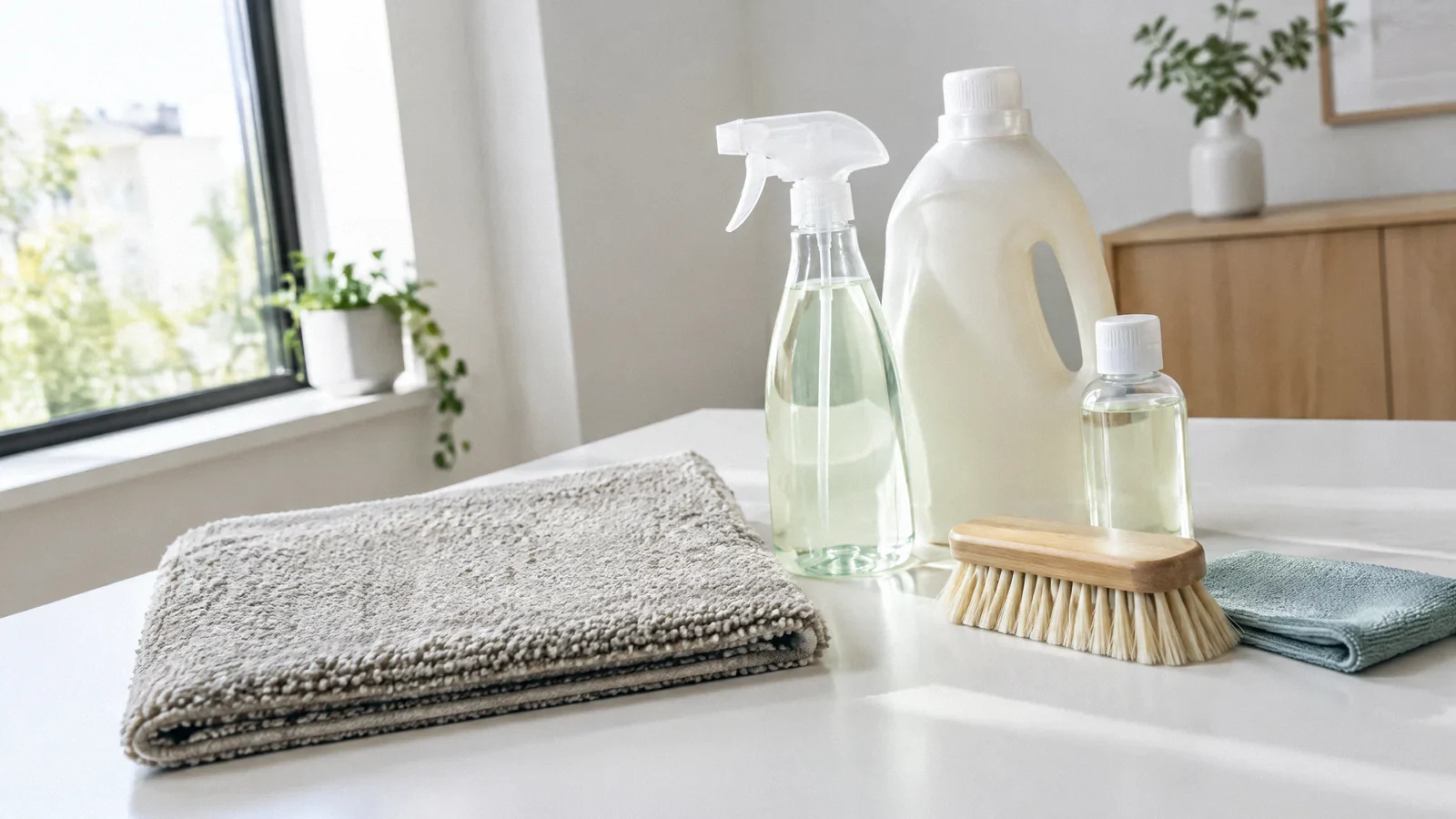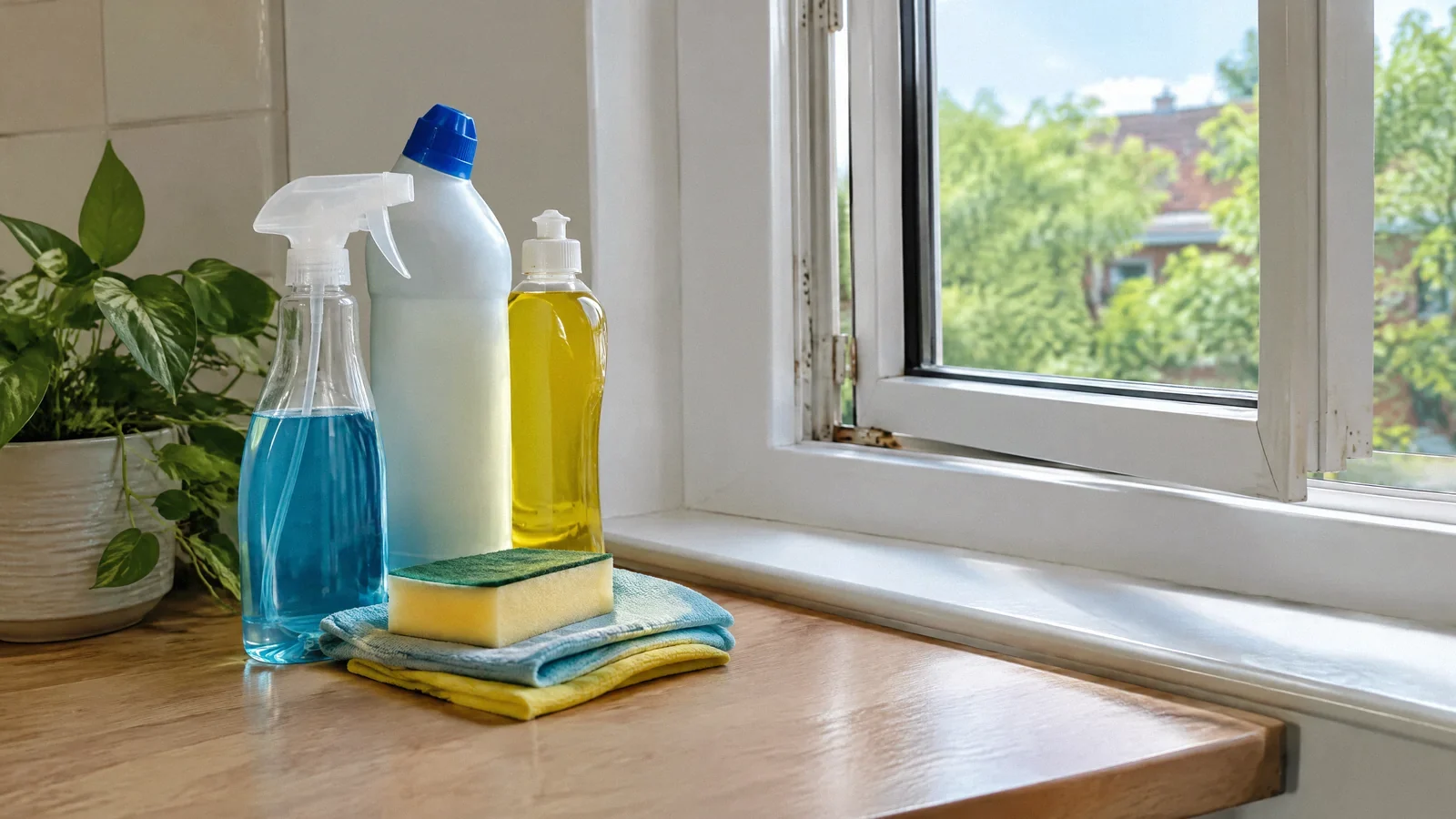
Some cleaners release vapors or airborne droplets, and certain ingredients react with ozone to form additional pollutants. Exposure depends on the product, application and ventilation. Follow the label, use only the amount needed and never mix cleaners.
Why cleaning products can affect indoor air
Some cleaning products release chemicals into indoor air during use and, sometimes, while stored. Volatile organic compounds, or VOCs, are chemicals that evaporate under ordinary indoor conditions. They include ingredients in some cleaners and disinfectants. A product may also release fine liquid droplets when sprayed. The amount reaching a person's breathing zone depends on the formulation, how much is used, application method, room size and ventilation. A cleaner's presence does not establish that it caused a symptom or that its normal, label-directed use is dangerous in every situation. It does mean the product is a potential source worth considering when trying to improve indoor air.
Vapors, droplets and reactions
Evaporation can continue after a surface has been wiped. Sprays can add airborne droplets as well as vapor. Those droplets can carry ingredients into the air. Cleaner ingredients may also react with other substances already in a room. For example, fragrance compounds associated with pine or citrus can react with ozone to create secondary pollutants, including formaldehyde and very small particles. A pleasant scent therefore does not tell you whether the air is clean. Conversely, an unscented product is not automatically free of VOCs or other hazards.
What exposure depends on
A small bathroom with its door closed can build up a different concentration from a large room supplied with outdoor air. Frequent applications, excess product, spraying close to the face and using several products in succession can increase opportunities for exposure. Health effects also depend on the chemical, concentration, duration and individual susceptibility. Some products can irritate eyes, skin or airways, and certain ingredients can worsen asthma. Symptoms alone cannot identify a particular chemical. If a product causes discomfort, leave the area, avoid further exposure and consult a health professional about symptoms. For a suspected poisoning or serious breathing difficulty, seek urgent local assistance.
Choose the right product and amount
First decide what the surface actually needs. Ordinary cleaning and disinfection are different tasks; follow the applicable instructions when disinfection is necessary rather than assuming that a stronger or more fragrant product cleans better. Select a product intended for the surface and read the complete label before opening it. Use only the directed amount and dilution, and observe required contact and rinse instructions. A concentrated product requires accurate measuring. More liquid can leave more residue without improving the result. Consider an appropriately labeled less-volatile or fragrance-free option when available, but still read its precautions and test material compatibility.
Ventilation and safer application
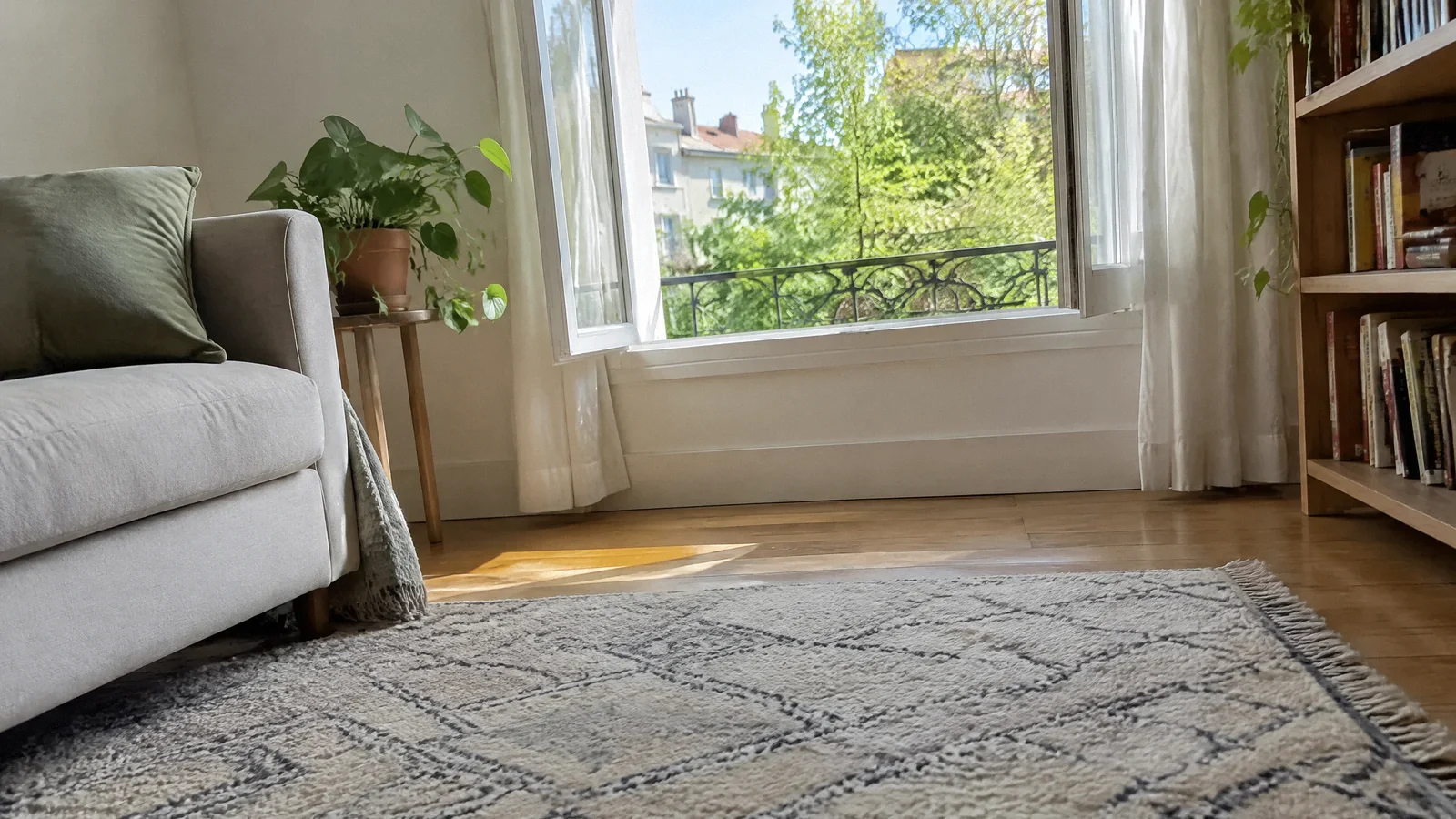
Follow the label's ventilation directions. When outdoor conditions permit, open a window or use an exhaust fan that vents outdoors; keep fresh air moving during use and drying. Ventilation dilutes many airborne pollutants but does not make incompatible products safe or guarantee zero exposure. If the label permits, applying a liquid to a cloth instead of spraying into the room can limit dispersal. Avoid creating a mist near the face and keep children, pets and people sensitive to the product away during application. Follow the manufacturer's re-entry and drying directions. If outdoor smoke or other pollution makes opening windows inadvisable, consider postponing nonessential work and follow local air-quality guidance.
Never mix products
Use one product at a time and follow its label. EPA advises against mixing household care products unless the label directs it. In particular, combining bleach with ammonia or acidic products can produce dangerous gases. Do not try to neutralize an unfamiliar spill by adding another cleaner. If a reaction or strong irritating fumes occur, leave the area and seek advice from poison control or emergency responders as appropriate. Tell responders which products were involved. Save the labels and make the area inaccessible to others; do not return simply to investigate a strong vapor.
Storage, disposal and air cleaners
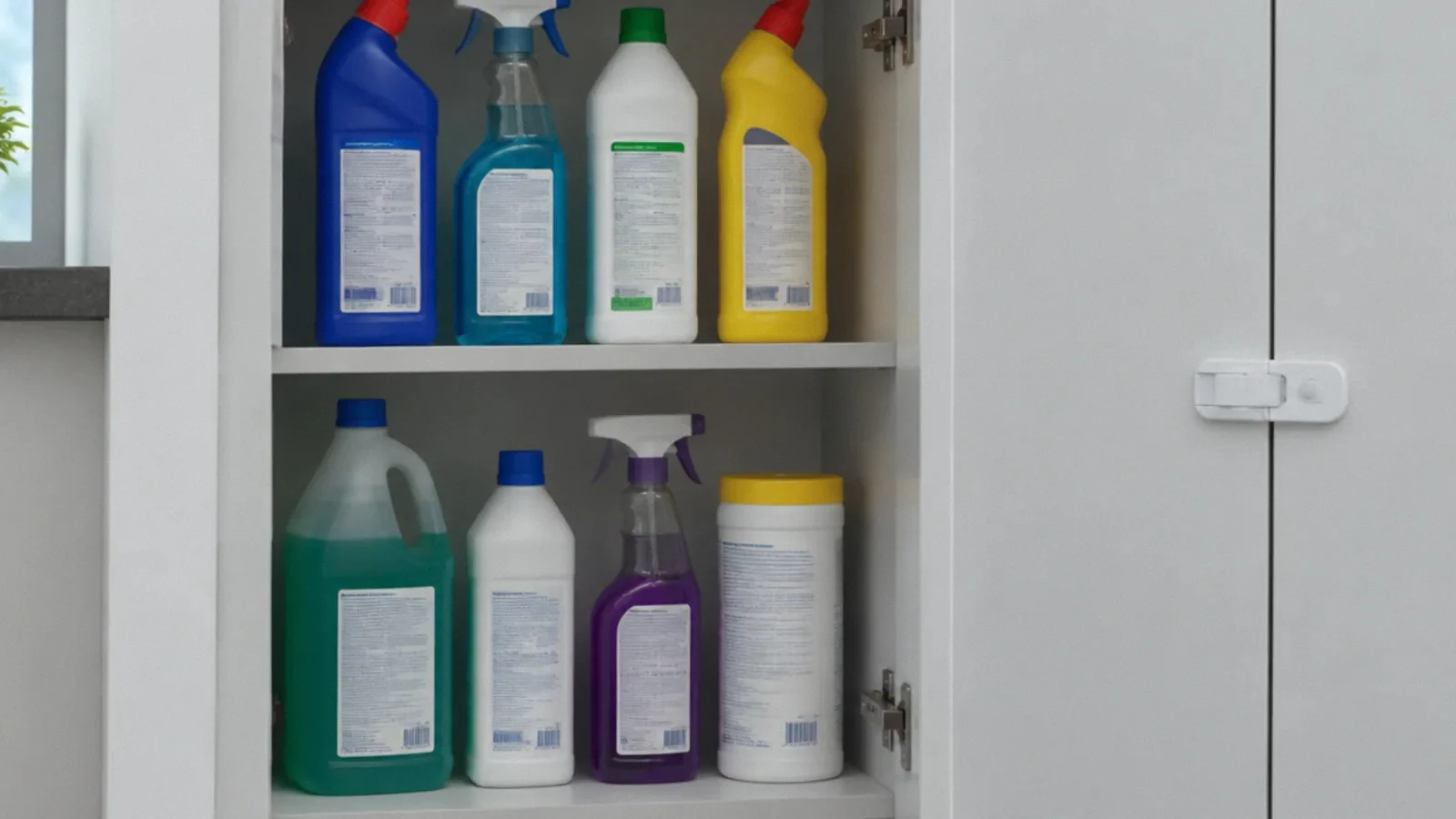
Keep products in their original labeled containers, closed and away from children and pets. Buy quantities that you can use and follow local household hazardous-waste instructions for unwanted products; disposal requirements differ by location and formulation. Do not assume a room air cleaner can compensate for heavy product use. Filters designed for particles and devices designed to remove gases have different capabilities, and performance varies. EPA treats source control and ventilation as central measures. Do not use an ozone-generating air cleaner in an occupied space: ozone itself irritates the lungs and can participate in reactions that form other pollutants.
When the concern is a carpet or a persistent odor
Carpets need products compatible with their fiber, backing and cleaning equipment. A label or environmental certification should be checked for the actual product, followed by an inconspicuous test and adequate drying. The related guide on choosing carpet cleaners explains those material-specific decisions. A musty smell after a leak calls for finding and correcting the moisture source; adding fragrance does not dry wet materials. If a smell or symptoms persist after the cleaning product has been removed and the room aired, discuss the situation with the relevant professional rather than guessing at the cause. Keep a record of when products were used and any symptoms, without treating the timing as proof of a diagnosis.
Your next-step checklist
- Read the complete product label and use only the amount directed.
- Ventilate as instructed when outdoor conditions permit.
- Keep sensitive occupants away during application and drying.
- Never mix cleaners; store and dispose of them according to directions.
Related questions
Are all cleaning products indoor pollutants?
Some products release substances into indoor air; the type and amount vary. Their presence alone does not establish harmful exposure in every use.
Does a fragrance-free cleaner release no VOCs?
Not necessarily. Fragrance is only one possible ingredient group. Check available product information and follow its label.
Can an air purifier replace ventilation?
No. A suitable purifier may help with certain pollutants, but it does not replace controlling sources and supplying appropriate ventilation.
Why can a citrus-scented cleaner affect air after use?
Some fragrance compounds can react with indoor ozone and form additional pollutants, including fine particles and formaldehyde.
Sources & context
Public guidance supports the principles in this article. The practical questions and examples are editorial interpretation, not a site assessment or a coverage decision. State-specific rules apply only where identified.