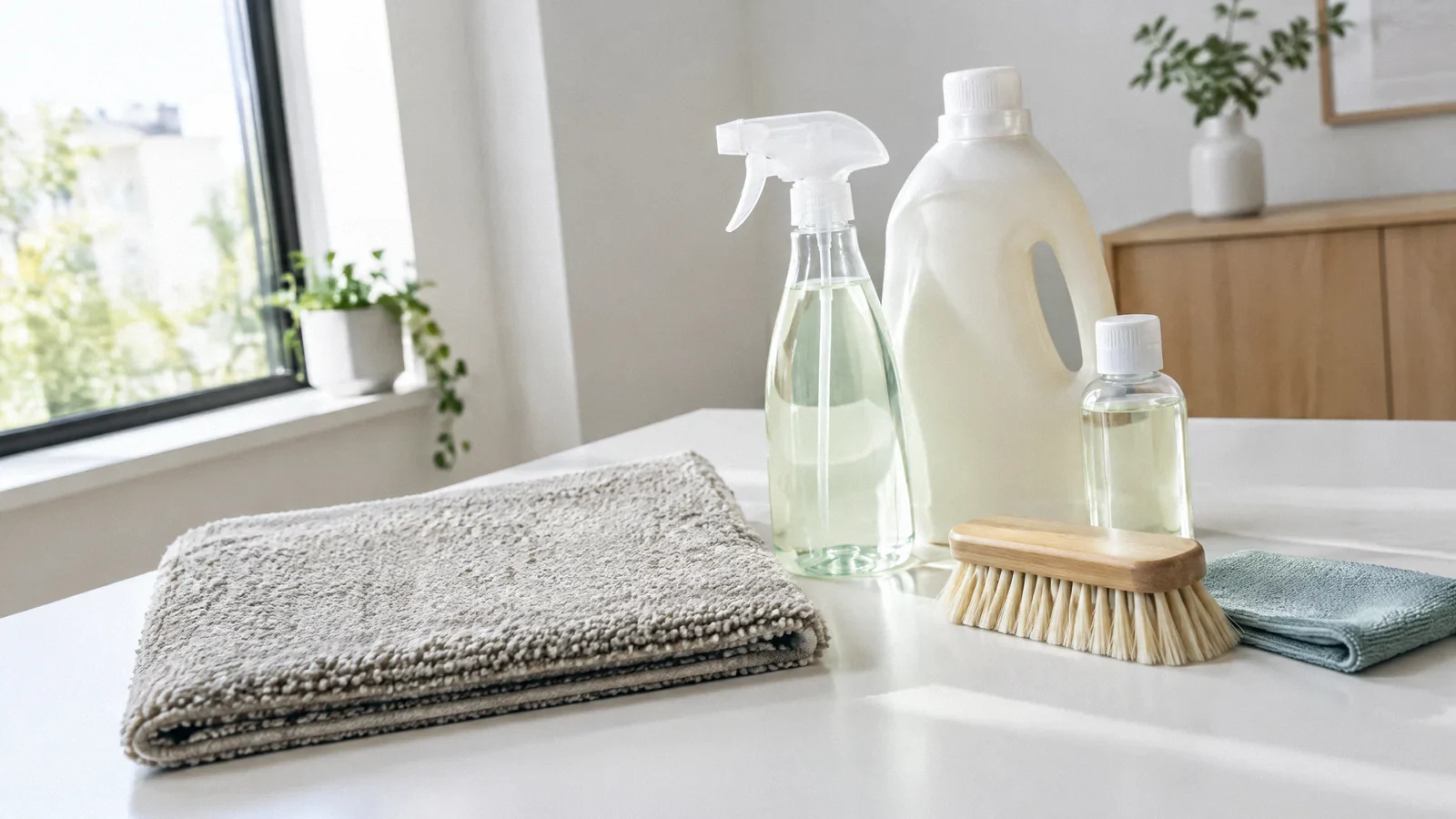
Choose a product intended for your carpet and cleaning method, check an independently supported environmental claim, and follow dilution and ventilation directions. No cleaner is risk-free for every person or material.
Begin with the carpet
Find the fiber, backing and manufacturer’s care instructions before comparing bottles. A product appropriate for synthetic wall-to-wall carpet may be unsuitable for wool, silk, a dyed handwoven rug or a moisture-sensitive backing. Check whether the product is meant for spot cleaning, a portable extractor, or a professional machine. If the rug has no label, valuable dyes, fragile fringe or unknown construction, consult a rug specialist rather than testing several products on a visible area.
Treat green claims as claims
Terms such as green, natural, eco-friendly and non-toxic do not by themselves describe a specific ingredient, exposure or environmental benefit. Look for a clear explanation of what the claim covers and an independent standard that can be checked. EPA’s Safer Choice label identifies products whose ingredients meet its criteria for human health and the environment. Check the actual product and intended use in the current program directory rather than assuming every product from a brand is certified.
Compare the full use instructions
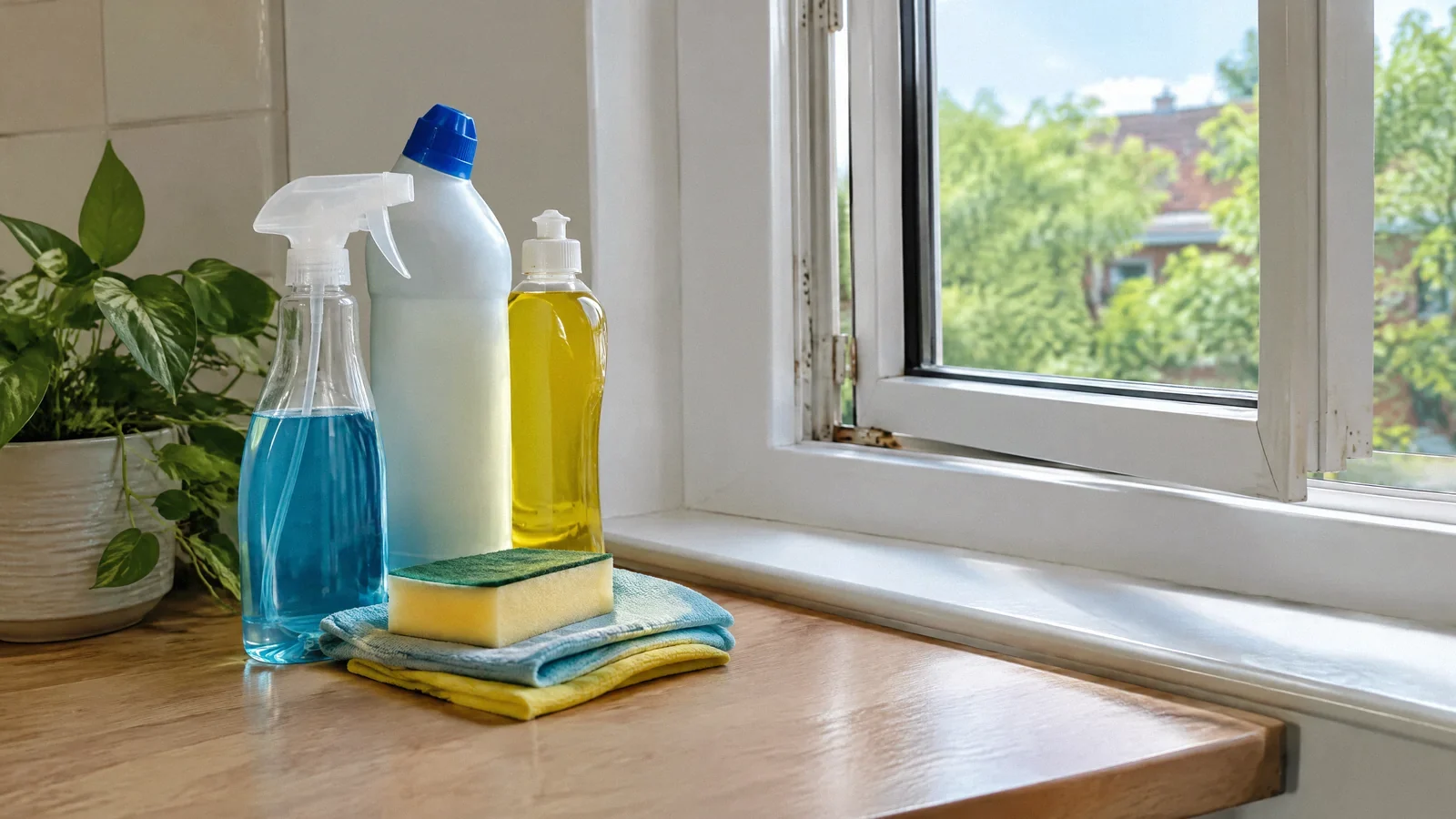
Read the entire label, including dilution, rinsing, ventilation, warnings and disposal. A concentrated solution may reduce packaging per use, but only if you can measure it correctly and use the stated dilution. More product can leave residue and make rinsing harder. Ready-to-use spot cleaners are convenient for small spills; a machine solution must be compatible with the machine and carpet. Never put a product in an extractor simply because its bottle says household cleaner.
Consider fragrance and exposure
A plant-derived ingredient can still irritate or cause a reaction, and fragrance-free is not the same as risk-free. If a household member is sensitive to fragrances or cleaning agents, compare ingredient disclosure and warnings, ventilate as directed and keep that person away during use. EPA offers a fragrance-free Safer Choice label for qualifying products. Avoid products that make you uncomfortable or aggravate symptoms; ask a health professional about individual concerns.
Test before treating the room
Vacuum loose soil first. Apply the solution exactly as directed to an inconspicuous area, using a clean white cloth if the instructions call for one. Look for color transfer, texture change or damage after the area dries. A successful small test reduces uncertainty but cannot guarantee every part of a rug will respond identically. Stop if dye transfers or the pile changes. For valuable or unstable rugs, obtain professional assessment before adding water.
Use less moisture and remove residue
Blot a fresh spill rather than rubbing it into the pile. Work from the outside toward the center as appropriate for the product, and avoid soaking the backing or floor beneath an area rug. Follow the specified rinsing or extraction steps rather than mixing solutions. Allow the carpet and its backing to dry thoroughly before replacing furniture. If you cannot dry the assembly promptly, professional cleaning may be safer than repeated wetting.
Ask a professional the same questions
A service provider should be able to identify the cleaning method, product and suitability for the carpet, and explain expected drying and any residue concerns. Ask whether they will test dyes, protect a sensitive floor and address the source of a stain. A certification claim should identify the actual product, not just a general company promise. Do not expect cleaning to reverse permanent dye loss or replace a water-damaged backing.
Avoid shortcuts that create new problems
Never mix cleaning agents or assume vinegar, essential oils or homemade mixtures are safe for every fiber. A strong scent can mask a damp odor while the carpet remains wet. If a rug smells musty after a leak, find and correct the moisture source; cleaning product selection alone will not repair ongoing water intrusion. Discard or professionally assess material that cannot be dried or was affected by contaminated water.
A practical comparison at the shelf
Compare two products with the same intended use rather than comparing a spot spray with a machine concentrate. First confirm both are approved for your carpet fiber and the specific equipment. Next, look for an independently verifiable label and review the complete ingredient and warning information available from the manufacturer. Check whether either requires rinsing, how much is used per treatment, and whether a fragrance-free version is available. Consider the amount left in the container after the project and the disposal directions as well as the package size. If the only environmental evidence is a leaf graphic or an undefined claim, ask the manufacturer for the standard and the specific product covered. When information is missing, treat the claim as unverified. Finally, test the selected product on the carpet as directed and allow the sample to dry. A product chosen for better environmental characteristics still needs careful handling and must not be used at a stronger concentration than its label allows.
Your next-step checklist
- Begin with the carpet
- Treat green claims as claims
- Compare the full use instructions
- Consider fragrance and exposure
Related questions
Does a green label mean the product is safe for every rug?
No. Verify the actual product’s certification and the rug manufacturer’s care instructions.
What if dye transfers during a test?
Stop applying the solution and consult a qualified rug specialist.
Sources & context
Public guidance supports the principles in this article. The practical questions and examples are editorial interpretation, not a site assessment or a coverage decision. State-specific rules apply only where identified.