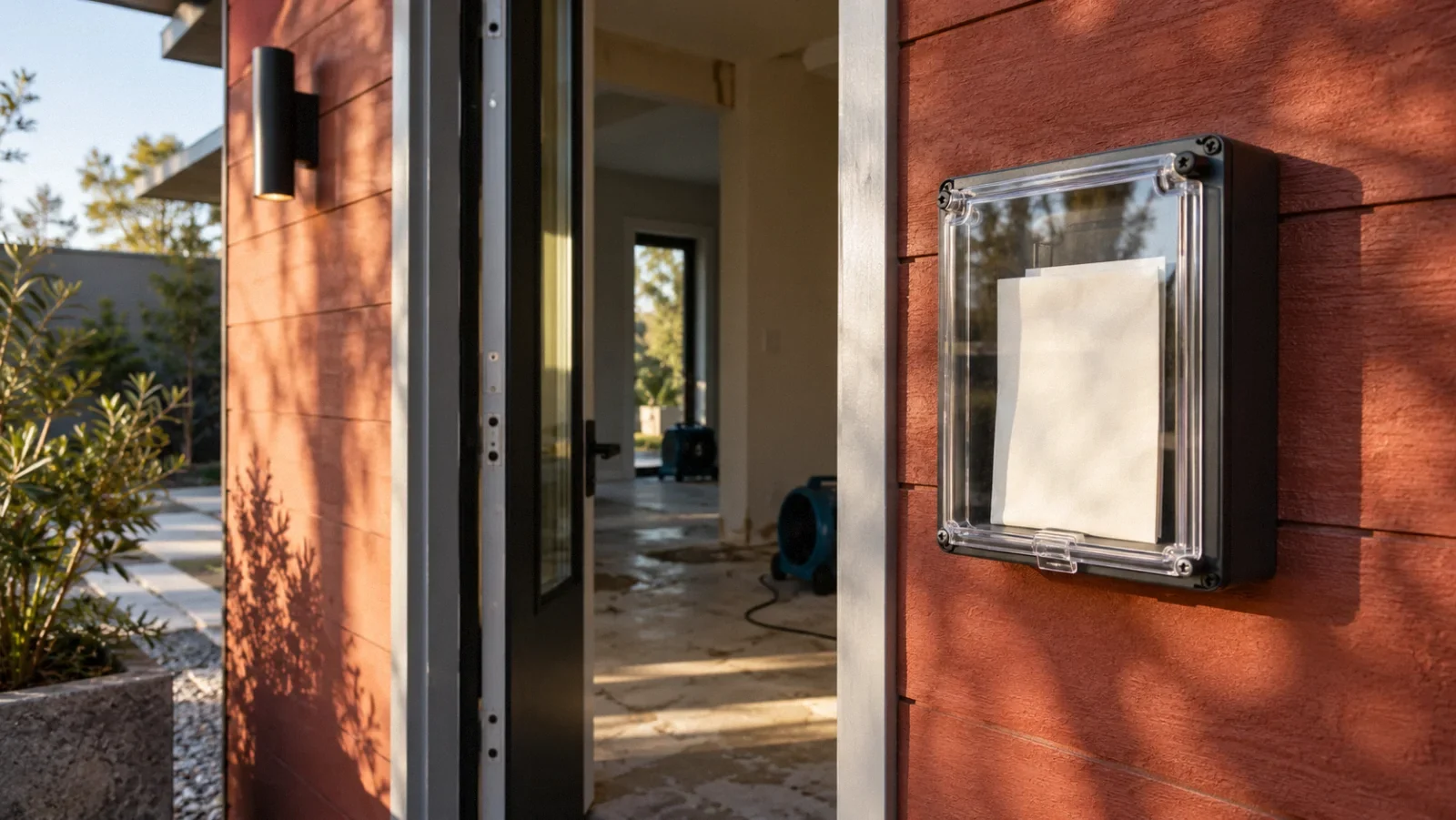
Being outside a mapped high-risk flood area does not eliminate flooding. Evaluate the structure’s local drainage and elevation, water pathways, infrastructure, and emergency access alongside FEMA information rather than using the zone label as a complete risk assessment.
A boundary answers a limited question
Flood maps serve important planning and regulatory purposes, but a boundary is not a physical barrier. FEMA's risk communication guidance states that risk remains when a property is mapped outside a high-risk area. The practical response is to understand what the map describes and which other water pathways affect the site.
Do not replace one oversimplification with another. Saying every property has identical risk is also unhelpful. Elevation, terrain, drainage capacity, river or coastal exposure, and building design differ. A useful assessment identifies the relevant mechanisms and their consequences for this property, including whether water could isolate occupants even if it never enters the living space.
Walk the water path before choosing equipment
From a safe location in ordinary conditions, note where roof water goes, whether ground slopes toward the foundation, and where driveway or street runoff could enter. Look for low doors, window wells, below-grade rooms, and downspouts discharging near the building. DOE's foundation guidance treats grading, gutters, drainage, and below-grade protection as connected measures rather than interchangeable products.
Ask the local authority about known drainage constraints, floodplain information, and planned changes. A blocked inlet or altered neighboring grade can create a problem that is not obvious from a regional map. Do not divert water onto another property or modify public drainage without proper design and approval. A local fix must have a lawful, functioning destination for the water.
Separate the mechanisms of water entry
Surface runoff, groundwater seepage, sewer backup, and a broken supply pipe require different prevention measures. A main-water shutoff device can help with some plumbing leaks but cannot stop floodwater outside the house. A sump pump may manage collected groundwater but is not a substitute for evacuation or a barrier against every external flood.
Write down the suspected mechanism for each vulnerable location. If you cannot explain where the water comes from and how it reaches the building, a product recommendation is premature. Ask an appropriate professional to investigate the uncertainty. The response may involve drainage maintenance, plumbing backflow protection, building-envelope repairs, equipment elevation, or a combination selected for the actual conditions.
Consider failure and access, not just normal operation
Protection can fail when power is lost, a discharge line blocks, a barrier is installed too late, or a storm exceeds its intended conditions. CDC recommends flood planning, backup power for sump pumps, and attention to evacuation. Discuss these failure modes before relying on a single device to protect a finished basement or essential equipment.
Consider who is available to respond, whether alerts work during outages, and how occupants leave if the surrounding roads flood. Never enter moving or electrically hazardous water to deploy equipment. A prevention plan should reduce the need for last-minute action in dangerous conditions. If a measure requires someone to be home, identify that dependency explicitly.
Consider access risk even when the floor stays dry
A home on slightly higher ground may avoid interior flooding while nearby roads, a driveway, or utility equipment remain vulnerable. Include those conditions in the plan. Ask local emergency management about designated routes and warnings, and consider occupants who need assistance leaving. The absence of a prior indoor loss does not establish that staying home during the next event is safe. Keep emergency decisions tied to current official instructions and actual conditions rather than confidence in the building elevation or a map label.
Turn uncertainty into a practical plan
Prioritize observations and defects that can be addressed now, then obtain design input for larger changes. Keep the map product, local information, site photographs, and professional recommendations together. Ask what the proposed measure protects against, what it does not protect against, and what maintenance or inspection it needs.
Review insurance options with the appropriate provider using the actual property facts; a lender not requiring a policy is not a technical finding of zero risk. Keep insurance decisions separate from physical mitigation performance. Revisit the plan after a nearby flood, drainage change, renovation, or new map information. A current, specific plan is more useful than permanently filing the property under 'not in a flood zone.'
Your next-step checklist
- Identify the exact map product and the water hazards it does and does not describe.
- Map roof runoff, low openings, below-grade areas, and lawful drainage outlets.
- Match each proposed measure to surface water, groundwater, sewer, or plumbing risk.
- Include power loss, blocked discharge, absence from home, and evacuation in planning.
- Review the plan when local drainage, building conditions, or official information changes.
Related questions
If my lender does not require flood insurance, is risk low enough to ignore?
That requirement is not a complete property risk assessment. Review the site and coverage options separately with the relevant professionals.
Will an automatic water valve prevent outside flooding?
No. It controls the connected water supply, not rainfall, groundwater, or sewer flow. Match devices to the source they can actually affect.
Should I build a flood wall myself?
A barrier changes loads and drainage and may need engineering and permits. Obtain site-specific advice rather than assuming a wall is suitable for every building.
Sources & context
Public guidance supports the principles in this article. The practical questions and examples are editorial interpretation, not a site assessment or a coverage decision. State-specific rules apply only where identified.
- FEMA: Flood risk communication guidebookofficial
- CDC: Preparing for floodsofficial
- DOE: Foundation drains, gutters and downspoutsofficial
Community questions behind this topic
These discussions helped identify reader concerns. They are anecdotal, not technical or legal authority.