Keep a complete record of the event, source correction, affected materials, drying or remediation, reconstruction, and follow-up. The file should help a future buyer understand what happened and what was verified without implying a guarantee about every hidden or future condition.
Build the record while access still exists
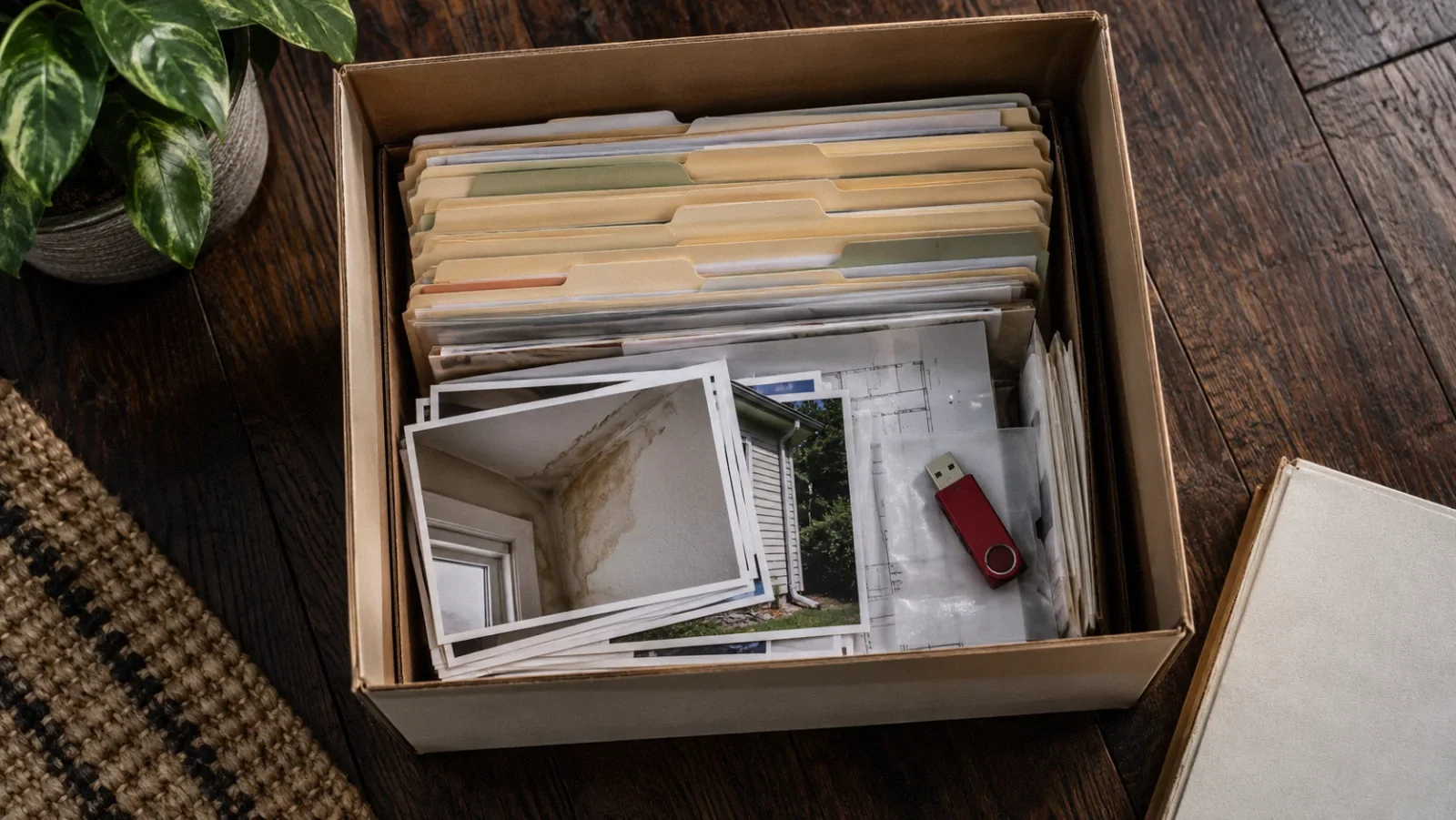
The best opportunity to document hidden conditions is often during the work. Once a wall, floor, or cabinet is closed, a later buyer cannot see the same surfaces without reopening them. Ask the project team for photographs that show both room context and close detail, with dates and descriptions connecting the images to the work area.
Keep the original event chronology: discovery, source shutoff or repair, assessment, material removal, drying, reconstruction, and follow-up. If the leak start time is unknown, say so. Do not turn an estimate into an exact date simply to make the file look tidy. A clear limitation is more credible than unsupported precision.
Preserve the source repair separately
A restoration invoice may describe fans, demolition, or cleaning but omit the plumbing, roof, drainage, or condensation defect. Keep the separate source diagnosis and repair record. It should identify the actual component or mechanism addressed and any test or observation supporting the result. A new ceiling finish is not evidence that the roof above it was repaired.
For recurring or weather-dependent problems, keep later observations and any additional work. If the first repair failed, retain that part of the history rather than deleting it once the second repair succeeds. A buyer can better assess a documented sequence than a final invoice that hides why several visits were necessary.
Collect material and moisture evidence
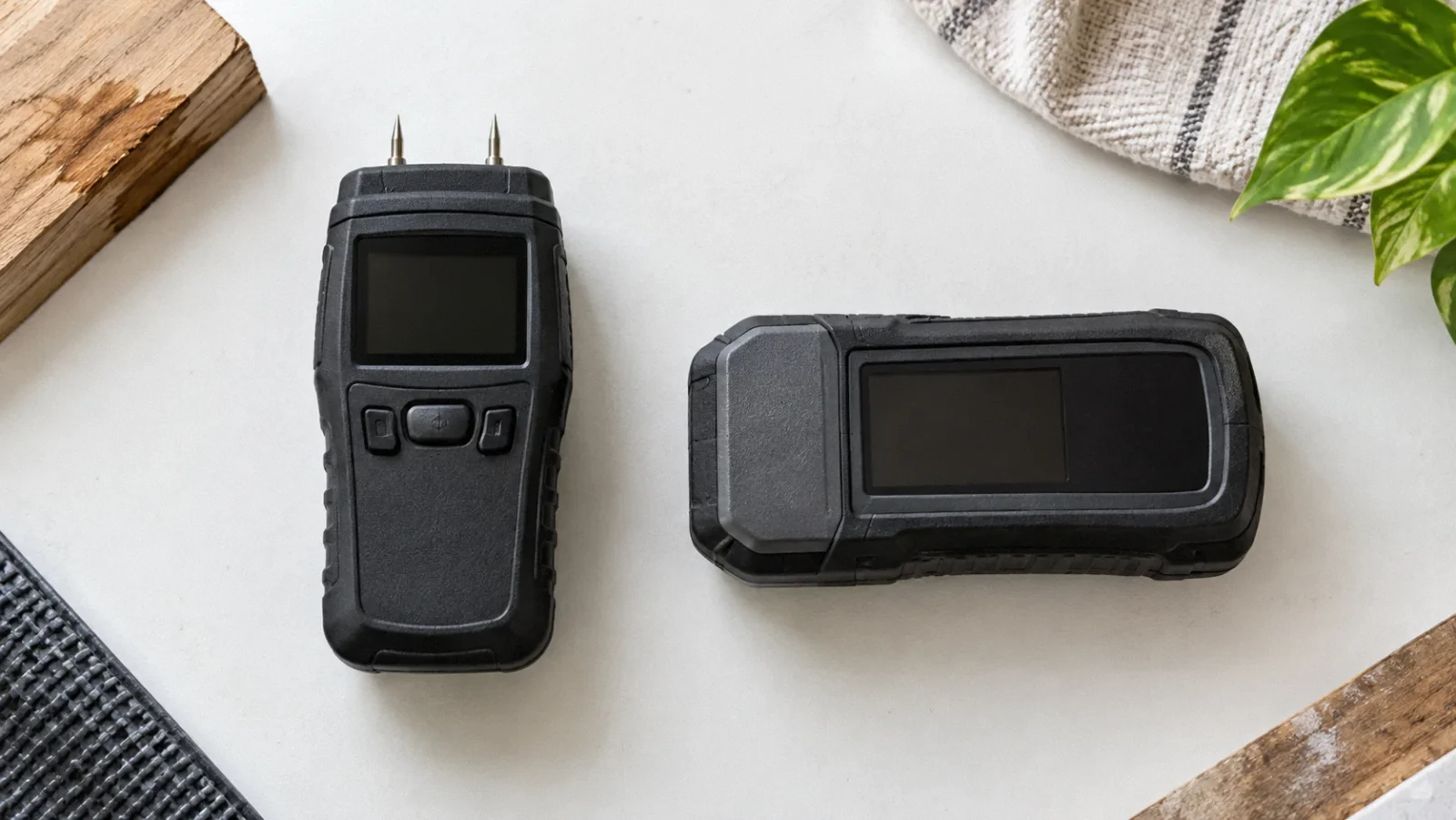
Ask for the affected-area map, retained and removed material list, drying records where available, and any remediation verification. EPA's guidance ties completion to moisture correction and cleanup, not merely elapsed equipment time. A record should therefore explain which materials were checked and what criteria were used, rather than containing only the number of dehumidifier rental days.
Keep complete reports, including limitations, sample methods if used, and appendices. A one-page certificate may omit the area actually inspected or conditions that remained inaccessible. If no formal report was produced, preserve genuine invoices, photographs, and correspondence; do not create a document that falsely appears to be a professional contemporaneous inspection.
Include permits and final status
Permit requirements depend on the work and local authority. CSLB directs California owners to their building department for project requirements. If permits were needed, retain the permit identification, approved scope, inspection records, and final status. A permit application or issued permit does not necessarily mean the work received its required final inspection.
If work was considered exempt, keep any written clarification available and describe the basis accurately. Do not call a mold sampling report a building inspection approval or a building final a mold clearance. Each document should be labeled for the question it actually answers. This makes the file easier for a buyer's inspector to review without confusing different responsibilities.
Make the file readable to someone new
A future buyer or inspector should not have to reconstruct the project from hundreds of unlabeled images. Use room names and a simple location sketch that remain understandable after furniture moves. Identify before-removal, exposed-condition, source-repair, and pre-closure photographs. Keep original timestamps while adding a separate index; do not alter originals to make dates appear more certain.
A concise record can say that a particular ceiling cavity was opened and inspected while the adjoining wall was not. That is more informative than a folder called mold clearance containing unrelated invoices. If a professional report refers to sample A or reading point 4, retain the diagram that explains those references. Otherwise, precise-looking data may lose its practical meaning.
When a later repair occurs, add it as a new dated event rather than overwriting the earlier history. Note whether it concerns the same source or a different one. This helps distinguish recurrence from a separate accident and allows a future reviewer to understand why the property has multiple water-related records without assuming they all describe one unresolved problem.
Prepare a readable index for a sale
Create a short summary listing the event, affected rooms, professionals involved, completed work, and remaining limitations, with links or filenames for the supporting documents. In California, use the actual disclosure forms and professional advice to decide how the information must be delivered. Elsewhere, local law and contract requirements differ. The index helps explain the history but does not replace required disclosures.
Before sharing, remove unrelated sensitive personal information while preserving the relevant substance and provenance. Keep an unaltered original set securely. Save the exact package delivered and its date. If new information arises during the sale, update through the appropriate transaction process. The result should be a useful factual record, not a marketing claim that a past repair makes the home permanently immune to water damage.
Your next-step checklist
- Keep original dated photographs of concealed areas before reconstruction.
- File source correction separately from drying, remediation, and cosmetic work.
- Retain complete reports with methods, scope, and limitations intact.
- Verify the actual permit and final inspection status where applicable.
- Create a concise index and save the exact disclosure package delivered.
Related questions
Should I discard records once the repair is finished?
Keeping them can help with maintenance, warranty questions, insurance review, and later disclosure. Store readable copies in more than one secure location.
Is a mold-free certificate enough?
No document should be read more broadly than its scope. Review what was inspected, when, with which methods, and what limitations remain.
What if the previous contractor has no moisture logs?
State that the records are unavailable and preserve the evidence you do have. A current assessment may clarify present conditions but cannot recreate missing historical measurements.
Sources & context
Public guidance supports the principles in this article. The practical questions and examples are editorial interpretation, not a site assessment or a coverage decision. State-specific rules apply only where identified.
- California DRE: 2026 real estate law excerptsofficial
- EPA: Mold, moisture and your homeofficial
- CSLB: Building permit requirementsofficial
Community questions behind this topic
These discussions helped identify reader concerns. They are anecdotal, not technical or legal authority.