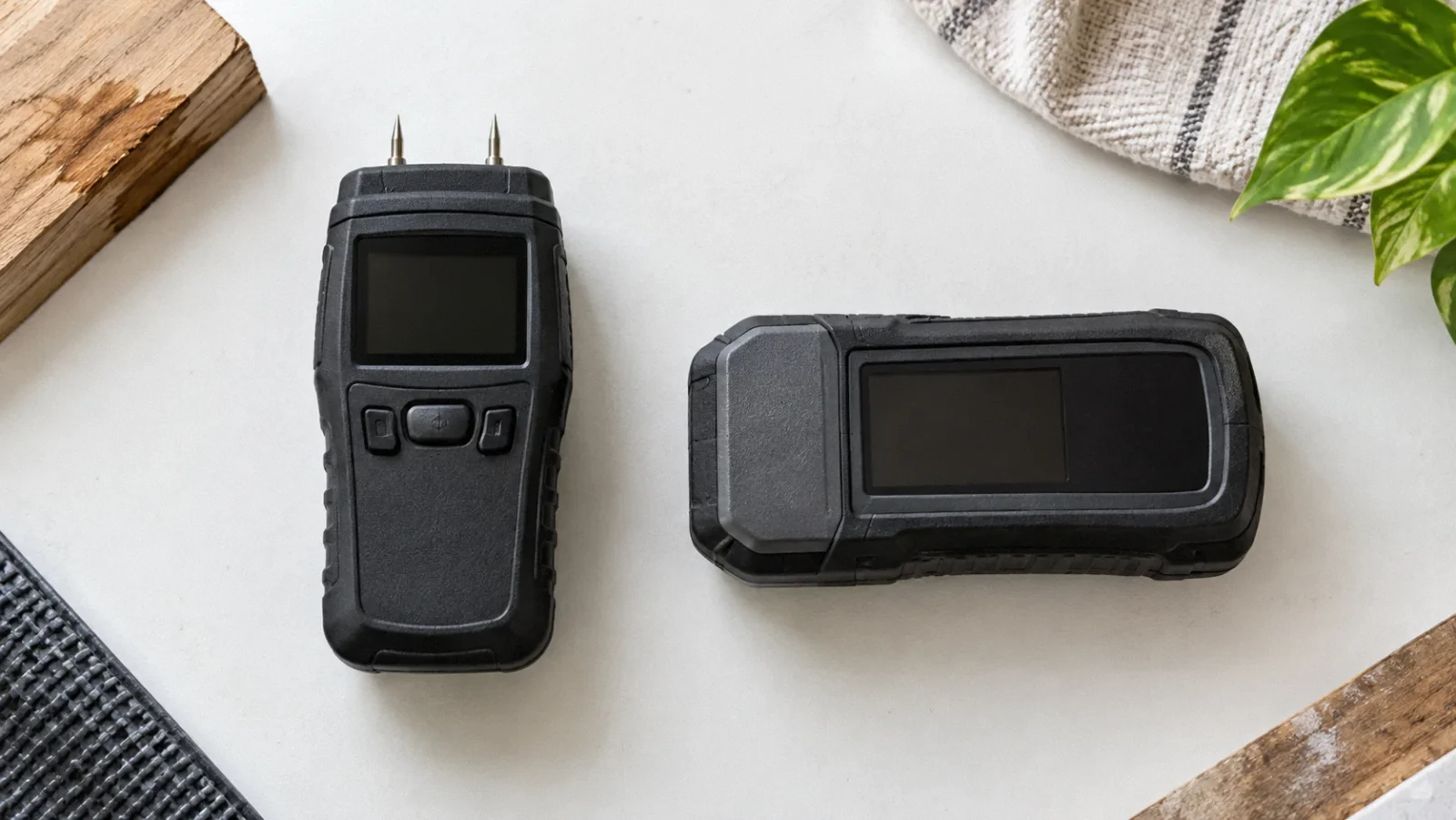
Pin and pinless meters answer different measurement questions and can disagree without either being broken. Identify the material, scale, sensing depth, and possible interference. Use consistent readings and appropriate comparison areas; do not interpret every displayed number as a universal moisture percentage.
Start with what the instrument actually reports
Some moisture meters estimate wood moisture content using electrical properties. Others provide a relative scale for locating wetter areas. A wood-moisture-equivalent reading on another material is not the same as that material’s moisture content by weight. EPA’s moisture guide explicitly discusses this distinction.
Read the instrument instructions and write down the selected mode. A number without the mode, material, and location is hard to interpret later. The fact that two screens both display a percent symbol does not guarantee that their results are directly comparable.
Pins provide contact at a particular location
Pin instruments use probes that contact the material. Probe length, insulation, contact, material settings, and temperature or species corrections where applicable can influence interpretation. A shallow measurement may not represent a deeper wet layer.
Insertion is invasive and should not be improvised around concealed wiring, pipes, finishes, or suspect hazardous material. Have permission and a safe measurement plan. A restorer can explain where deeper assessment is necessary and how it will avoid damaging utilities or important finishes.
Pinless scanning is useful but sees an assembly
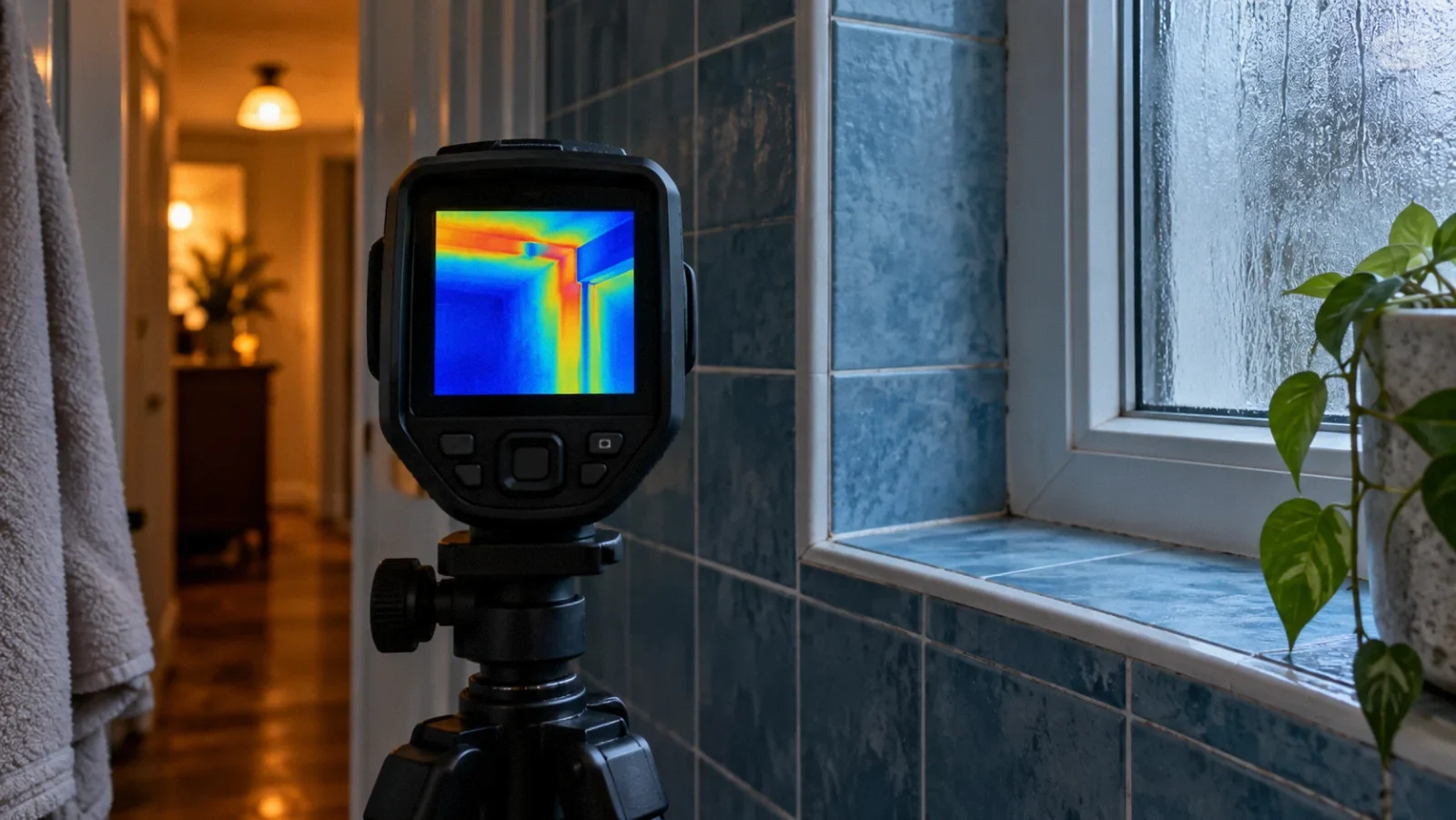
Pinless devices can screen a surface quickly without holes, but their sensing field has a finite depth and can respond to conditions beyond the visible finish. Metal, density changes, layered construction, and edge conditions can complicate a reading. The pattern matters, but it needs interpretation.
For example, an elevated response along a line might correspond to a wet path or to a construction element. Check comparable areas and, when warranted, confirm through another method or targeted access. Neither dismiss every high reading nor declare hidden damage from one scan.
Use a repeatable comparison plan
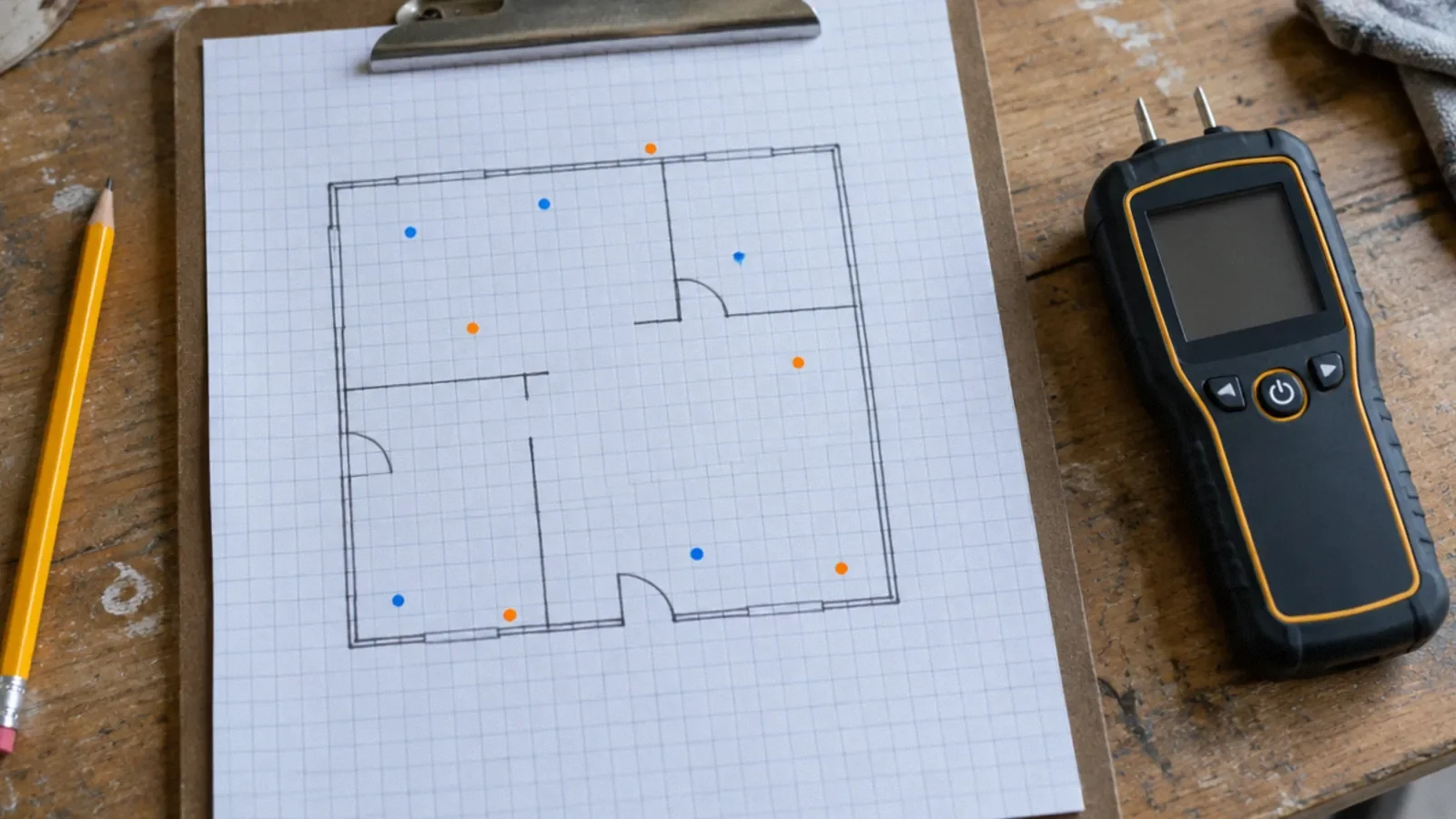
Measure the same marked locations with the same instrument and settings during drying. Include appropriate unaffected material of similar construction and environment. Document why that comparison is suitable; an exterior wall and an interior partition may not share the same conditions.
If different technicians or instruments take over, record the change rather than drawing one continuous trend as if nothing changed. A sudden numerical improvement can result from changing the scale or measurement point. Photographs with location labels help make the record auditable.
Work through a disagreement without choosing a favorite meter
A homeowner obtains a low reading on the painted face of a wall, while the contractor reports a higher value at an exposed bottom plate. These results are not necessarily in conflict: the material, depth, and location differ. First repeat the comparison at the same accessible target using methods appropriate to that target.
If two pinless instruments still differ, check whether they use comparable scales and sensing depths. If a pin measurement differs from a scan, investigate whether the pins reach the relevant layer and whether the scan includes metal or another material. The answer may be a measurement limitation, a real moisture gradient, or both. Document the interpretation rather than simply averaging the numbers.
A calibration or function check prescribed by the instrument maker can help establish that the device operates as intended. It does not erase the need for correct material settings and technique. Ask for the relevant check when a reading appears inconsistent with the rest of the evidence.
What a meaningful trend looks like
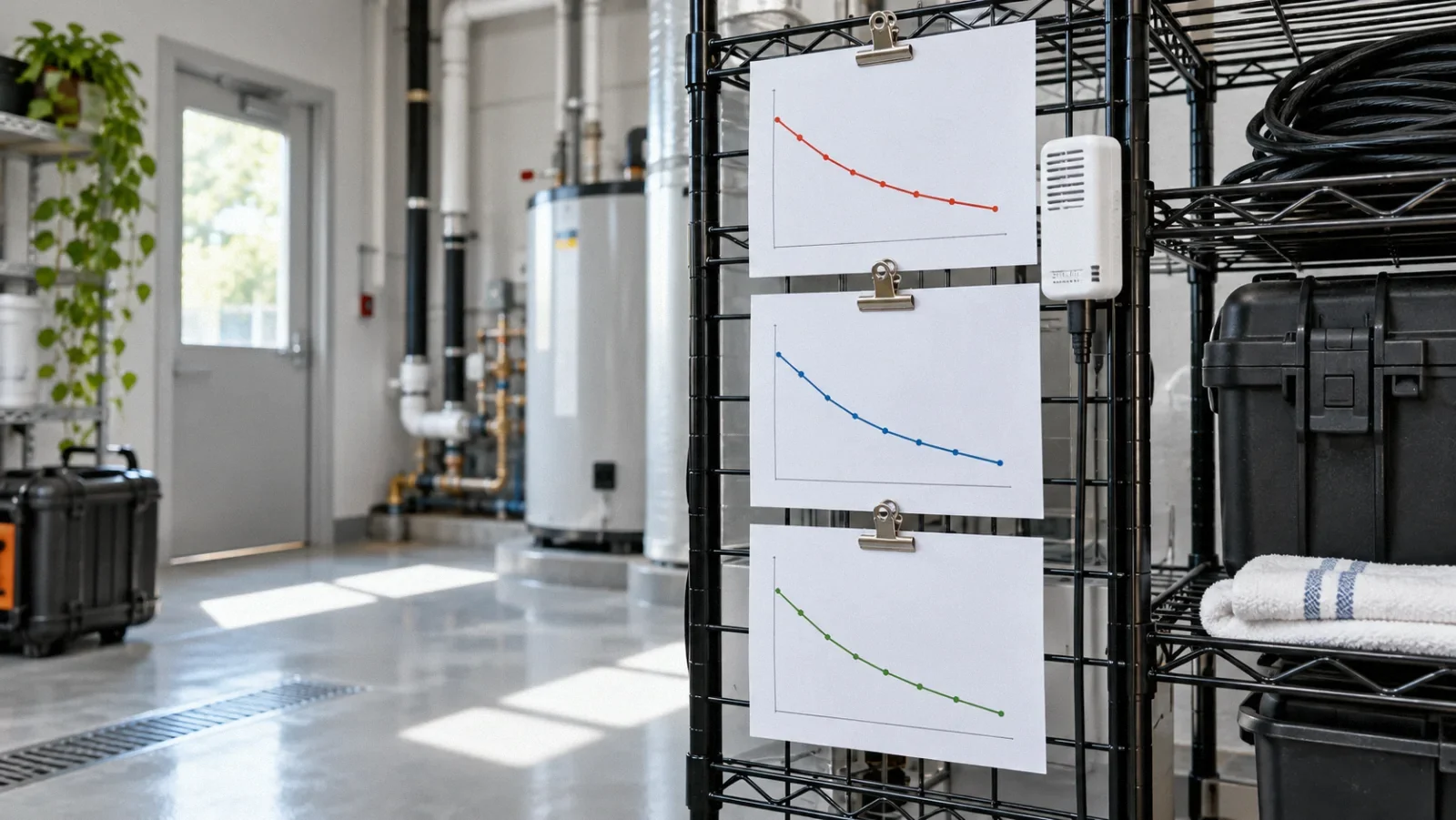
A consistent set of readings from the same wood locations moves toward an appropriate comparison condition while the source remains controlled. That pattern supports progress. If only the exposed face improves but deeper or adjacent locations remain elevated, the pattern suggests that the whole target has not reached the same state.
Do not interpret the numerical distance from a target as a linear clock. A material halfway between its starting reading and goal is not necessarily halfway through its drying time. Transport through layers and changing environmental conditions can slow or redirect the process.
Finally, keep the purpose clear. A meter can help decide where to investigate and whether drying is progressing. It cannot identify every contaminant, determine old damage, or certify structural strength. The repair conclusion should state which of those questions were addressed by other evidence so that a reassuring display does not carry more weight than it can support.
A meter measures condition, not every consequence
A low reading does not rule out old damage, loss of attachment, or contamination. A high reading does not establish that replacement is necessary. Combine measurements with source history, visual condition, material construction, and the requirements for the next repair stage.
The public IICRC S500 overview includes instruments, inspection, and documentation within restoration practice. It does not supply a freely accessible universal threshold for every material. Ask the practitioner to state the actual basis for the target rather than attributing an unexplained number to “the standard.”
Your next-step checklist
- Record model, mode, material, location, and depth or contact method.
- Distinguish true material moisture content from relative and wood-equivalent scales.
- Use comparable unaffected material and note why it is a valid reference.
- Repeat measurements consistently and label any instrument or method change.
- Combine readings with physical condition and source evidence before choosing repair.
Related questions
My meter says zero on carpet. Does that prove it is dry?
No. The tool or setting may not be appropriate for the carpet, pad, or substrate. Check the intended use and assess the relevant layers.
Why is a contractor’s reading higher than mine?
The instruments may use different scales, depths, contact methods, or settings. Compare methods and exact locations before deciding which conclusion is justified.
Should I replace wood above one online percentage?
Do not use a universal internet threshold. Species, material, environment, instrument, and the intended repair affect interpretation. Replacement also depends on condition and cleanability.
Sources & context
Public guidance supports the principles in this article. The practical questions and examples are editorial interpretation, not a site assessment or a coverage decision. State-specific rules apply only where identified.
- EPA: Moisture Control Guidance, Appendix C (material meters and flooring moisture tests)official
- IICRC: S500 public scope overview (not the paid standard text)standard
Community questions behind this topic
These discussions helped identify reader concerns. They are anecdotal, not technical or legal authority.