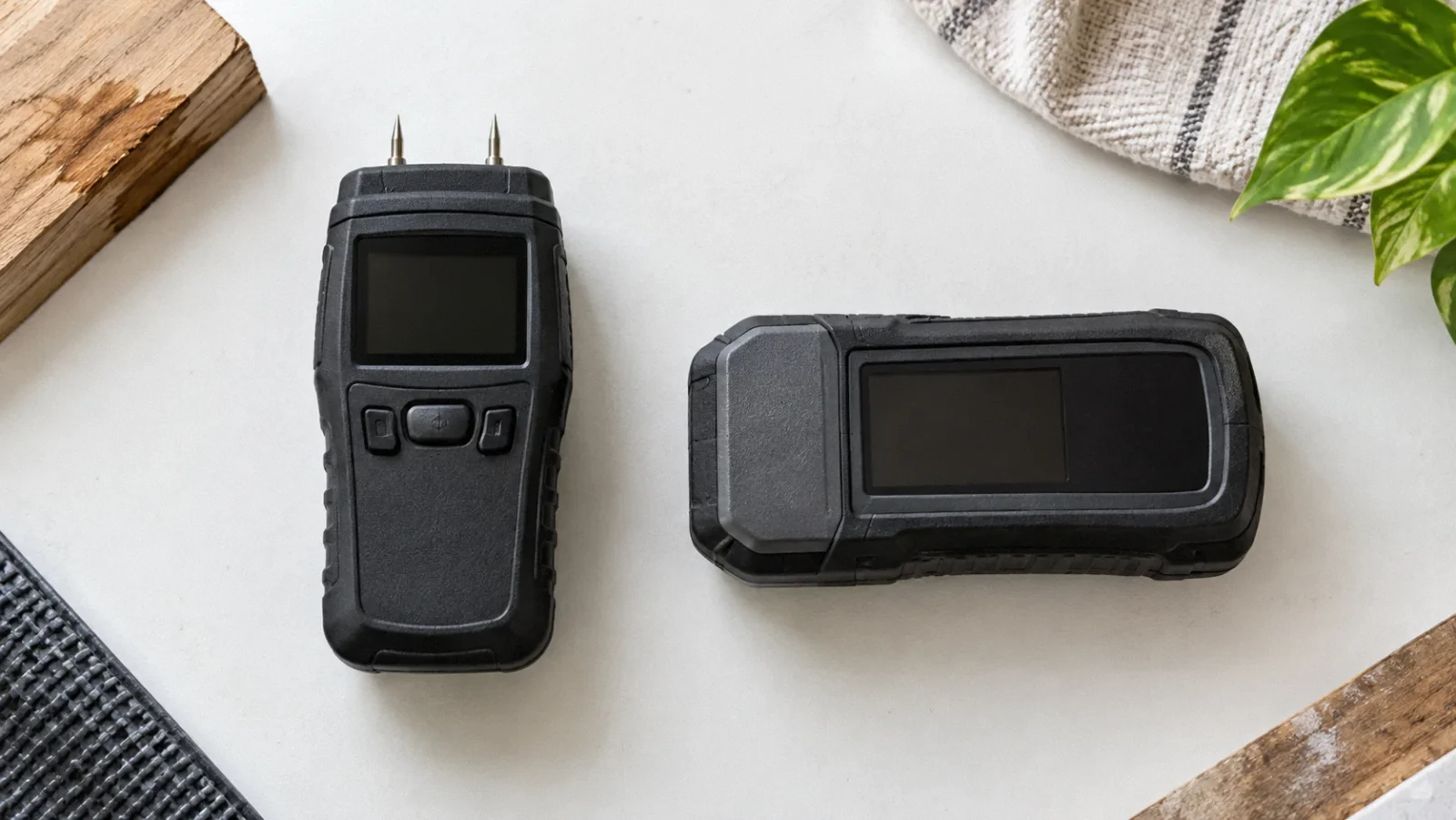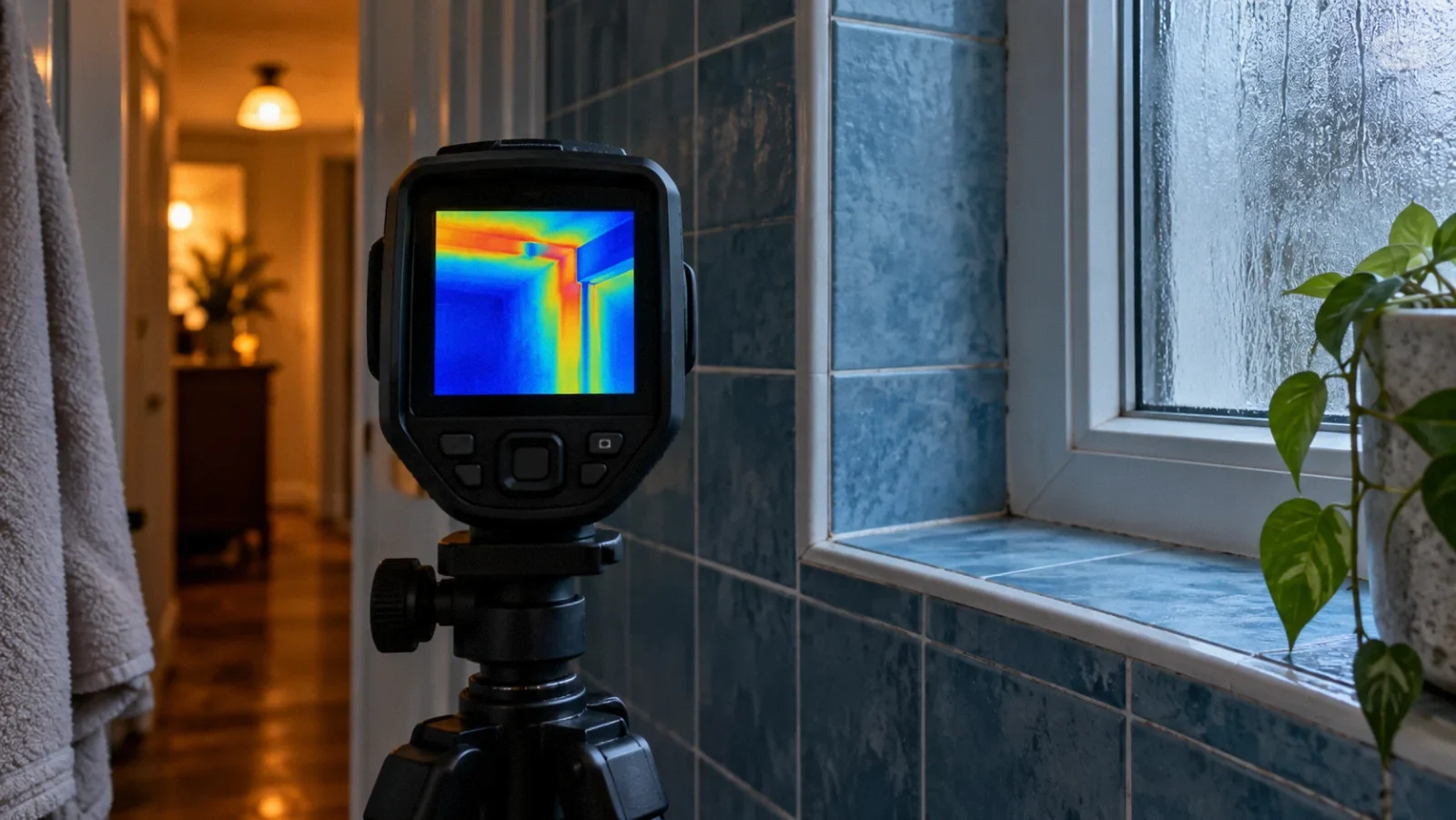
A thermal camera displays surface temperature patterns, not water content and not a view through walls. Use it to guide an investigation, then confirm suspected moisture with suitable measurements, history, and selective access when justified.
What a colored image can and cannot show
A cool or warm patch can reflect evaporation, insulation differences, air leakage, a hot pipe, sunlight, or other thermal effects. Water may contribute to a pattern, but the color itself does not identify water. A dramatic palette can make an ordinary temperature variation appear more conclusive than it is.
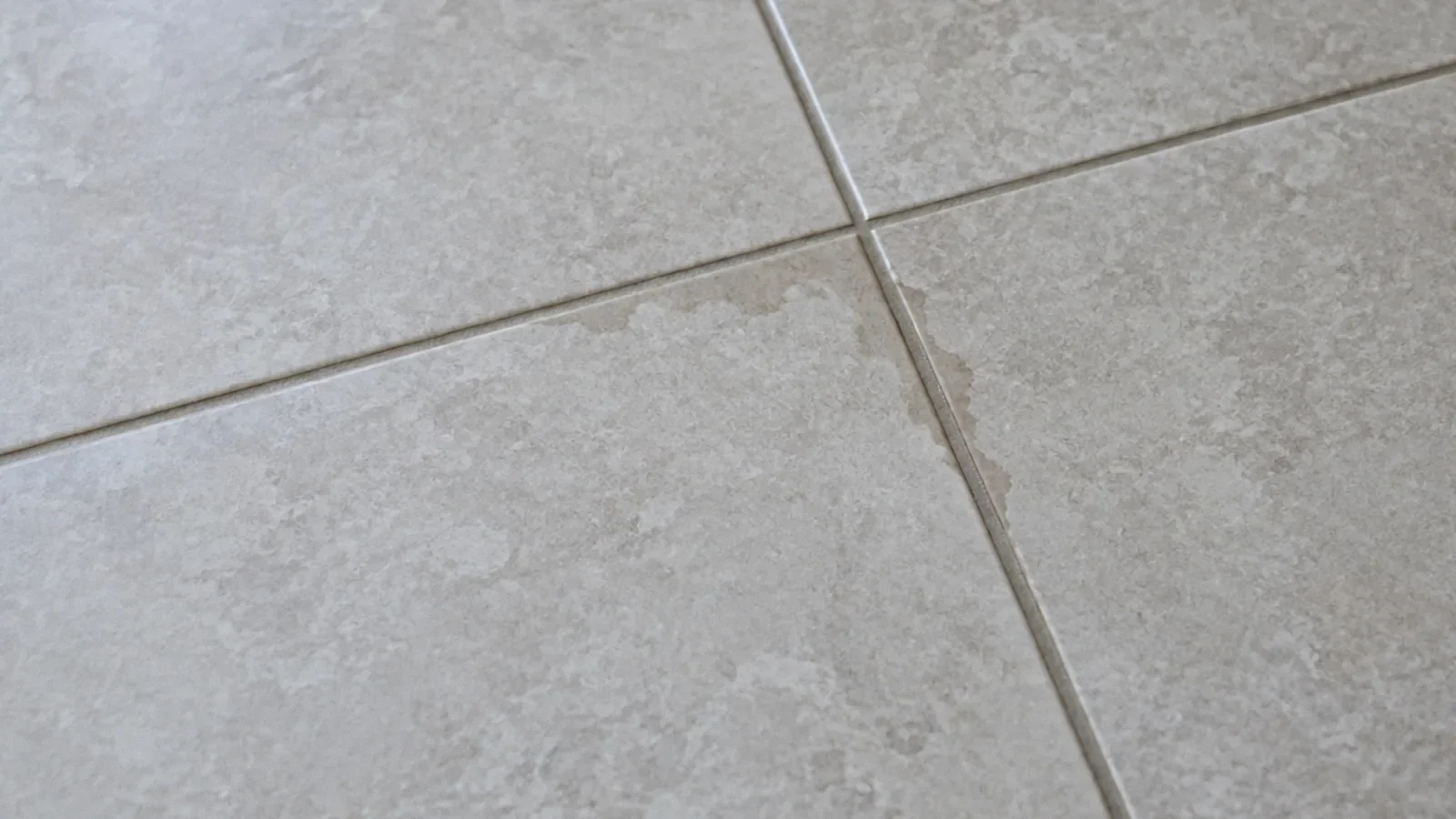
Ask for the visible-light photograph alongside the thermal image, the location, and the temperature context. The useful question is what competing explanations were considered and how moisture was confirmed. A screen capture alone should not decide the demolition scope.
Water can be present without a clear thermal signature
If wet and dry surfaces have similar temperatures, the camera may not reveal a useful contrast. Finish properties and reflections can further complicate interpretation. An apparently uniform image therefore does not certify that a wall cavity or floor assembly is dry.
This limitation matters when someone proposes a final walkthrough using only thermal imaging. Retained-material measurements and inspection still need to address the original wet areas and concealed layers. EPA’s guidance distinguishes material moisture measurement from room-air measurements; a temperature image is another different observation.
Confirm the pattern with a focused plan
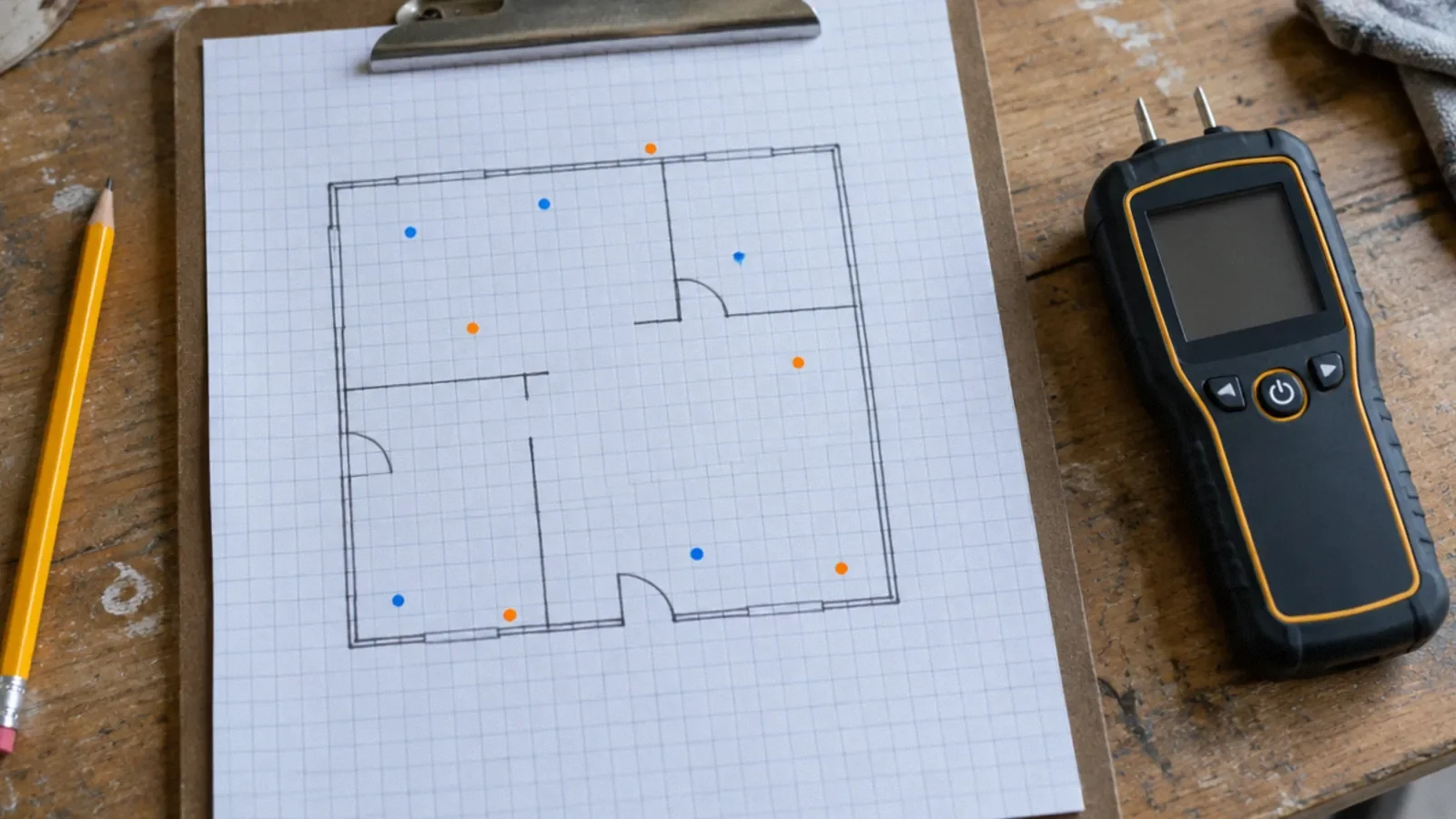
Start with the leak history, stains, construction, and the location of plumbing or exterior openings. Use the thermal pattern to choose where appropriate moisture screening or confirmation may be most informative. Compare similar areas and record the measurement method.
If the result remains ambiguous, targeted access may be justified. Before opening, consider utilities, finishes, occupant protection, and potentially hazardous materials. The purpose of access should be stated: confirming a leak path, examining a cavity, measuring a hidden layer, or assessing physical damage.
Do not use fixture tests casually
Running hot water may create a visible temperature change along a pipe without proving leakage. Deliberately repeating a suspected leak can also add damage. A plumber or other relevant specialist should plan testing when fixture operation is needed to distinguish a supply, drain, or enclosure problem.
Record the conditions under which an image was taken: recent fixture use, rainfall, equipment operation, and sun exposure can all matter. Comparing two images taken under very different conditions without that context can lead to a false story about improvement or deterioration.
A bathroom example with two plausible explanations
A warm vertical stripe appears below a bathroom when hot water runs. One explanation is ordinary heat from a pipe; another is warm leaking water affecting nearby material. The thermal image alone cannot choose between them. A useful investigation correlates the stripe with the pipe route, visible changes, appropriate moisture measurements, and any planned plumbing test.
Now consider a cooler patch on an exterior wall after rain. Evaporation may contribute, but insulation differences or air leakage can also affect temperature. Document rainfall and indoor conditions, then seek corroboration. The image is valuable because it directs attention efficiently, not because its color is a diagnosis.
When the camera cannot distinguish the alternatives, targeted access may be more informative than purchasing a higher-resolution device. The opening should be planned to inspect the relevant layer while protecting utilities and controlling disturbance. A sharper image of the same ambiguous surface remains ambiguous.
How to read the report’s confidence
Separate three statements: an anomaly was observed; moisture was supported by another method; the source was confirmed. Each requires different evidence. A report can appropriately support the first two while leaving the third for a plumber or building-envelope specialist. That limitation should be explicit.
For final drying verification, ask whether the measurement plan still includes the original wet materials even if the image now looks uniform. The thermal contrast may have disappeared because temperatures equalized, not because every layer reached its goal.
A useful stop condition for destructive work is a proposal based only on an unexplained color patch where corroboration is feasible. A useful reason to proceed with carefully planned access is a consistent combination of history, physical evidence, and measurements that leaves a consequential hidden question unresolved. The decision should be proportional to the evidence and the consequence of leaving the area unchecked.
Ask for a conclusion with limits
A useful report might say that a temperature anomaly was observed at a named location, an appropriate meter also found an elevated response, and additional access is recommended. That is more defensible than saying the camera “found mold” or proved a hidden cavity dry.
The public IICRC overview includes equipment, instruments, inspection, and documentation as parts of water restoration. A tool is one element in that process. Judge the quality of the reasoning and follow-up rather than the cost or appearance of the camera.
Your next-step checklist
- Keep visible and thermal photographs together with a precise location.
- Record environmental and operating conditions that affect the image.
- Identify competing explanations for the observed temperature pattern.
- Confirm suspected moisture through suitable additional methods.
- Do not use a uniform image alone to approve wall closure or flooring replacement.
Related questions
Can a thermal camera detect mold?
It does not identify mold. It can show temperature patterns that may guide investigation of moisture conditions, but mold assessment requires different evidence.
Does a warm patch beneath a bathroom mean a leak?
It may reflect hot-water piping or another heat source. The pattern should be correlated with the plumbing layout, moisture measurements, and professionally planned testing.
Is an expensive camera more reliable than a cheap moisture meter?
Price does not make the two tools interchangeable. Each measures a different property. A reliable conclusion comes from appropriate use and corroborating evidence.
Sources & context
Public guidance supports the principles in this article. The practical questions and examples are editorial interpretation, not a site assessment or a coverage decision. State-specific rules apply only where identified.
- EPA: Moisture Control Guidance, Appendix C (material meters and flooring moisture tests)official
- IICRC: S500 public scope overview (not the paid standard text)standard
- DOE: Infrared Temperature Field Imagingofficial
- NIH: Unwanted Moisture in Buildings, Part 2 (thermal imaging and moisture meters)official
Community questions behind this topic
These discussions helped identify reader concerns. They are anecdotal, not technical or legal authority.