A useful drying log shows whether specific materials are progressing toward an explained goal. Equipment counts, elapsed days, and room humidity alone cannot demonstrate completion. Look for repeat locations, consistent methods, environmental context, and documented changes when progress stalls.
Begin with the target and the starting condition
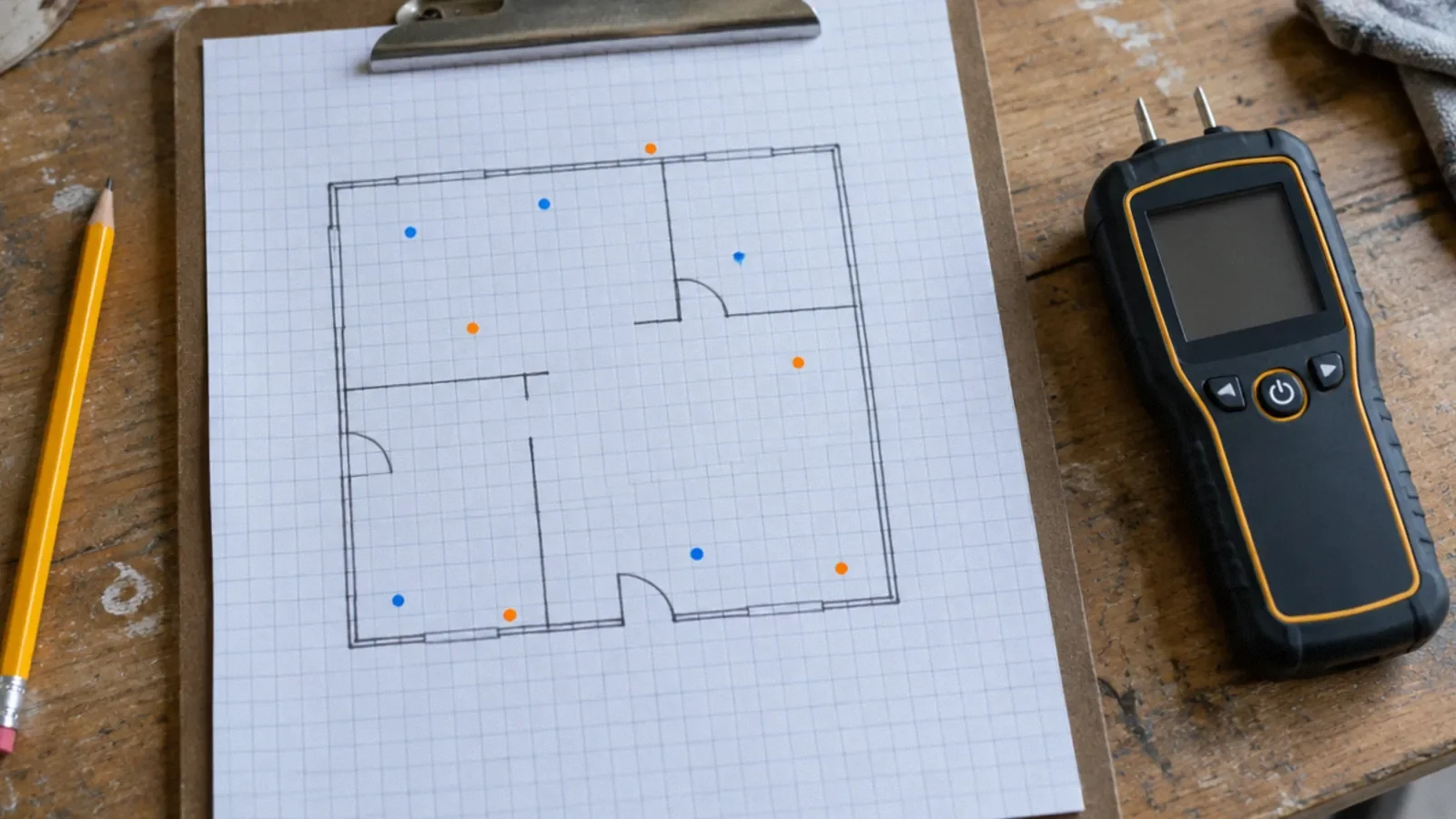
The log should identify what is being dried and why it was considered wet. Link initial readings to a moisture map or location labels. Then identify the drying goal and its basis, including appropriate comparison material or requirements for the next installation stage.
An unexplained number in a “dry” column is not enough. EPA moisture guidance distinguishes scales and materials; a framing reading cannot automatically serve as a drywall or concrete acceptance criterion. Ask the restorer to explain the measurement in ordinary language.
Follow the same locations through time
Repeat readings are meaningful when the location, material, instrument mode, and method remain consistent. If a new meter or technician uses a different approach, the log should say so. A sharp drop caused by moving to an easier location is not evidence that the original wet point dried.
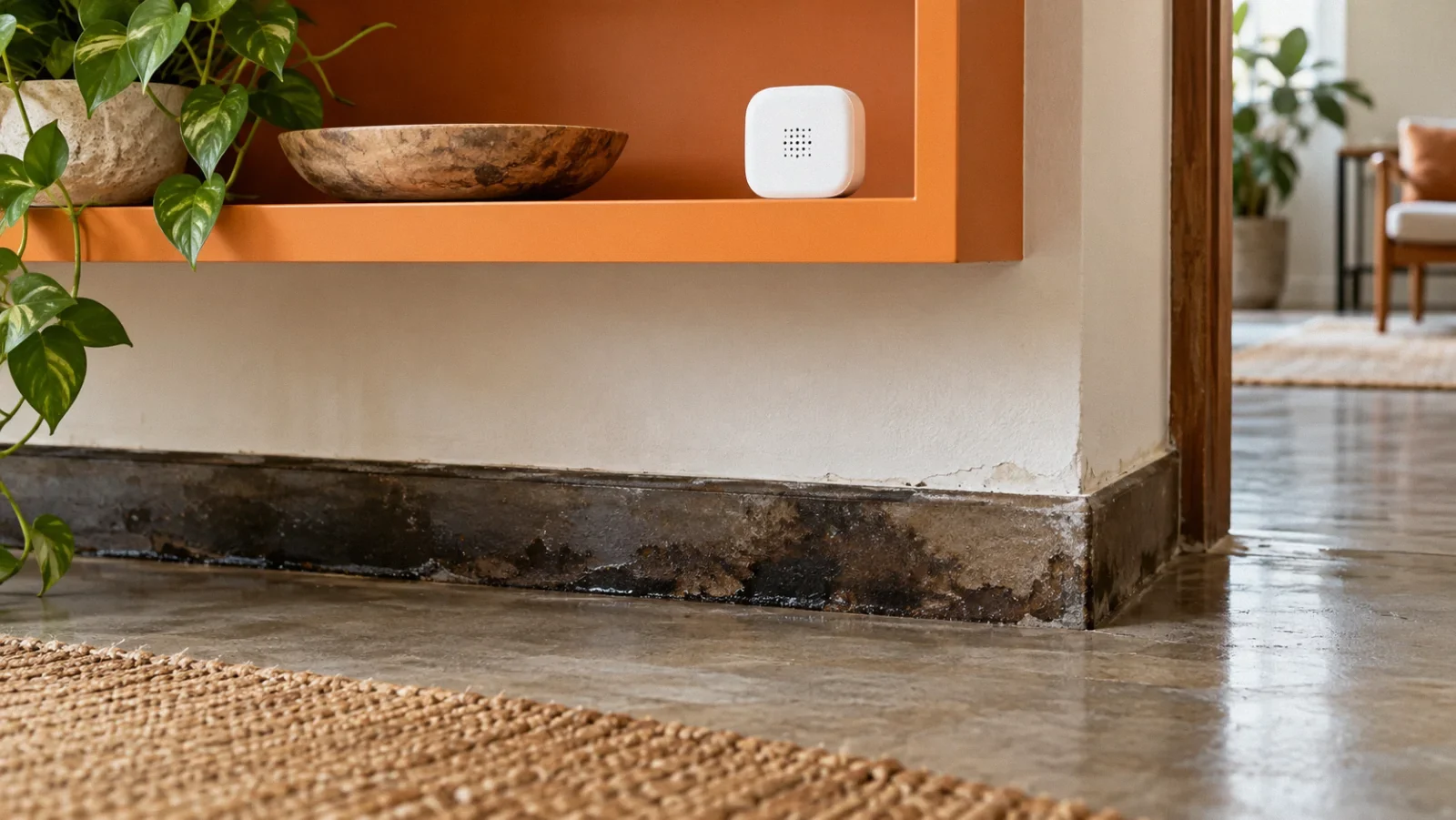
Look for the difficult areas, not only the room average. Bottom plates, layered floors, cabinet bases, and insulated cavities can lag behind exposed surfaces. An adequate log should make those exceptions visible and connect them to the plan.
Read air conditions as context
Temperature and relative humidity help describe the drying environment, while material readings describe the drying target. Both can be useful, but they are not substitutes. Room air may respond quickly to equipment while a concealed layer remains wet.
Equipment operating conditions also matter. Record outages, full collection tanks, interrupted drainage, doors or windows left open, or changes in containment. A material plateau may reflect a new water source, limited access, changed conditions, or a measurement issue. The log should trigger investigation rather than merely accumulate another date.
Equipment changes should have a reason
A drying plan may legitimately change after extraction, removal, or new findings. Ask why an air mover was added, relocated, or removed and how the change relates to the wet material. More equipment is not automatically better; fewer units are not automatically under-treatment.
The same applies to extending the job. A documented lagging assembly and revised access plan are more informative than a generic statement that drying “normally takes several more days.” If equipment continues without measurable progress, ask what has been reconsidered.
Three patterns worth distinguishing
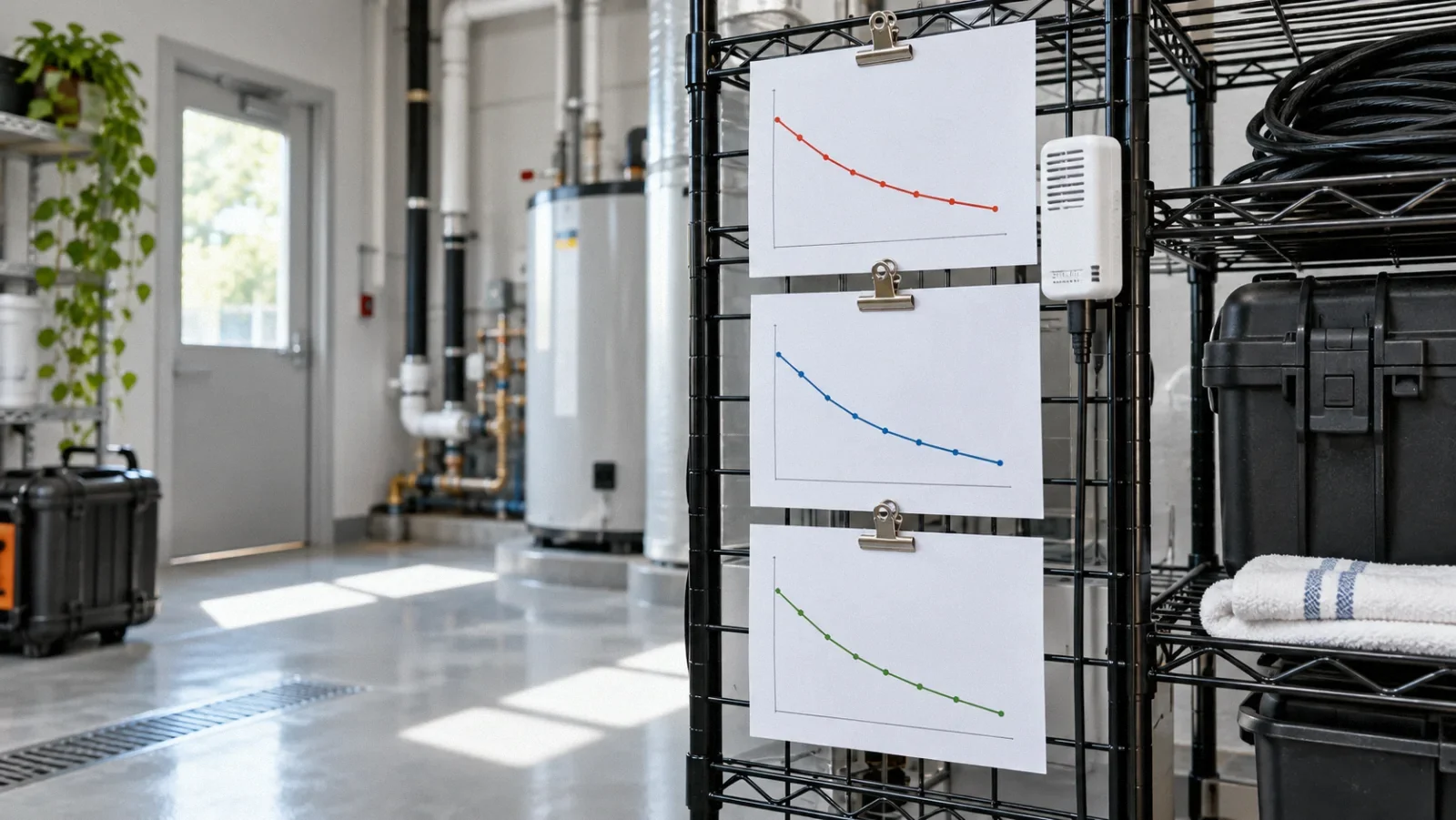
First, readings at consistent material points fall toward their explained goals while environmental conditions remain suitable. This supports continued progress, though the final condition still needs checking. Second, room humidity improves but one concealed material changes little. That pattern points toward an access or transport question rather than proof that the machine needs to run everywhere indefinitely.
Third, readings rise after previously improving. Check for a new leak, rainfall-related entry, drainage interruption, or a method change. The same shape on a chart can have different causes, so the log should connect readings with site events. Do not infer a cause solely from the line’s direction.
Numbers from relative scales should not be treated as physical percentages or used to calculate how many days remain. Even valid material moisture content does not necessarily decline at a constant rate. A straight-line prediction may create false confidence in a reconstruction date.
A practical request when a bill and log do not align
If equipment remains for extra days, ask which locations still require it, what changed since the last visit, and what the next decision point will be. This is more useful than objecting to every additional day or accepting all time as unavoidable. The response should refer to the target material and evidence.
If the log appears to skip days, clarify whether monitoring occurred remotely, on site, or not at all, and how the plan accounted for the gap. Missing entries do not automatically prove failed drying, but they limit what the record demonstrates.
A final report should preserve exceptions. If one inaccessible layer was removed rather than verified dry, state that outcome. If a separate flooring acceptance test is still pending, state that too. Drying logs are strongest when they show the boundaries of the conclusion, not when every cell is colored green regardless of what was actually checked.
Separate drying completion from reconstruction readiness
The end of equipment use should be supported by retained-material findings and a stated scope. Reconstruction can also require cleaning completion, soundness, substrate preparation, and product-specific acceptance. Those items may sit outside the drying log but should not disappear at handoff.
Ask for the final log in a usable format and keep it with source repair and photographs. The public IICRC S500 overview includes documentation and risk management, but its public page does not prescribe a particular spreadsheet. A clear record matters more than a branded form with unexplained abbreviations.
Your next-step checklist
- Find the starting readings, named materials, and goal basis.
- Check whether repeated points and instrument settings remain consistent.
- Review the slowest areas separately from room averages.
- Connect equipment changes and extra days to observed conditions.
- Keep the final log with cleaning, source-repair, and reconstruction acceptance records.
Related questions
Is six days of drying proof that the job is complete?
No. Duration describes work performed, not the retained materials’ final condition. Completion requires evidence tied to the relevant locations and criteria.
Why might readings stop falling?
Possible reasons include trapped moisture, renewed leakage, insufficient access, environmental changes, or measurement differences. The cause should be investigated before assuming replacement or simply adding time.
Can a homeowner keep a parallel log?
Yes, especially for equipment interruptions and observations. Record your instrument and methods if taking readings, and avoid treating them as directly interchangeable with professional measurements.
Sources & context
Public guidance supports the principles in this article. The practical questions and examples are editorial interpretation, not a site assessment or a coverage decision. State-specific rules apply only where identified.
- EPA: Moisture Control Guidance, Appendix C (material meters and flooring moisture tests)official
- IICRC: S500 public scope overview (not the paid standard text)standard
Community questions behind this topic
These discussions helped identify reader concerns. They are anecdotal, not technical or legal authority.