Relative humidity describes air at its current temperature; material moisture describes water retained in a substance. Air can become drier long before a layered floor or wall cavity is ready. Use both types of measurement for their proper purpose.
Why the dehumidifier display changes first
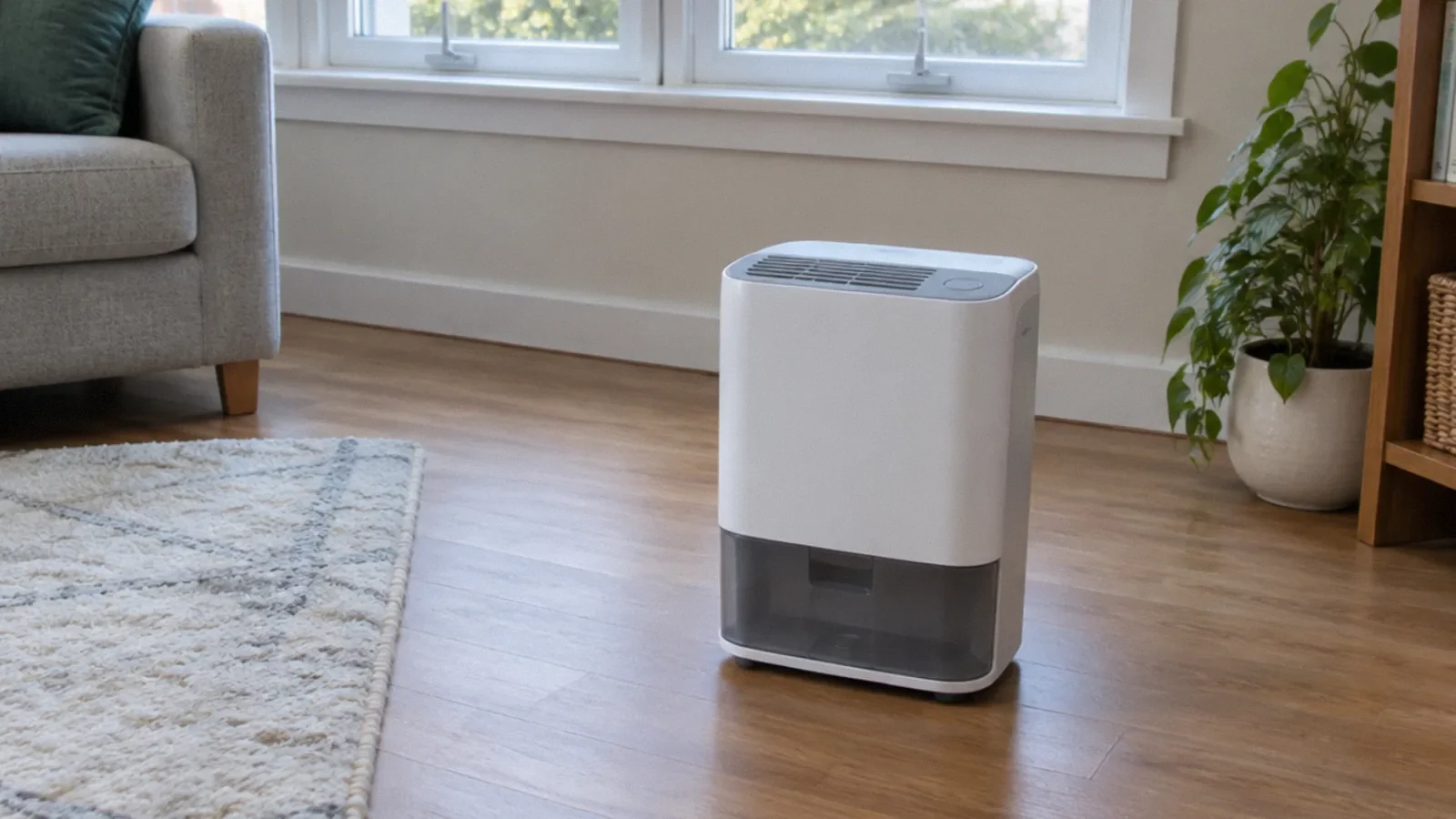
The air around equipment can respond quickly to vapor removal and heating. Moisture inside a board or behind a finish must travel to an exposed boundary before the equipment can remove it. That transport can be slower and uneven across the assembly.
A low reading near the dehumidifier therefore tells you something about that air, not every wet material in the room. Take environmental observations at representative locations and pair them with material measurements tied to a map.
Temperature changes relative humidity
Relative humidity is relative to how much water vapor air can hold at a given temperature. Warming air can lower its relative humidity even without removing the same proportion of water vapor. This is one reason a hot drying room can display a reassuring number while materials remain wet.
EPA’s moisture-control guidance discusses humidity, condensation, and moisture movement. When comparing conditions across rooms or between indoors and outdoors, temperature and a suitable measure of vapor content matter. Comparing relative-humidity percentages alone can lead to the wrong ventilation decision.
Material meters have their own scales
A material reading may be true moisture content for a supported material, a wood-equivalent value, or a relative indication. It cannot be substituted for room relative humidity simply because both screens use numbers. Record the instrument mode and material.
A drywall reading and a wood reading also may not be directly comparable. Ask what the result means and how the drying goal was selected. Good measurement practice connects the number to the physical question being asked.
Trapped layers explain common contradictions
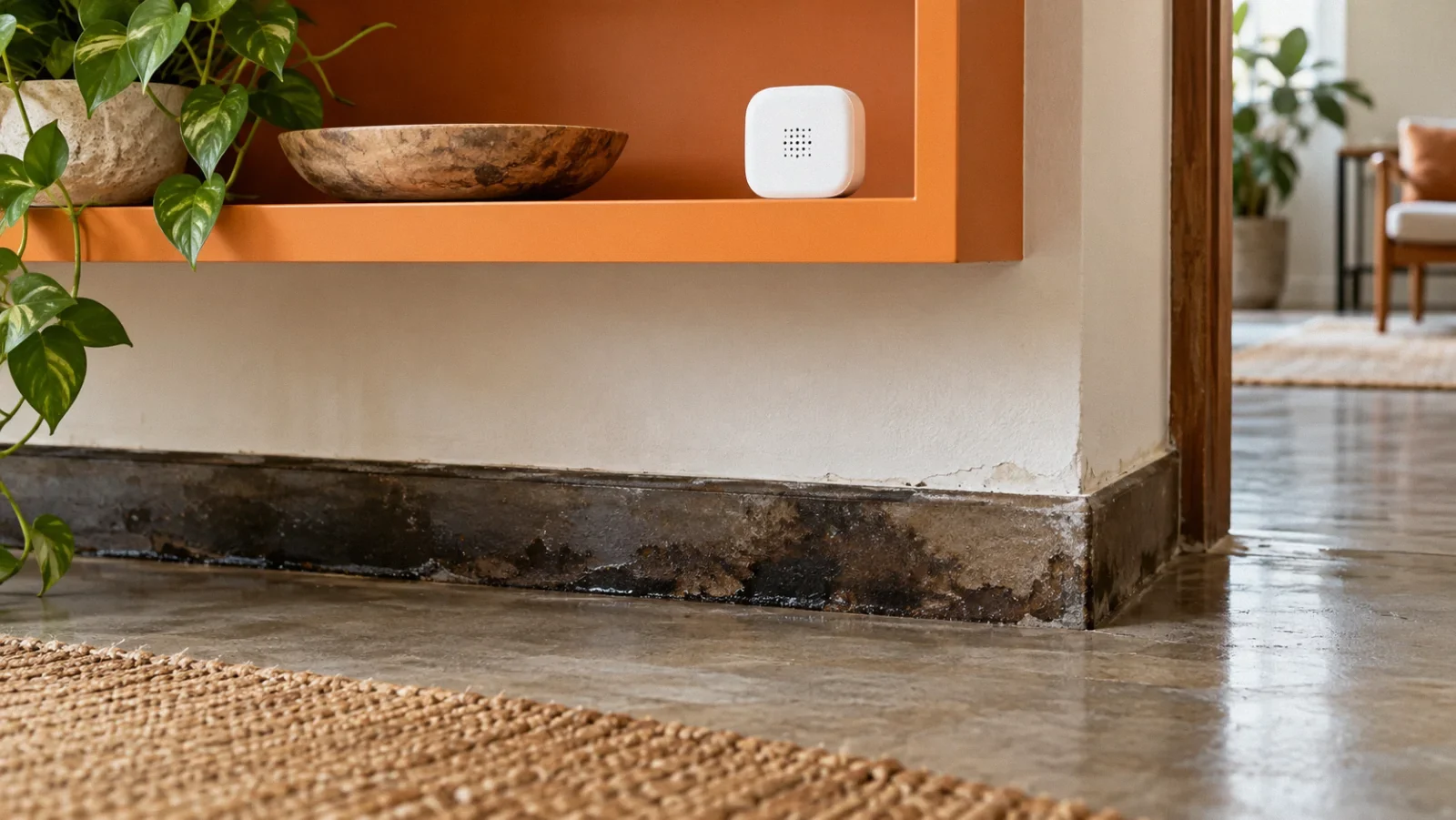
Consider vinyl over a wet subfloor. The room air may be dry while the finish restricts the subfloor’s drying path. Similarly, a wall face may dry while wet insulation remains behind it. These are not contradictions once the air and material are treated as separate parts of the system.
The response should address access and material condition, not simply drive the room humidity lower. Excessively aggressive environmental changes can create other material concerns and still fail to reach the hidden layer. Monitor the actual target.
A heating example without misleading percentages
Imagine a room warming while no water is drained and no meaningful air exchange occurs. The relative humidity can fall because the air temperature increased. That change does not mean the building lost an equivalent amount of water. If the room later cools, relative humidity can rise again without a new leak.
Now add a functioning dehumidifier that removes water while wet materials continue releasing vapor. The display may hold near a stable value even though real moisture removal is occurring. A flat air-humidity line is therefore not automatically evidence that drying has stopped. Material trends and equipment operation provide the missing context.
Finally, consider a unit that stops because its tank is full. The room may remain warm and temporarily show a relatively low humidity reading, even though active removal has ceased. Monitoring operation matters alongside reading the display.
Use the distinction to avoid the wrong intervention
When a wall remains wet despite favorable room air, ask whether the layer is accessible and whether moisture is still entering. More aggressive air drying may not address either limitation. When room air becomes wetter but material readings still improve, ask whether the release load or outdoor-air conditions changed before deciding that the material plan failed.
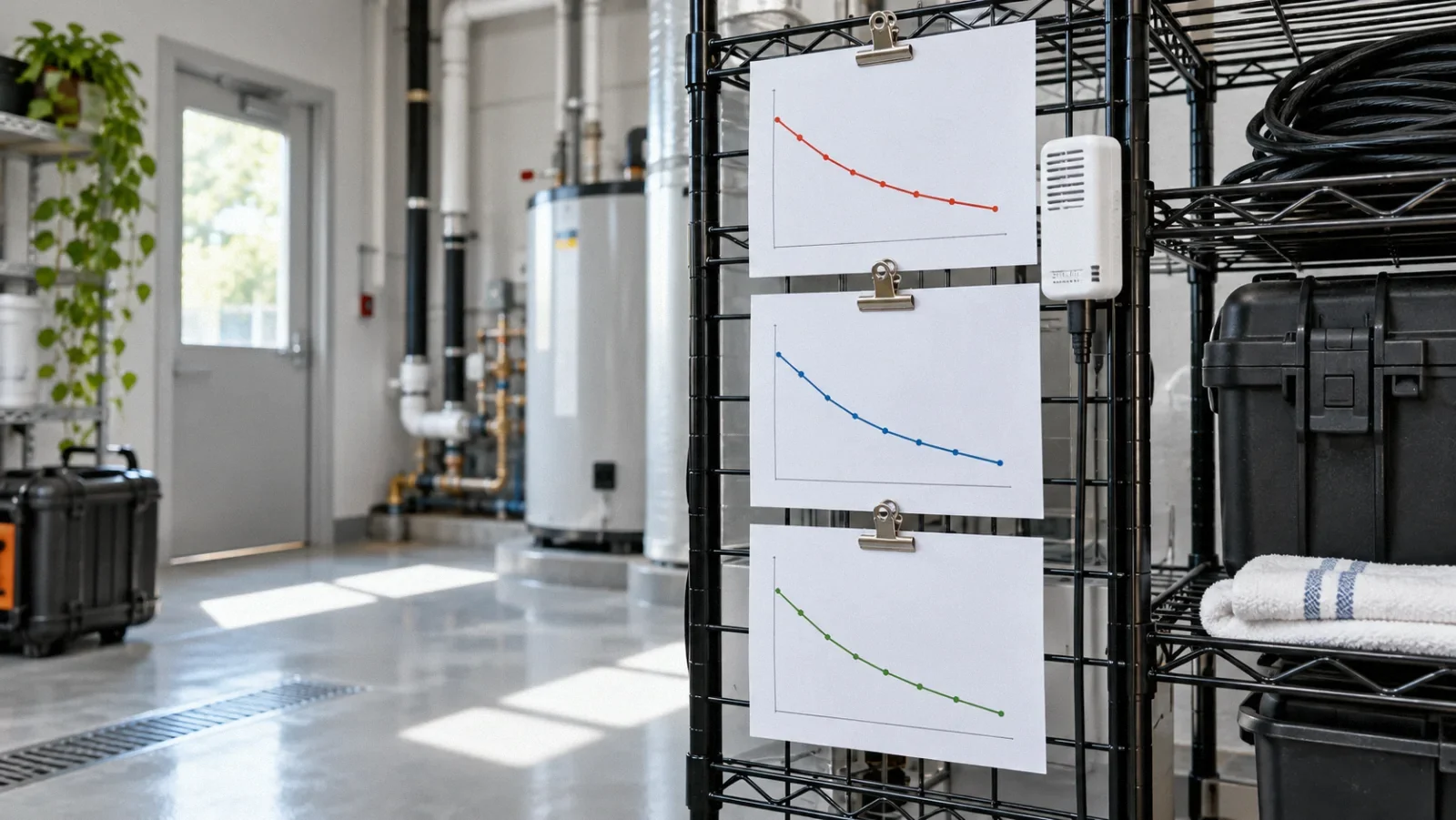
A useful log labels each measurement clearly: air temperature, air relative humidity, and a named material reading with its scale. Avoid charts that place all three on one unlabeled percentage axis. That format invites comparisons that have no physical meaning.
The final decision should match the task. Ventilation decisions consider incoming and indoor air conditions. Closing a wall considers retained-layer moisture and condition. Installing flooring considers the selected system’s substrate requirements. Each may use the same underlying investigation, but none should borrow another task’s measurement as a shortcut.
This distinction also helps explain why a comfortable room can still need work. Human comfort responds to air conditions, while a wet cavity can remain concealed behind a finished surface. The occupant’s experience is important for managing the work, but it does not replace material assessment.
Use a paired record for decisions
Log temperature and relative humidity as context, then record material readings at consistent locations. Note equipment state, openings, and source events. DOE’s description of refrigerant dehumidification explains vapor removal, while EPA’s building guidance explains why that process must be connected to material behavior.
At completion, ask for both the environmental picture and the retained-material findings. A healthy-looking air reading may be part of a good result, but it should not be the sole reason to reinstall flooring, replace insulation, or close a cavity.
Your next-step checklist
- Label air measurements separately from material measurements.
- Record temperature with relative humidity.
- Avoid sampling only at the dehumidifier discharge or another unrepresentative location.
- Check hidden layers when air and material progress differ.
- Use the relevant material or installation criterion for closure.
Related questions
Can low humidity prove there is no mold?
No. It describes current air conditions at a location, not prior exposure or contamination inside materials. Cleanup decisions require separate evidence.
Why did humidity fall after I turned up the heat?
Relative humidity can fall as air warms even without equivalent moisture removal. Consider vapor removal and material progress rather than the percentage alone.
Is my wall meter also a humidity meter?
Some instruments have multiple functions, but the modes measure different properties. Confirm the selected function and units before interpreting the display.
Sources & context
Public guidance supports the principles in this article. The practical questions and examples are editorial interpretation, not a site assessment or a coverage decision. State-specific rules apply only where identified.
- EPA: Moisture Control Guidance, Chapter 1 (moisture transport and whole-assembly control)official
- DOE: Consumer Dehumidifiersofficial
Community questions behind this topic
These discussions helped identify reader concerns. They are anecdotal, not technical or legal authority.