Opening windows can help when outdoor air supports drying, but it can also add moisture or disrupt a controlled system. Decide from weather, indoor and outdoor moisture conditions, contamination controls, and the equipment plan. Follow the monitored strategy rather than a universal open-or-closed rule.
Ventilation and dehumidification are different strategies
Ventilation exchanges indoor air with outdoor air. Dehumidification removes vapor from air within the controlled space. Both can support drying under suitable circumstances, but an uncontrolled open window can change the load on equipment and the conditions the crew is trying to maintain.
CDC advises opening windows and doors when weather permits during flooded-home drying. That general guidance should be read alongside the specific restoration setup, especially when containment, outdoor humidity, rain, or security constraints are present.
Compare more than the weather app’s percentage
A cool outdoor day with high relative humidity and a warm indoor room with lower relative humidity cannot be compared by the percentages alone. Temperature affects relative humidity. A practitioner can compare appropriate vapor-content measures and the actual conditions entering the building.
EPA’s moisture guidance explains how humid air and cool surfaces can create condensation. Ventilation that brings moist air into a cool basement or crawlspace may worsen some conditions. The relevant question is what the incoming air will do in this particular space.
Account for contamination and pressure control
A window can be an intentional exhaust point in a cleanup plan, but randomly opening other windows may alter airflow. If negative-pressure containment is in place, coordinate changes with the contractor. Do not defeat barriers or duct arrangements to relieve heat without discussing the effect.
Where mold or contaminated water is present, the priority includes preventing spread to occupied areas. A window fan arrangement appropriate to one assessed space is not a universal recommendation for blowing through another contaminated room.
Make the choice observable
Ask the crew whether the current phase uses an open or controlled drying environment and why. Record window or door changes in the drying log. If someone opens the house overnight, the next readings should be interpreted with that information.
A useful trial, when the professional considers it appropriate, has a specific objective and observations: how room conditions and material progress respond. Do not continue a strategy only because the room feels fresher. Comfort, odor, air temperature, and moisture removal are related but not identical outcomes.
Compare two different outdoor-air situations
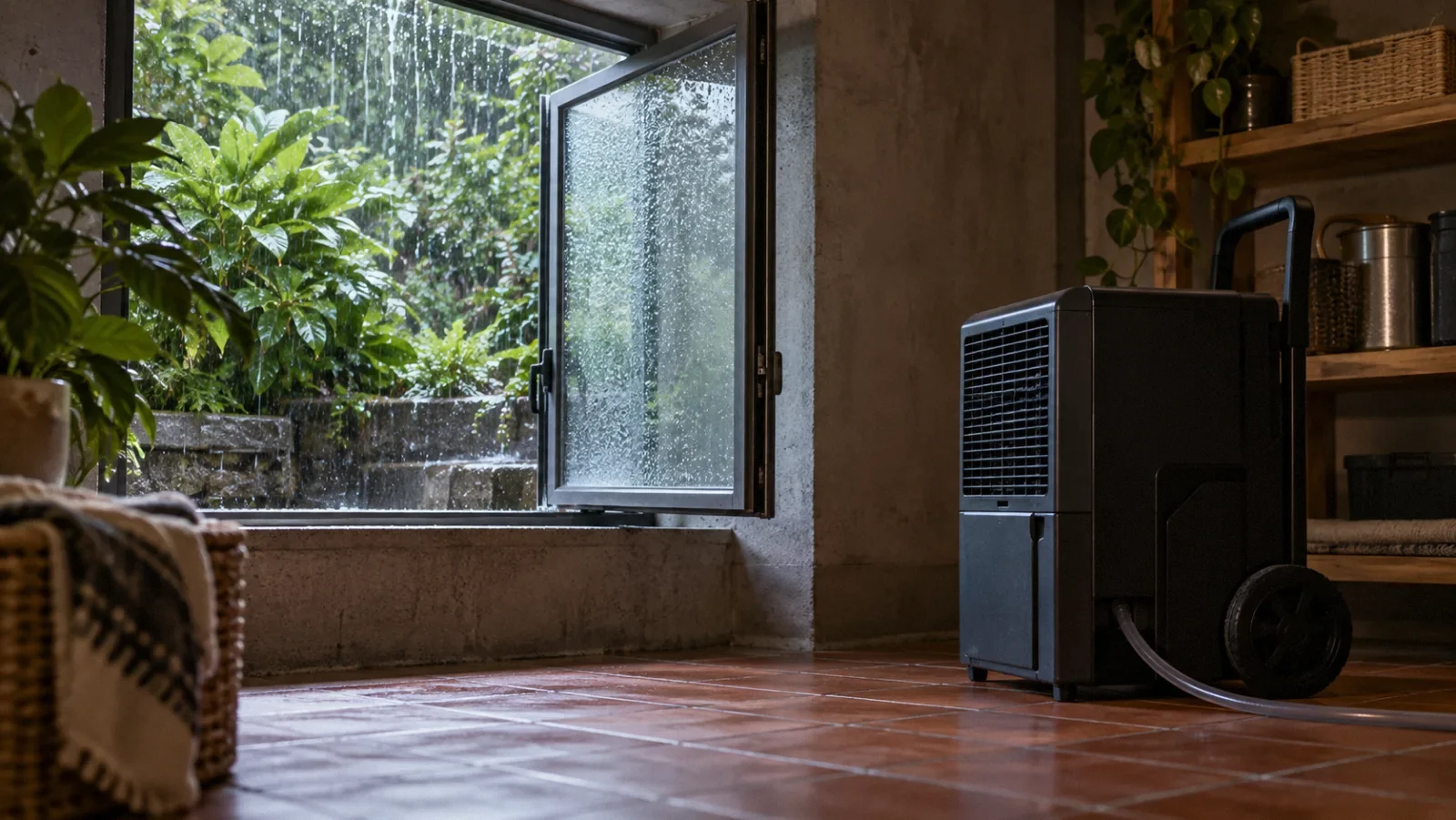
A dry outdoor period may offer useful ventilation for an assessed clean-water drying project. Another day may bring warm humid air into a cool basement, where contact with cooler surfaces can increase condensation risk. The same open-window habit can therefore have different effects at the same house.
The comparison should account for temperature and vapor conditions rather than labeling one day “humid” from a single percentage. A practitioner can use suitable measurements to decide whether exchange helps the intended drying target. Security, rain entry, outdoor smoke, and the building’s ventilation needs can also constrain the practical choice.
These considerations explain why general public guidance and a contractor’s instruction to close a particular window can both be reasonable. The public guidance describes a broad option; the contractor should explain how the site-specific arrangement uses or excludes it.
A useful way to discuss a change with the crew
If the room becomes uncomfortable, report the actual concern: heat, odor, noise, or poor access. Ask which change can address it without undermining drying or contamination control. Opening an unrelated window may not be the most effective answer and may alter the pressure setup.
When a change is approved, record when it began and which opening changed. Compare subsequent material and environmental readings with that context. If the crew later asks why performance changed, the log can distinguish a weather shift from a source or equipment problem.
Do not treat a brief improvement in smell as proof that the wet assembly is resolved. Air exchange can dilute odors without drying a concealed layer or cleaning contamination. Conversely, a closed drying enclosure can feel unpleasant while the material trend improves; that calls for an occupancy or equipment adjustment rather than hiding the problem.
A stop condition for the ventilation approach is new rain entry, adverse condensation, compromised containment, or another unsafe operating condition. The contractor should identify the relevant response. At the end of the work, ask how the house should return to normal operation so a temporary drying configuration does not become an accidental permanent ventilation strategy.
Weather and work stages can change the answer
The best arrangement during initial airing may differ from the later stage of drying a concealed assembly. Rain, changing humidity, and security needs may require adjustment. Equipment selection and drainage also affect what is practical.
Have the household’s instructions written clearly: which openings should remain in which position, who may change them, and whom to contact if heat or odor becomes a problem. A plan that occupants cannot reasonably follow should be adjusted openly rather than undermined silently.
Your next-step checklist
- Ask whether the current plan relies on outdoor-air exchange or controlled dehumidification.
- Consider temperature and vapor content rather than comparing humidity percentages alone.
- Coordinate all openings with containment and exhaust arrangements.
- Record changes so drying readings can be interpreted accurately.
- Reassess when weather or the stage of work changes.
Related questions
Should windows always be closed with a dehumidifier?
Often a controlled environment improves predictability, but there are situations where planned ventilation is useful. Follow the site-specific monitored plan.
Does fresh outdoor air always contain less moisture?
No. Outdoor air may be wetter in the terms that matter for drying, even if it feels cooler or fresher. Temperature and vapor content both matter.
Can I open a window because the room is too hot?
Report the heat and ask for a coordinated change. The crew can adjust conditions while accounting for drying performance and any containment requirements.
Sources & context
Public guidance supports the principles in this article. The practical questions and examples are editorial interpretation, not a site assessment or a coverage decision. State-specific rules apply only where identified.
- CDC: Reentering Your Flooded Homeofficial
- EPA: Moisture Control Guidance, Chapter 1 (moisture transport and whole-assembly control)official
Community questions behind this topic
These discussions helped identify reader concerns. They are anecdotal, not technical or legal authority.