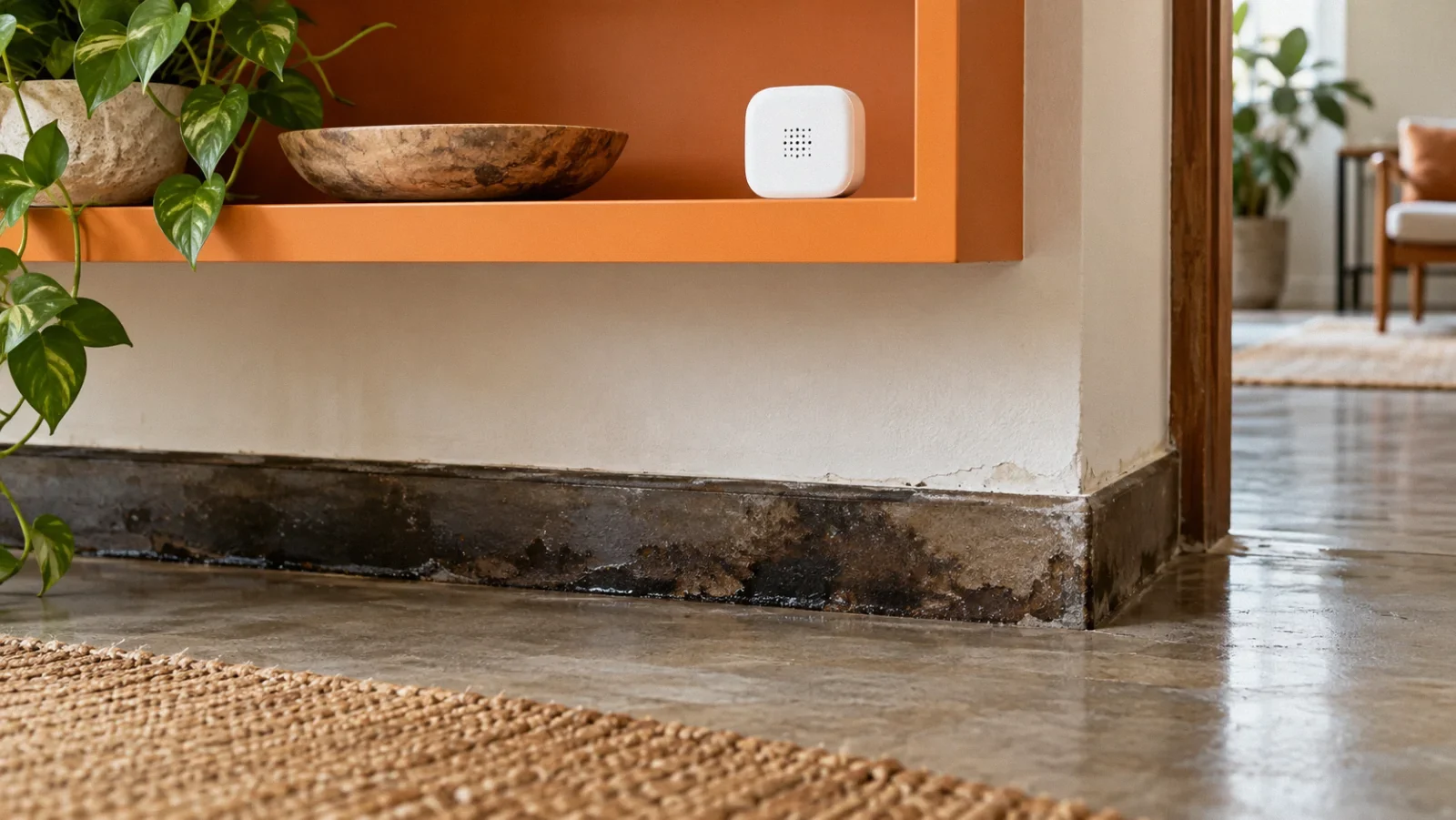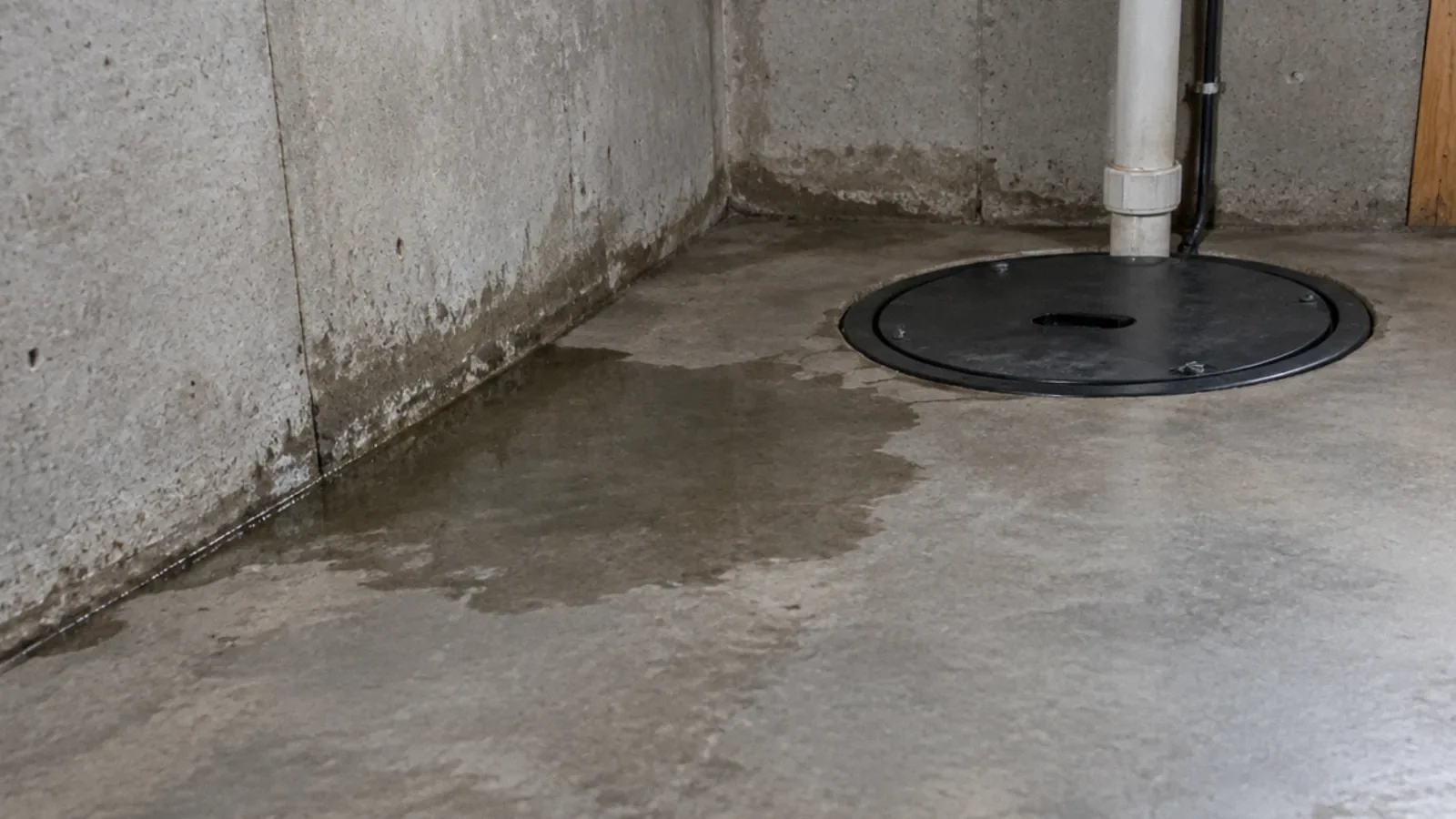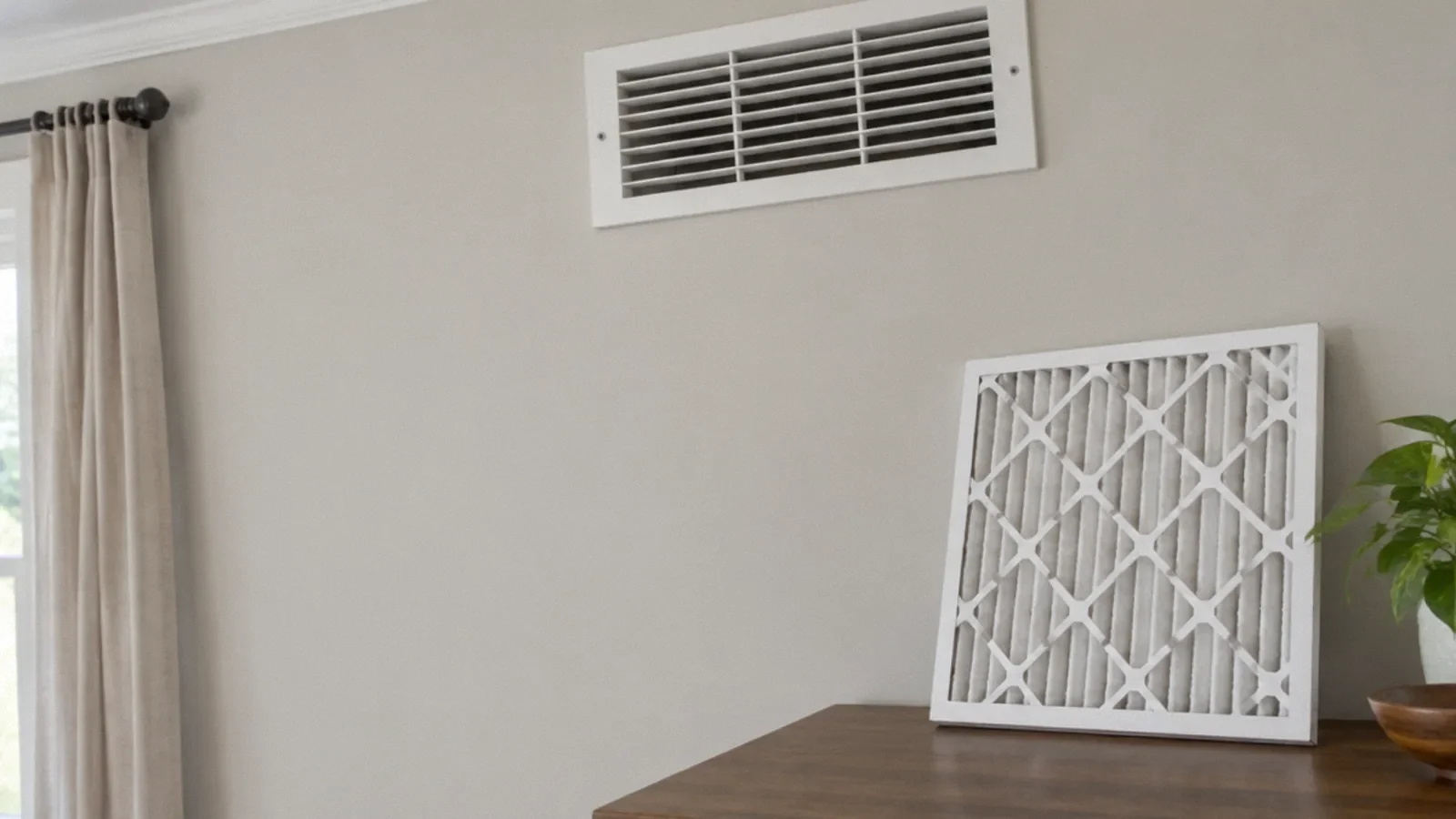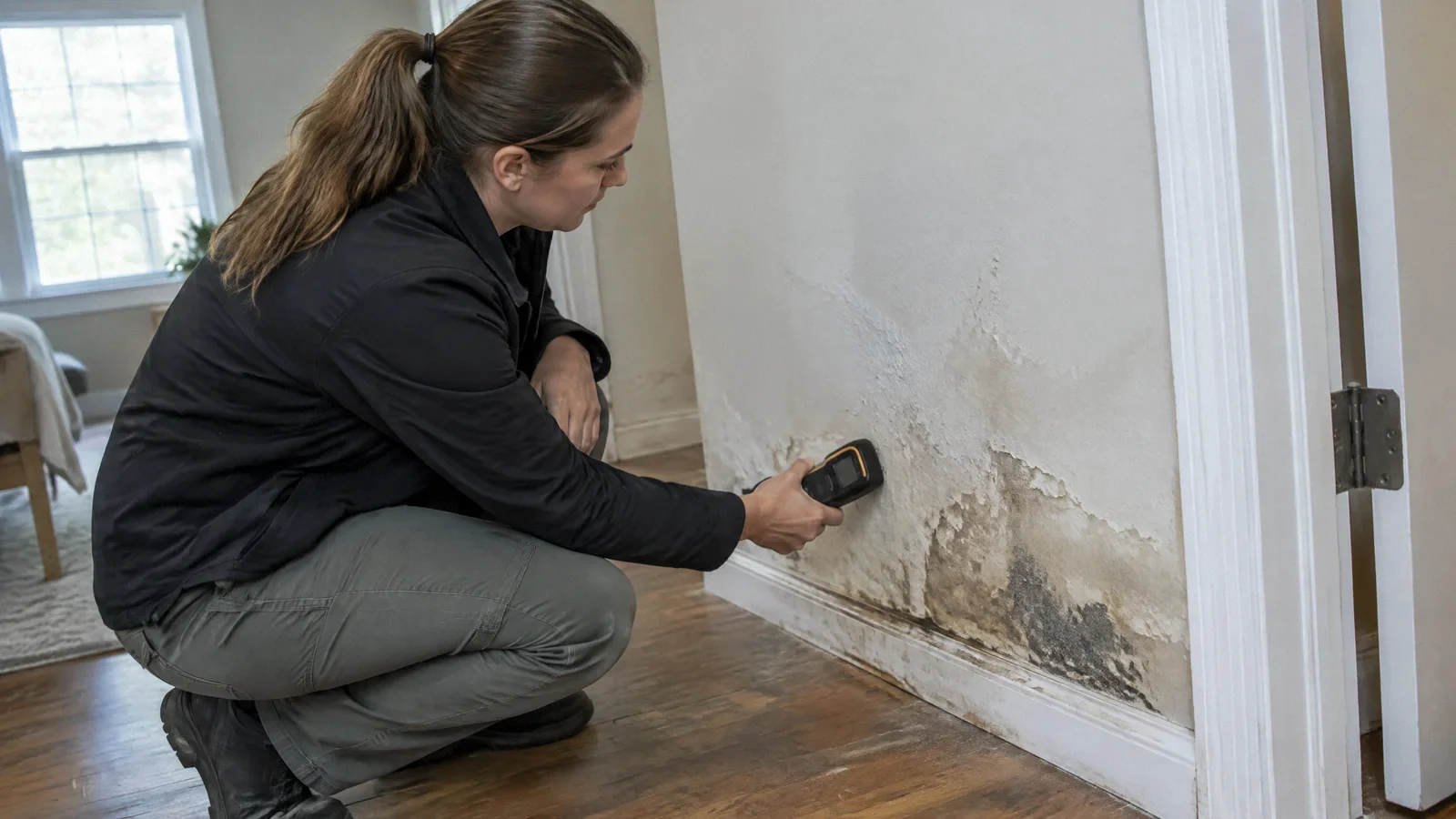
Pressure drying moves air into or out of an accessible wet assembly to support evaporation. A professional must first assess water, contamination, safe access and whether materials can be cleaned and dried in place.
What pressure drying means
Pressure drying is a professional approach that moves air through or across a wet building layer that is difficult to reach with ordinary room airflow. Equipment can direct air into an accessible cavity or draw air out of it. The purpose is to support evaporation and remove moisture-laden air; it does not make liquid water, contamination or damaged material disappear.
Whether it is suitable depends on the assembly, water source, amount of retained moisture and safe access. A wall or floor may look dry while concealed layers remain wet. An inspection and moisture assessment should precede a decision to dry in place or remove materials.
Remove liquid water first
Stop the source when safe, address electrical hazards and remove accessible standing water using appropriate equipment and discharge arrangements. EPA’s review of flood cleanup guidance explains that water can remain in porous materials, cavities and cracks after visible liquid is gone; that retained moisture must reach a surface and evaporate.
Pressure drying is not a substitute for extraction. A flooded basement may involve sewage, electrical hazards or structural pressure from outside water. Seek qualified help rather than entering unsafe water or pumping rapidly without an assessment of the actual conditions.
Positive pressure and negative pressure
In a positive-pressure arrangement, equipment supplies air into an accessible cavity and air leaves through an available path. In a negative-pressure arrangement, equipment draws air from the cavity, with replacement air entering from an intended path. A manufacturer’s structural drying manual describes equipment capable of either mode.
The two arrangements are not interchangeable guarantees of containment. Positive pressure can push particles out of a contaminated cavity. Negative pressure requires a properly designed airflow path, filtration and monitoring; a hose alone does not prove contaminants are controlled. The contractor should explain the specific setup and its limits.
What can be dried in place?
The answer depends on material, construction, contamination, duration of wetting and whether air can reach the affected layer. A cavity behind a cabinet or a layered floor may require access or removal to inspect and dry. Dense materials, coatings and trapped insulation can slow drying or hide damage.
EPA notes that wall cavities are difficult to dry and that wet underflooring needs appropriate drying or exposure to air. Some porous or damaged materials cannot be effectively cleaned and dried and may need removal. A proposal to preserve a finish should identify what has actually been inspected and how the hidden layers will be verified.
Contamination changes the plan
Sewage, floodwater, visible mold, rodent waste or other contaminants require an assessment before air is moved through the assembly. High airflow can disturb and spread particles. EPA’s flood cleanup review cautions that cleaning and strong airflow can resuspend contamination; suitable containment and professional controls may be needed.
Do not inject air into an unknown cavity simply to save demolition. Ask how the contractor determined the water source, identified affected materials and protected occupied spaces. If the contamination cannot be safely assessed or removed while enclosed, controlled opening and removal may be necessary.
Measure the material, not only the room
A hygrometer describes room air; it cannot establish that insulation, framing or flooring is dry. An assessor may use moisture meters and other methods appropriate to the material and assembly, compare affected and representative unaffected areas, and record readings over time. The instrument and material affect interpretation.
Ask where readings were taken, what remained inaccessible and what drying goal was used. EPA advises against closing flooded cavities or applying finishes before the inside is dry. A single dry surface reading or a fixed number of machine days is not proof that the whole assembly is ready to close.
Questions to ask before work
Ask which layers are wet, how they were assessed, whether the system supplies or extracts air, where that air goes and what filtration or containment is planned. Request the basis for preserving or removing materials, the treatment of contaminated water, the power arrangement and how progress will be recorded.
Clarify what conditions would change the scope, such as hidden mold, damaged insulation or readings that do not improve. A competent plan includes access and repair of openings as well as drying. It should not promise that pressure alone sterilizes an assembly or eliminates all future moisture risk.
Completion and follow-up
Before equipment is removed and finishes are restored, review moisture measurements, visible condition and unresolved access limitations. EPA’s flood guidance calls for materials that cannot be cleaned and dried to be removed and for the area to be dry and free of visible contamination and musty odor.
Repair the source and monitor the area under normal conditions. A new leak can wet a previously dried assembly. If odor, staining or elevated readings return, investigate the source and scope again; do not simply repeat the same setup without understanding why the problem recurred.
Your next-step checklist
- Stop the water source and control hazards.
- Remove accessible liquid water before drying.
- Assess contamination and affected layers.
- Ask how air movement and containment are controlled.
- Document material readings before restoring finishes.
Related questions
Does pressure drying remove standing water?
No. Accessible liquid water should first be removed using an appropriate safe method.
Are positive and negative pressure the same?
No. One supplies air into the cavity; the other draws it out. Each requires a planned airflow path and contamination controls.
Can pressure drying be used on sewage damage?
Contaminated water requires a professional assessment and cleanup plan; moving air through an unknown contaminated cavity can spread material.
Does a dry room prove a wall is dry?
No. Concealed materials require appropriate measurements and interpretation.
Sources & context
Public guidance supports the principles in this article. The practical questions and examples are editorial interpretation, not a site assessment or a coverage decision. State-specific rules apply only where identified.
- EPA: Flood cleanup and dryingfederal cleanup guidance
- EPA: Mold course, drying materialsfederal technical guidance
- Report to EPA: Flood-damaged house cleanuptechnical report to federal agency
- Legend Brands: DriForce owner’s manualmanufacturer primary documentation