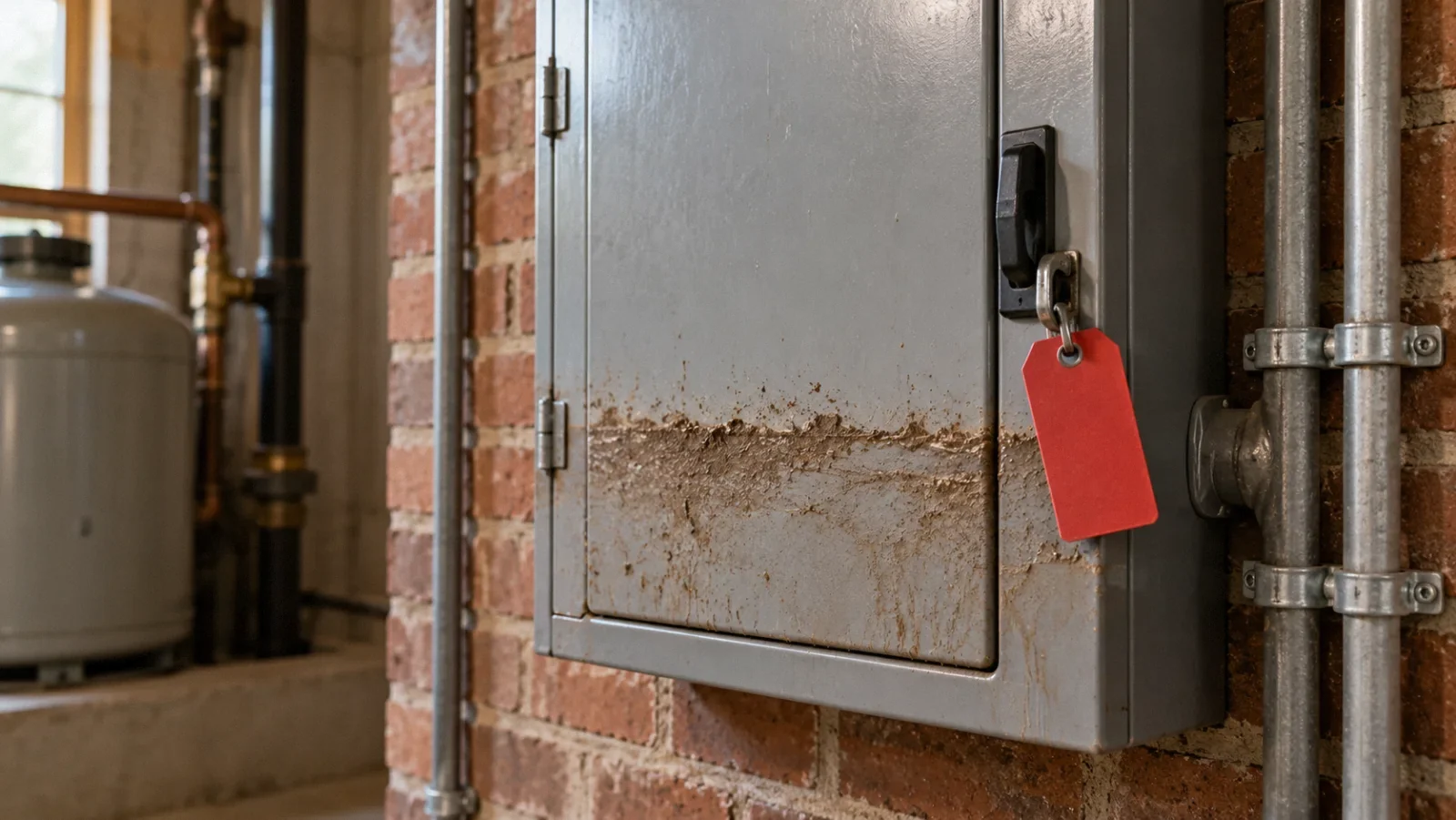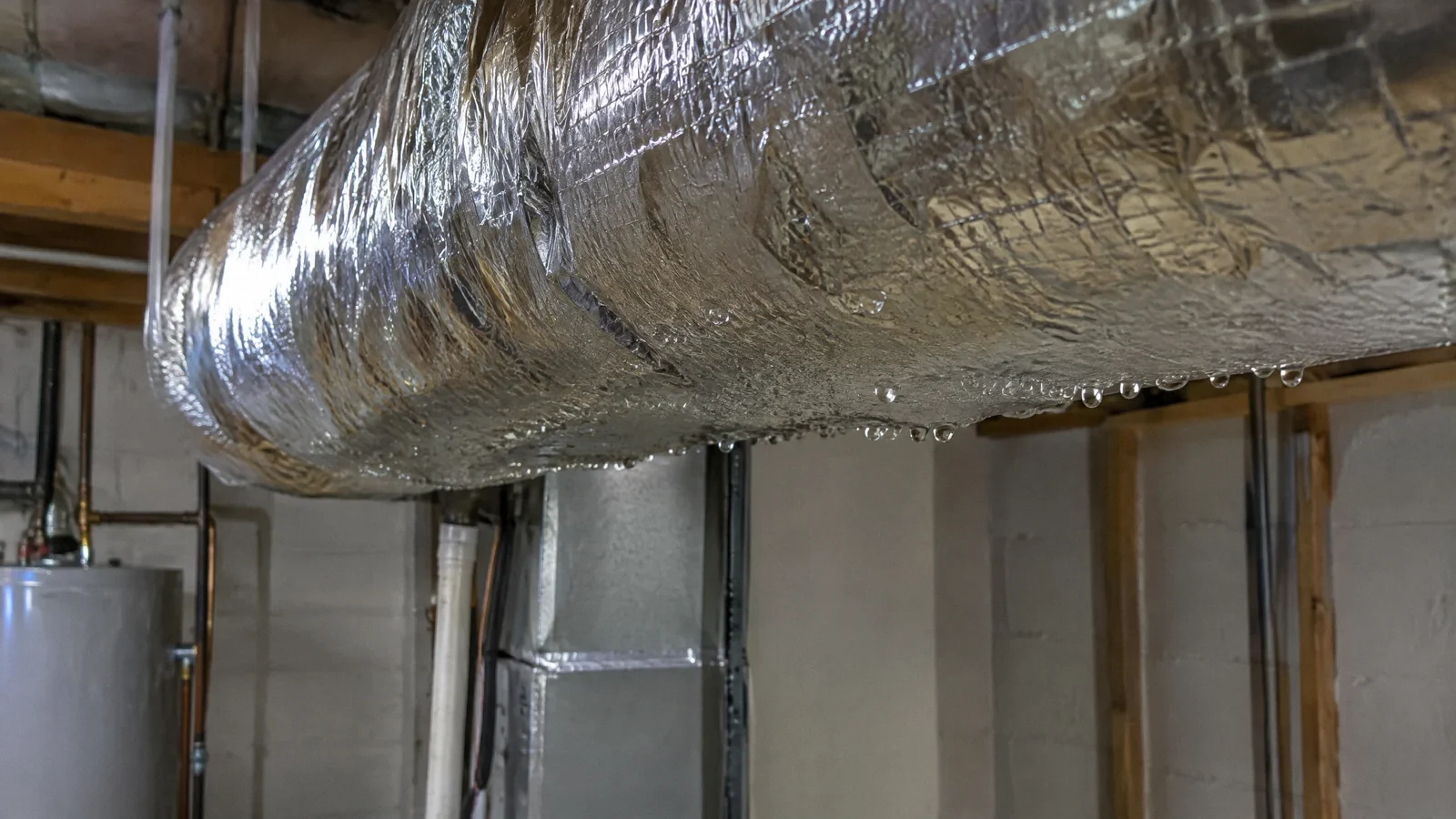
If HVAC equipment or ducts are known or suspected to be mold-contaminated, do not run the system until it is assessed. Identify the moisture source and affected components; cleaning accessible metal does not resolve wet or moldy insulation or a continuing condensate problem.
Determine whether the system is the source or pathway
An HVAC system can create a moisture problem through condensate drainage or other defects, or it can be affected by water entering from elsewhere. It may also distribute particles when contaminated components are disturbed or operated. These roles require different investigations. Start by identifying the observed condition rather than assuming every musty room needs whole-house duct cleaning.
EPA advises against running a system known or suspected to be contaminated with mold because it could spread contamination. Arrange an HVAC assessment and address urgent occupant temperature needs through an appropriate alternative plan. Do not open electrical compartments or reach into operating equipment to inspect a drain pan. The access and safety requirements belong in the professional scope.
Inspect the component, not just the register
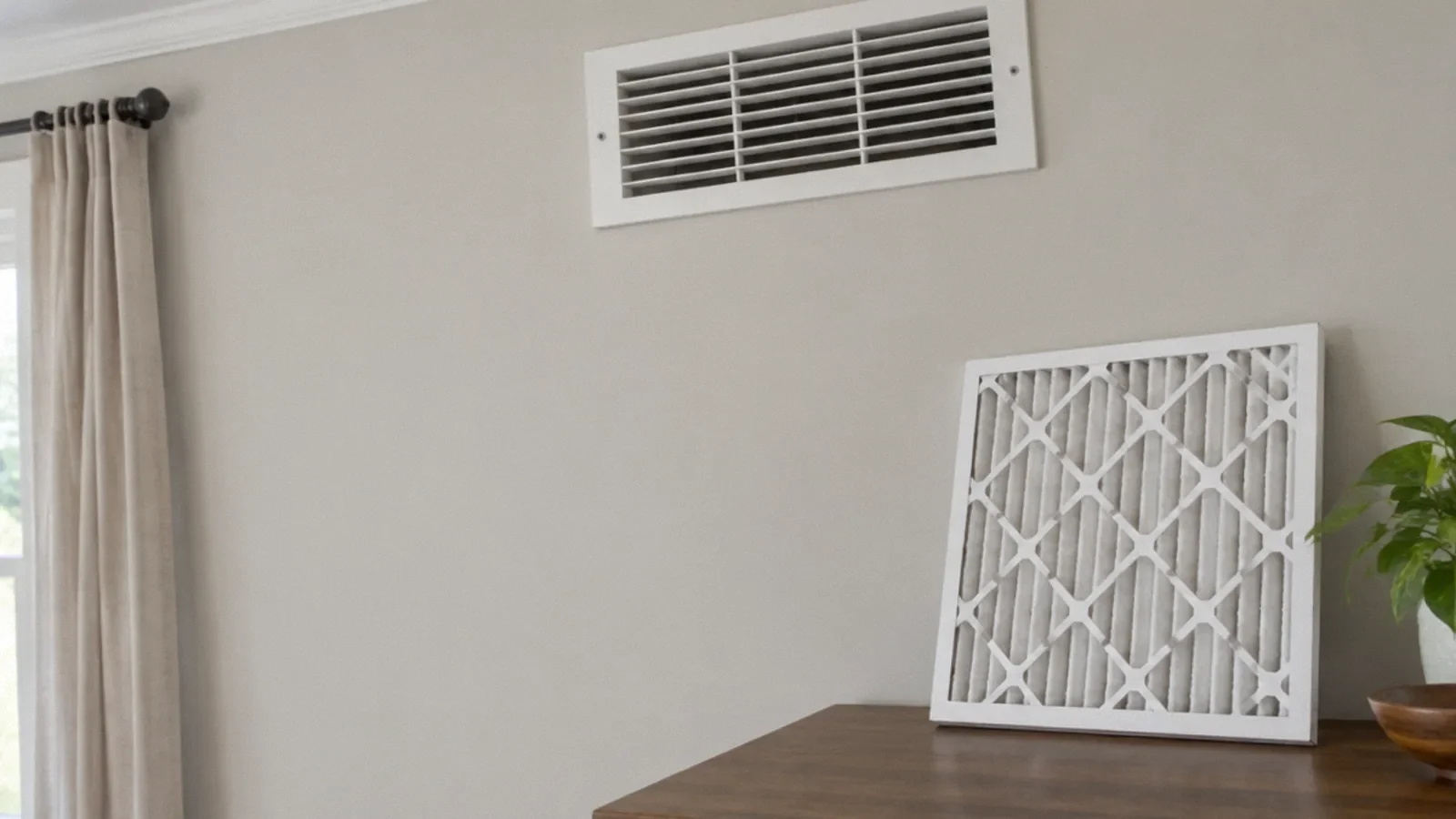
A dirty supply grille does not establish contamination throughout the duct system. Conversely, a clean grille does not rule out a wet internal liner, drain pan problem, or affected air-handler compartment. Ask the assessor to identify which components were actually examined and which remained inaccessible. Photographs should connect findings to specific equipment or duct locations.
The review may need to consider condensate drainage, insulation condition, filter fit, nearby building leaks, and the moisture conditions that allow recurrence. The correct scope depends on the system and event. A fixed duct-cleaning package that ignores the original water source may leave the cause untouched even if some accessible surfaces look better afterward.
Distinguish cleanable metal from porous insulation
EPA's duct guidance explains that wet or moldy insulation in HVAC components cannot necessarily be effectively cleaned and may need replacement. The investigator should identify the material, its condition, and the proposed disposition. Do not generalize from a cleanable metal surface to an internally lined duct or insulated cabinet.
Ask how the work avoids damaging retained insulation or spreading debris into occupied areas. If replacement is proposed, clarify whether the affected length or component has been mapped and whether adjacent areas were evaluated. If retention is proposed, ask what evidence supports it and how the condition will be verified. Neither choice should rest solely on the price of the available cleaning package.
Be skeptical of broad treatment claims
A chemical application, fragrance, or coating should not substitute for source correction and appropriate physical cleaning or replacement. Ask what product is proposed, whether its label permits the intended use, and what benefit the team expects. The provider should explain why the treatment is needed for this system rather than treating it as a standard add-on for every odor complaint.
Air sampling can also be overinterpreted. A room sample does not identify every internal HVAC condition, and NIOSH cautions against treating short samples as a health-risk verdict. If sampling is included, ask what question it answers and how it connects to the inspected components. A favorable result cannot erase visible wet insulation or a blocked condensate pathway.
Coordinate HVAC and building repairs
A roof leak above a duct, plumbing leak beside an air handler, or damp crawlspace can require work outside the HVAC contractor's scope. Assign responsibility for the external source. Otherwise, a cleaned component may become wet again while each contractor considers their own invoice complete.
Plan system isolation, work-area protection, and the order of component replacement and building reconstruction. Ask who confirms that the system is ready to operate and what observations or tests support that decision. If other rooms were potentially affected, define how that concern will be evaluated rather than automatically expanding the job to every room without evidence.
A whole-house odor may still have a local source
Imagine an air handler with a recurring condensate problem and an insulated compartment that became wet. Cleaning every supply grille would leave the important component unaddressed. The assessment should first explain the drainage defect and the condition of the insulation, then determine whether other parts of the system need attention based on evidence.
In a different house, a musty closet may sit beside a clean supply duct while a plumbing leak wets the wall behind it. The timing of the odor when the fan runs could reflect air movement through the room rather than growth throughout the HVAC system. Ask the investigator to compare these explanations before authorizing a broad duct scope. The system's role should be demonstrated rather than inferred solely from when someone notices a smell.
Review performance after restart
Once qualified personnel authorize operation, observe whether the original odor, drainage problem, or condensation returns under normal conditions. Ask for a maintenance schedule based on the actual equipment and repair. Keep records of replaced insulation, cleaned components, source correction, and any access limitations.
Persistent symptoms belong in a clinical discussion, while persistent odor or moisture belongs in a renewed building assessment. Do not assume either proves a specific species or guarantees an exposure level. A useful completion file explains what the system problem was, what was corrected, and what remains to monitor; it does not promise that routine duct cleaning cures every indoor-air concern.
Black material around an air vent
Dark material around a vent can be dust, soot or possible microbial growth; color alone cannot distinguish them. Investigate moisture and whether the material is on the grille, nearby surface, duct liner or equipment. Avoid disturbing a large suspect area to obtain a sample.
If an HVAC system is known or suspected to be contaminated with mold, EPA advises not operating it until it is assessed. A qualified HVAC or remediation professional can inspect accessible components, identify the moisture source and explain a specific scope.
Window, split and central systems
A window unit, wall-mounted mini-split and central air handler have different designs and access instructions. A spot on an exterior case or grille does not show what is inside. Surface condensation can reflect cold metal and humid room air; recurring moisture calls for checking drainage, insulation and room humidity rather than wiping alone.
A white residue may be dust or another deposit; dark material can also be dust or growth. Color cannot identify mold. If particles blow from vents, a technician can investigate accumulated debris or deteriorating lining as well as the fan and filter. Do not open powered equipment or disturb insulation.
Inspect the source, not only the stain
A technician can assess the condensate pan and drain, cooling coil, blower, cabinet and insulation, including locations inaccessible to an occupant. Ask the HVAC contractor to investigate equipment and drainage; a building repair professional may need to assess a wet closet, roof, plumbing or neighboring wall. Correcting both pathways matters before closing a wet assembly.
For a small dry dust deposit on an accessible outer grille, turn the unit off and follow the manufacturer’s instructions for a dry wipe or suitable vacuum attachment. Avoid wetting electrical parts or reaching inside. Recurring staining, moisture, odor or contamination inside equipment calls for professional assessment, not a surface-only cleaning.
Health concerns, testing and attic vents
Dampness and mold can cause symptoms such as nasal stuffiness, wheezing or eye irritation in some people, while others have no symptoms. Symptoms alone do not prove an HVAC source or identify a species. Seek medical advice for health concerns and describe the exposure; severe breathing difficulty warrants urgent care.
CDC does not recommend routine home mold testing, and a short-term air sample cannot establish an individual health risk. A qualified investigator may recommend a targeted assessment when its purpose and limits are clear. Photographs may show an apparent problem but do not distinguish mold from dust or identify species.
A roof ridge vent ventilates an attic rather than serving as a room supply register. If suspected growth appears near it, ask a qualified professional to assess roof leaks, attic ventilation and condensation without entering an unsafe attic or blocking the vent.
Your next-step checklist
- Stop operating a system known or suspected to be mold-contaminated pending assessment.
- Identify whether HVAC is the moisture source, an affected component, or a distribution pathway.
- Map inspected metal surfaces, insulation, drainage components, and inaccessible sections.
- Require a reason for every cleaning, replacement, or chemical-treatment proposal.
- Coordinate external source repairs and retain the authorized restart record.
Related questions
Does dust on a vent prove mold throughout the ducts?
No. The material and system need assessment. A register photograph cannot establish the condition of every internal component.
Can wet duct insulation simply be disinfected?
Not necessarily. EPA notes that wet or moldy insulation may require replacement because effective cleaning is difficult. Evaluate the specific component.
Will duct cleaning fix a leaking condensate line?
No. Cleaning and source correction are separate tasks. The drainage defect needs an appropriate repair and follow-up.
How can I tell dust from mold on an air vent?
Appearance alone is not reliable. Ask an experienced professional to inspect the accessible components, the moisture source and any limitations; EPA notes that expert examination may be needed for identification.
Can suspected mold in air conditioning be harmful?
Exposure affects people differently and a mark cannot establish the organism or dose. EPA advises against operating a system known or suspected to be mold-contaminated until it is assessed.
Can a heat pump or air handler develop mold-like growth?
Dampness or residue in HVAC components can support growth, but a visual spot does not identify an organism. Avoid disturbing suspected contamination, follow EPA guidance not to run a system known or suspected to be contaminated, and request qualified HVAC assessment.
What if water gets into heating or air ducts?
Avoid running a system known or suspected to be contaminated, and do not handle wet electrical components. Have a qualified HVAC professional assess the water source, duct materials and equipment; wet insulation may require replacement rather than surface cleaning.
Why are air vents turning black?
Dust, residue, moisture or other conditions can cause dark marks. Color does not prove mold. If the system is known or suspected to be contaminated, do not run it until qualified assessment; do not disturb wet or damaged components.
Sources & context
Public guidance supports the principles in this article. The practical questions and examples are editorial interpretation, not a site assessment or a coverage decision. State-specific rules apply only where identified.
- EPA: Should air ducts be cleaned?official
- EPA: Mold, moisture and your homeofficial
- CDC/NIOSH: Mold, testing and remediationofficial
- CDC: Mold and healthfederal health guidance
Community questions behind this topic
These discussions helped identify reader concerns. They are anecdotal, not technical or legal authority.