Turn off a system you suspect is mold contaminated. Clean only user-accessible parts as the manufacturer permits; suspected growth inside the unit or ductwork needs qualified inspection and correction of the moisture source.
Start with the location, not the color
Dark material on a filter or vent can be ordinary dust, and a photograph or color cannot identify mold. A musty odor, visible growth, repeated condensation or a known leak gives you reason to investigate. Note where the moisture occurs and whether the concern is confined to a removable filter, on an exterior grille, or inside the equipment. Take photographs without disturbing the material. Do not open a sealed electrical enclosure or remove a heavy window unit by yourself.
Switch off a suspected contaminated system
EPA advises against running an HVAC system when it is known or suspected to contain mold because operation may distribute material through the building. Turn it off at the normal controls. For a portable or window unit, follow its manual for safe disconnection before touching a removable filter. Do not handle a plug, switch, or equipment standing in water. If water has reached electrical parts, keep clear and arrange professional electrical evaluation. Avoid spraying a running unit.
Determine whether the filter is user-serviceable
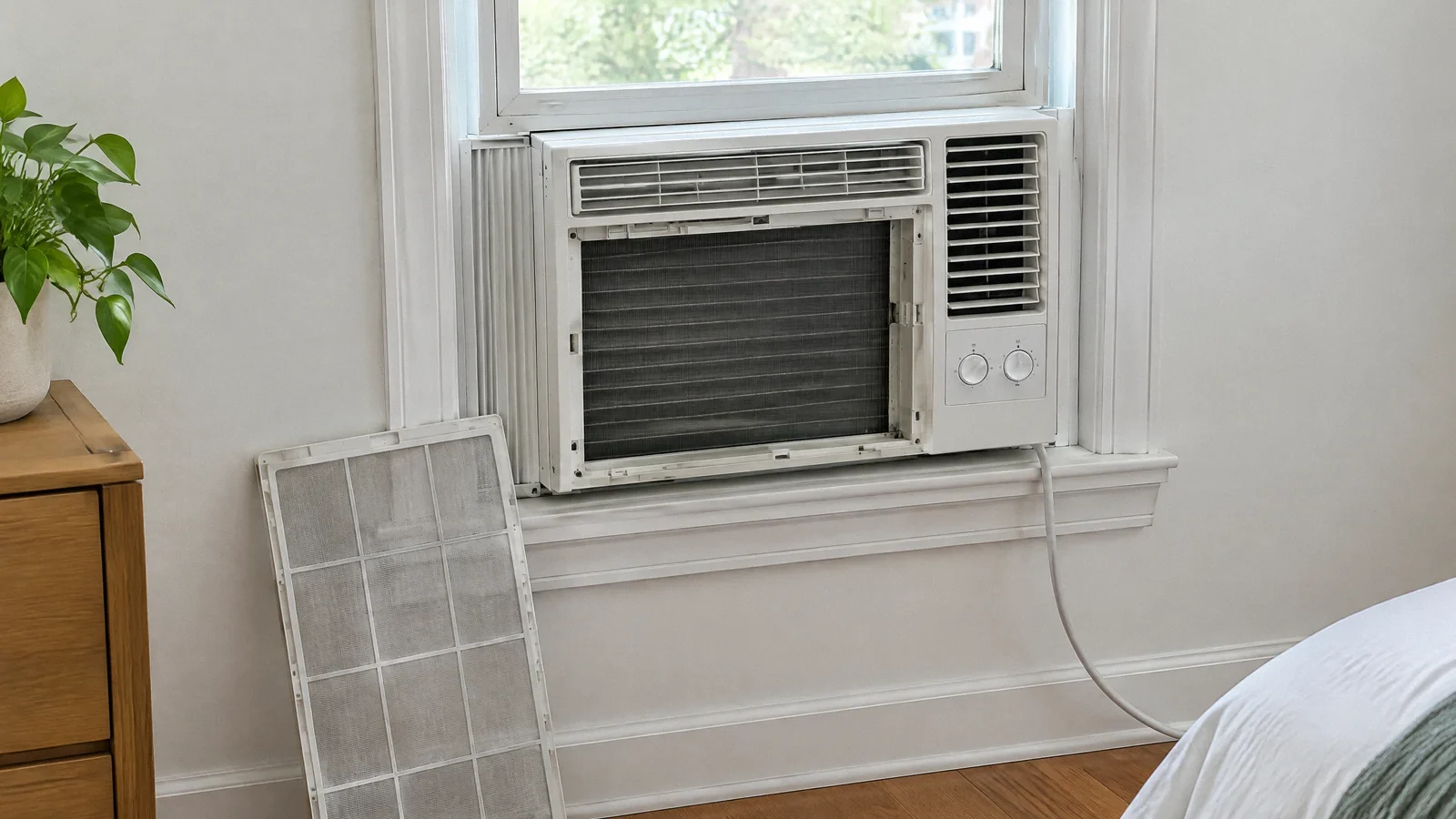
Check the model number and the manual. Some filters are disposable; others may be rinsed according to the manufacturer. Remove only parts the manual identifies as accessible, and do not shake a dirty filter indoors. Place a disposable filter in a bag and seal it before carrying it through the home. For a washable filter, follow the specified washing method and let it dry completely before reinstalling. A filter that remains damaged, visibly contaminated, or cannot be cleaned according to instructions should be replaced with the specified part.
Cleaning a small accessible surface
If an exterior, nonporous grille has a small area of suspected growth and the manufacturer permits cleaning, remove the grille only as directed. Protect nearby surfaces, keep others out of the immediate work area, and wear gloves, eye protection and a well-fitting N95 respirator. Wipe the surface with detergent and water, then dry it fully. Avoid aggressive brushing and high-pressure sprays that scatter debris or drive moisture into the unit. Do not mix chemicals, and do not assume a fragrance or disinfectant spray removes the underlying material.
When a technician should take over
Suspected growth on coils, insulation, blower components, inside ductwork or in inaccessible cavities calls for a qualified HVAC and mold professional. The same applies to extensive water damage, recurrent growth, sewage contamination, or an area beyond a small isolated patch. EPA uses roughly 10 square feet as a general consideration for cleanup scope, not a guarantee that any smaller HVAC problem is safe for a homeowner. Ask the provider to show you the affected areas and explain how they will protect occupants, remove contamination and correct moisture.
Find and correct the moisture source
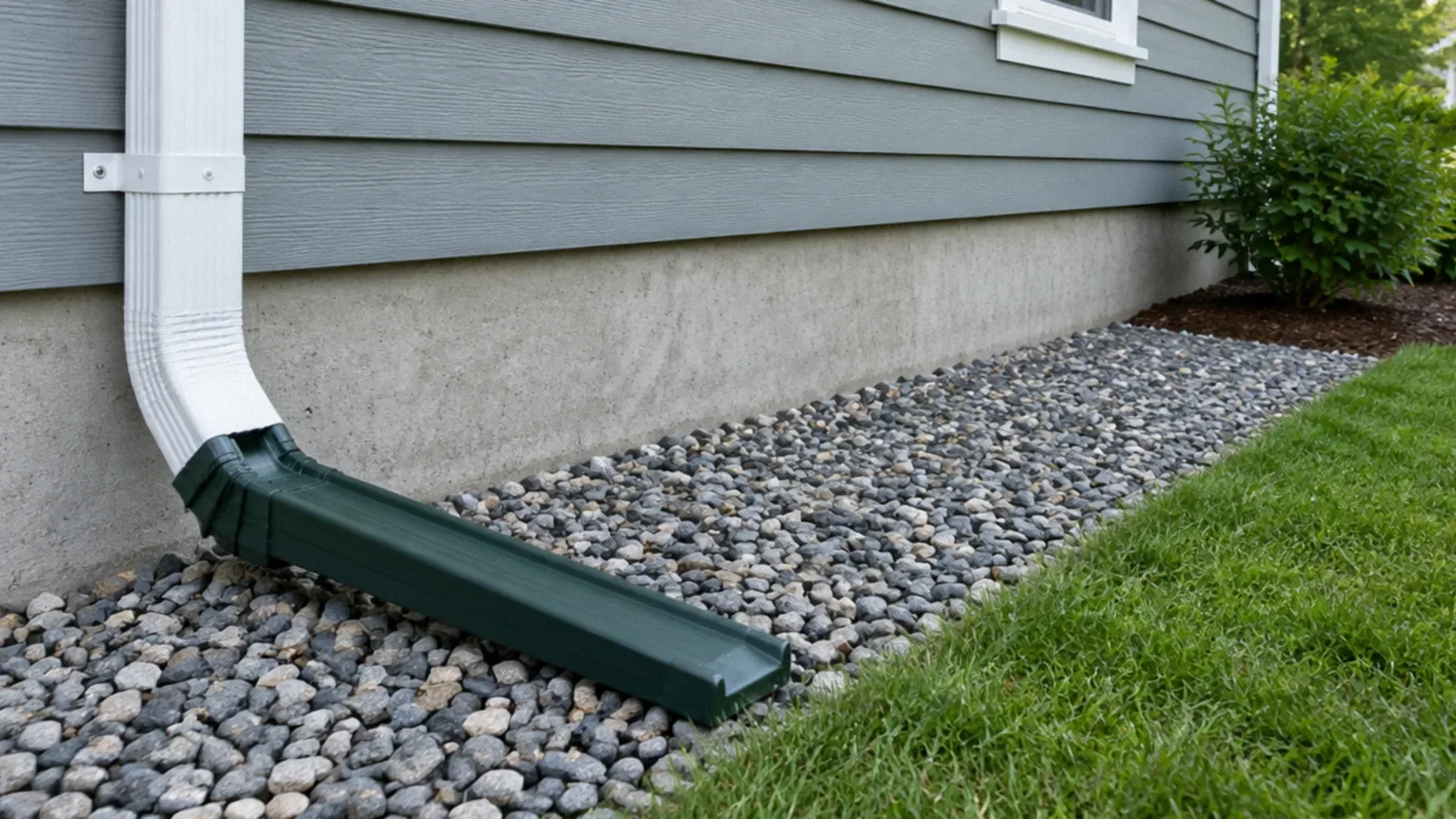
A filter change alone will not solve a wet drain pan, blocked condensate line, leaking building envelope, poorly maintained coil or recurring condensation. A technician can inspect drainage and equipment operation without your opening electrical compartments. Check whether rain enters around a window installation or whether nearby building materials remain damp. Fix the actual source, then dry affected materials. If porous insulation or other materials are contaminated, cleaning may not be sufficient; replacement may be needed.
Before running the system again
Reinstall a clean, fully dry filter of the correct size and any panels removed under the manual. For suspected internal contamination, wait until the professional has completed the work and explains what was cleaned or replaced and why the moisture problem is controlled. Watch for renewed dampness or odor during subsequent use. Persistent odor is a reason to investigate further, not proof of a particular species or a reason to cover the smell with scent.
Prevent another moisture problem
Use the manufacturer’s filter schedule as a starting point and inspect more often where conditions warrant. Keep the area around the unit and its air intake clear, and have condensate drainage checked as part of appropriate maintenance. Address leaks promptly. Indoor humidity control and ventilation can reduce conditions that encourage growth, but no filter or cleaning product makes a damp system immune to recurrence.
Your next-step checklist
- Identify the affected area and the moisture source.
- Keep people and pets away from cleanup.
- Follow the manufacturer’s instructions and seek qualified help for inaccessible or extensive contamination.
- Dry the area and check for recurrence.
Related questions
Can color identify the type of mold?
No. Appearance alone cannot reliably identify a mold species. Address visible contamination and the moisture source.
Will bleach alone solve the problem?
Removing contamination and correcting moisture are essential. EPA does not routinely recommend biocides such as bleach for mold cleanup.
Sources & context
Public guidance supports the principles in this article. The practical questions and examples are editorial interpretation, not a site assessment or a coverage decision. State-specific rules apply only where identified.
- Mold Cleanup in Your Homegovernment
- Mold Clean Up Guidelines and Recommendationsgovernment