Do not energize or test flood-exposed electrical equipment yourself. Keep away from water and damaged systems, have the utility or qualified professionals establish safe isolation, and require an equipment-specific evaluation before any authorized return to service.
A dry exterior is not an electrical clearance
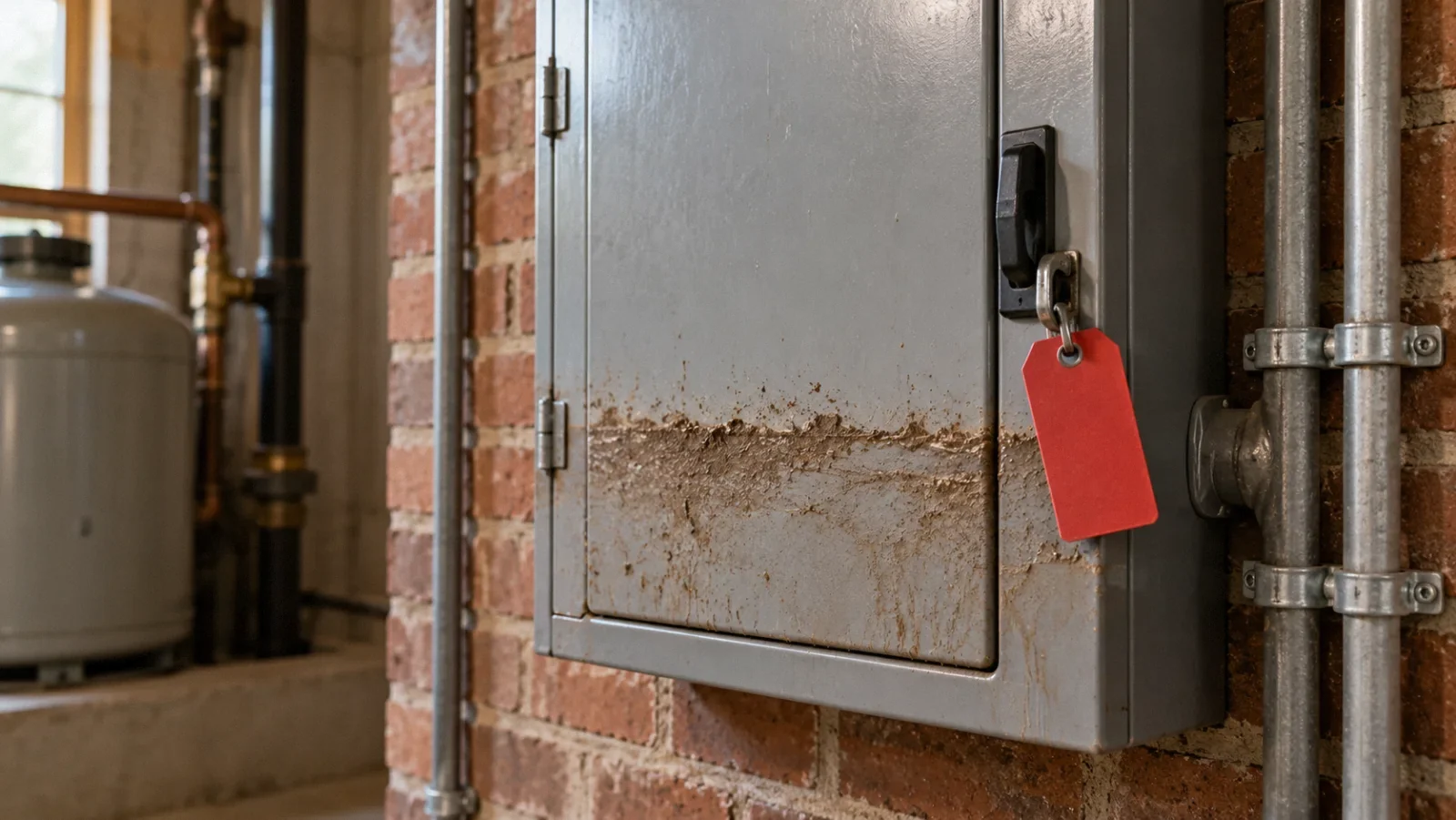
Floodwater can reach equipment through openings and leave contamination or corrosion that is not visible from outside. A device may appear to work while important protective functions are compromised. Drying a room, replacing a cover, or waiting several days therefore does not establish that its electrical equipment is suitable for service.
OSHA identifies electrical hazards as a major concern in flood response, and CDC's flood guidance emphasizes preparation and safe utility decisions. For a homeowner, the practical boundary is clear: do not enter water to reach a panel, open energized equipment, reset devices to see what happens, or attempt a household drying-and-restart procedure. Arrange qualified help and maintain separation from the hazard.
Establish who controls isolation and re-energization
The utility, electrical contractor, building authority, and property owner may each have different responsibilities. Ask the qualified team who confirms isolation, which parts of the property remain energized, and who may authorize reconnection. A dark room does not prove every conductor is de-energized, and alternative sources can complicate the system.
Disclose solar equipment, batteries, generators, shared building services, and any temporary power arrangements. Do not connect a generator to building wiring through an improvised connection. Temporary power for drying equipment needs its own safe plan, including equipment placement and protection. Restoration urgency is not a reason for workers or occupants to use an unverified electrical system.
Record exposure without approaching equipment
From a safe, accessible location, preserve photographs of water levels and affected rooms. Provide the electrician with the source of water, duration if known, and any evidence of splash, submersion, or contamination. Do not remove covers or touch damaged components to improve the documentation. Qualified personnel can obtain necessary equipment details under appropriate controls.
Ask the evaluation to include more than the obvious panel. Receptacles, switches, protective devices, wiring methods, junctions, appliances, motors, controls, and HVAC equipment may have different exposure and recovery considerations. A line drawn at the visible water mark may not capture every affected component. The scope should explain what was evaluated and which systems require another specialist.
Require equipment-specific decisions
Whether an item must be replaced or may be evaluated for reconditioning depends on its type, exposure, applicable requirements, and manufacturer guidance. Do not accept a universal statement that all equipment can be saved by drying or that every component above the floor is unaffected. Ask for a written list identifying each affected item, the proposed disposition, and the basis for that decision.
Where reconditioning is considered, it should follow an appropriate manufacturer-supported and qualified process, not an improvised homeowner method. The owner should know who assumes responsibility for the work and what testing or documentation supports return to service. A successful power-on demonstration alone is not a comprehensive verification of protective performance.
Coordinate repair with the building recovery
Electrical evaluation should occur before workers depend on the system for drying or reconstruction. Opening walls can expose wiring, and replacing finishes can conceal components that still need inspection. Include electrical hold points in the project schedule so one trade does not close the work prematurely.
Permit and inspection requirements are local. Ask the electrical contractor to identify them and provide the actual status at completion. Utility reconnection, inspection approval, and completion of all remaining repair items may occur at different times. Record those stages accurately rather than treating the return of lights as proof that the entire restoration is finished.
Ask which guidance edition informed the decision
NEMA's May 28, 2026 public announcement identifies its updated Evaluating Water-Damaged Electrical Equipment guidance as NEMA CS 70006-2026. The announcement describes equipment evaluation, manufacturer consultation, and decisions about return to service or replacement. It supports asking the electrical professional which current guidance and manufacturer instructions informed the disposition of your equipment; it does not turn a homeowner article into the underlying technical evaluation.
If a proposal refers to an older guide, ask whether the professional has checked for updated requirements or recommendations relevant to the equipment. Keep any manufacturer response with the job record. Where no supported recovery method is available, do not pressure the electrician to invent one solely to reduce replacement cost. The decision should follow the equipment-specific evidence and applicable requirements.
This article does not reproduce the paid guide's tables or assign replacement categories to individual devices. Those decisions belong in the qualified evaluation, with the actual equipment and exposure known.
Plan prevention during replacement
If equipment must be relocated or replaced, discuss whether elevation or another flood-resilience measure is appropriate for the site. CDC recommends involving a licensed electrician in raising electrical components as part of flood preparation. The design must account for local requirements, accessibility, equipment suitability, and the actual flood hazard; a generic elevation number from another project is not a complete design.
Keep the exposure record, equipment list, repair invoices, inspection documents, and any manufacturer correspondence. These records support future maintenance and disclosure. If an item was outside the evaluated scope, identify it. The strongest completion statement is a precise account of which systems were assessed and authorized for service, not a promise that a previously flooded house has no remaining electrical risk.
Your next-step checklist
- Keep occupants away from floodwater, damaged wiring, and electrical equipment.
- Have qualified parties establish isolation and the authority for reconnection.
- Disclose solar, batteries, generators, and shared electrical services.
- Require an equipment-by-equipment exposure and disposition record.
- Coordinate inspection access before walls or finishes conceal the work.
- Retain documentation of authorized return to service and unresolved items.
Related questions
Can I reset a breaker after the room dries?
Do not use a reset as a test of flood-exposed equipment. Have the system evaluated and re-energized through the qualified process.
If an appliance runs, does that mean it survived safely?
No. Operation alone does not establish the condition of insulation, controls, or protective functions after exposure.
Can the restoration crew decide electrical equipment is safe?
Only appropriately qualified personnel should perform the electrical evaluation within their competence and applicable requirements. Drying work alone does not establish that qualification.
Sources & context
Public guidance supports the principles in this article. The practical questions and examples are editorial interpretation, not a site assessment or a coverage decision. State-specific rules apply only where identified.
- OSHA: Flood preparedness and responseofficial
- CDC: Preparing for floodsofficial
- NEMA: Updated damaged-equipment evaluation guidance, May 2026standard
Community questions behind this topic
These discussions helped identify reader concerns. They are anecdotal, not technical or legal authority.