Drying is complete when the affected retained materials meet an explained, appropriate goal and unresolved sources or trapped layers have been addressed. Elapsed days, surface touch, room humidity, or a silent dehumidifier alone cannot establish that endpoint.
Define “dry” for the decision being made
There is no single universal number that establishes readiness for every material and repair. Wood, drywall, masonry, and concrete require different interpretation. Even within one material, the instrument, environmental conditions, and next installation can matter.
Ask for the drying goal at the start and the basis for it. Appropriate comparison areas can be useful, while a flooring system may require specific substrate tests and limits. Do not let a goal appear only after the crew wants to remove equipment.
How long can the full restoration take?
The complete project can include source repair, extraction, cleaning, material drying, approvals and reconstruction. Drying time is only one part of that schedule. The duration depends on the water source, materials, hidden conditions, access, permits and repair scope; no single number reliably predicts every project.
Ask for an estimated schedule with separate milestones and the evidence needed for each handoff. An estimate should explain what happens if concealed damage, contamination or a continuing leak changes the plan. A 24–48-hour prompt-response guideline is not a guarantee that the building or repairs will be complete in that period.
Follow the wettest retained layers
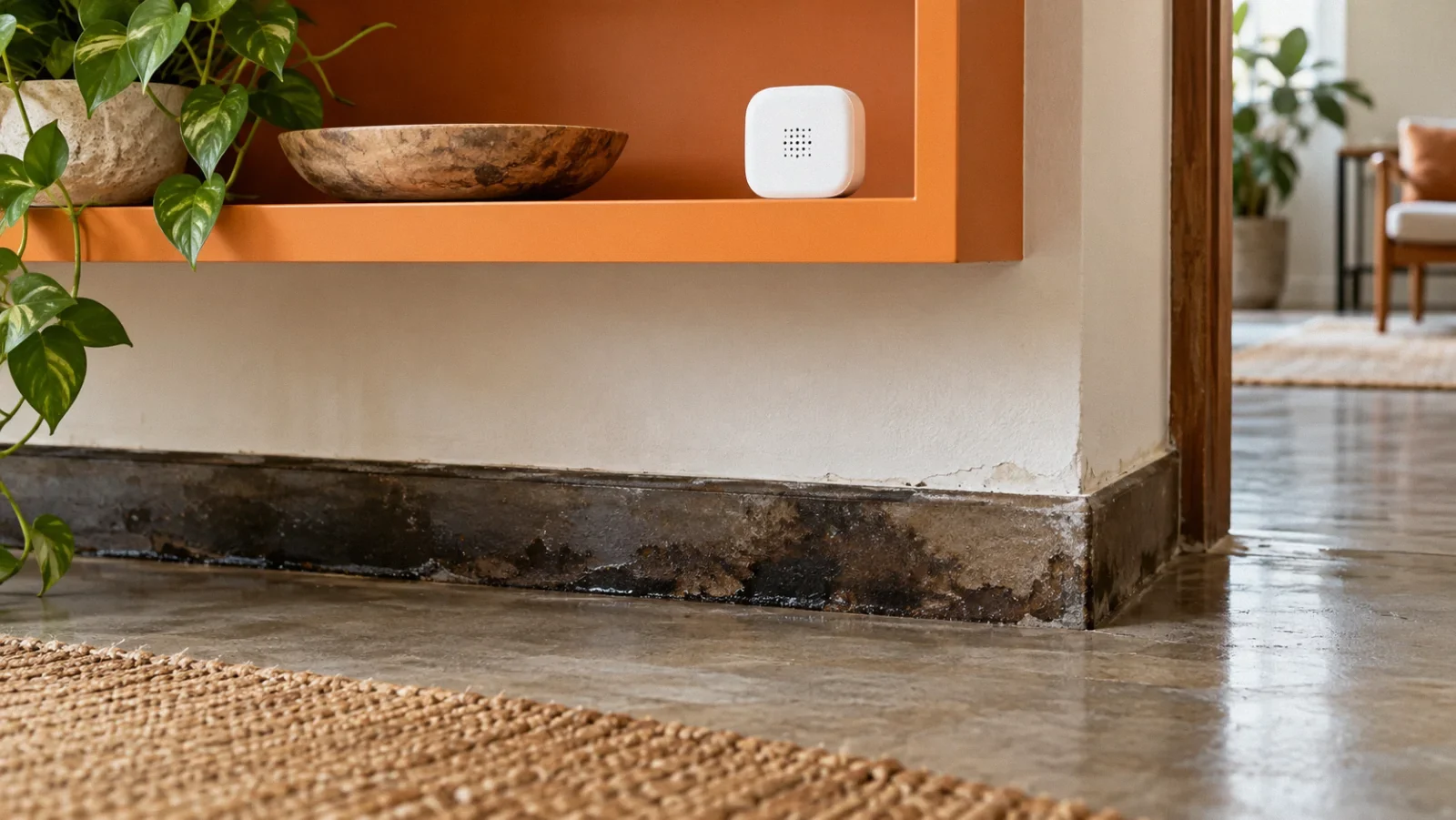
The easiest exposed surface is not necessarily the controlling location. A bottom plate, insulated cavity, cabinet base, or subfloor under a low-permeance finish may remain wet after room air improves. EPA’s guidance repeatedly distinguishes material-specific response and underlying flooring checks.
Use the moisture map to review all known affected retained areas. If one layer was inaccessible, ask how its condition was resolved. “No longer visible” is not equivalent to “verified dry,” especially after new finishes have already been installed.
Interpret the trend, not just the final screenshot
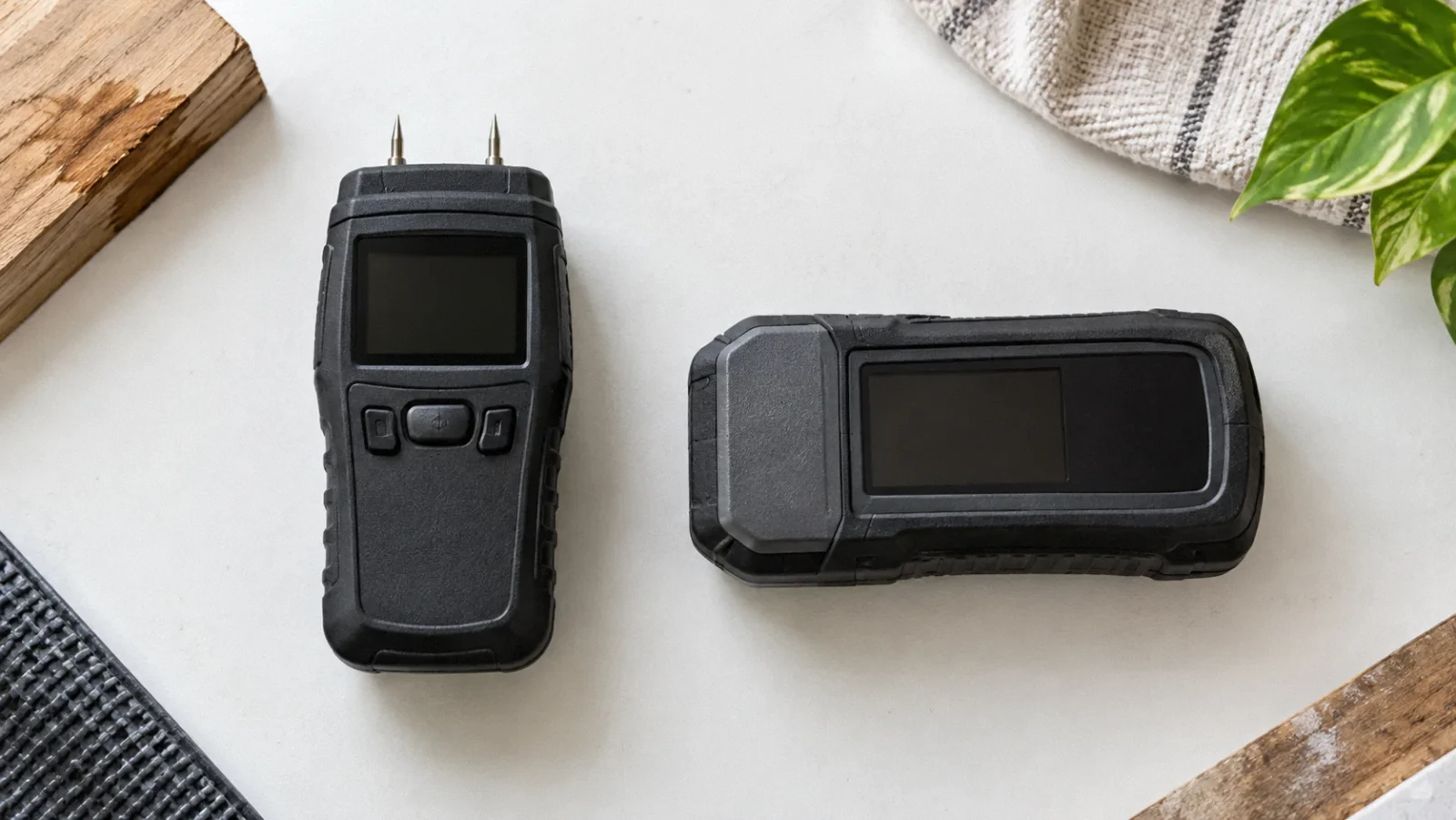
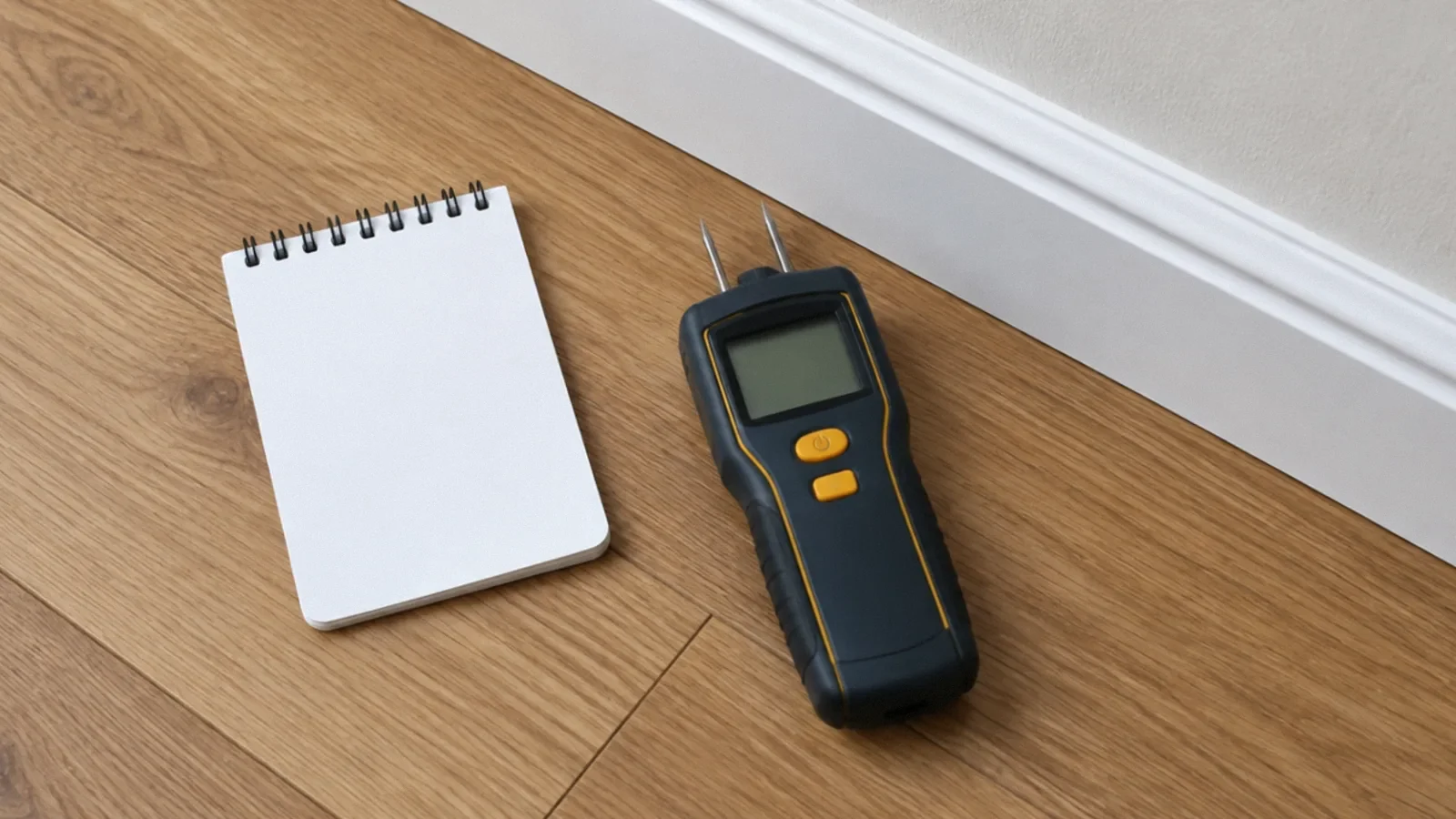
Repeated measurements at consistent locations show whether the plan is progressing. A single low reading can be misleading if the point, meter scale, or depth changed. The final record should include enough method information to make the conclusion understandable.
If readings plateau or rise, reassess the source, access, environment, and instrument interpretation. The appropriate response may be more time, a method change, selective opening, or repair of continuing entry. A plateau alone does not prove irreversible damage, but it does need an explanation.
Drying does not settle every repair issue
A dry material may still be swollen, delaminated, loose, contaminated, or otherwise unsuitable to retain. Cleaning completion and physical serviceability are separate findings. Conversely, a high reading does not automatically mean a material has lost structural capacity.
Before reconstruction, identify the responsible person for each acceptance decision. The restorer may document drying, while a flooring installer or structural professional determines another requirement. Clear handoffs prevent each trade from assuming the other has already accepted the substrate.
Read three drying patterns differently
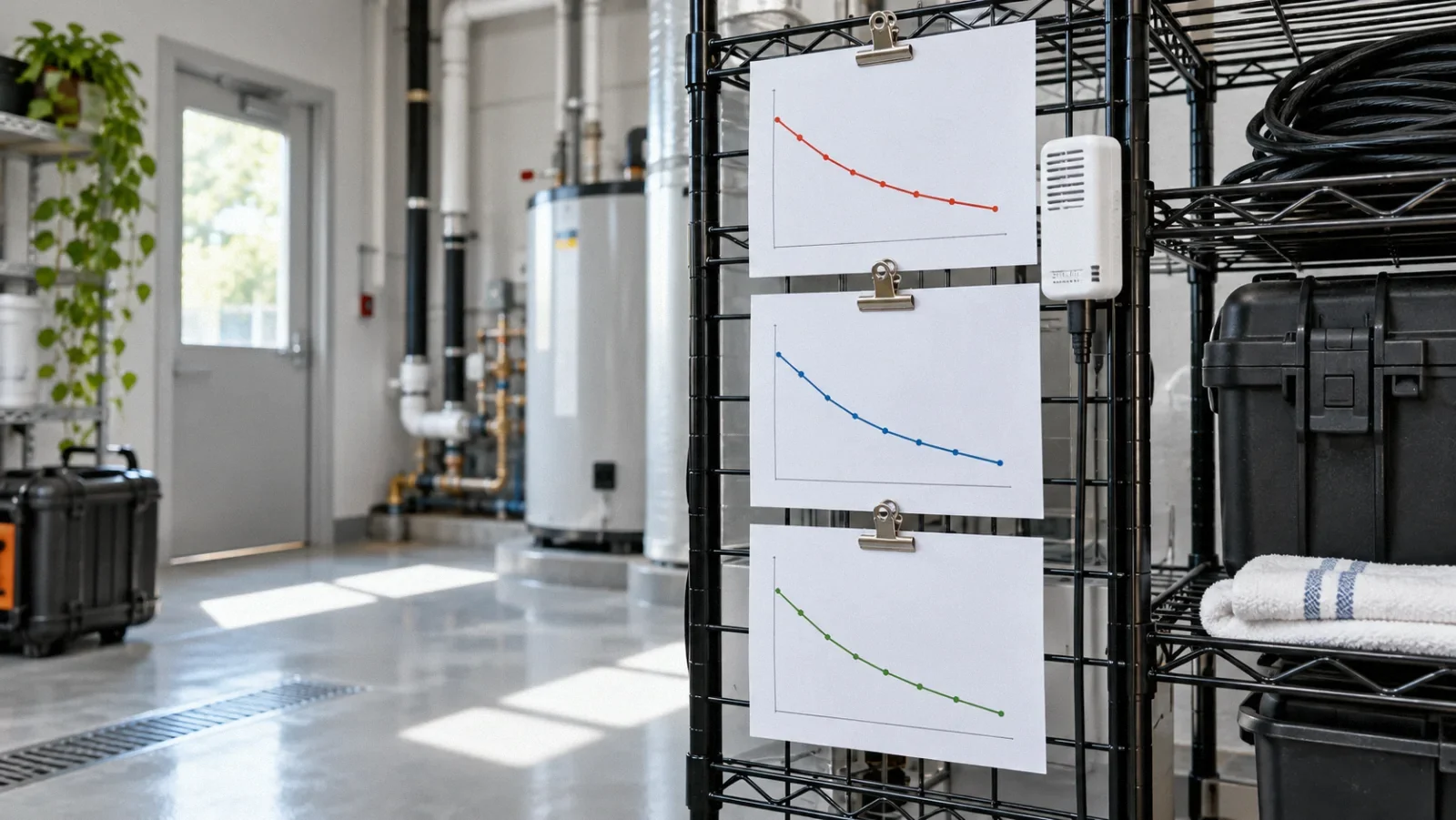
In the first pattern, repeated readings at the same exposed wood points move steadily toward an appropriate unaffected comparison, and the source remains controlled. This supports progress. The endpoint still requires checking the retained affected locations rather than stopping after one favorable sample.
In the second pattern, room humidity falls quickly but readings in the subfloor under a low-permeance finish barely change. The air has improved while the controlling material has not. Investigate access, layer construction, and the source before assuming a lower humidity setting will solve the problem. The final floor decision should include the substrate, not only the room.
In the third pattern, material readings improve and then rise after rain or fixture use. That suggests a need to check renewed entry, but instrument or location changes can also create an apparent reversal. Compare the same method and point, then investigate the relevant source trigger. A chart is useful because it directs the next question, not because it diagnoses the cause by itself.
An endpoint should survive an honest handoff
Suppose the restorer accepts exposed framing but the new flooring requires a separate substrate test. The report can correctly state that its structural drying scope is complete while flooring readiness remains pending. Combining those decisions into one “all done” statement would hide an important condition.
Likewise, if wet insulation was removed, the completion record should say it was removed. It should not imply that every original layer was dried in place. Where an inaccessible component remains, explain the evidence or repair decision used to resolve it.
Ask whether ordinary operating conditions need to be considered before a sensitive finish is installed. The relevant installer or specialist should define any stabilization or testing requirements for that system. There is no need to invent a universal waiting period after equipment removal.
Proceed with reconstruction when the actual prerequisites are met; pause when the source, retained material, or installation requirement remains unresolved. This approach prevents both premature closure and needless equipment time. It also gives the homeowner a specific reason for each remaining task instead of an indefinite instruction to keep waiting.
Close with a record of what was verified
Request the final material readings, locations, goal basis, source-repair information, photographs before closure, and any limitations. If the project includes an independent post-work assessment, keep its scope and findings with the record. Avoid treating a generalized certificate as evidence for uninspected layers.
After ordinary use resumes, watch for recurrence associated with rain, fixture operation, or seasonal conditions relevant to the original cause. Monitoring is not an admission that the repair failed; it is a way to check a source that may not have been tested under every condition during the dry-out.
How long does water take to dry?
A small exposed puddle may evaporate faster than moisture trapped in wood, drywall, carpet padding or a wall cavity. Temperature, airflow, humidity, the quantity of water and the material all affect the time. There is no reliable single drying time for every surface or building.
For a water-damage loss, the visible water disappearing is not proof that concealed materials are dry. Appropriate measurements, comparable dry material and the requirements of the planned repair help determine the endpoint. Respond promptly and address the source rather than waiting for a fixed number of days.
Wet ceilings and the dryout timeline
For water damage, “how long does it take to dry out” can mean a puddle evaporating or a building assembly reaching a documented drying goal. A damp wall’s material, thickness, coatings and hidden cavity all influence the time; no fixed number of days proves it dry. The time for damage to appear is also a different question from the duration of drying and reconstruction. For practical steps, see the separate guide to drying out water damage.
Keep clear of a sagging wet ceiling and water near electrical equipment. Arrange safe source repair and professional assessment of concealed layers before closure. EPA guidance recommends replacing water-damaged ceiling tiles in its clean-water response table; nonporous ceiling components may have different cleaning options under manufacturer instructions, but retention is not guaranteed. Structural dryout typically involves source control, extraction, drying equipment, monitoring and documented material-specific goals. A completed drying scope is a project outcome, not proof that the worker holds a particular certification.
Your next-step checklist
- Agree on material-specific goals and their basis.
- Include the initially wettest and hardest-to-access retained areas.
- Review consistent trends and explain exceptions or plateaus.
- Separate moisture acceptance from cleaning and physical repairability.
- Keep a final record before reconstruction conceals the assembly.
Related questions
Is 48 hours the definition of dry?
No. EPA’s prompt-response guidance is a prevention-oriented time frame, not a universal drying duration or a guarantee about mold.
Can a contractor remove machines while some repairs remain?
Yes, if the drying purpose is complete and other work is separately planned. Ask which conditions justified equipment removal and what tasks remain.
What if my own meter still reads high?
Compare the exact material, point, mode, and method with the professional record. Ask for a joint check rather than assuming either reading is directly comparable or conclusive.
How long does water damage restoration take?
It varies with the source, affected materials, access, drying progress and repairs. Request separate estimates for mitigation, drying and reconstruction rather than relying on a universal duration.
What should I do with wet ceiling tiles?
Keep clear of sagging or loose tiles and wet electrical equipment. Find and stop the water source when safe. Porous tiles can retain water or contamination and may need replacement; a professional can assess the ceiling space and underlying cause.
What is a safe moisture level in a wall?
There is no single universal meter reading for every material and instrument. A professional should use the appropriate meter, compare suitable unaffected reference areas and interpret readings with the assembly and conditions before closing the wall.
Sources & context
Public guidance supports the principles in this article. The practical questions and examples are editorial interpretation, not a site assessment or a coverage decision. State-specific rules apply only where identified.
- EPA: Table 1, Water Damage Cleanup and Mold Prevention (clean-water material guidance)official
- EPA: Moisture Control Guidance, Appendix C (material meters and flooring moisture tests)official
Community questions behind this topic
These discussions helped identify reader concerns. They are anecdotal, not technical or legal authority.