An air conditioner condensate line carries water from the cooling coil and drain pan to an approved drain or outlet. If the pan is overflowing, stop cooling if you can do so safely and arrange service. Follow the exact equipment instructions for any owner-accessible cleaning; do not open electrical panels or pour random chemicals into the line.
What the condensate line does
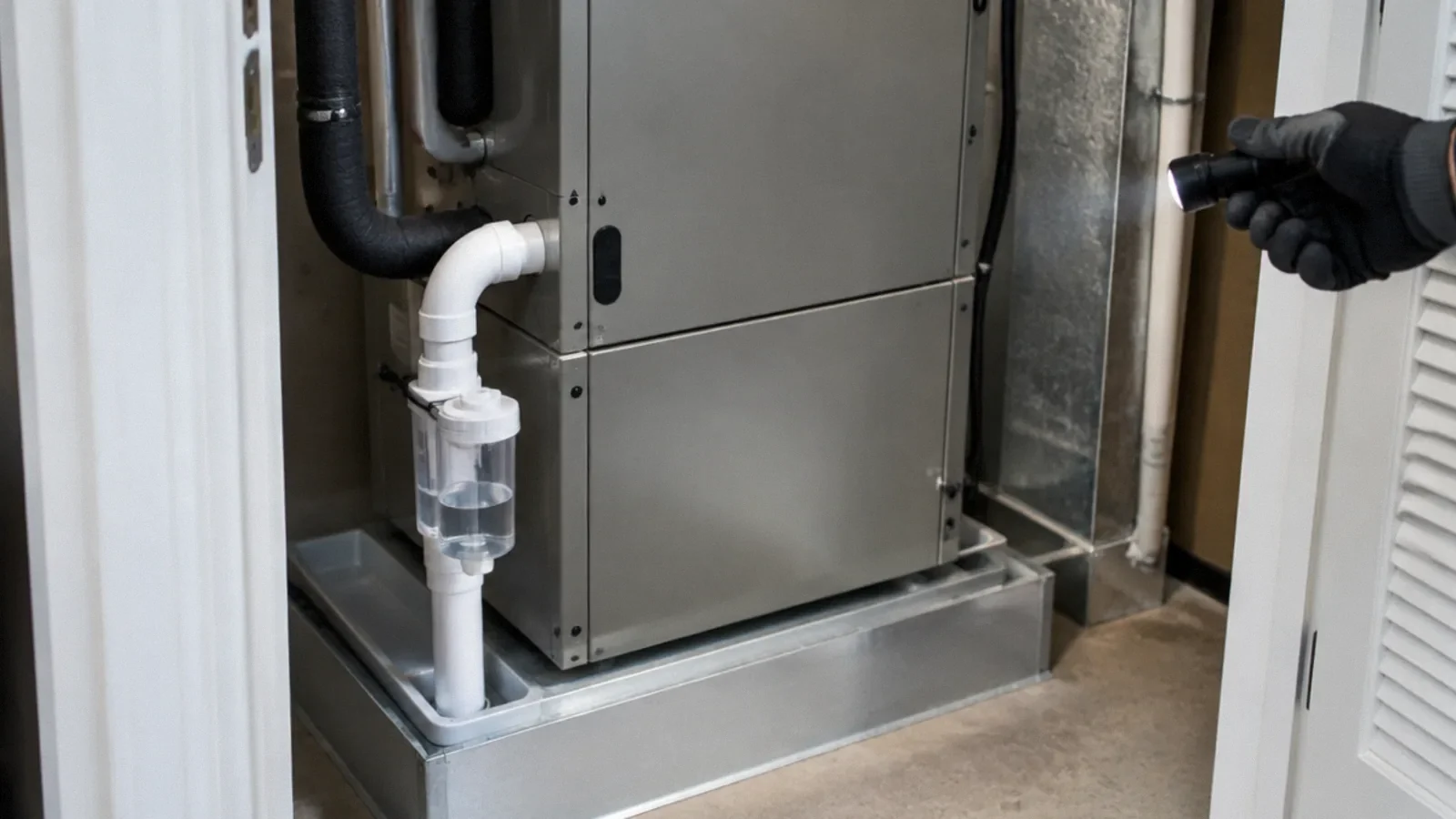
A cooling coil removes moisture from indoor air as the air conditioner operates. The water normally collects in a drain pan and leaves through a drain line or a condensate pump. The arrangement can include a trap, a cleanout and an overflow safety switch, but not every system has the same components.
A blockage, damaged pan, faulty pump, poor slope or disconnected pipe can lead to water escaping into a closet, ceiling or floor. A dry outdoor outlet alone does not prove a blockage: condensate production depends on operation, indoor conditions and the equipment design.
Recognize a possible drain problem
Signs can include water around the indoor unit, a full auxiliary pan, a wet ceiling below attic equipment, a safety switch that has stopped the system, or an unusual musty smell. These symptoms can have other causes, including frozen coils or a plumbing leak. Do not assume that clearing a pipe is the only repair needed.
If water is near a power source, stay away from the wet area and do not touch equipment or electrical controls. If the thermostat is safely accessible, stop cooling and contact an HVAC professional. For an immediate electrical danger, contact an electrician or emergency services as appropriate.
Find the correct instructions and access point
Locate the model-specific manual and identify only the owner-accessible drain components it describes. A white pipe near equipment might serve a different purpose; tracing it incorrectly can lead to a spill or damage. The landlord or building manager may be responsible for a shared system.
Do not open the air-handler cabinet, remove electrical covers, reach near a fan, climb onto a roof or enter an unsafe attic to find a line. If the cleanout is inaccessible or the configuration is unclear, arrange professional maintenance instead.
Cleaning a line you can safely access
If the manufacturer explicitly provides an owner cleaning method, follow its steps and the stated shutdown requirements. Place protection below an accessible cleanout because trapped water may spill. Use only the tools and materials specified for that particular system, and replace any cap or fitting as directed.
Do not mix bleach, vinegar, drain opener or other chemicals, and do not assume any one solution is suitable for every drain, pump, seal or local disposal arrangement. Never force a wire into a line or use excessive pressure; either can damage a connection or move a blockage into equipment.
Professional clearing and system inspection
An HVAC technician can determine whether the problem is in the line, pan, trap, pump, float switch or another component, then clear or repair the affected part using methods suitable for the installation. Ask the technician to explain the cause, inspect for leaks and confirm that the drain operates after service.
EPA recommends paying attention to cooling coils and drain pans and notes that substantial standing water or debris indicates a problem needing attention. Cleaning a drain line is not the same as a full duct cleaning, and it does not establish that an entire system is free of mold.
What if water has damaged the building?
Once the source is controlled and electrical conditions are safe, assess the affected ceiling, drywall, flooring and insulation. A stain may be larger on the hidden side than it appears from below. Do not stand under a sagging ceiling or cut into materials of unknown condition to investigate.
Prompt drying and a repair plan can limit ongoing moisture problems, but the method depends on the amount of water and affected materials. A restoration professional can check concealed moisture. Report the incident to the property manager or insurer and keep photographs and service records.
Avoid unnecessary treatments
A musty smell can result from damp materials or other sources and does not identify a mold species. Do not spray unapproved products into the HVAC cabinet or ducts to mask an odor. If the system is suspected of mold contamination, EPA advises against running it until the problem is assessed.
Ask for the proposed cleaning scope and the reason for any chemical treatment. A fragrance or a clear pipe at one moment does not prove that the pan, pump or affected building materials are dry and functioning properly.
Prevent a recurrence
Include the drain, pan and any pump or safety switch in routine service according to the equipment manufacturer and a qualified technician’s recommendations. Replace the air filter using the correct size and schedule for the system; a filter change alone does not clear a drain.
After service, ask where water should discharge, what an overflow switch does, and whom to call if it trips. Keep the owner manual and technician’s findings accessible. The right maintenance interval depends on operating conditions and the equipment.
Why an air conditioner may leak water
A blocked condensate drain is one possibility; a damaged or overflowing pan, failed pump, frozen coil or equipment installation problem can also cause water indoors. Different systems collect and discharge moisture differently. A technician can distinguish the causes before recommending work.
Water dripping outdoors from an appropriate condensate outlet during cooling can be normal. Unexpected indoor water, an overflowing pan or water close to electrical equipment warrants stopping cooling if the control is safely accessible and arranging assessment. Do not touch wet electrical parts.
Your next-step checklist
- Stop cooling from a safe location if a condensate leak is suspected.
- Stay clear of wet electrical equipment and unstable ceilings.
- Use only the equipment maker’s owner-accessible instructions.
- Never mix drain-cleaning chemicals.
- Have a technician inspect recurring blockage, a pump or overflowing pan.
Related questions
Can I pour vinegar down an AC drain?
Only use a product and method the equipment manufacturer approves for your specific system. Do not mix cleaning chemicals or pour drain opener into the line.
Why is my AC drain pan full?
A blocked line, faulty pump, damaged pan, installation issue or another problem may be responsible. A technician can inspect the actual system.
Should I run the AC when water is leaking?
Stop cooling if the control is safely accessible and arrange assessment. Keep away from wet electrical equipment.
Does a clogged condensate drain mean I need duct cleaning?
Not necessarily. Clearing a drain and cleaning ducts are separate services; ask for evidence and a written scope for any additional work.
Can I use an air conditioner when it is leaking water?
Stop using equipment that is leaking onto electrical components or causing damage and arrange qualified assessment. Do not touch wet electrical parts. The cause may involve a condensate drain, pan or another component, and the correct response depends on the system.
Sources & context
Public guidance supports the principles in this article. The practical questions and examples are editorial interpretation, not a site assessment or a coverage decision. State-specific rules apply only where identified.
- U.S. EPA: Air duct cleaning and condensate pansfederal indoor air guidance
- U.S. EPA: Moisture control guidancefederal building moisture guidance
- Carrier: Why is my AC leaking water?equipment manufacturer guidance