A homeowner may be able to clean an accessible register and replace an appropriate filter according to the system instructions, but that does not clean the entire duct system. EPA does not recommend routine duct cleaning for every home; it identifies specific conditions that may justify considering it. Suspected mold, pests or inaccessible equipment call for professional assessment.
Do ducts need a fixed cleaning schedule?
EPA does not recommend routine air duct cleaning for every household. A light layer of dust on a return register is common and does not by itself establish that the ducts are heavily contaminated or pose a health risk. The value of cleaning depends on the actual conditions.
EPA identifies substantial visible mold in hard-surface ducts or components, infestation by pests, and excessive debris released into rooms as reasons to consider professional cleaning. Investigate the cause as well: moisture, damaged equipment or another source can make the problem return.
Registers are not the entire duct system
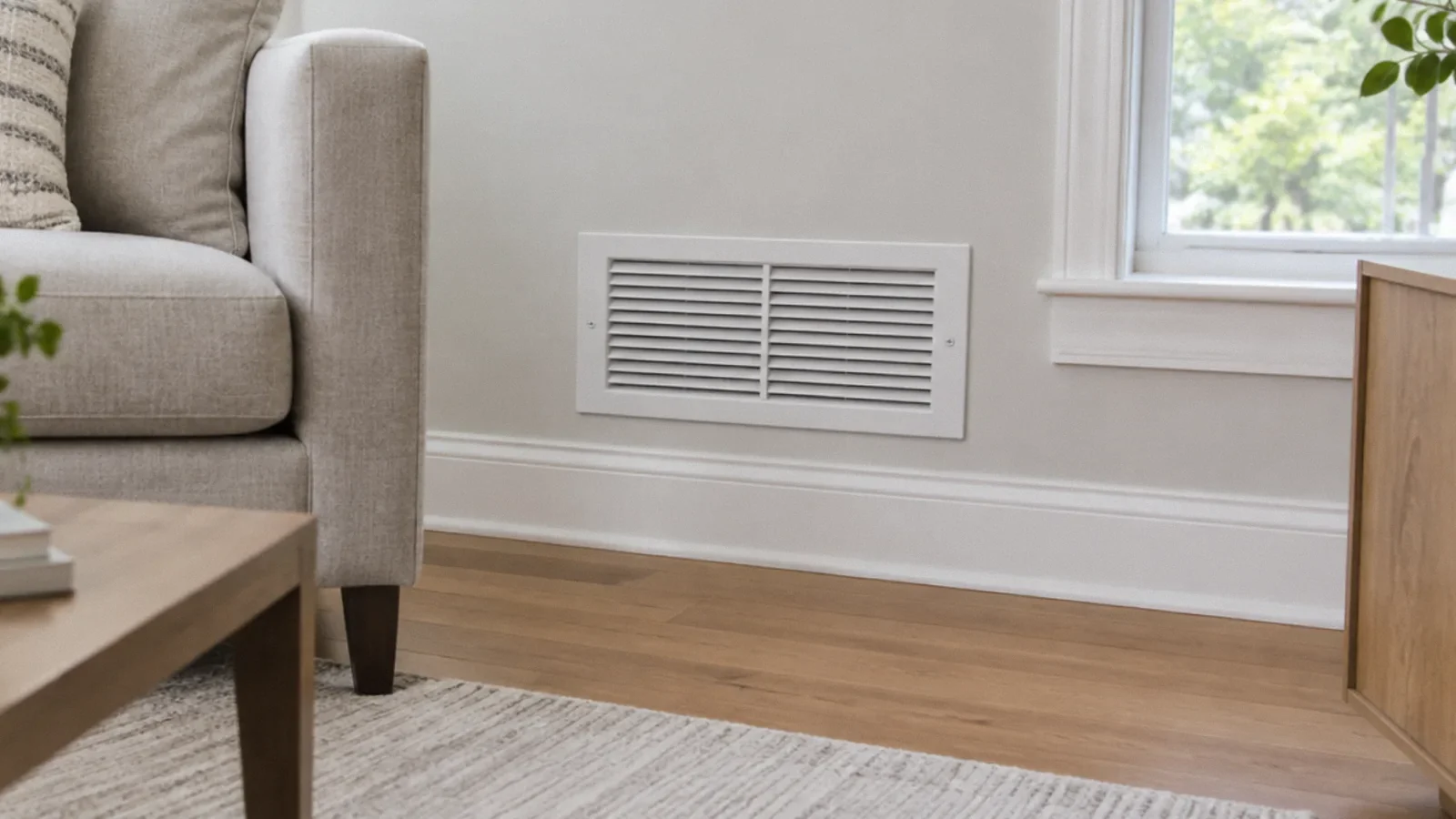
A register is the visible grille where air enters or leaves a room. Cleaning an accessible grille can remove surface dust, but a household brush cannot verify or clean every branch, return, coil or air handler. Do not call a register-only task a complete duct cleaning.
Follow the manufacturer’s instructions and use safe access. Do not climb on unstable furniture, reach into sharp ductwork or remove a cover that is difficult to handle. If a grille is damaged or the system configuration is uncertain, ask a professional.
Filters and normal maintenance
Use a filter of the type and size recommended by the equipment manufacturer and replace it according to the system instructions and actual conditions. A poorly fitted filter can allow air to bypass it; an unsuitable filter can affect airflow. A filter change is maintenance, not proof that hidden ducts are clean.
If the system was exposed to construction dust, water or another contaminant, ask a qualified HVAC professional how to inspect and protect the equipment. EPA advises keeping dirt and moisture out of the system and not running it during dust-producing renovation until the area is cleaned.
What about suspected mold?
If an HVAC system is known or suspected to be contaminated with mold, EPA advises not operating it until it has been assessed because it could spread material through the building. A dark mark alone does not identify an organism. Do not disturb the area to collect a sample or spray it with an unapproved product.
Wet or moldy insulation inside a duct may not be effectively cleanable and can require replacement. The moisture source must also be corrected. Ask an experienced professional which components were inspected, what evidence supports the finding and which sections remain inaccessible.
DIY tools and limitations
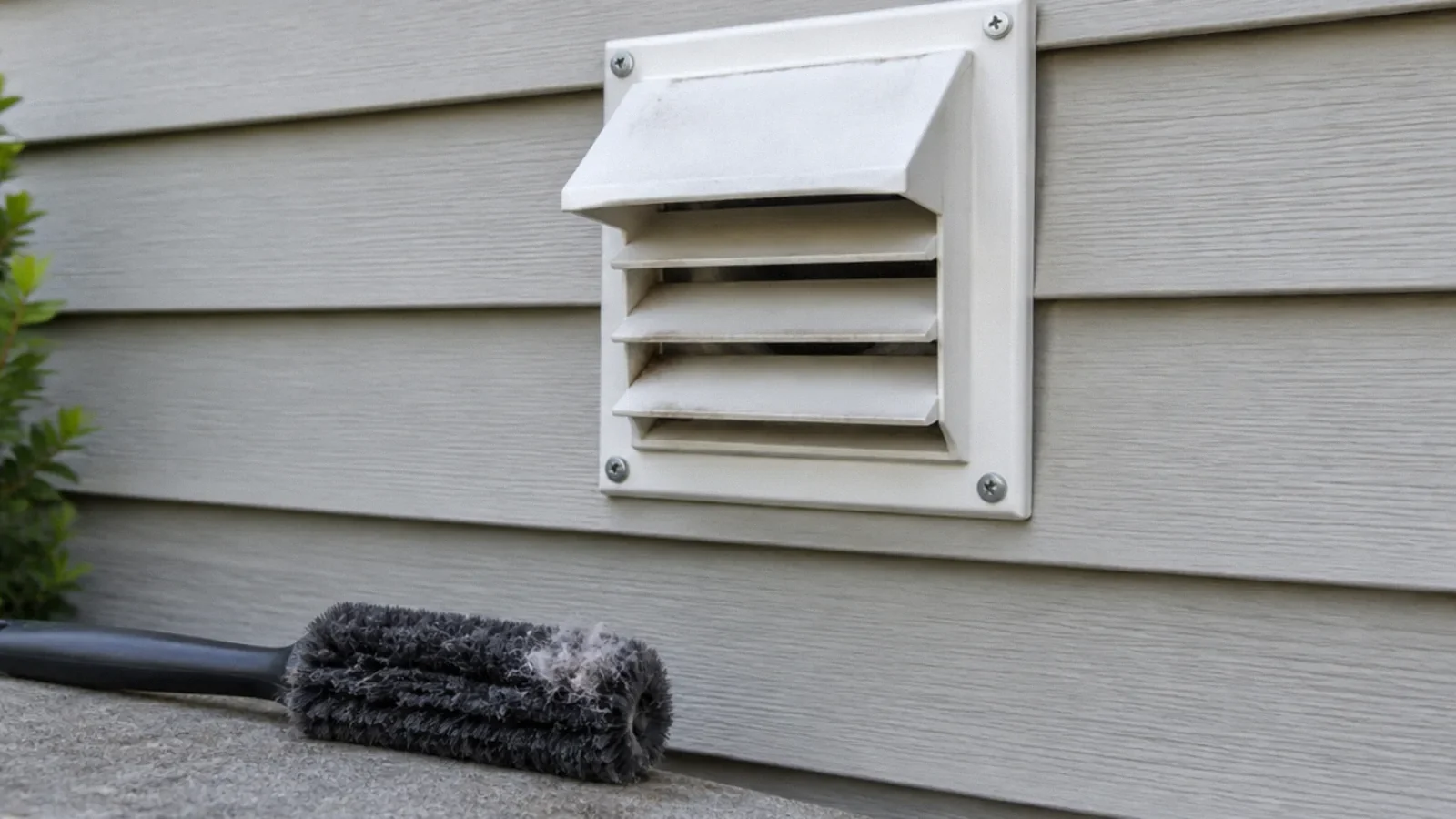
A household vacuum or brush may reach only a short accessible section and can dislodge debris without containing it. Flexible or internally lined ducts can be damaged by an unsuitable tool. Do not cut access holes, disconnect ducts or enter an unsafe attic or crawl space to extend a cleaning tool.
Never handle wet electrical equipment or open an appliance panel without the appropriate qualifications. If you suspect pest droppings, substantial debris, damaged insulation or a shared building issue, stop and request professional guidance. A cosmetic cleaning should not create a larger problem.
How professional duct cleaning works
A provider may inspect accessible components, create controlled access, use equipment to remove debris and collect it, then close access points and check system operation. The method depends on the system and material. Ask which supply and return ducts, registers, air handler or other components are included.
Request a written scope, total price, protection for the home, cleanup and a way to review the completed work. EPA recommends checking the provider’s competence and avoiding unsupported claims that duct cleaning will prevent health problems. A separate cost guide explains how estimates vary.
Chemicals, sealants and odors
Some contractors propose a biocide or sealant. EPA advises understanding the product, its intended use and limitations; routine sealant use is not generally recommended to cover duct contaminants. Ask for the exact product, safety instructions, reason and separate price before authorizing it.
A scent, fog or fresh-looking grille does not prove that moisture or contamination was removed. Avoid mixing cleaners or spraying household products into ducts. If occupants have health concerns, consult a healthcare professional rather than relying on a cleaning guarantee.
Apartment and mobile-home considerations
A rental or shared building can have equipment and ducts maintained by the owner or manager. Report unusual odors, dust, water or a suspected problem and ask who may access the system. Do not open shared equipment or modify ductwork without authorization.
A mobile home may use a different layout and access arrangement from another house. The safe scope still depends on the actual system, its instructions and the condition found. Save service records and report recurring moisture or debris for further assessment.
What is an HVAC plenum?
A plenum is an air distribution chamber connected to a heating or cooling system. Depending on the system, a supply plenum distributes conditioned air toward branch ducts and a return plenum collects air returning to the equipment. The layout and materials vary with the building.
A visible register is only one part of the system; cleaning it does not clean a plenum or the equipment. If a plenum contains moisture, damaged insulation or suspected mold, do not spray products into it. Ask a qualified HVAC professional to inspect the system and address the cause.
Where ducts run and what to observe
Supply ducts carry conditioned air from the equipment to rooms; return ducts carry room air back. Depending on the building, runs may be behind walls, above ceilings, in an attic or beneath floors. Many sections are concealed and should not be opened merely to look inside.
Ordinary dust on a register alone does not establish a system-wide problem. Report recurring debris blown into rooms, wetness, musty odors, visible substantial contamination or pest evidence for inspection. Such signs do not by themselves prove a health effect or its cause.
Clean an accessible floor grille
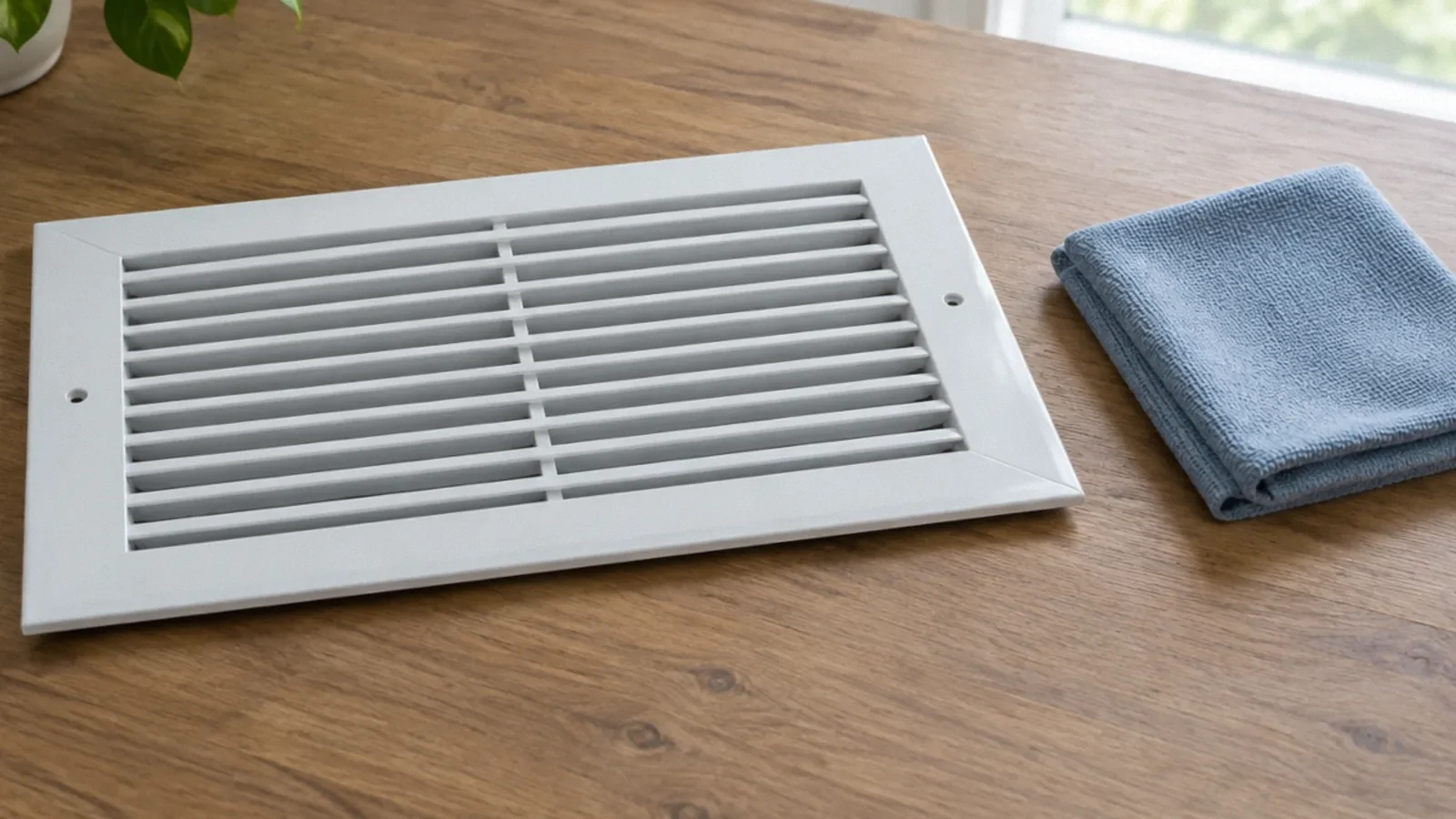
Turn the system off and check the manufacturer’s instructions. If the grille can be safely lifted without tools or damage, remove it, clean its accessible surface with a material-compatible method, allow it to dry fully and reinstall it securely. Do not reach into ductwork or dislodge lining. In a mobile home, the floor register may connect to fragile ducting beneath the floor; do not cut or detach it. Clean the visible grille as needed according to its maker, rather than assuming a fixed duct-cleaning schedule.
Ask a prospective provider to identify whether the quoted work includes supply and return ducts, grilles, air handler, blower, coil and drain pan. Duct cleaning alone is not necessarily complete HVAC servicing. Request inspection evidence, access and containment methods, product labels and written exclusions; a clean grille alone does not verify the rest of the system.
After renovation and during service
Construction dust on a register does not automatically prove every duct needs cleaning. Protect returns during dusty work and clean the work area; if substantial debris entered the system, ask for an inspection and a scope based on what is found. Cleaning may reduce material actually removed from ducts, but EPA does not establish that routine duct cleaning prevents health problems or eliminates household dust.
Equipment and vacuuming can be noisy. Ask the contractor about expected noise, occupied rooms, pets and the time during which the system must be off. A professional should explain any access openings and how they will be closed.
Your next-step checklist
- Distinguish a register from the full duct system.
- Follow filter and equipment instructions.
- Do not operate a system suspected of mold contamination until assessed.
- Avoid unsafe access, tools and chemical sprays.
- Compare a written professional scope when cleaning is needed.
Related questions
Can I clean air ducts myself?
You may be able to clean an accessible register, but that does not clean or inspect the full system. Suspected contamination or inaccessible components need professional assessment.
How often should air ducts be cleaned?
EPA does not recommend routine cleaning for every home. Consider service when specific conditions warrant it.
Will duct cleaning prevent health problems?
EPA says duct cleaning has not been shown to prevent health problems. Discuss individual symptoms with a healthcare professional.
Can I spray a household cleaner into the ducts?
Do not spray an unapproved product into ductwork. Ask a qualified professional about the system and any proposed treatment.
Can I clean the vents in my home myself?
Accessible dusty registers may be vacuumed or cleaned according to the system instructions. This does not clean the entire duct system; avoid disturbing suspect asbestos-containing material.
How do I clean a heater vent?
Follow the system instructions for an accessible register and filter. Do not open electrical equipment or assume that wiping a grille cleans the entire duct; arrange service for damaged, wet or suspect components.
Can I sanitize air ducts myself?
Do not spray household cleaners or unapproved chemicals into ductwork. EPA recommends understanding any proposed treatment and its limitations; suspected mold or contaminated components need qualified assessment and moisture correction.
Can I clean a floor vent in a mobile home?
A safely accessible register may be cleaned under the manufacturer’s instructions, but the grille is not the entire duct system. Do not reach into sharp or damaged ductwork, disturb suspected contamination or handle wet electrical equipment; request professional help when uncertain.
How can I get an object out of a floor vent?
Stop if the object is sharp, the register is unsafe to remove or access would expose wiring or damaged ductwork. Do not reach blindly into the opening; ask a qualified professional to retrieve it without damaging the system.
Can I remove air ducts myself?
Disconnecting or removing ductwork can damage the system and expose sharp edges, insulation or other hazards. Do not disturb suspected asbestos or contaminated material. Ask a qualified HVAC professional to evaluate the work and any permit requirements.
Sources & context
Public guidance supports the principles in this article. The practical questions and examples are editorial interpretation, not a site assessment or a coverage decision. State-specific rules apply only where identified.
- U.S. EPA: Should you have air ducts cleaned?federal guidance
- U.S. EPA: Mold cleanup in your homefederal guidance
- U.S. EPA: Indoor air filtrationfederal guidance