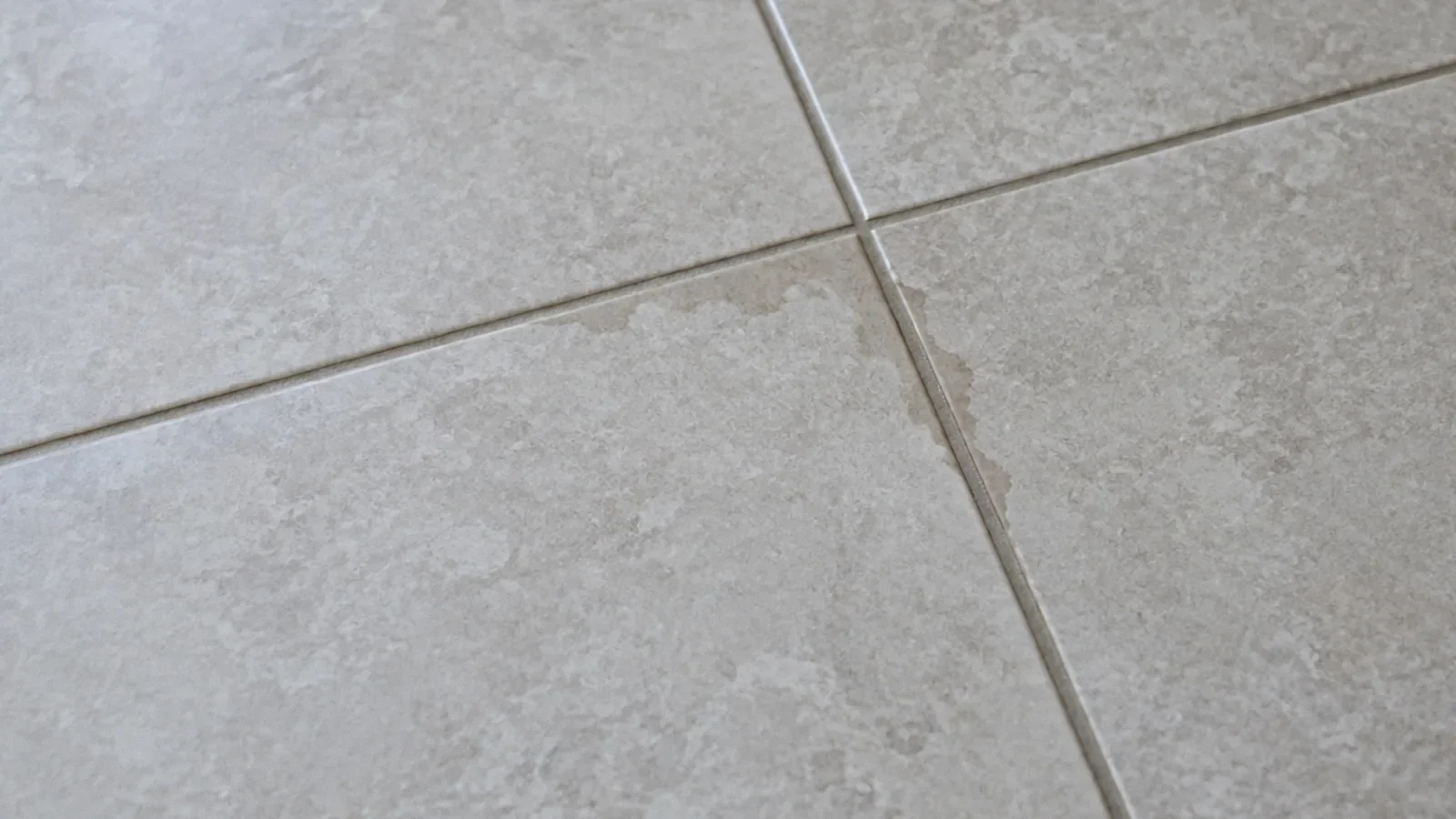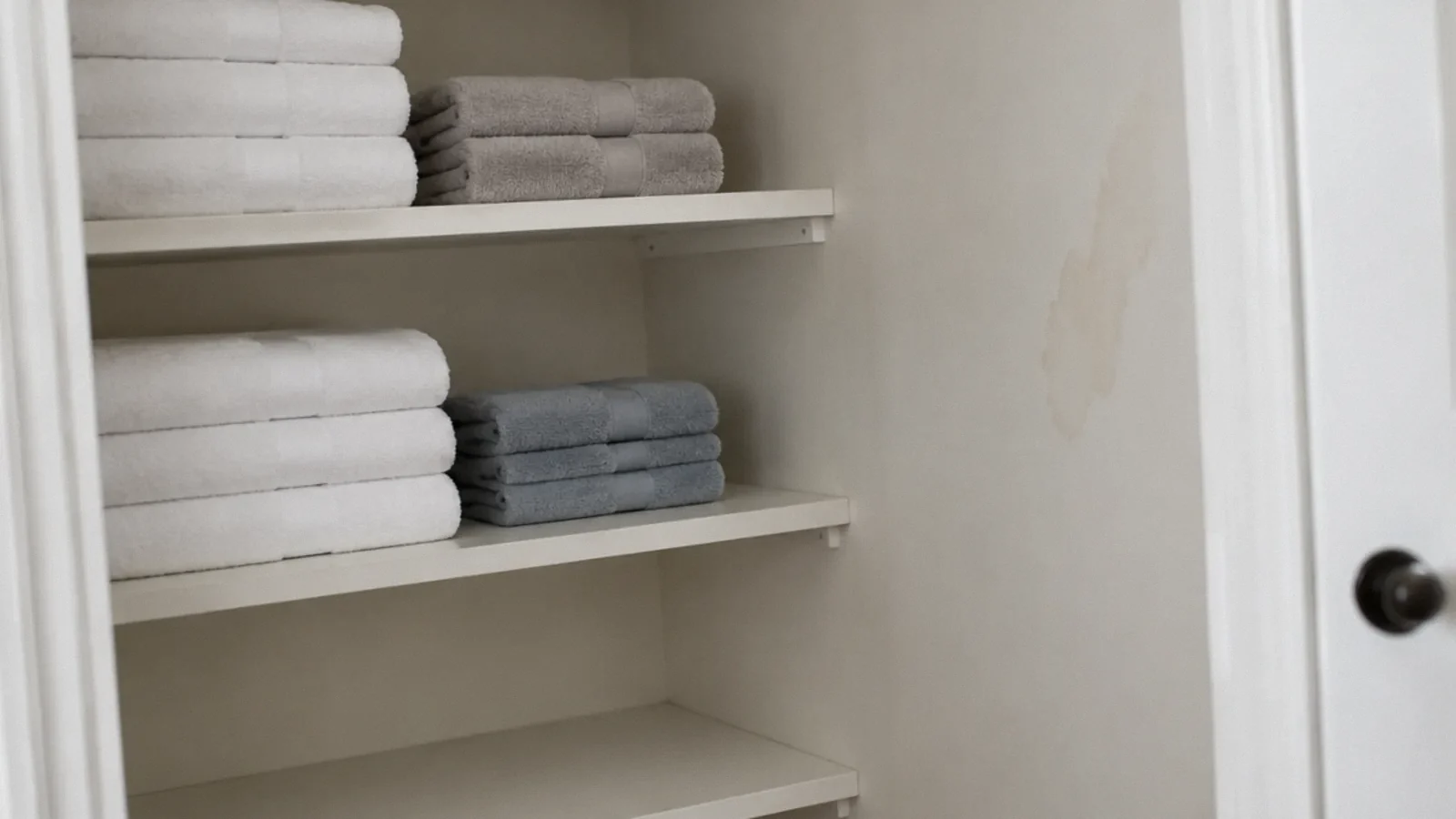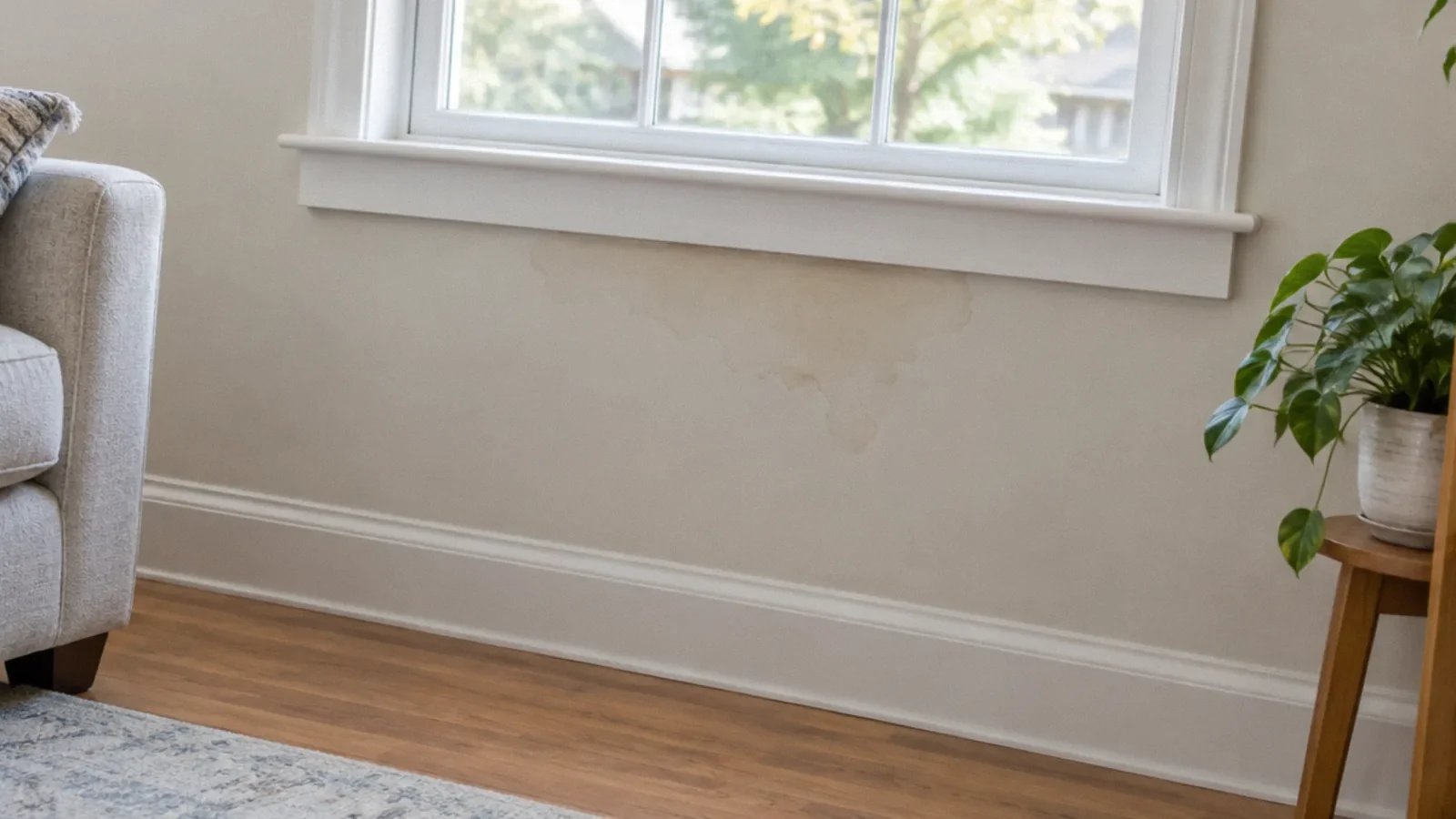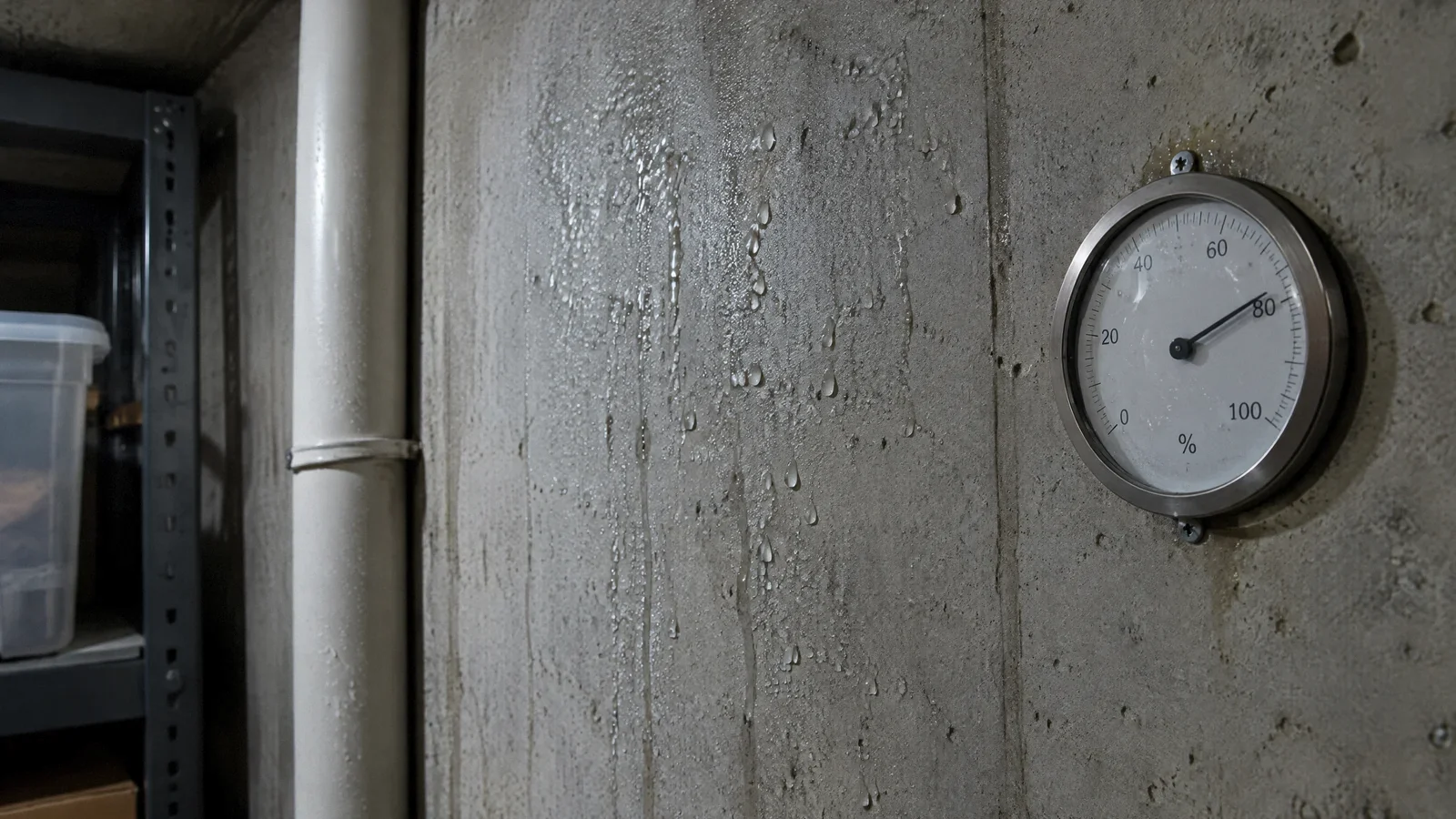
Basement walls can appear to sweat when humid air meets a cooler surface and water condenses. Seepage through the foundation or a plumbing leak can look similar. Observe the timing and location, investigate the source, and address moisture before covering the wall.
What sweating means
Condensation occurs when a surface is cool enough for moisture in the surrounding air to turn into liquid water. Below-grade concrete can remain cooler than the air in a basement, particularly during warm, humid weather. Droplets may appear on the wall, pipes, or other cool surfaces. Persistent moisture can damage stored items and support mold growth on dust or adjacent materials.
The word sweating describes an appearance, not a diagnosis. Rainwater entering through a crack, moisture moving through masonry, or a leaking pipe can also wet the wall. The correct remedy depends on the path of the water. An indoor humidity problem and an exterior drainage problem can occur together.
Look for patterns without disturbing materials
Note where the dampness appears and when it changes. Widespread droplets during humid weather, particularly on cold pipes as well as walls, can suggest condensation. Wetness that follows rainfall, concentrates at a crack or wall-floor joint, or appears as a trickle may point toward water entry. These are clues, not definitive tests.
Photograph the area and record recent rain, humidity readings and plumbing use. Check gutters and downspouts from the ground and note whether water pools near the foundation. Avoid opening a wall, scraping suspect growth, or entering standing water near electrical equipment. If a ceiling or wall appears structurally unsafe, keep people away and seek qualified help.
Humidity and surface temperature
A hygrometer gives a useful reading of relative humidity at its location. EPA recommends indoor relative humidity below 60%, ideally between 30% and 50% when possible. One reading cannot rule out moisture inside a wall, and a sensor in a dry room may not represent a cool corner behind stored belongings. Track the trend rather than relying on a single number.
A dehumidifier can reduce indoor humidity when properly sized, operated and maintained. Arrange safe drainage of the collected water and follow the manufacturer’s instructions. It does not stop water entering through a foundation or repair a leaking pipe. Ventilation can help in some conditions, but bringing very humid outdoor air into a cool basement can add moisture instead.
Check roof runoff and site drainage
Roof water discharged next to the foundation can increase moisture in the surrounding soil. Maintain gutters and direct downspouts to a suitable, permitted outlet away from the building. Check the surrounding ground for low spots that collect water, and evaluate whether the grade directs runoff away from the foundation. The proper arrangement depends on the lot and local rules.
If wetness follows rain or water collects at the wall-floor junction, a drainage professional may need to assess the foundation and any existing perimeter drains or sump. Do not disconnect a sump pump simply because the wall looks like it is sweating. A pump, exterior drainage and humidity control can address different parts of the problem.
Avoid trapping moisture behind a finish
Painting, paneling or applying a coating may hide a wet wall without correcting the source. An impermeable covering installed in the wrong assembly can make inspection or drying more difficult. Before finishing a basement, resolve water entry and consult a qualified building professional about the insulation and vapor-control assembly appropriate to the climate and wall.
Keep stored cardboard, fabrics and furniture away from damp surfaces while the cause is investigated. If visible mold is present, do not identify its type by color. EPA advises fixing the water problem and cleaning mold from hard surfaces with detergent and water, then drying completely; some porous materials may need to be discarded.
When to call a professional
Seek help when water continues to enter, the source is concealed, the area is extensive, or you suspect sewage or contaminated floodwater. A qualified drainage or building professional can assess surface water, below-grade drainage, plumbing and the building assembly. A mold remediation professional may be needed when the affected area or access makes cleanup unsuitable for a homeowner.
Ask for a written diagnosis and plan that identifies the suspected source, how it will be verified, and how the repair will be checked. A proposal that only covers the interior surface without explaining the water path deserves further questions. Keep the records and photographs for comparison after the work.
Monitor after the repair
Track humidity and wall conditions during the weather that previously caused the problem. Check that the dehumidifier drains and that gutters and outlets remain clear. A dry wall on a single day does not prove the issue has been resolved through a wet season.
If moisture returns, note whether it corresponds to rain, humid air or plumbing use. Share those observations with the professional who designed the repair. The goal is to prevent repeated wetting and dry affected materials, not merely to make the surface look dry for an inspection.
Your next-step checklist
- Document the location and timing of wetness.
- Keep clear of standing water near electrical equipment.
- Track humidity and inspect roof runoff from the ground.
- Investigate leaks and foundation drainage when indicated.
- Dry and clean affected materials before covering the wall.
Related questions
Is a sweating basement wall always condensation?
No. Seepage or a plumbing leak may look similar. Timing, location and a targeted inspection help distinguish the sources.
Will a dehumidifier fix a leaking foundation?
It can reduce indoor humidity but cannot stop liquid water entering through the foundation.
Can I paint over a damp wall?
Resolve the moisture source and dry the assembly first. A coating can conceal symptoms without fixing the cause.
Sources & context
Public guidance supports the principles in this article. The practical questions and examples are editorial interpretation, not a site assessment or a coverage decision. State-specific rules apply only where identified.
- Foundation Moisture Controlgovernment
- A Brief Guide to Mold, Moisture and Your Homegovernment