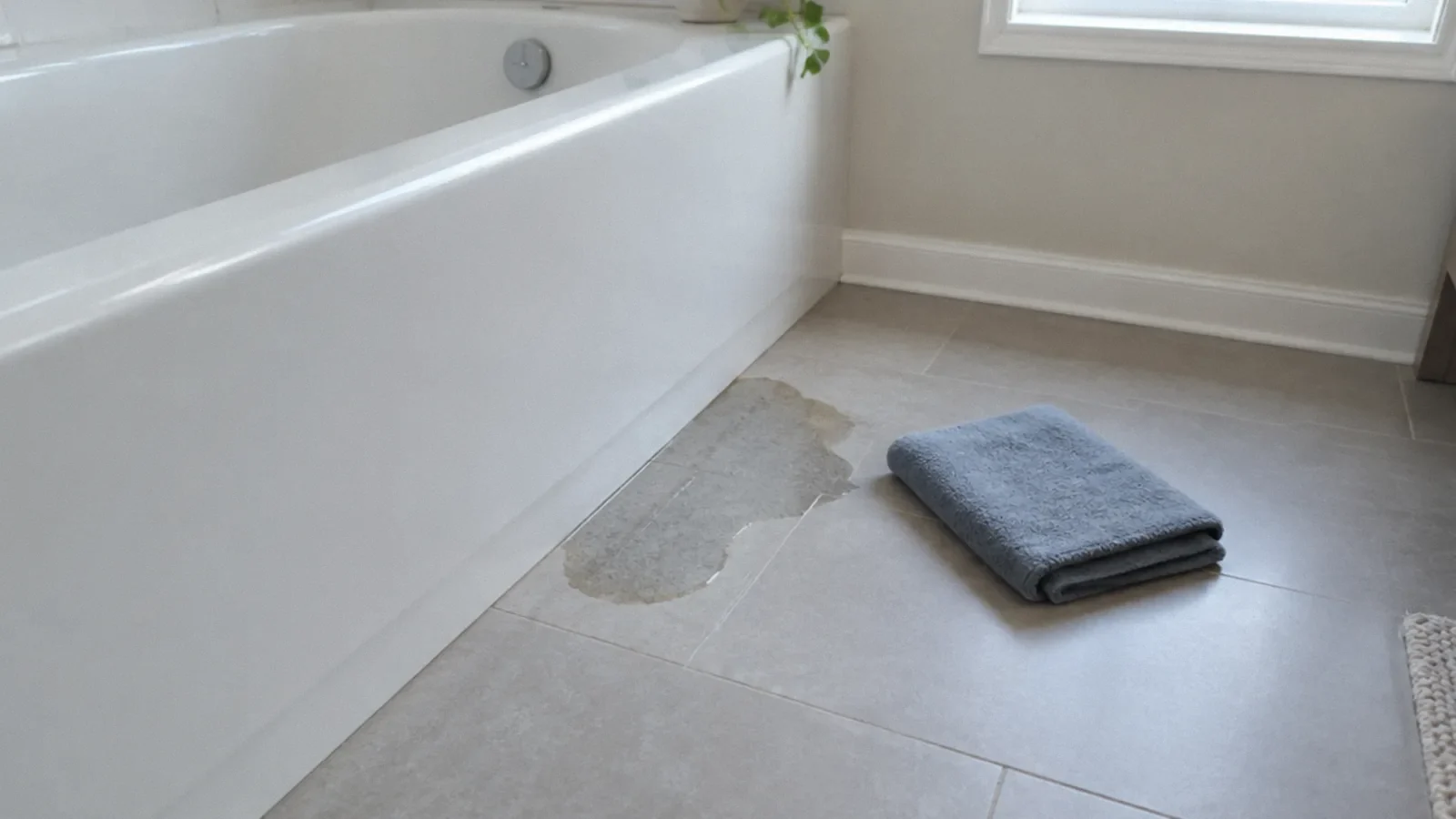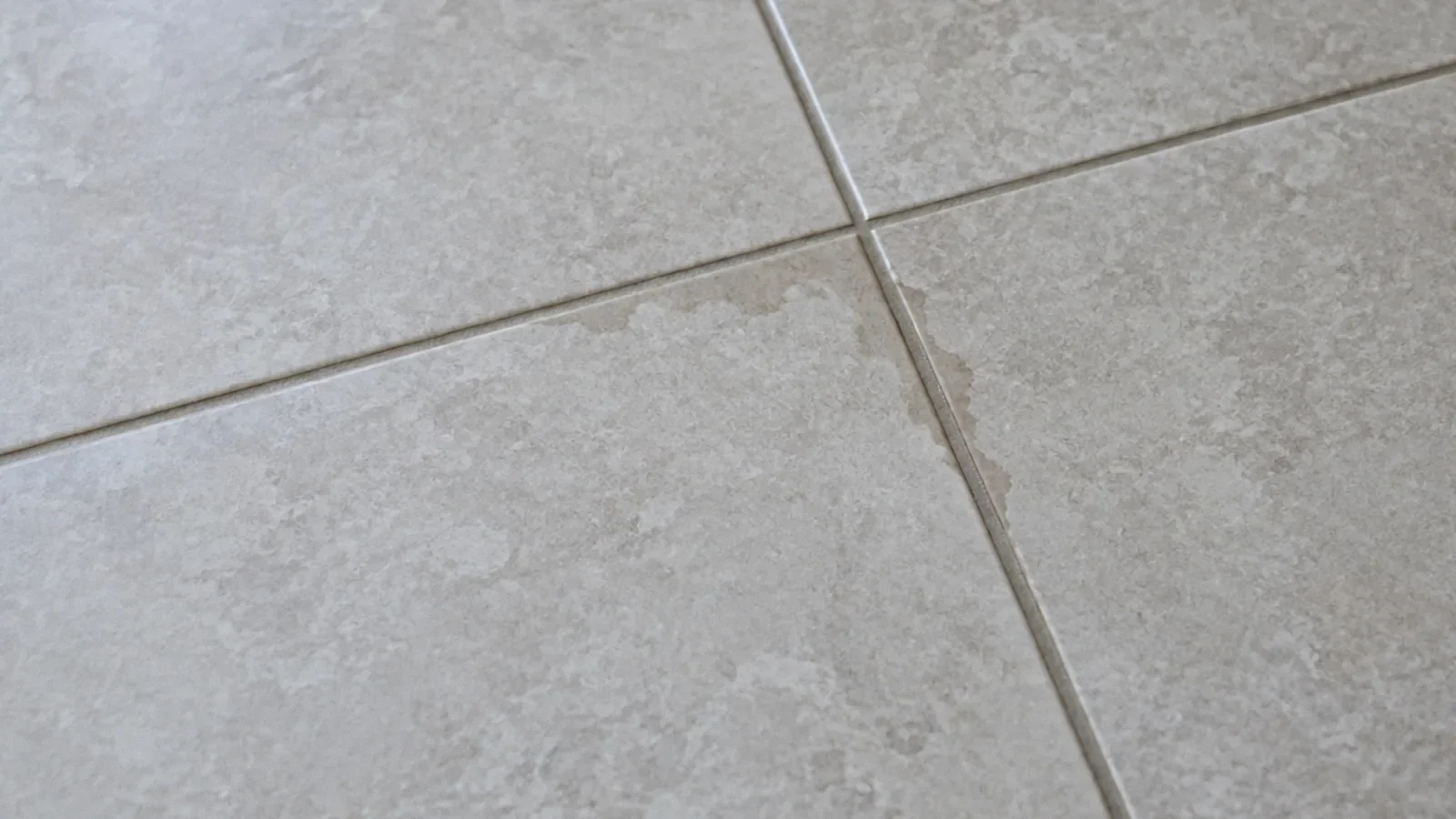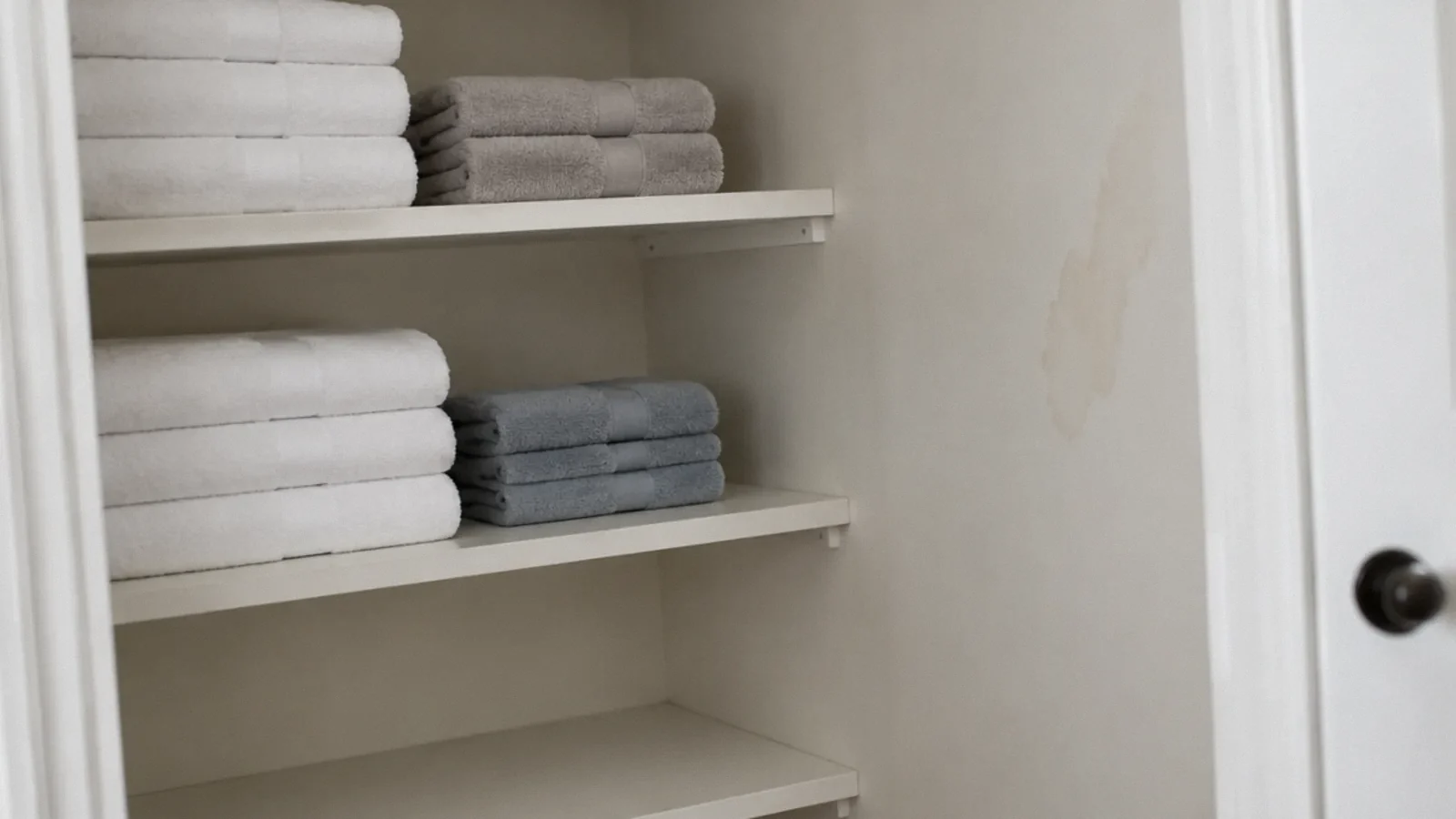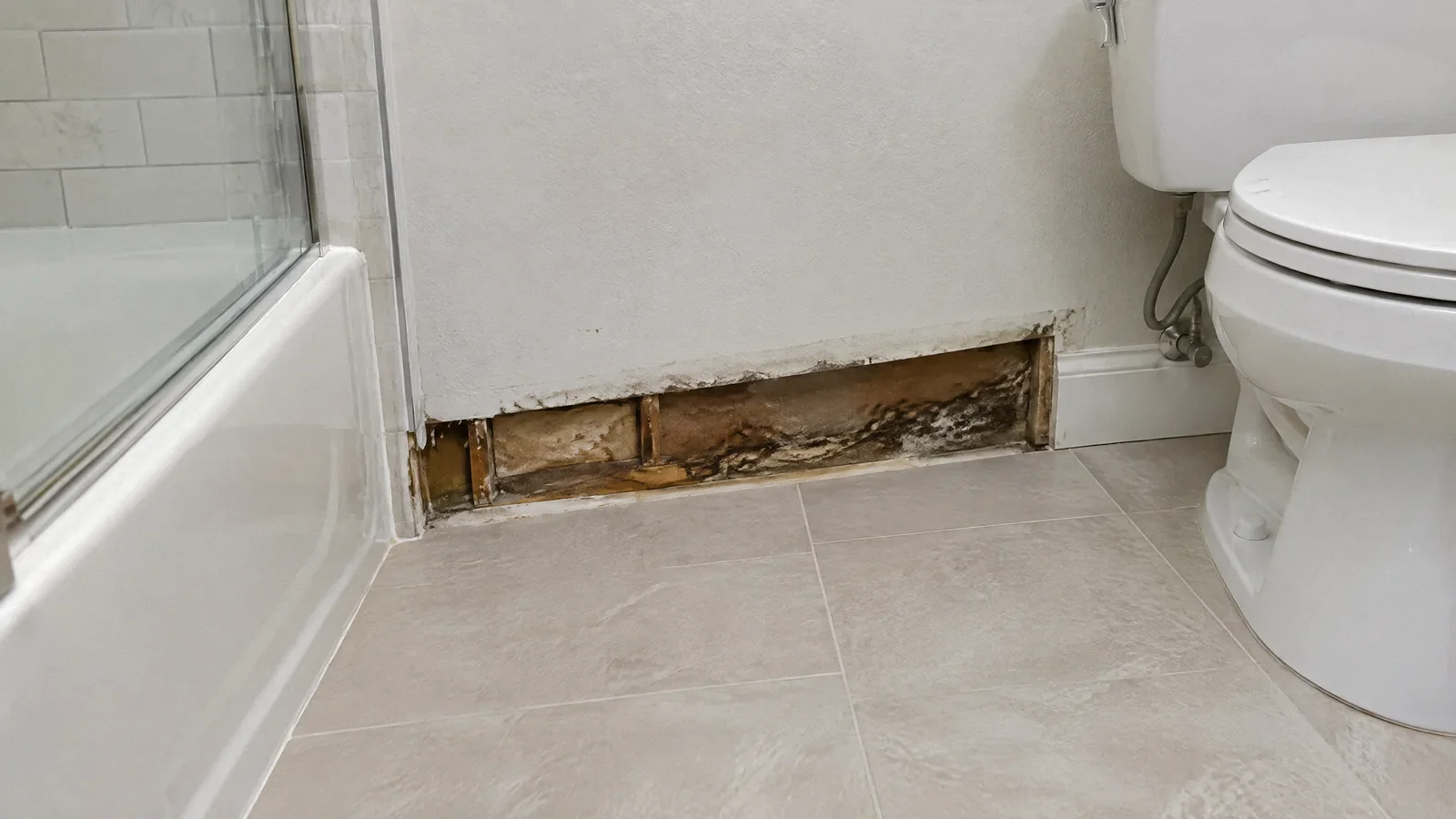
Stop the water source if it is safe, document the damage, and assess the water category and affected materials before opening or rebuilding the bathroom. Repair the leak, dry or remove damaged materials as appropriate, and restore waterproofing and finishes only after the assembly is ready. Sewage, electrical hazards and structural damage require qualified help.
Make the area safe and stop additional water
Stop using the affected fixture. If a known shutoff is safely accessible, close it without forcing it; a supply leak may continue even when the fixture is not in use. If water is near a light, outlet, appliance or electrical panel, stay clear and have a qualified electrician or utility address electrical safety. Do not enter standing water to reach a switch.
Keep people away from a sagging ceiling or soft floor. If wastewater or toilet overflow is involved, limit access and contact a professional experienced with contaminated water. Photograph the damage from a safe place and notify the property manager or insurer promptly when applicable. Ask the insurer about documentation and any required procedures before discarding items when it is safe to wait.
Find the source before repairing finishes
A bathroom leak can originate at a pressurized supply, faucet or valve, tub drain, overflow, toilet connection, shower enclosure, waterproofing failure, or water splashing past a curtain. A stain below the bathroom may be where water emerged rather than where it began. Note whether water appears continuously or only when a particular fixture is used, but do not repeatedly create a leak to test it.
A plumber can isolate the plumbing source, and a qualified bathroom contractor can assess the shower assembly and surrounding materials. Caulk or grout may be one part of a water-management system, but applying new sealant over an unknown defect can conceal symptoms while the cavity remains wet. Repair the identified source before closing the assembly.
Assess the water and affected layers
Clean supply water, toilet wastewater and floodwater present different contamination concerns. The time water has remained in the building and contact with materials also affect the cleanup plan. Do not assume that clear-looking water is clean. A professional should assess sewage or other contaminated water and select suitable containment, removal and disposal practices.
Bathroom tile is only the visible surface. Water can reach grout joints, a waterproofing layer, backer board, subfloor, framing or the ceiling below. Look for loose tile, swollen trim, staining, odor and soft spots from a safe location. These signs can identify an area to investigate but cannot establish the extent of concealed damage.
Drying, cleaning and removal
EPA recommends drying water-damaged areas and items within 24 to 48 hours where possible to help prevent mold. This is a prevention goal, not proof that every layer is dry at a particular time. A thick floor or enclosed wall may require targeted inspection and professional drying. Do not close a wet cavity because the surface feels dry.
The decision to retain or discard material depends on its composition, condition, contamination and ability to be cleaned and dried. Porous materials affected by sewage or extensive mold may require removal. Hard surfaces may be cleanable under an appropriate plan. If visible mold is present, correct the moisture source and use EPA cleanup precautions; do not identify its species by color.
Repair the floor, wall and waterproofing assembly
Once the source is corrected and the affected area has been assessed, repair damaged framing or subfloor as needed. Structural deterioration requires qualified evaluation. Replacement finishes should be supported by a sound, dry substrate, and the shower or tub surround should be rebuilt as a compatible water-management assembly using manufacturer instructions and applicable code.
Tile and grout alone should not be treated as a substitute for a properly designed waterproofing system. The correct membrane, backer and transitions depend on the fixture and products used. Coordinate the installer’s sequence so penetrations, corners and the tub or shower connection are handled as a system rather than patched independently.
Coordinate plumbing, permits and documentation
Ask whether the project involves replacement of concealed piping, a valve, a drain or structural components, and check local permit and inspection requirements. A qualified plumber should complete the relevant plumbing work and follow the fixture manufacturer’s instructions for testing connections. Electrical work affected by the leak requires an appropriately qualified electrician.
Request a written scope identifying demolition, drying, disposal, plumbing, waterproofing and finish restoration. Ask how hidden damage will be handled if discovered and how drying and testing will be documented. Keep photographs, measurements, invoices and inspection records. Insurance coverage depends on the policy and facts; the contractor cannot guarantee payment.
Check completion and prevent a repeat
Before the area is closed, ask what evidence shows materials are ready for reconstruction and the water source has been corrected. After reinstallation, the responsible trades should perform applicable checks and inspections. Observe the bathroom during normal use for renewed dampness, loose finishes or staining, without deliberately causing another overflow.
Maintain accessible seals and fixtures, use the bathroom exhaust as appropriate, and address recurring condensation or leaks promptly. A dehumidifier can assist with humidity but does not fix a failed pipe or shower assembly. If odor or dampness returns, contact the contractor and revisit the moisture source and original scope.
Your next-step checklist
- Stop using the fixture and address immediate hazards.
- Document damage and identify the water source.
- Assess contamination and hidden layers.
- Repair the source and verify drying before rebuilding.
- Restore a compatible waterproofing assembly and retain records.
Related questions
Can I replace bathroom tile before the subfloor is dry?
No. First assess and dry or replace affected layers. Installing finishes over wet materials can conceal an unresolved problem.
Does caulk fix every shower leak?
No. A leak may originate in plumbing, waterproofing or another component. Identify and repair the source before resealing.
Should sewage water damage be treated like a clean supply leak?
No. Sewage presents additional contamination hazards and calls for an appropriate professional assessment and cleanup plan.
Sources & context
Public guidance supports the principles in this article. The practical questions and examples are editorial interpretation, not a site assessment or a coverage decision. State-specific rules apply only where identified.