For many ordinary toilet clogs, a toilet plunger or a toilet-specific auger is a more appropriate first choice than a corrosive drain opener. Product compatibility varies: use a chemical only if its label expressly permits toilet use, and never mix cleaners. Stop and call a plumber for an overflow, repeated blockage, suspected object, or a chemical already in the bowl.
Choose for the blockage, not the strongest label
A toilet can clog because of excess paper, a foreign object, a problem farther down the drain, or a fixture or vent issue. A product marketed for sink or shower drains is not automatically suitable for a toilet. Its active ingredients, permitted uses and restrictions are on its label. A stronger chemical is not necessarily the best choice for an unknown obstruction.
If the bowl is close to overflowing, stop flushing. Keep children and pets away, and protect the surrounding area from contaminated water. If a safely accessible supply shutoff is already identified, closing it can help prevent additional tank water from entering; do not force a stuck valve. If wastewater backs up elsewhere, stop using affected fixtures and call a plumber.
A toilet plunger for a routine clog
A flange-style toilet plunger is shaped to form a seal at the toilet outlet. For a routine paper blockage, it can move water through the trap without introducing corrosive chemicals. Follow the tool instructions and use controlled movements to avoid splashing. If the water level is too high or contaminated liquid may spill, pause and arrange professional help.
Do not plunge when a chemical drain cleaner has already been poured into the bowl: splashes can cause severe burns. Tell the plumber exactly what product was used and when. A plunger also may not remove a solid object, and repeated force can make diagnosis or retrieval more difficult.
A toilet auger and foreign objects
A closet auger is designed to reach through the toilet’s built-in trap. A protective sleeve helps reduce contact with the porcelain, but improper use can still scratch or damage the fixture. Follow the manufacturer’s instructions, use only a tool intended for a toilet, and stop if it binds or you are unsure what is obstructing the drain.
If a toy, hygiene product, hard object or other item may be lodged in the toilet, a plumber may need to retrieve it rather than push it farther into the line. Recurring clogs or multiple fixtures backing up can indicate a downstream obstruction. Chemical products cannot be counted on to dissolve every object or correct a damaged drain.
Chemical drain openers: check the label
Some drain products contain strong acids or alkalis that can burn skin and eyes. Poison Control warns that many non-enzymatic drain cleaners are corrosive. A product labeled for a sink or tub may expressly exclude toilets or particular plumbing materials. Read the entire current label and do not use a product in a fixture or manner the label prohibits.
Never combine drain openers with bleach, toilet-bowl cleaner, another drain product, or any other cleaning chemical. A reaction can release dangerous fumes or heat. Do not add a second product when the first does not work. If a chemical is already in standing water, keep clear, retain the container and contact the manufacturer or a plumber for safe next steps.
Enzyme and biological products
Enzyme or bacterial products are marketed for breaking down certain organic deposits. Their formulations and labels differ, and they are not interchangeable with fast-acting corrosive openers. They may be intended for maintenance rather than an immediate toilet obstruction and will not reliably remove a hard object. Verify the label’s intended use, compatibility and timing before considering any product.
Do not treat a product described as natural or non-corrosive as automatically safe for every person, fixture or septic system. Store it in its original container, follow the directions and keep it away from children and pets. If the toilet is overflowing or the cause is unknown, a product purchase should not delay addressing the immediate problem.
When to call and what to tell the plumber
Call when the toilet repeatedly clogs, water backs up into another fixture, an object is suspected, or a plunger and appropriate auger do not resolve a routine obstruction. If sewage has overflowed onto floors or into a wall, limit access and arrange cleanup appropriate to contaminated water. Avoid contact with wastewater and do not use electrical equipment in wet areas.
Tell the plumber what was flushed, whether other fixtures are affected, and every chemical added. Provide the product name and container if available. This information protects the worker and helps select a safe method. Do not conceal a chemical treatment because it did not work.
Prevent the next blockage
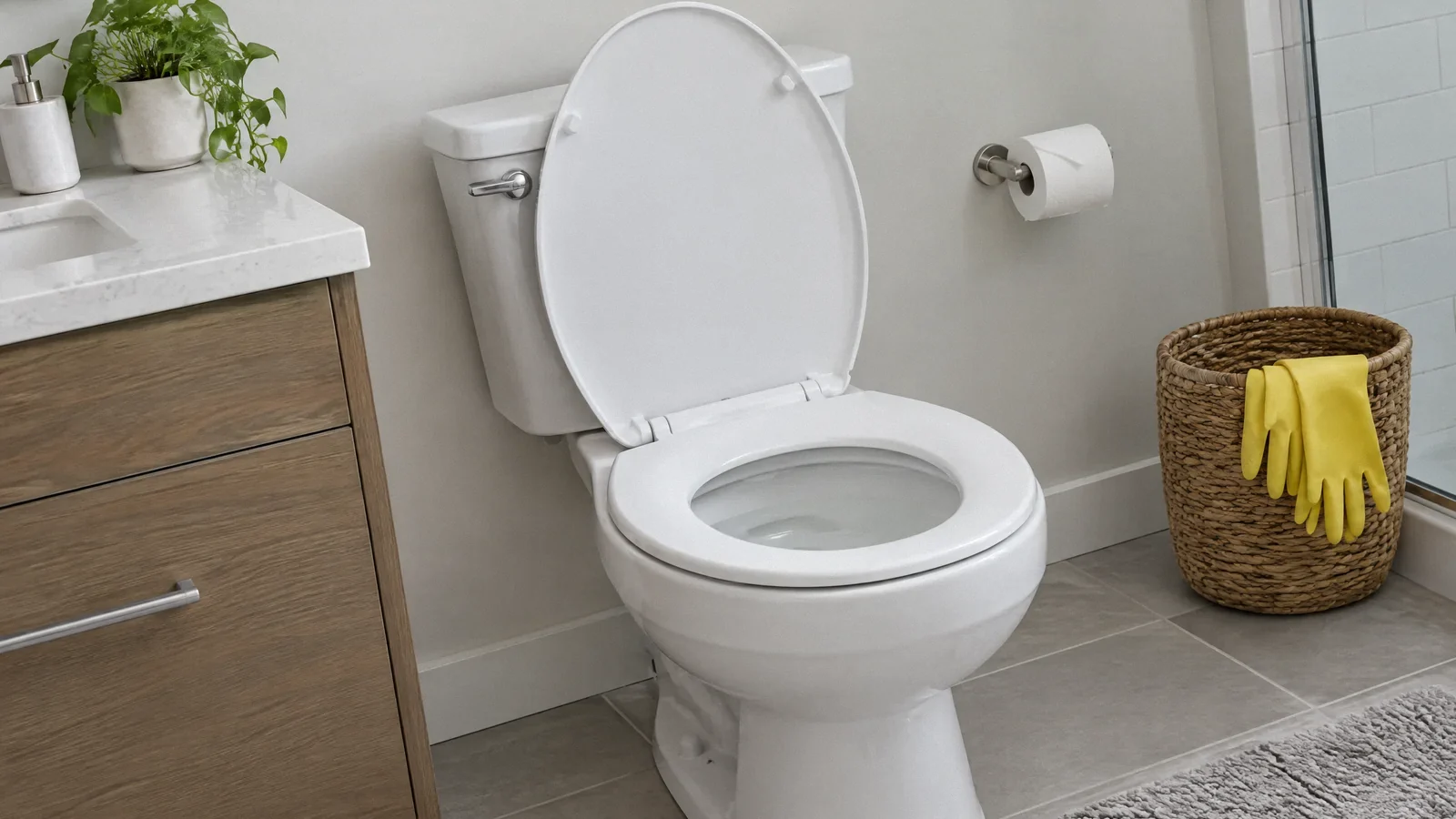
Flush only human waste and toilet paper. Products marketed as flushable may still cause problems in a particular plumbing system; follow local wastewater guidance and dispose of wipes and other objects in the trash. A covered waste bin can make the correct choice easier in a bathroom.
If clogs recur despite normal use, record when they occur and whether nearby fixtures drain slowly. A professional can assess the toilet and downstream line rather than repeatedly applying chemicals. Once the cause is understood, the repair can address the obstruction or system condition instead of temporarily masking it.
Your next-step checklist
- Stop flushing if the bowl is rising.
- Do not plunge into water containing drain chemicals.
- Use a toilet-specific mechanical tool for a routine blockage if safe.
- Call a plumber for repeated clogs, an object or multiple affected fixtures.
- Tell the plumber about every chemical already used.
Related questions
Can I use sink drain cleaner in a toilet?
Only if the product label specifically allows toilet use and all directions and restrictions can be followed. Many products are not intended for toilets.
Can I mix bleach with drain cleaner?
No. Never mix drain cleaners with bleach or other cleaning products; dangerous reactions and fumes can result.
What if drain cleaner is already in the bowl?
Do not plunge or add another chemical. Keep people away, retain the container, and tell the plumber or manufacturer what was used.
Sources & context
Public guidance supports the principles in this article. The practical questions and examples are editorial interpretation, not a site assessment or a coverage decision. State-specific rules apply only where identified.