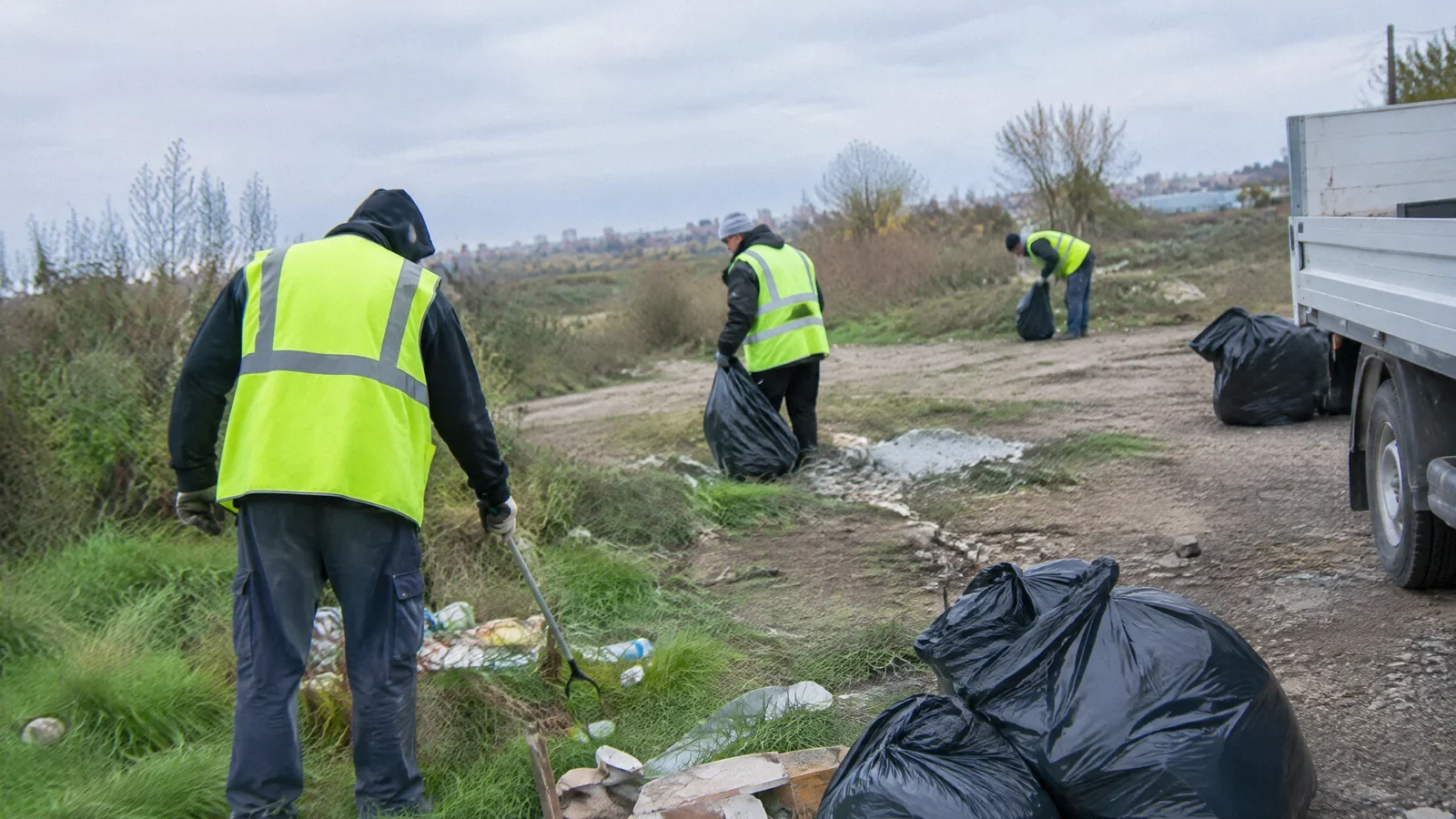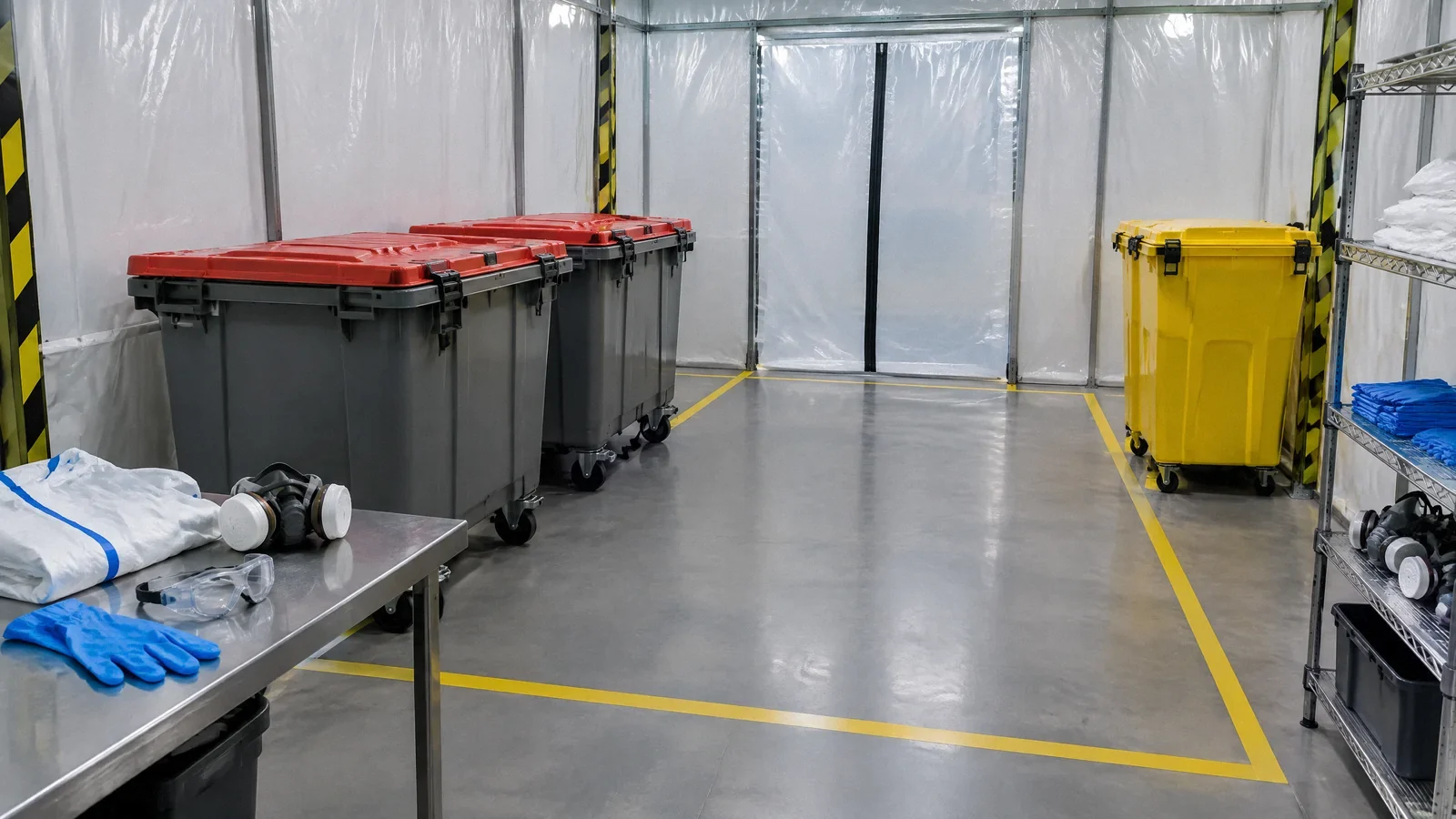
The requirements depend on the material, the work, and who performs it. California employers must assess workplace hazards, and the bloodborne pathogens standard applies when employees have occupational exposure. Commercial trauma scene waste practitioners must register with CDPH and follow applicable waste rules.
Start with the type of hazard and the role
Biohazard cleanup is a broad description, not a single California permit category. Human blood after a serious injury, discarded sharps, sewage, animal waste and spoiled food present different hazards and can trigger different rules. The first step is to identify what is known, keep people away, and avoid disturbing or moving contaminated items. If there is an immediate medical emergency, contact emergency services.
A homeowner arranging service, an employer directing workers, and a company commercially removing trauma scene waste have different responsibilities. Do not assume a contractor is qualified for every biological hazard because it advertises general water restoration. Ask what material is involved, what controls are planned, and which agency regulates the work and waste.
California trauma scene practitioner registration
The California Department of Public Health defines a trauma scene waste management practitioner as a person undertaking commercial removal of human blood, human body fluids and associated residues from the scene of a serious human injury, illness or death. CDPH says such practitioners must register and follow the relevant provisions of the Medical Waste Management Act. This requirement is tied to that defined activity; it should not be generalized to all household cleaning or all sewage work.
CDPH publishes a list of registered practitioners and explains that applicants must show a contractual relationship with a registered transporter or a permitted medical waste facility that will receive the waste. Ask the proposed company for its current registration and verify its standing with CDPH. Registration is one part of due diligence; it does not by itself establish the scope or quality of work at a particular property.
Worker exposure and employer responsibilities
California’s bloodborne pathogens standard, Title 8 section 5193, applies to occupational exposure to blood and other potentially infectious materials as defined in that standard. Covered employers must address exposure through an exposure control plan and applicable engineering and work-practice controls, personal protective equipment, training, vaccination and post-exposure procedures. The precise obligations depend on the work and exposure; read the standard and obtain qualified safety advice for the particular operation.
Universal precautions treat human blood and certain other body fluids as potentially infectious. Employers should not depend only on a worker’s willingness to wear gloves. The work plan needs suitable equipment, access controls, procedures for contaminated materials and sharps, and a way to respond to exposure. Workers need training relevant to the hazards and their assigned tasks.
The absence of coverage under section 5193 does not mean a workplace is unregulated. Cal/OSHA explains that an effective injury and illness prevention program must address other hazards encountered at work. For example, sewage cleanup can involve biological, chemical, electrical and physical hazards even when a particular task is not covered by the bloodborne pathogens rule.
Waste, transport, and documentation
Do not place unknown sharps or suspected regulated waste in ordinary household trash. The legal classification depends on the material and circumstances, and California has specific requirements for medical and trauma scene waste. A qualified practitioner should identify the receiving facility and transport arrangements before work begins. Do not assume that a red bag alone satisfies packaging, storage, transport or disposal requirements.
Ask for a written scope identifying what will be removed, how remaining surfaces and materials will be handled, and how the company will document disposal. Preserve invoices and records supplied for the job. For regulated operations, the contractor should be able to explain which required records apply and who maintains them. Local environmental health authorities can help identify the proper agency when the waste category is unclear.
Choosing a contractor and planning access
Describe the event factually without handling the material to obtain a sample. Ask whether the company has experience with the specific hazard, how it will limit access and cross-contamination, and whether it uses employees or subcontractors. Request evidence of applicable registration, worker training and insurance. If the work involves a commercial trauma scene, check the current CDPH registration rather than relying solely on a logo or statement in an advertisement.
Discuss the rooms and contents affected, who can enter during the work, and how completion will be assessed. Porous materials may require a different decision from hard, cleanable surfaces. A contractor should explain any proposed demolition and repair and identify uncertainties that may change the scope after inspection. Do not promise that a single disinfectant or odor treatment makes every material safe.
After an exposure or a disputed scope
If someone has a needlestick or another possible exposure, stop work and seek prompt medical advice. An employee should immediately report the event through the employer’s established procedure; the applicable standard addresses confidential post-exposure evaluation and follow-up. Do not wait for the entire cleanup to finish before reporting an exposure.
For a rental, notify the property manager and document the condition from a safe distance. If the classification, registration, or waste route is disputed, contact CDPH, the local environmental health agency, or Cal/OSHA as appropriate. Requirements can change and depend on the facts, so confirm the current rule and local enforcement agency before beginning regulated work.
Your next-step checklist
- Keep occupants away and do not handle unknown waste or sharps.
- Identify the material, circumstances and affected areas.
- Verify current CDPH registration when commercial trauma scene rules apply.
- Ask the contractor about worker protection, waste transport and disposal.
- Keep the written scope and applicable disposal documentation.
Related questions
Does every biohazard cleanup company need trauma scene registration?
No. CDPH registration applies to the defined commercial trauma scene waste activity. Other cleanup work may be subject to different rules.
Can a property owner dispose of contaminated sharps in household trash?
Do not put loose sharps into household trash. Contact the local health or waste authority for the proper collection and disposal route for the specific material.
Is a written safety plan enough?
A plan must be appropriate to the work and implemented. Applicable employer duties can also include controls, equipment, training and exposure follow-up.
Sources & context
Public guidance supports the principles in this article. The practical questions and examples are editorial interpretation, not a site assessment or a coverage decision. State-specific rules apply only where identified.