Identify the responsible property owner and public agencies, confirm the local rules for notice and belongings, coordinate outreach, and have qualified personnel assess hazards before cleanup. Procedures vary by jurisdiction and site; this is not a universal removal or eviction process.
Engage people respectfully
People at a site may be living there and may rely on possessions for shelter, identification, medication, mobility or communication. Coordinate with local outreach and service providers so residents can receive information and be heard. Use clear language about the proposed work, timing, who to contact and available assistance, in accessible languages and formats where feasible.
Do not assume that an unattended tent, bag or wheelchair is abandoned. Treat uncertain items as personal property until the responsible authority applies its current procedures. Avoid photographing or sharing identifying details unnecessarily; follow applicable privacy rules and the agency’s documentation policy. Safety planning should include residents as well as workers.
Notice and belongings depend on local rules
San Diego provides one local example: its published City procedure describes advance notice before certain cleanups and a process for documenting, storing and retrieving qualifying property. Its page also describes circumstances in which an expedited abatement may occur. Those details apply to the City’s own program and are not a national rule or permission for private parties to remove belongings.
Requirements may differ by site, legal authority, court order and current local policy. Ask the responsible agency which version applies, who provides notice, how property is identified and inventoried, and how its owner can retrieve it. Preserve records of the instructions received and do not decide a disputed property classification by convenience.
Assess hazards before work
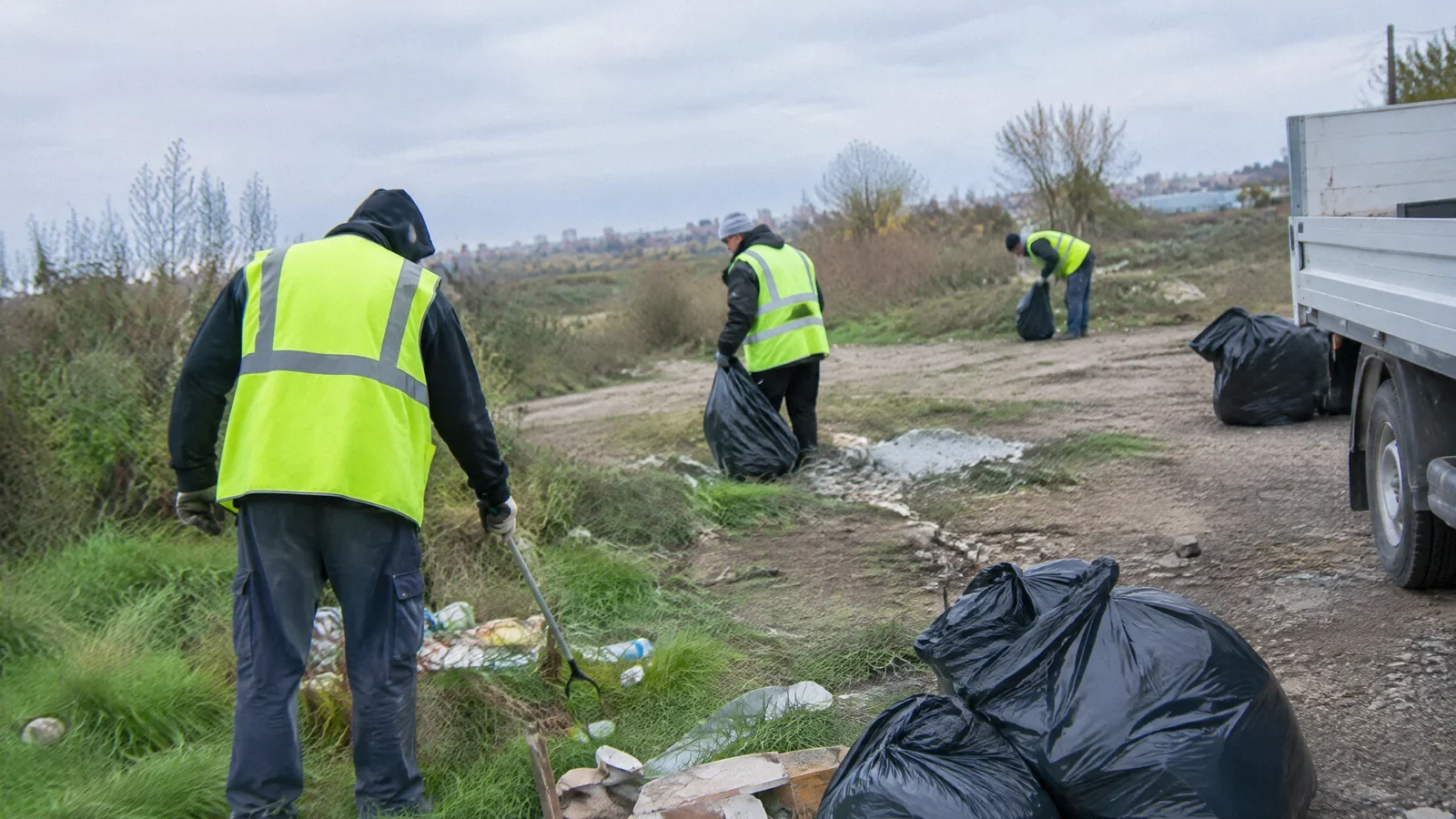
CalRecycle identifies potential solid, hazardous, medical and liquid wastes at encampments. Site conditions may include sharps, broken glass, waste containers, human waste, fuels, unstable objects, traffic or electrical hazards. A bag or container can conceal a hazard; its appearance does not establish its contents. Stop and ask qualified personnel to evaluate unidentified materials.
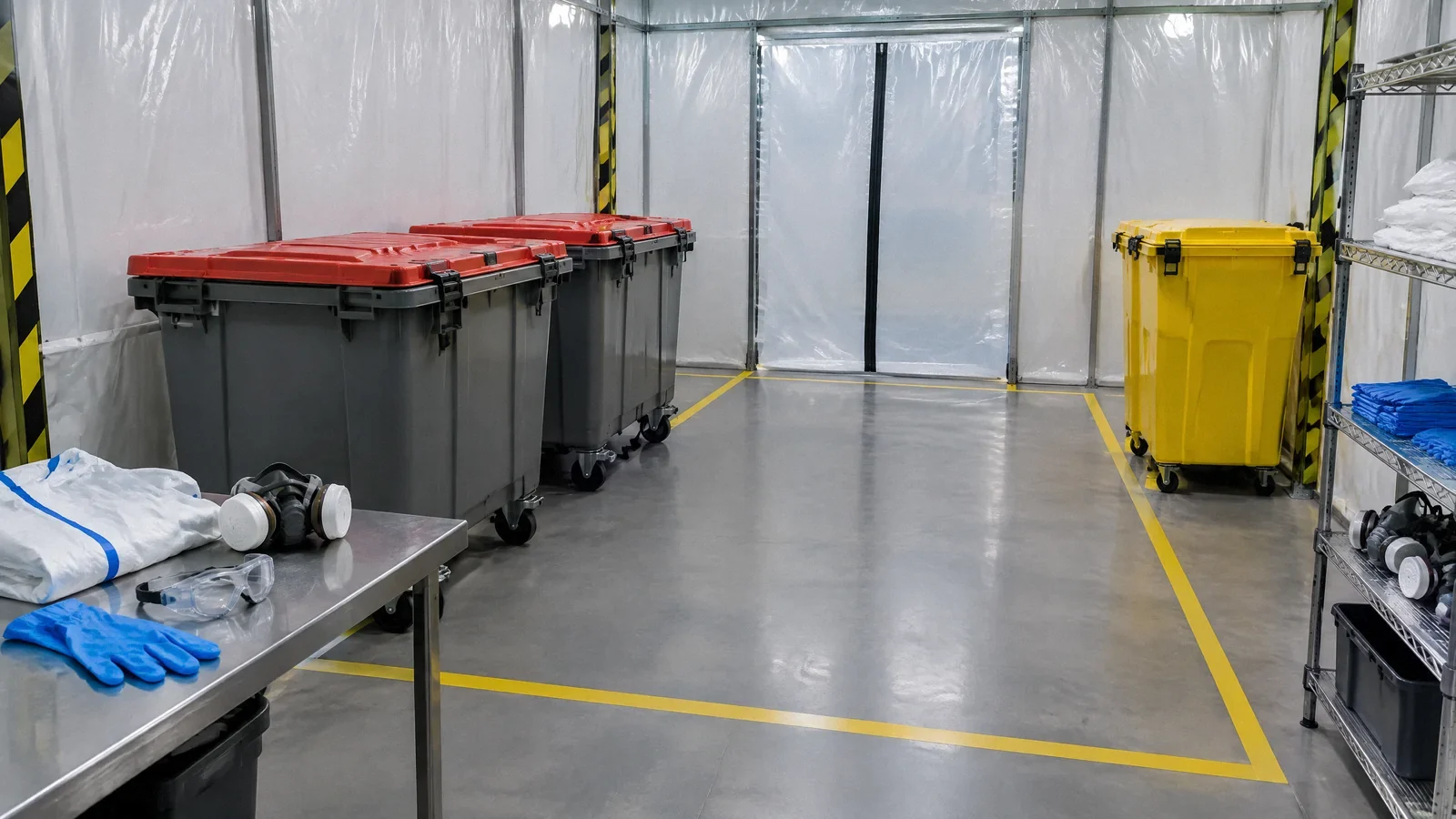
The employer or responsible organization should perform a site-specific hazard assessment and plan access, communications, equipment, protective measures and disposal. Keep untrained people away from hazardous materials. Do not compress bags by hand, pick up needles without appropriate training and equipment, or mix unknown chemicals.
Worker protections and specialist help
OSHA explains that workplace standards addressing personal protective equipment, respiratory protection, bloodborne pathogens and hazard communication may apply depending on the hazards and work. HAZWOPER applies to certain hazardous waste site cleanups and emergency responses when its specific conditions are met, including some sites identified by a government agency as uncontrolled hazardous waste sites. Its application depends on the operation and circumstances; it does not automatically apply to every encampment cleanup. Other applicable workplace protections still apply when HAZWOPER does not.
Select a contractor or public crew with training and equipment appropriate to the assessed hazards and applicable rules. Ask who supervises the work, how exposure incidents are handled and which licensed or otherwise authorized facilities will receive regulated wastes. Workers need a way to stop work if conditions differ from the plan.
Separate waste from property
Agree in advance on the responsible authority’s process for distinguishing ordinary refuse, regulated waste and personal property. Keep belongings and waste streams separate, and use approved collection and transport arrangements for sharps, hazardous substances and other regulated material. Do not place an unknown container in ordinary trash merely to clear the site quickly.
Documentation should record the site, scope, decisions, property handling and disposal destinations as required by the governing procedure. A record is not a substitute for authority or notice. Where a person disputes an item’s status, pause and refer the question to the agency or person legally responsible for the decision.
Complete the work and handoff
After the authorized cleanup, have the responsible supervisor check the site for remaining hazards without exposing untrained people. Confirm that waste was transferred to the appropriate receiving facility and retain the relevant records. If a hazardous substance, abandoned container or suspected contamination remains, identify who will assess it and how access will be controlled.
Communicate any property retrieval process and follow-up service information through the responsible agency. A clean surface does not prove that underlying soil or water is free of contamination. Testing or remediation decisions should be based on a qualified site assessment and applicable requirements, not on appearance alone.
Plan ongoing services
Repeated cleanup without a coordinated plan may leave the same safety and sanitation issues unresolved. Local agencies and property owners can discuss scheduled waste collection, access to sanitation, outreach and lawful property management appropriate to the site. CalRecycle describes several possible waste-management approaches, but local permission and practical conditions determine what can be used.
Review the cleanup with residents, outreach workers and the team where appropriate: whether communication was understood, hazards were reported, belongings were handled properly and services were accessible. Adjust the plan through the responsible authorities. This article provides an organizational overview, not legal advice or a procedure for removing residents.
Your next-step checklist
- Identify the property owner and responsible public agency.
- Confirm current local notice, property and retrieval rules.
- Coordinate outreach and clear communication.
- Have qualified personnel assess hazards and plan protections.
- Document authorized property handling and waste disposal.
Related questions
Can a property owner simply throw away belongings at an encampment?
Do not assume that unattended items are abandoned. Applicable property, notice and storage rules depend on the jurisdiction and circumstances; consult the responsible authority or local counsel.
Do all encampment cleanups require HAZWOPER?
No. OSHA describes specific conditions under which HAZWOPER applies; other workplace protections may also apply depending on the hazards and work.
What if a needle or unknown container is found?
Keep untrained people away and contact qualified personnel to assess and handle it under the applicable procedures.
Does San Diego’s notice period apply everywhere?
No. San Diego’s published procedure is a local example. Other jurisdictions and particular sites can have different requirements.
Sources & context
Public guidance supports the principles in this article. The practical questions and examples are editorial interpretation, not a site assessment or a coverage decision. State-specific rules apply only where identified.
- CalRecycle: Homeless Encampment Reference GuideCalifornia government guidance
- OSHA: Application of HAZWOPER to Worksite Response and Cleanup Activitiesfederal workplace safety guidance
- City of San Diego: Encampment Cleanup and Abatementlocal government procedure
- OSHA: Bloodborne Pathogensfederal workplace safety guidance