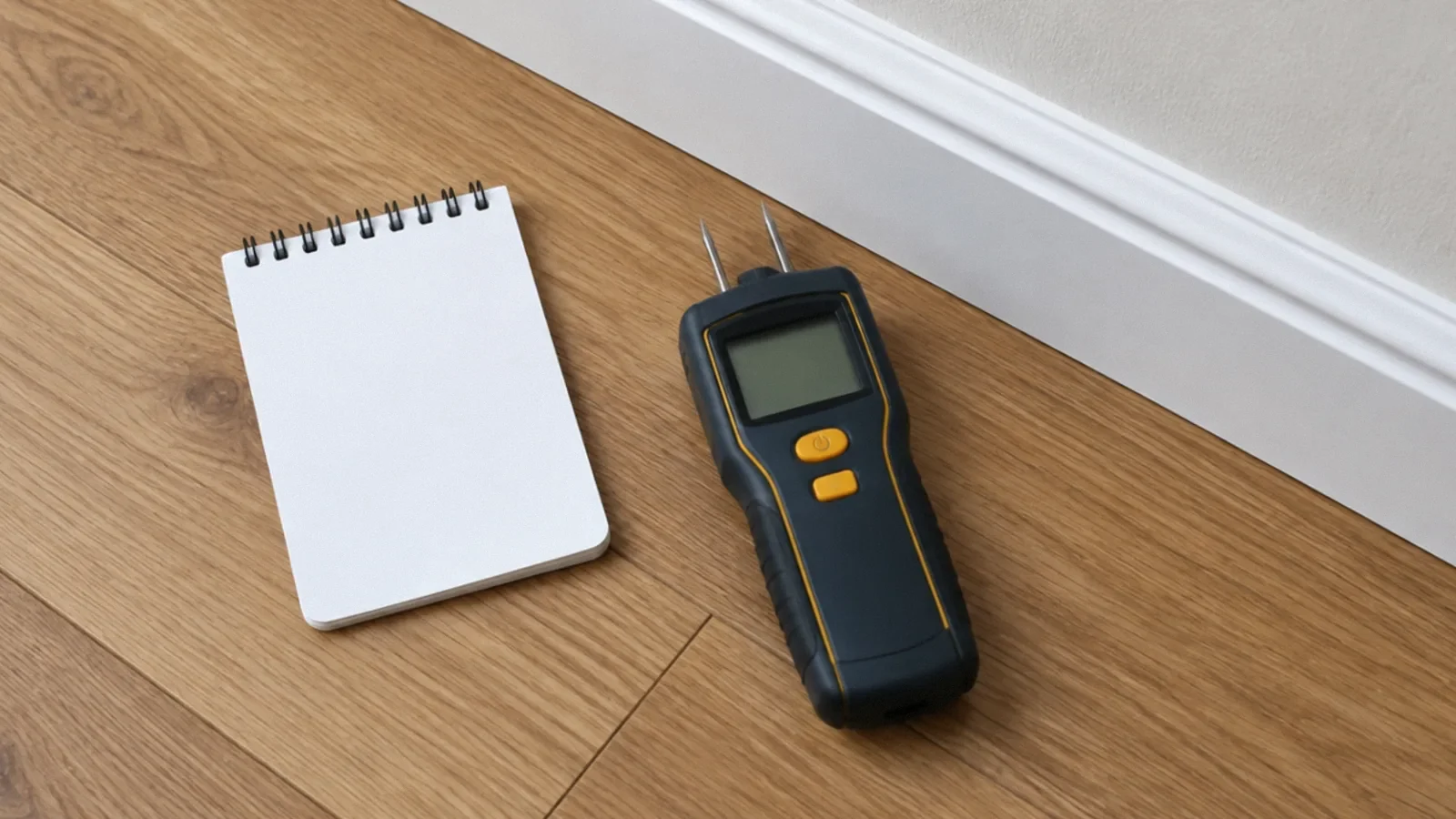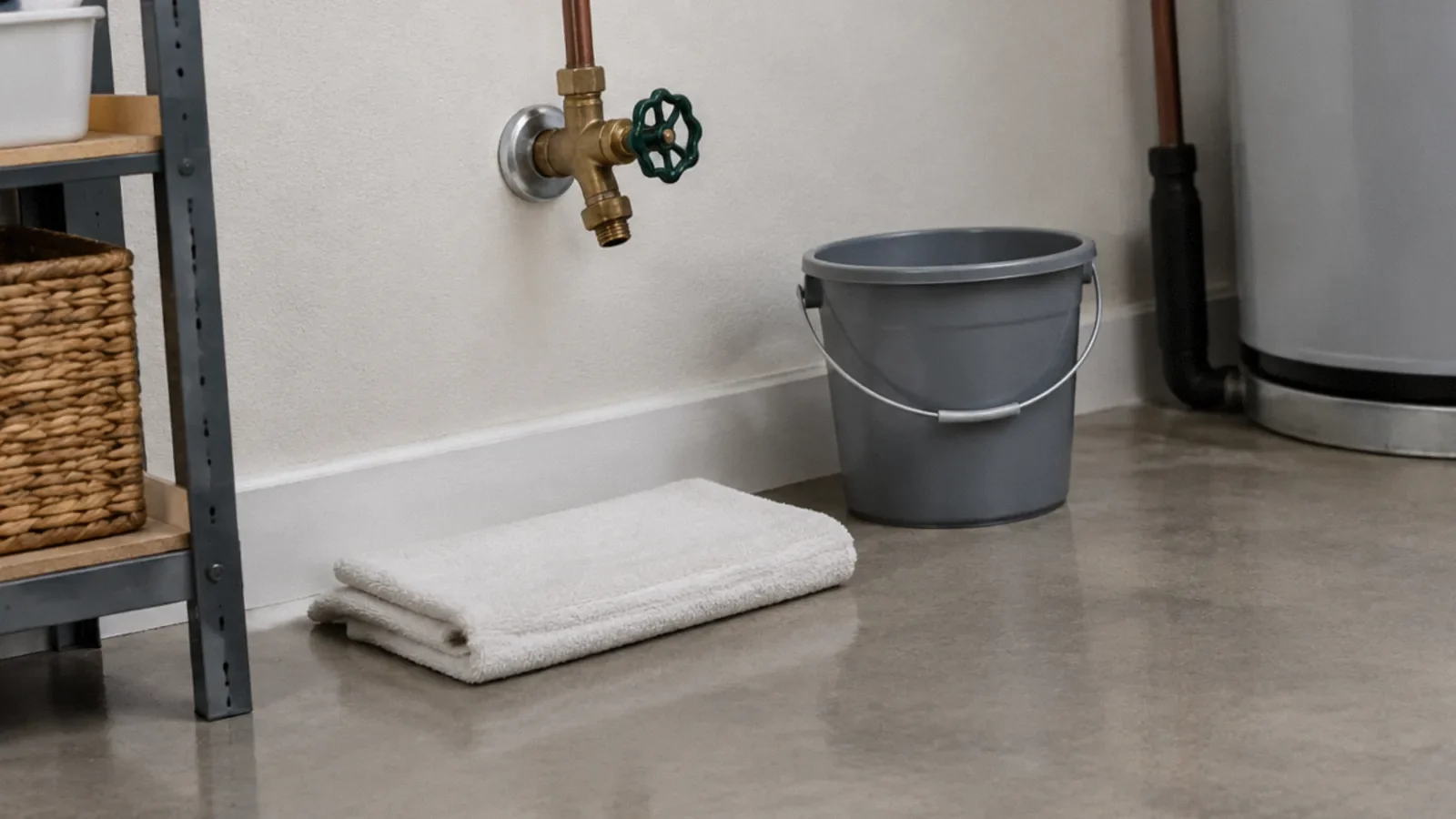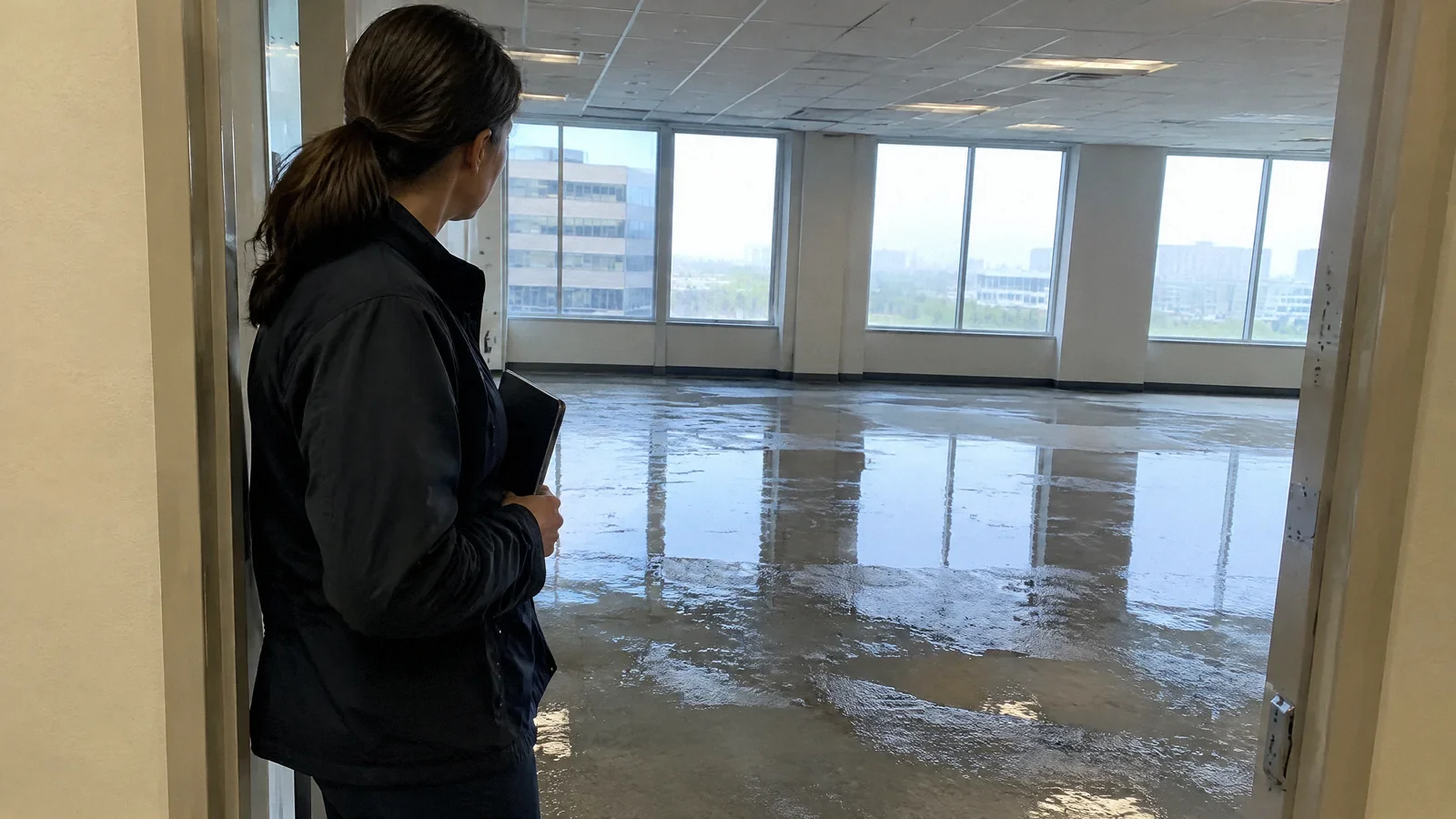
Protect occupants first, stop the water source only when safe, notify the owner or manager and affected tenants, and arrange a qualified assessment. Document the loss and coordinate drying, repairs and business continuity under the lease and actual insurance policies.
Common sources of commercial water damage
Commercial buildings can experience water intrusion from supply pipes, appliance or equipment connections, roof leaks, blocked drains, HVAC condensate, sprinkler systems, sewer backups and flooding from outside. A single incident can affect several floors or tenants because water travels through openings and building assemblies. The first visible stain may not identify the source.
Identify the suspected source and time of discovery, but do not treat a visual clue as a final diagnosis. A qualified plumber, roofer, building engineer or other specialist may be needed. The source and water quality influence safety precautions, cleanup decisions, repair scope and insurance review.
Protect people before property
Keep occupants away from standing water near electrical equipment, damaged ceilings, unstable structures and areas with suspected sewage or chemicals. OSHA advises a competent assessment before workers enter previously flooded areas because utilities and building conditions can be hazardous. Do not touch wet equipment or operate a switch in an unsafe area. Contact emergency services or the utility when appropriate.
Stop the source only if the correct valve or control is accessible and it is safe to do so. Fire protection, HVAC and other systems may have special shutdown and impairment procedures. Coordinate with building management and qualified personnel; an improvised shutoff can interrupt critical systems or affect other tenants.
Coordinate owner and tenant responsibilities
A commercial lease may allocate responsibility for the roof, plumbing, tenant improvements, contents, access and notice. The owner or manager may control shared systems while tenants control their own equipment and records. Notify all parties who may be affected and identify one contact to coordinate access, safety decisions and updates.
The lease, building rules and applicable law determine responsibilities; a generic checklist cannot decide who pays. Keep a record of notifications and decisions, including any temporary relocation or operational restrictions. If the incident affects a fire alarm, sprinkler or essential utility, follow the site’s impairment plan and contact the responsible service providers.
Document the loss and preserve evidence
When it is safe, photograph the source if visible, affected rooms and contents, and note when water was discovered and whether it continues. Record equipment shutdowns, contractor visits, communications and emergency expenses. Ask the insurer what documentation is needed and whether it wants to inspect before damaged materials are discarded, subject to urgent safety and mitigation needs.
A water meter reading, maintenance record or security footage may help establish timing, but it may not prove the cause by itself. Keep removed components when advised and practical. Separate confirmed observations from assumptions in the incident log. The insurer, engineer and repair team may each need different evidence.
Assess water quality and affected materials
Water from a broken supply line, sewage backup and outside flood can present different hazards. Do not assume that clear-looking water is clean or that contamination can be identified by smell. Floodwater can carry sewage and other hazards; trained personnel should assess the source and select appropriate controls and disposal methods.
EPA’s commercial-building guidance recommends prompt response to clean-water damage and offers material-specific guidance. It notes that professional assistance may be needed to dry an area quickly and thoroughly. Its 24–48-hour response guidance is not a promise that every assembly will be dry or mold-free within that period.
Drying and repairs need a clear handoff
Stop continuing water entry before rebuilding. The assessment should consider hidden cavities, flooring layers, insulation, contents and equipment, not just the visible surface. Ask which materials will be retained, removed or cleaned, what drying goals apply and how progress will be measured. A dry-looking finish does not establish that concealed layers are ready to close.
Some materials may remain damaged or contaminated even after they are dry. Coordinate the roof or plumbing repair with interior restoration and the eventual installer’s requirements. Obtain records of measurements, photographs before closure, unresolved limitations and the party accepting each stage of work.
Insurance and business interruption
Notify the appropriate property, flood or other insurer according to the actual policy. Coverage depends on the cause, definitions, exclusions, endorsements, deductibles and jurisdiction. A burst pipe and flooding from outside may be treated differently; do not assume either is covered or excluded without reviewing the policy and claim facts.
Business income or interruption coverage may have its own conditions, waiting period, limits and documentation requirements. The National Association of Insurance Commissioners explains that such coverage commonly relates to suspended operations after covered physical damage. Record lost operating time, expenses and alternative arrangements, and ask the insurer or broker how the specific policy applies.
Return to operation and prevent recurrence
Before reopening an affected area, confirm that building management and the appropriate professionals have addressed electrical safety, water source control, drying and any required system inspections. Follow local authority instructions where permits or occupancy restrictions apply. Inform employees and tenants about access, remaining work and whom to contact if water returns.
Review the incident afterward: whether shutoffs were accessible, alerts reached the right people, equipment maintenance was current and the lease contacts were available after hours. Preventive inspection and leak detection can reduce response time, but no device guarantees that every source will be caught. Update the plan based on the actual failure and building configuration.
Your next-step checklist
- Protect occupants from electrical, structural and contamination hazards.
- Stop the source only when safe and authorized.
- Notify building management, tenants and insurers.
- Document damage, timing and emergency expenses.
- Agree on drying goals, repair responsibilities and return-to-use criteria.
Related questions
What commonly causes commercial water damage?
Sources include plumbing failures, roof leaks, HVAC condensate, blocked drainage, sprinkler releases, sewer backup and outside flooding.
Who is responsible for repairs in a leased building?
Responsibility depends on the lease, the component involved, applicable law and the circumstances. Coordinate with the owner or manager and review the documents.
Is flood damage covered by commercial property insurance?
It depends on the actual policies, definitions and endorsements. Ask the insurer or broker to review the specific cause and coverage.
Is a building dry after 48 hours?
Not necessarily. EPA recommends prompt response to clean-water damage, but drying time and completion depend on materials, access and documented conditions.
Sources & context
Public guidance supports the principles in this article. The practical questions and examples are editorial interpretation, not a site assessment or a coverage decision. State-specific rules apply only where identified.
- EPA: Mold Remediation in Schools and Commercial Buildingsfederal building health guidance
- OSHA: Initial Entry into Flooded Buildingsfederal worker safety guidance
- NAIC: Business Interruption Insuranceinsurance regulator guidance
- California Department of Insurance: Commercial Insurance GuideCalifornia insurance guidance