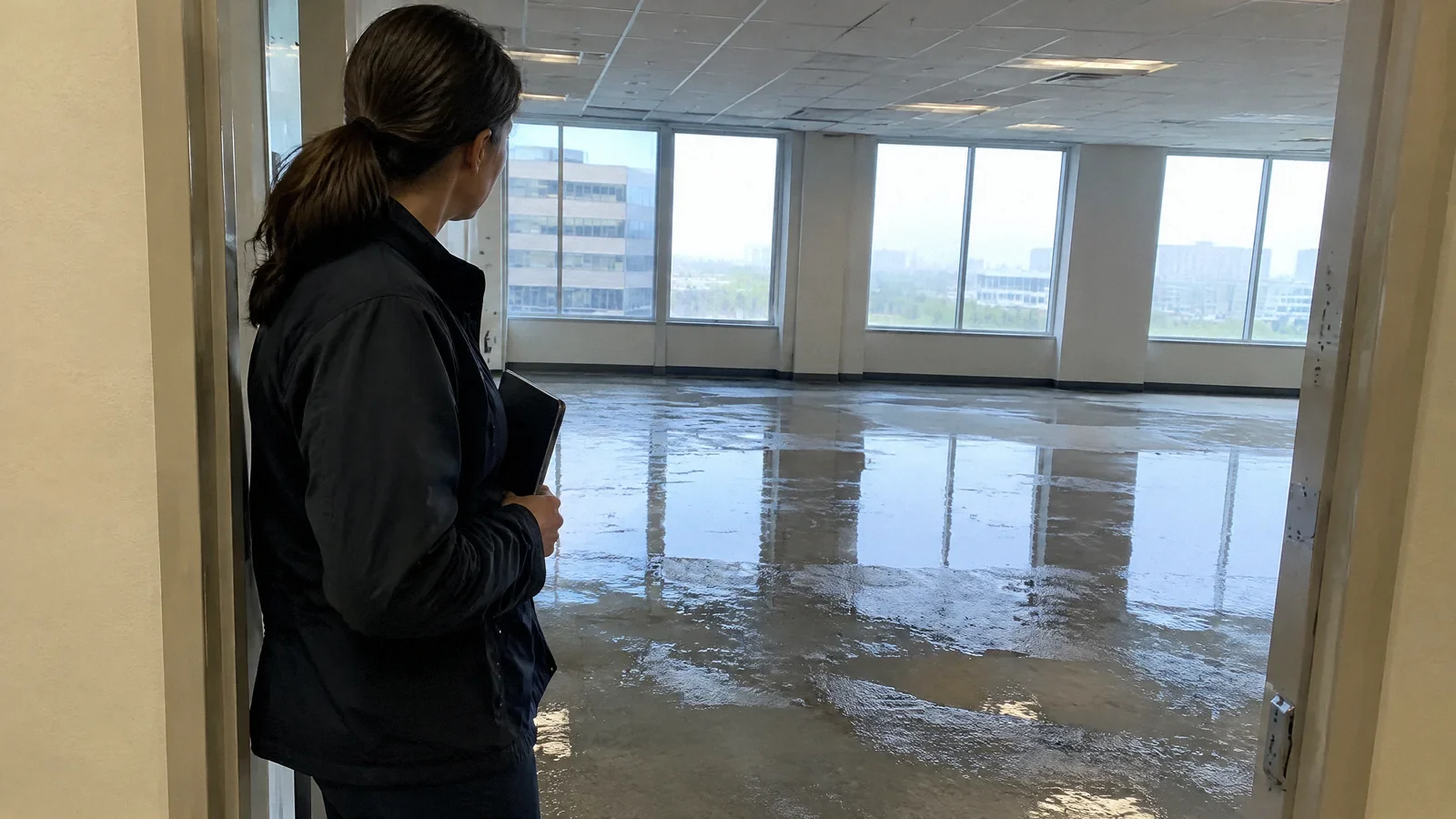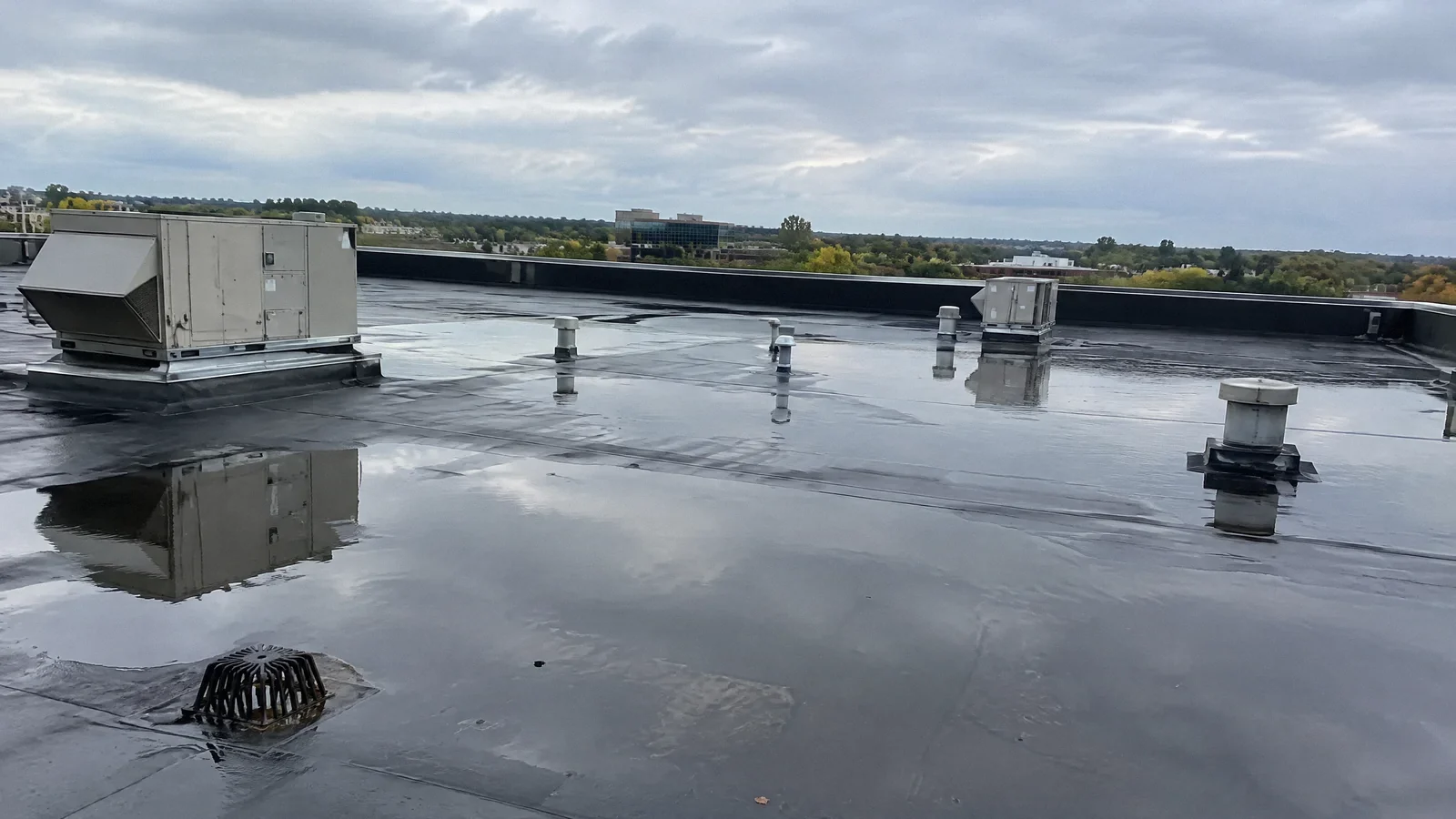
Protect occupants and equipment, document the leak, and arrange a qualified roof inspection and interior moisture assessment. A leak visible inside may originate elsewhere on a flat or low-slope roof, so avoid relying on the stain alone to locate it.
Protect the space below the leak
Keep people away from dripping water, a sagging ceiling, and wet electrical equipment. Move sensitive stock or records only when it is safe to do so. Do not stand on furniture or enter a wet electrical area to investigate. Notify facilities staff, the property owner, and affected tenants, and follow the building’s emergency procedures.
Record the time, weather, affected room, and visible damage from a safe location. If the leak threatens operations, arrange a safe temporary relocation and establish a single contact for updates. A container under a drip is only a temporary measure; it does not locate the entry point or dry concealed materials.
Arrange a professional roof assessment
A qualified commercial roofer can inspect the membrane, seams, penetrations, flashing, drains, and other components appropriate to the roof. Water can travel before appearing inside, so the roof defect may not be directly above a ceiling stain. Provide roof plans, warranty details, maintenance records, and information about recent work or storms.
Do not send untrained staff onto a wet roof or ask them to access edges and roof equipment. The roofer should use appropriate access and fall protection. Ask whether temporary weather protection is necessary and what conditions must be met before a permanent repair can be made.
Understand flat-roof drainage
Commercial flat or low-slope roofs rely on a drainage design suited to the building. Blocked drains, damage at penetrations, or other defects can contribute to water problems, but standing water alone does not identify the leak. A professional should assess the roof and drainage together, including any equipment or service penetrations.
Document whether the leak appears during rain, after a storm, or under different operating conditions. Interior plumbing or heating and cooling equipment can also cause moisture near a roof. Ask the inspector to explain the evidence supporting the diagnosis and any competing possibilities.
Assess interior moisture
A roof repair must be paired with an assessment of the affected ceiling, insulation, walls, and contents. Wet materials hidden above a suspended ceiling can remain after the visible drip stops. EPA recommends addressing the moisture source and evaluating the extent and materials when planning remediation. A restoration provider can document drying and materials that require removal.
Do not operate ventilation equipment suspected of mold contamination until qualified personnel assess it. If water reaches electrical or specialized business equipment, have qualified technicians evaluate it before use. Painting a stain before the area is dry can hide a continuing problem.
Coordinate estimates, warranty, and insurance
Ask for a written scope separating emergency protection, roof diagnosis and repair, interior drying, material replacement, and final finishes. Clarify access, tenant notifications, safety controls, and how hidden damage changes the price. A roof warranty may have notice and maintenance conditions; contact the issuer and roofer before work when practical.
Notify the insurer promptly and ask what documentation and authorization are needed. Coverage depends on the policy and cause. Keep photographs, roof inspection findings, repair records, invoices, and correspondence. Do not delay necessary emergency protection solely because a claim decision is pending.
Verify the repair and maintain the roof
Ask how the roofer will verify the repair and what conditions could limit that verification. After rain, inspect the previously affected area from a safe location and report recurring moisture promptly. Obtain records of the work, remaining defects, and recommended maintenance. Coordinate any required inspections with the property owner.
Set a regular inspection and maintenance process for drains, rooftop equipment, and penetrations, especially after storms or third-party roof work. Keep records of who accessed the roof and what changed. Repeated interior staining warrants a renewed investigation, not repeated cosmetic patching.
Coordinate rooftop work with building operations
A commercial roof may host ventilation equipment, communications equipment, and services maintained by different vendors. Give the roofer access information and relevant maintenance records, and coordinate with the responsible vendors before equipment is moved or interrupted. Ask the contractor how occupants will be protected from work below and how weather will affect the schedule. If a temporary repair is installed, document its intended duration and the conditions requiring follow-up. Keep the warranty contact informed as required by its terms. A temporary patch may limit immediate entry but does not establish that insulation or interior cavities are dry.
Your next-step checklist
- Keep people away from leaks and affected electrical equipment.
- Record weather, location and roof history.
- Arrange qualified roof and interior moisture assessments.
- Verify repairs and maintain roof drainage.
Related questions
How should a business respond to a leaking commercial roof?
Protect occupants and equipment, document the leak, and arrange a qualified roof inspection and interior moisture assessment. A leak visible inside may originate elsewhere on a flat or low-slope roof, so avoid relying on the stain alone to locate it.
Sources & context
Public guidance supports the principles in this article. The practical questions and examples are editorial interpretation, not a site assessment or a coverage decision. State-specific rules apply only where identified.