Stop the microwave and let it cool. If you suspect an electrical or chemical burning smell, see damage or cannot identify the source, do not use it again until a qualified technician has assessed it. For confirmed burnt food, follow the manufacturer’s cleaning instructions.
Stop and identify the source
Stop the appliance if you notice smoke or a burning odor. A food spill or burned popcorn can leave a persistent smell, but a damaged component or electrical connection can also produce an odor. Do not assume that all burnt smells are harmless food residue.
If the smell is electrical or chemical, there is sparking, or you see damage, stop using the microwave and contact the manufacturer or a qualified technician. Disconnect power only if the plug and surrounding area are dry and safe to approach; otherwise seek qualified help.
If there is active smoke or fire
Do not open the microwave door while there is a fire inside; keeping it closed can limit oxygen. Turn the appliance off or disconnect power only if it is safe to do so. If the fire does not go out promptly, or there is any doubt, leave, close the door behind you and call 911 from outside.
Never put water into an appliance to fight an electrical fire. Do not restart a microwave after a fire until it has been professionally evaluated. Follow the fire department’s instructions about reentry and use of the kitchen.
Let the appliance cool
After a confirmed minor food-burning incident has ended, allow the microwave and container to cool before touching them. Open the kitchen window if conditions permit, and remove the burned food when it is safe to handle. A hot dish can cause burns even when the appliance has stopped.
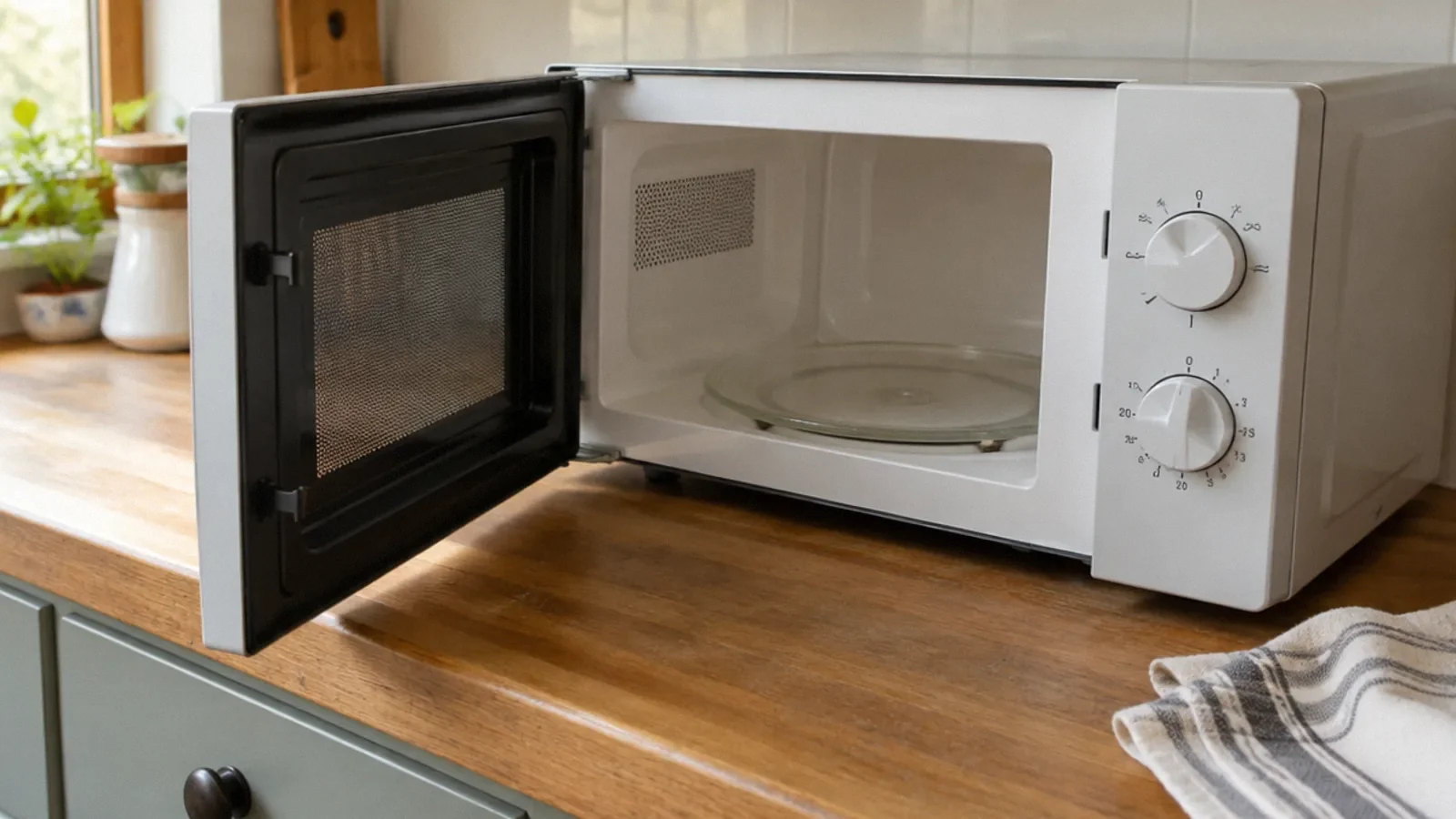
Unplug the microwave before cleaning if it is safe and accessible, or follow the model’s instructions for disconnecting a built-in unit. Do not remove the outer cover: internal components may retain a hazardous electrical charge even when the appliance is unplugged.
Clean the interior according to its manual
Check the owner’s manual for the permitted cleaning method. GE Appliances describes using a damp, soapy paper towel or sponge for many interior spills. Wipe away loose food without soaking openings, rinse residue with a clean damp cloth as directed and dry the surfaces.
Avoid abrasive pads, strong solvents and cleaners prohibited by the manufacturer. Never spray liquid directly into vents, controls or electrical openings. Remove the turntable only as the manual allows, wash it according to instructions and let it dry before reinstalling.
What about lemon or baking soda?
Some manufacturers suggest model-appropriate deodorizing methods for food odors. Recipes on the internet are not automatically safe for every appliance. Follow the specific owner’s manual rather than mixing products or heating an unfamiliar solution.
Heated liquids can become dangerously hot or erupt when disturbed. If the manufacturer directs you to heat liquid, use a suitable container, follow its instructions and allow cooling time. Never operate a damaged microwave merely to remove an odor.
A smell in the vents or the room
Burnt food odors can linger in the kitchen or around the appliance after residue is removed. Ventilate the room when safe and clean accessible exterior surfaces according to the manual. Odor alone cannot establish that wiring or internal insulation is undamaged.
Do not remove vent covers or disassemble the microwave to reach an odor. If the smell appears to come from an outlet, cord or internal component, stop using the appliance and arrange a technician or electrician as appropriate. Persistent smoke or an active fire warrants emergency action.
When to arrange repair
Arrange service if there is arcing, a damaged door or seal, a burned outlet or cord, an unexplained electrical odor, or smell and smoke that return during normal use. Give the technician the model number and describe what was cooking and when the odor began.
A damaged unit should not be tested repeatedly. Ask whether repair is appropriate and whether a qualified person should check the outlet. Do not use an extension cord or adapter as a workaround for a suspect connection.
Prevent food from burning again
Use the recommended power and cooking time for the food and container. Check progress, follow package directions and avoid operating the appliance empty unless the manufacturer explicitly instructs it. Use only containers and covers approved for microwave use.
Clean spills promptly once the unit has cooled. Keep the door seal and interior in good condition and follow the manufacturer’s instructions for maintenance. A microwave that smells clean is not necessarily safe if electrical damage remains.
Your next-step checklist
- Stop use if you notice smoke or an unexplained odor.
- Do not open the door during an internal fire.
- Cool and disconnect safely before cleaning.
- Seek service for sparking, damage or electrical smells.
Related questions
How do I get burnt food smell out of a microwave?
After the incident has ended and the unit has cooled, follow the manufacturer’s interior cleaning and ventilation instructions.
Can I use a microwave with an electrical burning smell?
Stop using it and have a qualified technician assess it before reuse.
Should I take the cover off to clean the vents?
No. Internal components may retain a dangerous electrical charge even after unplugging; leave disassembly to a technician.
How do I remove the smell from the kitchen?
Once the incident is over and conditions are safe, ventilate and clean accessible surfaces. Investigate persistent or electrical odors.
Sources & context
Public guidance supports the principles in this article. The practical questions and examples are editorial interpretation, not a site assessment or a coverage decision. State-specific rules apply only where identified.
- GE Appliances: Microwave odorsmanufacturer guidance
- GE Appliances: Cleaning recommendationsmanufacturer guidance
- U.S. Fire Administration: Cooking fire safetyfederal safety guidance