Stop additional treatment, document the condition and contact the cleaning company promptly. Some appearance changes may improve as the carpet dries; others need a qualified assessment. If it remains wet, smells musty or water reached the pad, arrange prompt drying and inspection. Do not assume the cause or authorize another chemical treatment before the carpet is assessed.
Pause and document the change
If a carpet looks worse after cleaning, note exactly what changed and when. Take photographs in consistent lighting of the affected area and a wider view showing its position in the room. Photograph seams, edges or backing only where already visible; do not pull up carpet yourself to prove a point. Save the invoice, work order, product information, warranty documents and any photographs taken before the visit.
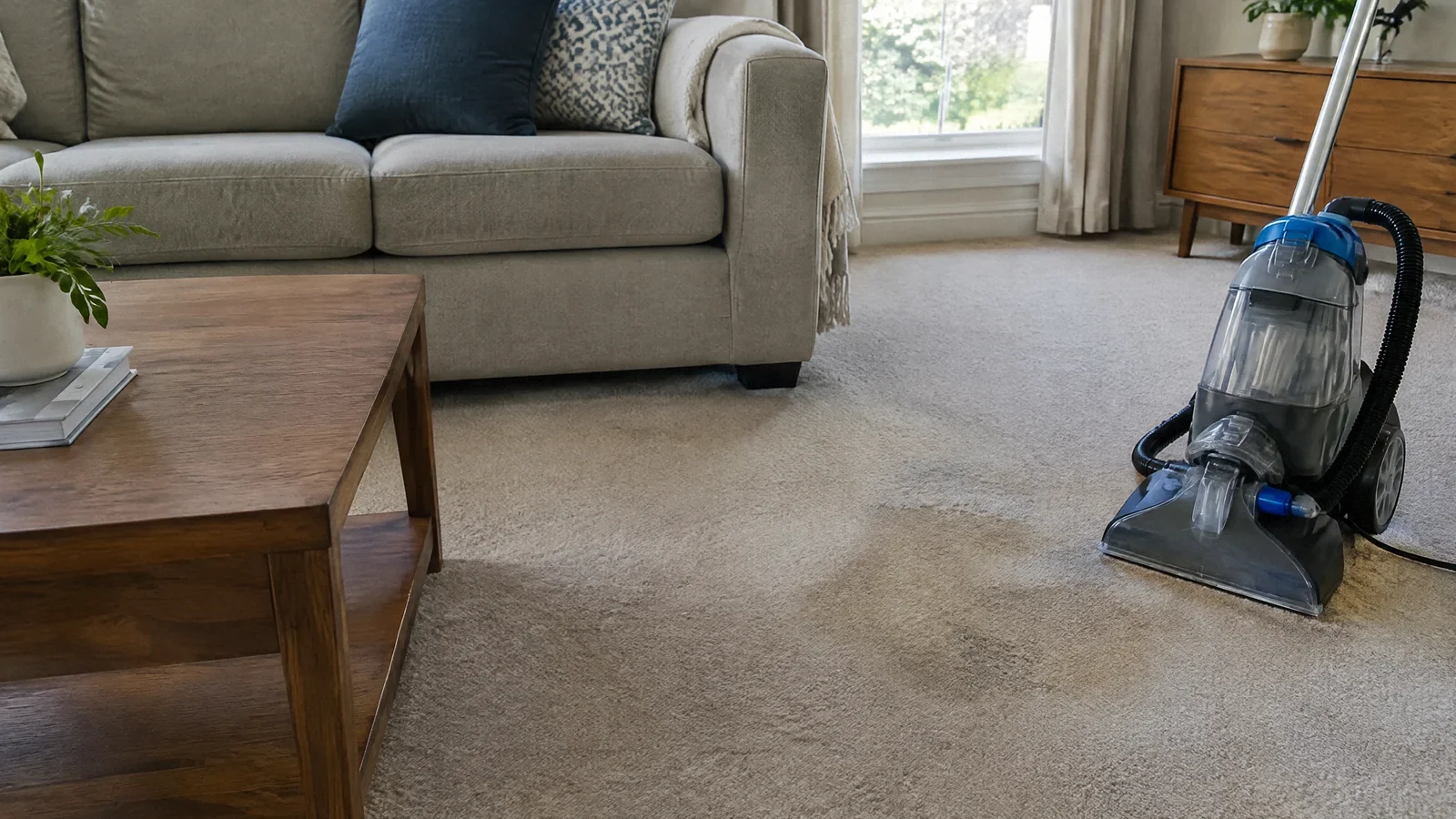
Describe the appearance in neutral terms: a brown patch, a lighter spot, a ripple, a stiff area, a changed texture or a persistent odor. These are observations, not proof of the cause. A carpet may look different while damp, and a stain can become apparent as it dries. At the same time, visible change may involve the carpet, backing, pad or a preexisting condition. An inspection is needed before assigning responsibility.
Contact the company promptly and request a written response. Give it a reasonable opportunity to inspect, but explain any active moisture concern immediately. Ask what method and products were used, what drying time was expected, and whether it has photographs or notes from before the work. Preserve messages and dates.
Deal with dampness first
A carpet that is still damp immediately after wet cleaning is not automatically ruined. However, prolonged wetness deserves prompt attention because the backing, pad and subfloor may also be wet. EPA emphasizes drying wet carpet and backing promptly and investigating moisture that remains beneath the visible surface. Ask the cleaner how it will check and accelerate drying without applying more water or chemicals.
Follow the cleaner’s and carpet manufacturer’s instructions for ventilation and access. Keep people from slipping on wet transitions to hard floors, and keep furniture off damp areas as directed. If there is standing water, a musty odor, suspected mold, or the carpet and pad are not drying, contact a qualified water-damage professional. If the water source is sewage or otherwise contaminated, use a specialist experienced with contaminated water instead of treating it as routine cleaning.
Do not place electrical equipment in standing water or use household appliances in a way the manufacturer does not permit. A dry carpet surface does not prove the pad and subfloor are dry. Ask the professional what was checked and how the condition was determined.
Understand common appearance changes
Brown or yellow areas can have several causes, including residue or material drawn toward the surface as moisture evaporates. A stain that reappears after drying is not necessarily proof of a particular chemical or technique. Ask an experienced carpet professional to assess the fiber, backing, cleaning history and moisture before proposing treatment. More cleaning solution can complicate the assessment or add moisture.
Ripples or a loose appearance may relate to moisture, installation, wear or other conditions. Some changes may lessen as the carpet dries; others require a carpet installer’s evaluation. Avoid cutting, stretching or gluing the material yourself while its condition and any warranty implications are unresolved.
A lighter patch may reflect color loss, a change in pile direction or another cause. Texture changes can also arise for several reasons. An independent specialist can assess whether correction, a patch or replacement is feasible, but no method can guarantee the original appearance. Retain a spare piece or product information if available.
Agree on an assessment and proposed remedy
Ask the original cleaner to inspect and provide a written explanation of observations, proposed treatment, expected outcome and any limitations. Find out whether an additional treatment could affect color, backing or warranty coverage, and whether there is a charge. Do not feel obliged to accept an immediate second treatment before you understand it. If the parties disagree about the cause, consider an independent carpet inspector or installer familiar with the product.
A useful assessment records the carpet type and age, installation, previous condition, products and method used, moisture status, and the location of each change. Ask whether the proposed remedy is a cleaning correction, drying, stretching, repair or replacement, and what outcome can realistically be expected. Obtain the proposal in writing before work starts.
The Carpet and Rug Institute recommends asking prospective cleaning providers about their methods and training. Your carpet manufacturer’s care and warranty documents may set additional conditions. A warranty or insurance policy should be read on its own terms; this article cannot determine liability, coverage or a legal outcome.
If the issue remains unresolved
Summarize the facts and requested remedy in writing, attach dated photographs and give the company an opportunity to respond. Keep original files and avoid altering the area unnecessarily. If an urgent drying intervention is needed, document why and tell both providers what work has already been done. Obtain a separate written estimate if an independent repair is proposed.
If direct discussion does not resolve the matter, consider the consumer complaint, mediation or other options available in your location. Rules and deadlines differ, so consult the relevant local authority or a lawyer if needed. Do not assume that the presence of a stain alone proves negligence or that a particular remedy will be available.
Your next-step checklist
- Photograph the condition and retain the invoice and care documents.
- Contact the cleaner promptly and request its work details.
- Address persistent moisture and check the pad and subfloor when needed.
- Obtain a written assessment before additional treatment.
- Consider an independent evaluation if the cause or remedy is disputed.
Related questions
Does a brown mark mean the cleaner ruined the carpet?
Not necessarily. Several conditions can produce discoloration, and a qualified assessment is needed to determine the cause and possible remedy.
Should the cleaner immediately treat the area again?
Ask for an assessment and written explanation first. Another treatment can affect the carpet or add moisture.
How can I tell whether the pad is dry?
The surface alone is not reliable evidence. Ask a qualified professional how the pad and subfloor will be evaluated.
Sources & context
Public guidance supports the principles in this article. The practical questions and examples are editorial interpretation, not a site assessment or a coverage decision. State-specific rules apply only where identified.