Electrostatic sprayers charge droplets as they are applied to surfaces. The process is an application method, not proof that a room is clean or disinfected. EPA does not recommend using a disinfectant this way unless its label includes the method; cleaning, suitable coverage and required contact time still matter.
What electrostatic spraying means
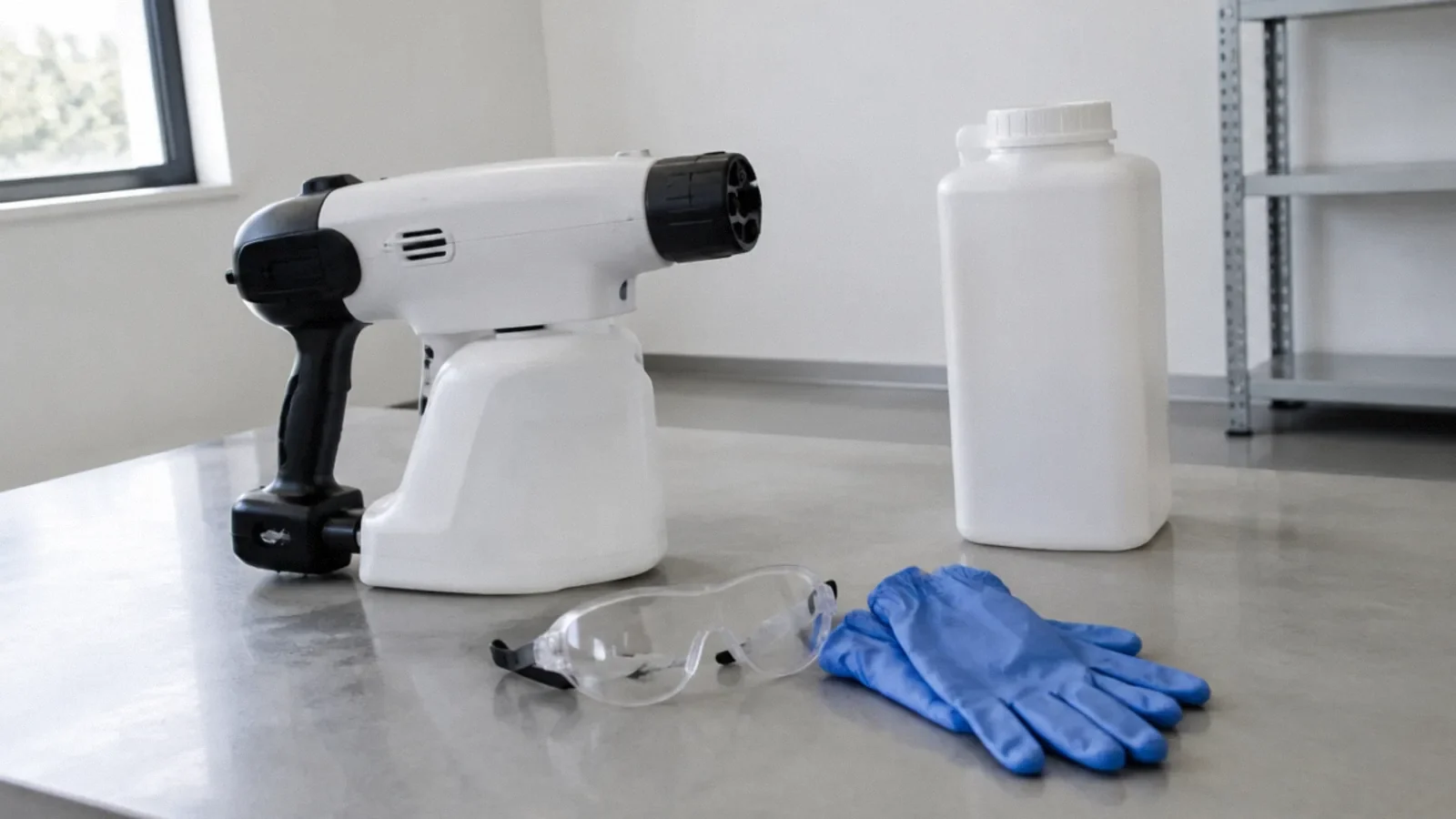
An electrostatic sprayer applies a charge to liquid droplets, which may affect how they deposit on surfaces. Equipment, droplet size, distance, surface geometry and the product all affect results. The term is often used in marketing as “electrostatic cleaning,” although spraying a disinfectant and physically cleaning soil are different tasks.
The device itself does not establish that a surface is disinfected. Evaluate the specific product, the surfaces to be treated and the purpose before selecting a method. A routine cleaning task may not require a disinfectant at all.
Cleaning comes before many disinfection tasks
Cleaning removes dirt and visible organic material; disinfection uses a product against organisms specified on its label when directions are followed. Soil can interfere with a disinfectant. Check whether the chosen product and situation require precleaning and follow the relevant instructions.
A spray cannot reliably remove hidden contamination, wet building material or the source of a sewage leak. After water or mold damage, a qualified assessment should address moisture, affected materials and physical removal as appropriate. Do not treat fogging as a substitute for remediation.
Read the product label before choosing a sprayer
EPA states that it does not recommend applying disinfectants with electrostatic spraying, fogging or related methods unless the product label specifically includes directions for that method. A disinfectant being EPA registered for another use does not automatically authorize every application method.
Read the complete current label for the specific product, target organisms, surfaces, dilution and application method. Follow its requirements for ventilation, protective equipment, bystanders, contact time and reentry. A provider should be able to identify the product and show the applicable label.
Contact time and coverage
A disinfectant generally needs to remain wet on the surface for the label’s required contact time. EPA research found that a sprayer can apply too little liquid to maintain the needed wetness. Missing areas, shadows behind objects and incompatible surfaces can also limit coverage.
In EPA’s tests, the commonly claimed wraparound effect was limited. Do not assume that a single pass reached every side of an object or that the same settings work for all products. Follow the labeled method and inspect the practical conditions.
Exposure and safety
Spraying can create airborne chemical exposure. CDC warns that aerosolized disinfectants may irritate eyes, skin or airways and cause other health problems. The product’s safety data sheet and label, together with applicable workplace requirements, guide protective measures.
Keep unprotected occupants and pets out when the label requires it. Do not mix chemicals or spray electrical equipment, food, medical devices or sensitive materials unless the specific instructions permit that use. Seek qualified advice for specialized environments.
Questions to ask a service provider
Ask which surfaces will be physically cleaned, the exact product and EPA registration number, whether the label permits electrostatic application, required wet contact and reentry times, and who is responsible for ventilation and occupant protection. Request a written scope rather than an unspecified “whole-room sanitization.”
For schools, healthcare or workplaces, the facility’s infection-control and occupational safety procedures may impose additional requirements. A service claim should be limited to the actual product, method and treated surfaces rather than a promise that a building is permanently germ-free.
When another approach may be better
Routine cleaning with soap or detergent is sufficient for many everyday situations. A targeted liquid or wipe application can provide better control over where a disinfectant goes when disinfection is needed. The appropriate method depends on the task, label and setting.
For sewage, blood or mold, identify the specific hazard and follow qualified procedures; the same chemical or process is not suitable for every contaminant. Stop if the method, product or required protective measures are unclear.
Plan a verifiable scope
Before arranging any spraying, list the surfaces, occupants and access restrictions, and identify who will clean visible soil. Ask the provider for the complete label and written application method, not just the name of the machine. The product must be suitable for the specific surface and any claim relied upon.
Ask how the provider will confirm that accessible surfaces remain wet for the required contact time, and how equipment, sensitive surfaces and occupied areas will be protected. A sprayed mist does not establish that hidden faces or obstructed surfaces have been reached. Record what was treated and any areas excluded.
For office cleaning after COVID-related illness, the separate office-cleaning guide addresses the broader decisions about routine cleaning and targeted disinfection. Select the method based on current public-health guidance and the product label, rather than treating a particular machine as a substitute for a cleaning plan.
Your next-step checklist
- Define the cleaning or disinfection task.
- Confirm the product label permits electrostatic application.
- Clean visible soil when required.
- Follow coverage, contact time and reentry directions.
- Do not use a spray as a substitute for fixing moisture or removing contaminated materials.
Related questions
Does electrostatic spraying clean a room?
It applies liquid to surfaces; it does not replace physical removal of dirt or establish that every surface was treated.
Can any disinfectant be used in an electrostatic sprayer?
No. EPA does not recommend the method unless the product label includes directions for it.
Does electrostatic spraying remove mold?
Spraying alone does not remove affected material or correct the underlying moisture problem.
Is contact time still necessary?
Yes. Follow the specific disinfectant label, including the time the surface must remain wet.
Sources & context
Public guidance supports the principles in this article. The practical questions and examples are editorial interpretation, not a site assessment or a coverage decision. State-specific rules apply only where identified.
- U.S. EPA: Electrostatic spraying and disinfectant labelsfederal guidance
- U.S. EPA: Research on electrostatic sprayersfederal research
- CDC: Sprayer safety precautionsarchived federal guidance