Clean frequently touched surfaces routinely and use targeted disinfection when appropriate under current health guidance. Choose a product suitable for the surface and virus, follow its label and protect cleaning workers. Ventilation and other respiratory illness precautions remain important.
Set a plan for the actual office
A practical plan identifies who cleans, which surfaces are shared, what products are approved and how staff report shortages or spills. Start with entrances, meeting rooms, shared desks, kitchens and restrooms. The CDC recommends regular cleaning of high-touch surfaces and cleaning other surfaces when visibly dirty in community facilities such as offices. Frequency should reflect use and the conditions in the building.
This guide concerns a general office, not a healthcare facility, food preparation operation or other setting with specialized rules. Check current local public-health advice and workplace requirements, particularly during an outbreak. A cleaning plan is one part of a broader respiratory illness plan, not a guarantee that no one will become ill.
Clean first and disinfect when appropriate
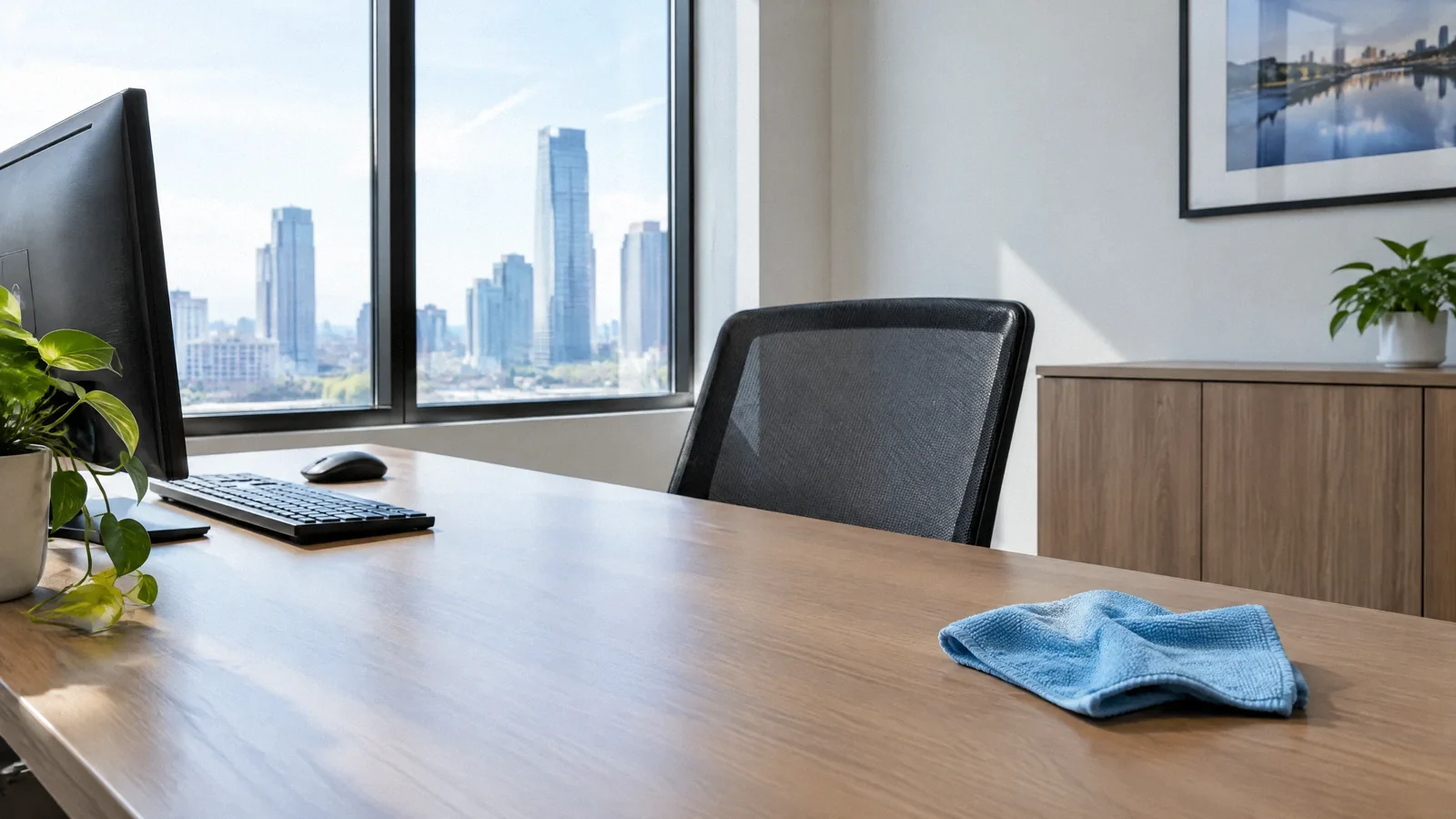
Cleaning removes dirt and impurities; disinfection uses a product intended to kill specified germs on a surface. Dirt can interfere with disinfection, so clean first when the product instructions require it. Focus on shared touch points such as door handles, switches, meeting-table surfaces and shared equipment. Follow the equipment maker’s instructions for screens, keyboards and other electronics.
CDC recommends disinfecting areas where people have obviously been ill and notes that facilities may choose additional disinfection for high-traffic areas or under outbreak guidance. If a person with suspected or confirmed COVID has used a space, follow current local and organizational instructions for that situation. Document who is responsible and when the affected area can be returned to use. Do not promise that a single treatment makes a room permanently safe.
Choose and apply a suitable product
EPA’s List N identifies registered disinfectants expected to work against SARS-CoV-2 when used according to their labels. Check the EPA registration number and confirm that the product is suitable for the surface. The label specifies dilution if required, application, protective equipment and the contact time: the period the surface must remain wet. A quick wipe that dries too early may not meet those directions.
Follow any label instructions for rinsing food-contact surfaces and for storage. Never mix disinfectants or cleaning chemicals, and never apply them to people. Keep products in labeled containers and out of unauthorized reach. A stronger smell or a larger amount does not prove better disinfection. Train workers to read the label and the safety data sheet for each product they use.
Protect cleaning staff and occupants
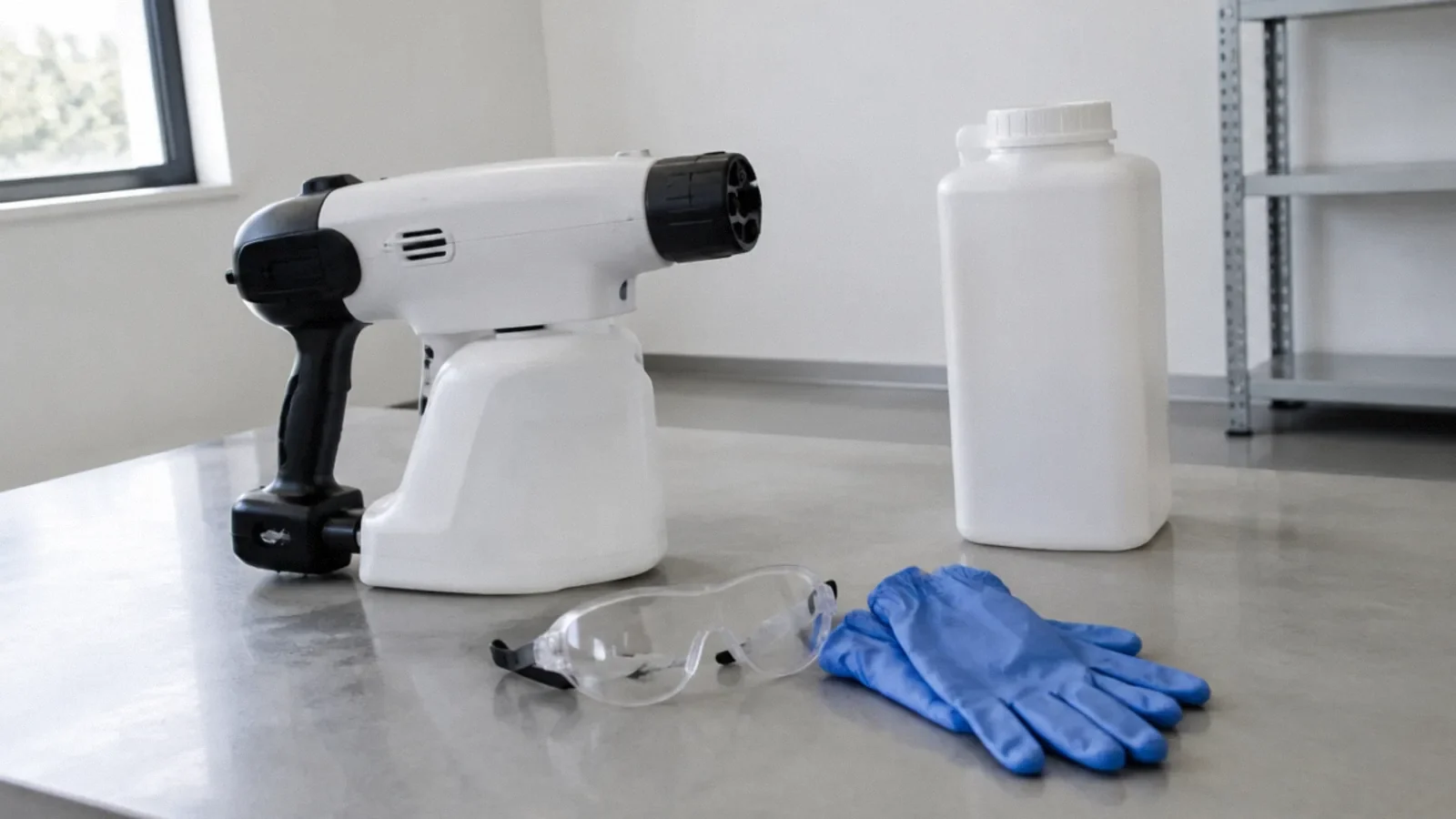
Make the work area ventilated as directed, provide the recommended gloves or other protective equipment, and ensure staff know how to put it on, remove it and dispose of or clean it. CDC advises employers to train workers about product hazards, protective equipment and safe use and storage. Keep safety data sheets accessible and follow applicable workplace requirements.
Schedule cleaning to reduce unnecessary contact with occupants and post a clear temporary notice where a surface must stay wet or dry. Coordinate with building management before changing ventilation settings. If a worker has a concern about chemical exposure, provide a way to stop work and report it. Do not direct spray toward people, food or sensitive equipment.
Treat the air as well as surfaces
Respiratory viruses can spread through the air, especially indoors and in crowded areas. CDC says ventilation can reduce airborne germ concentration and recommends multiple prevention measures. Ask a qualified building professional to check that the HVAC system operates as designed and supplies appropriate outdoor air. Portable HEPA air cleaners may supplement ventilation when selected and positioned for the room.
Opening windows can help where outdoor conditions, safety and security allow, but it may not be appropriate everywhere. Do not disable central ventilation merely because a room is being cleaned. Coordinate any changes with the building operator. Cleaning surfaces does not replace clean air, and air cleaning does not remove visible dirt from a desk.
Avoid unnecessary fogging and unsupported promises
CDC says fogging, fumigation and wide-area or electrostatic spraying are generally not recommended as primary surface-disinfection methods unless the product label permits the method. These approaches can expose workers and may not ensure that every surface receives the required wet contact time. Ask any contractor to identify the product, application method, surfaces, training and reentry instructions.
Be cautious of a proposal that promises a permanently virus-free office or recommends treating all surfaces without explaining the reason. Request a written scope separating routine cleaning, targeted disinfection and any air-quality work. Confirm the product and method are appropriate to the space and that the contractor can supply labels and safety information.
Maintain and review the plan
Keep a simple schedule showing high-touch areas, cleaning frequency, responsible staff and supplies. Include a procedure for restocking, handling spills and escalating a question about a product or surface. Record completed work in proportion to the size of the facility; a useful checklist is better than a log that no one reviews.
Review the plan when occupancy changes, a product is replaced, local guidance changes or a problem is reported. Check that shared equipment can be cleaned without damage, that staff have access to supplies, and that building ventilation receives normal maintenance. Adjust the plan to actual use rather than applying the same intensity to every room.
Your next-step checklist
- Identify high-touch surfaces and assign routine cleaning.
- Use targeted disinfection when indicated and follow the label.
- Provide ventilation, training and protective equipment.
- Coordinate HVAC and cleaner-air measures with building management.
- Review the plan after changes in occupancy or guidance.
Related questions
Does office cleaning alone prevent COVID transmission?
No. Surface cleaning is one measure. Respiratory viruses can also spread through the air, so ventilation and other appropriate precautions matter.
Should every office be fogged after a COVID case?
Not automatically. CDC generally does not recommend fogging as a primary surface-disinfection method unless the product label permits it. Follow current guidance and assess the actual circumstances.
Sources & context
Public guidance supports the principles in this article. The practical questions and examples are editorial interpretation, not a site assessment or a coverage decision. State-specific rules apply only where identified.