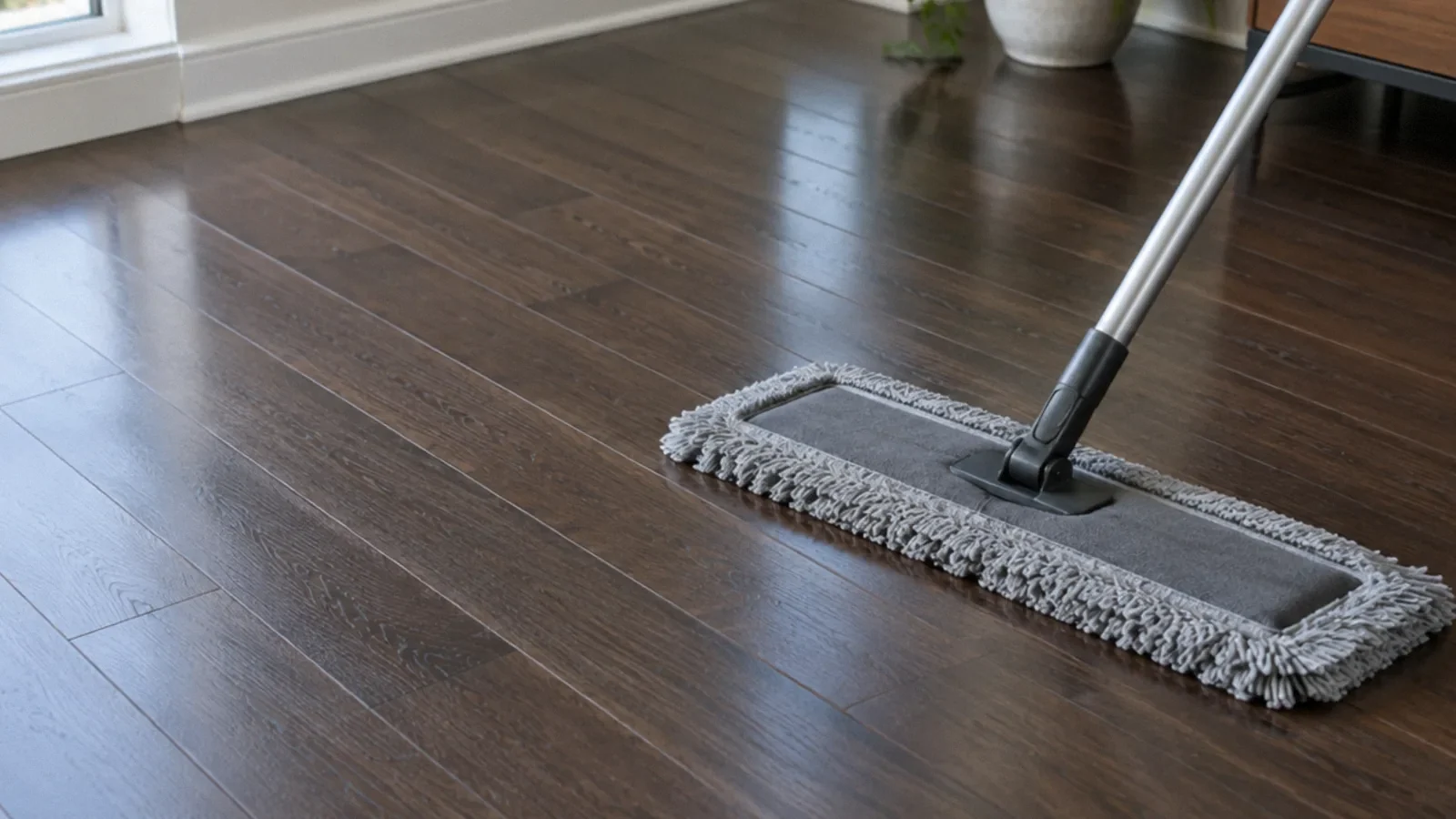
Remove grit with a soft dust mop or a vacuum suitable for wood, and follow the flooring and finish manufacturer’s care instructions. Avoid standing water, steam and unapproved polish. Dark floors can show dust and scratches more readily, but they do not need a separate chemical recipe.
Identify the floor and finish
Solid hardwood, engineered wood and wood-look vinyl are different products. A surface finish, wax or oil finish can also require different care. Check the manufacturer’s documents or ask an installer before choosing a cleaner, especially if the floor is old or its finish is unknown.
A generic “wood-safe” label does not prove compatibility with every finish. Test an approved product in an inconspicuous area as directed, and do not use a restoration or polishing product simply because the floor looks dull.
Remove grit first
Sweep with a soft broom, use a clean dust mop or vacuum with an attachment and settings appropriate for wood. The National Wood Flooring Association advises turning off a vacuum’s beater bar. Grit under shoes and furniture can scratch the surface.
Use protective pads on furniture and lift rather than drag heavy pieces when possible. Place suitable mats at entrances, following the floor manufacturer’s recommendations for backing and placement. Clean beneath mats periodically so trapped moisture or grit does not remain.
Use very little moisture
For routine cleaning, use the cleaner and method recommended by the flooring or finish manufacturer. A cloth or mop should not leave standing water. Wipe up spills promptly and dry the area using a clean cloth when appropriate.
The National Wood Flooring Association cautions against wet mops and steam mops because moisture can damage wood and finish. Do not saturate seams or rely on a fixed drying time to prove that water has not reached the layers below.
Cleaning dark hardwood floors
Dark finishes can make ordinary dust, footprints and light scratches more visible. Remove loose debris gently and clean according to the same finish-specific instructions used for any wood floor. Avoid applying extra product to make the surface look shiny.
Use good lighting to check whether a mark is loose soil, residue or finish damage. Repeated scrubbing can worsen a dull or worn area. If a mark remains after a compatible cleaner is used, ask a flooring professional to identify the finish and recommend a repair.
Vinegar, soap and household recipes
Vinegar, oil soap and homemade mixtures are not universally safe for wood finishes. NWFA advises against vinegar on wood floor finishes and cautions against products that add a film unless the finish manufacturer recommends them. Do not mix household cleaners.
Some polishes or waxes can leave residue, interfere with a future finish coat or make a floor slippery. Use a product only if the manufacturer or a qualified flooring professional confirms it is suitable for the specific finish.
When the floor looks dull
Dullness can result from residue, wear, scratches or moisture damage. Cleaning with the approved product may remove ordinary soil, but it will not replace lost finish. Ask a flooring specialist whether a professional cleaning, maintenance coat or refinishing is appropriate.
Engineered wood may have a limited wear layer, so sanding options vary. Do not assume every engineered floor can be refinished or that applying a consumer polish repairs damaged wood. Obtain a written scope before mechanical work.
Water damage needs a different response
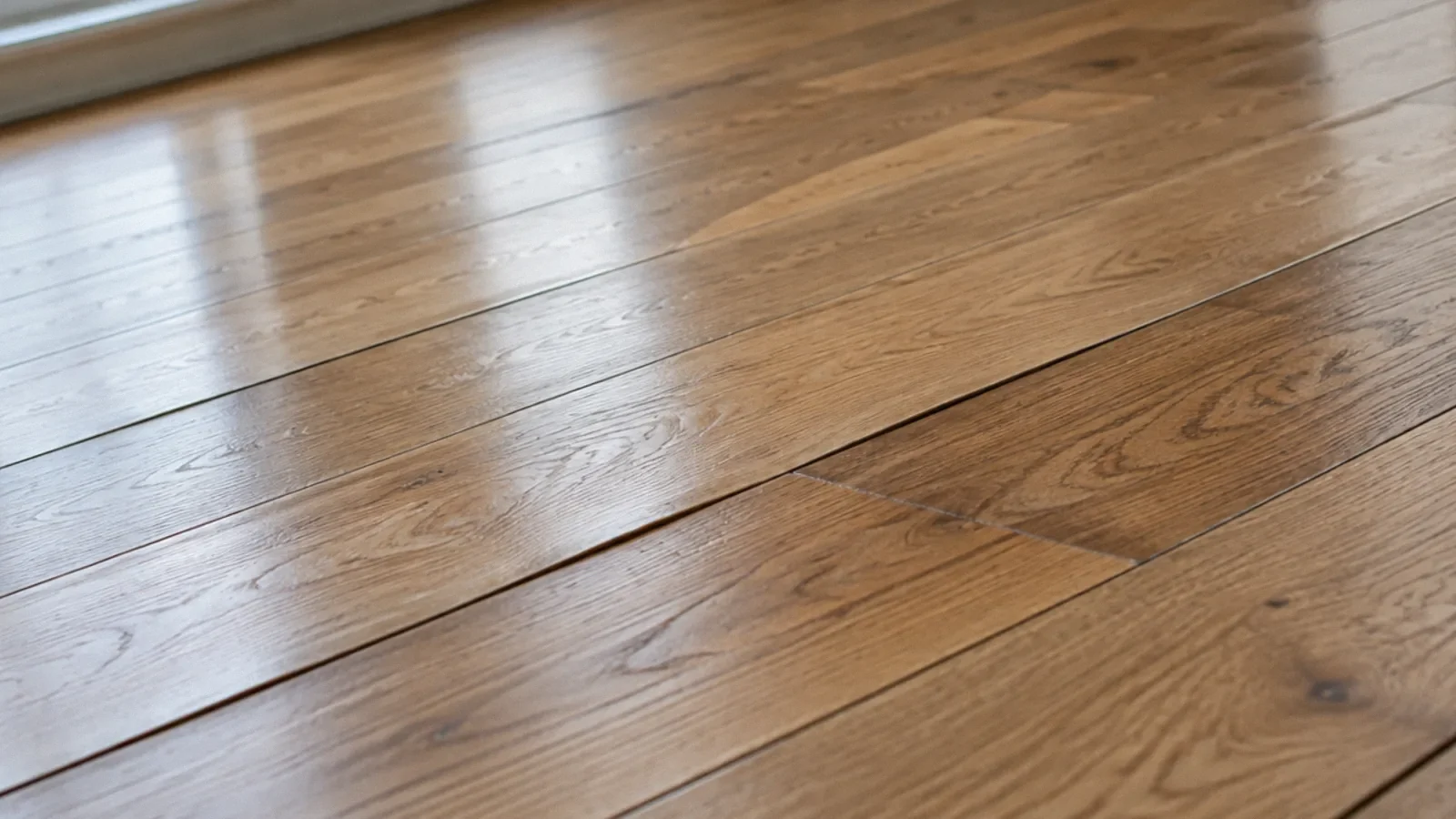
If boards cup, swell or darken after a leak, stop the water source when safe and assess the flooring and subfloor. Avoid wet outlets and electrical equipment. Drying and repair decisions depend on the assembly, contamination and moisture measurements.
Do not seal, polish or sand over wet flooring to hide the damage. A qualified professional can evaluate the layers and explain whether drying, repair or replacement is appropriate. Keep photographs and records for a possible insurance claim.
A simple maintenance routine
Remove grit regularly, clean spills promptly and use the manufacturer’s recommended product as needed. Maintain indoor conditions within the flooring maker’s recommended range and address leaks quickly. Frequency depends on traffic, pets and the floor finish.
Keep the care instructions and product information for future service. If you hire a cleaner, explain the floor type and ask what equipment and solution will be used. A small amount of preventive care can reduce avoidable wear without adding an unnecessary coating.
Why a wood floor feels slippery and what to do
Restrict access to the slippery area while investigating. Blot any spill with a dry cloth and look for tracked moisture, cleaner or polish residue, wear, or an unsuitable coating; appearance alone does not establish the cause. Follow the floor and finish maker’s directions to remove a compatible residue, testing as directed, and dry without leaving standing water. Do not apply another polish to cover the problem. If slipperiness persists or the finish is worn, ask a flooring professional to assess it. For unsealed wood, use a soft dry dusting method and consult the maker or a specialist; do not use vinegar or excess water without specific instructions.
Your next-step checklist
- Identify the floor and finish.
- Remove grit with a suitable soft tool.
- Use only an approved cleaner and minimal moisture.
- Avoid steam, standing water and unapproved polish.
- Investigate swelling or stains after a leak.
Related questions
What is the best way to clean dark hardwood?
Remove grit gently and use the finish manufacturer’s recommended cleaner with minimal moisture. Dark color does not require a different chemical recipe.
Can I use vinegar on hardwood floors?
NWFA advises against vinegar on wood floor finishes. Follow the flooring manufacturer’s instructions.
Should I polish a dull floor?
Not automatically. Dullness may be residue or worn finish; ask a flooring professional before applying a coating.
Can I steam clean hardwood?
NWFA advises against steam mops because moisture and heat can damage wood and finish.
How can I make a wood floor less slippery?
Investigate residue, spills or an unsuitable coating and follow the flooring manufacturer’s care instructions. Do not add an unapproved polish or abrasive treatment. A flooring professional can assess persistent slipperiness and the finish.
Sources & context
Public guidance supports the principles in this article. The practical questions and examples are editorial interpretation, not a site assessment or a coverage decision. State-specific rules apply only where identified.
- National Wood Flooring Association: Installation and maintenance guidelinesindustry technical guidance
- National Wood Flooring Association: Consumer maintenanceindustry consumer guidance
- NWFA: Caring for wood floorsflooring industry guidance
- NWFA: Wood floor maintenanceflooring industry guidance