Dark lines along wall studs or ceiling joists may be associated with thermal tracking, often called ghosting: cooler surface areas can collect moisture and airborne particles differently from nearby areas. Similar marks can also have other causes, including a leak or mold. Inspect the moisture and particle sources and seek a qualified assessment when the cause is unclear.
What ghosting means
Ghosting describes visible marks that can follow framing or other cooler portions of a wall or ceiling. The University of Alaska Fairbanks describes cooler wall surfaces over studs as a place where moisture can condense, illustrating the role of thermal bridging: heat moves through different materials at different rates.
Airborne particles can accumulate unevenly on surfaces. The pattern may appear as straight lines, rectangles or darker edges, but a photograph or shape by itself cannot confirm the mechanism. Different sources can occur together, and a professional may need to inspect the building conditions.
Why framing may show through
Wood or metal framing, insulation gaps and air leakage can create temperature differences on an interior surface. When indoor air contacts a sufficiently cool surface, condensation can form. The exact conditions depend on temperature, humidity, insulation and air movement.
A humidity meter and surface measurements can help an assessor understand conditions, but neither a single reading nor a pattern of lines proves the complete cause. Avoid opening walls or disturbing insulation yourself, particularly in older buildings where materials may contain hazardous substances.
Particle and moisture sources
Combustion appliances, candles, cooking and other activities can contribute indoor particles. Excess moisture may come from cooking, showers, leaks, condensation or humidification. EPA recommends controlling pollutant sources and maintaining indoor relative humidity below 60% where possible, ideally 30% to 50%.
Never ignore a burning smell, smoke, soot around an appliance or a suspected fuel leak as a cosmetic issue. If fire or gas is suspected, leave, avoid ignition sources and call emergency services or the utility from a safe location. Ask a qualified technician to inspect suspect equipment.
Ghosting, mold or a water leak?
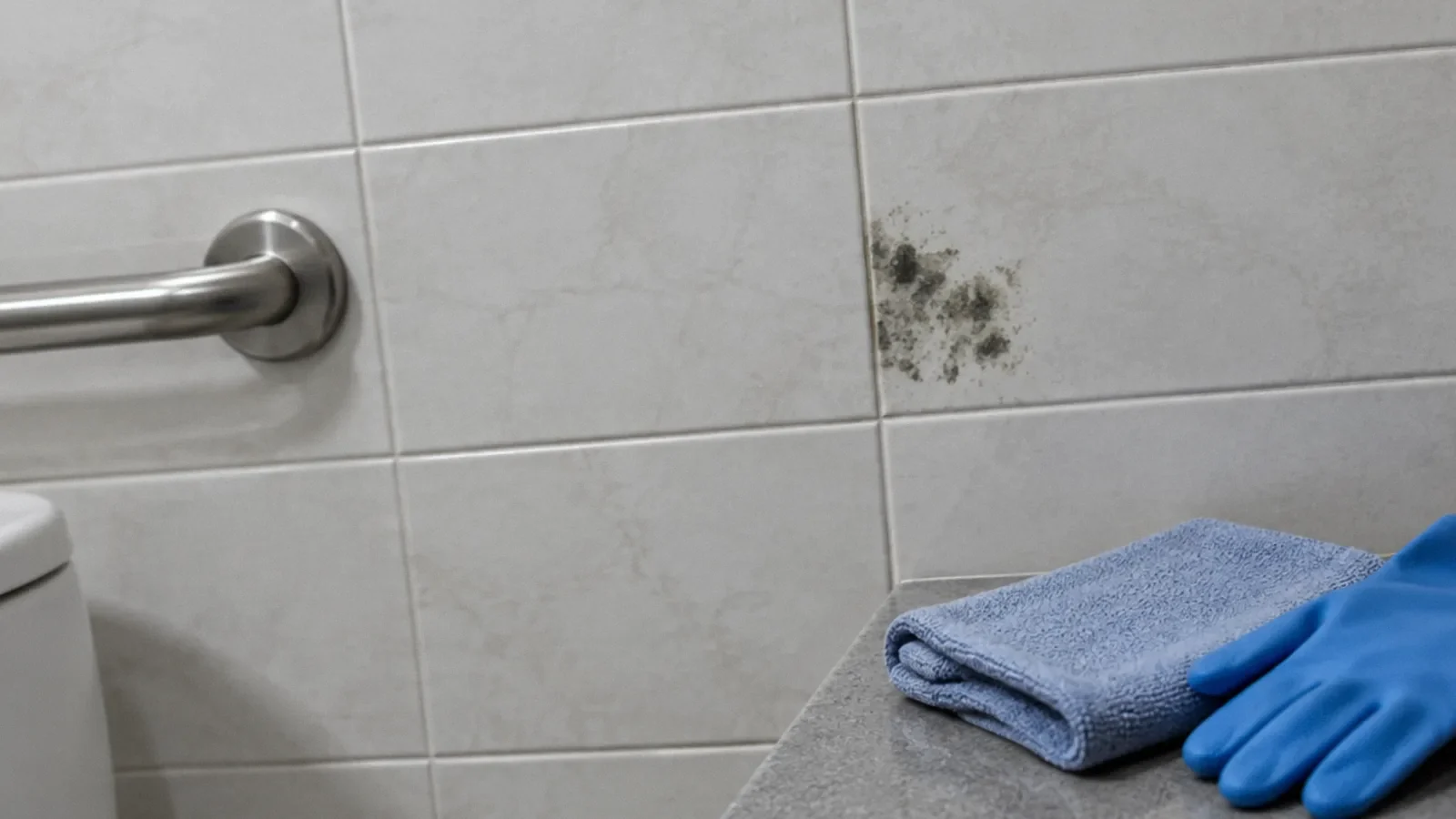
Dark staining does not identify an organism. Mold may grow on damp materials and may be hidden, while a roof or plumbing leak can also stain a ceiling. Look for safe, visible clues such as a recurring wet patch, peeling paint or a musty odor, and document when the mark changes.
A sagging ceiling, active leak near wiring or damage after a storm can present an immediate hazard. Keep away and arrange qualified help. Do not cut into a stained ceiling, climb on an unstable ladder or assume the mark is harmless simply because it follows a straight line.
Is ghosting dangerous?
The staining itself cannot tell you whether the indoor air is safe. The underlying source may matter: for example, moisture can damage building materials and an appliance problem can create combustion hazards. Individual health concerns should be discussed with a healthcare professional.
If a smoke or carbon monoxide alarm sounds, follow the device and emergency guidance, leave and contact emergency responders. Do not wait for a visual inspection of the stain. Carbon monoxide has no smell, and a clean-looking wall does not establish that an appliance is safe.
How to investigate the cause
Document the location and timing and note recent changes in cooking, heating, ventilation, humidity or building work. A building professional can assess for air leakage, insulation problems, condensation, roof or plumbing leaks and possible indoor particle sources. A fuel-burning appliance concern calls for a qualified service technician.
Ask what evidence supports the diagnosis and which areas remain inaccessible. An infrared image can indicate temperature differences but does not by itself identify mold or establish moisture content. An assessor may use multiple methods and should explain their limitations.
Cleaning and repair
Address the source before cosmetic cleaning or repainting, otherwise the marks may return. For a small ordinary surface mark that has been assessed as safe, follow the paint manufacturer’s cleaning instructions and test a hidden area. Avoid saturating drywall or scrubbing a fragile finish.
Widespread soot, suspected mold, damaged material or uncertain contamination needs an appropriate professional scope. Do not paint over active moisture or mold as a substitute for correcting the cause. Insulation and air-sealing changes should be designed for the building and local climate.
Prevent recurrence
Use kitchen and bathroom exhaust that vents outdoors where available, repair leaks and monitor humidity during cold weather. Maintain heating equipment and follow manufacturer instructions for filters. A dehumidifier may help with moisture but cannot repair a roof leak or an unsafe appliance.
After correction, record whether the surface remains dry and whether marks return. If you rent, report recurring staining and moisture to the property manager in writing. A repair is more informative when the source, work and follow-up observations are documented.
Pictures of ghosting on a ceiling or wall
For real photographic examples of ceiling and wall tracking, see the InspectAPedia ceiling-stain guide in the sources below. Its photographs show several patterns, including marks that follow framing. A photograph is a comparison aid, not proof that a particular mark has the same cause.
Ghosting can resemble moisture stains, mold or other deposits. Investigate the pattern, nearby particle sources and any evidence of a leak. If a stain is damp, spreading or near electrical equipment, address the potential hazard and seek an appropriate assessment.
Lines, seams and ceiling movement
Straight dark marks near joists, studs or drywall seams can be consistent with thermal tracking, but lines alone do not establish the cause. A visible seam, crack or bulge may instead involve movement, damaged joint treatment, moisture or another condition. Photographs help communicate the pattern, not diagnose what is behind the surface.
If a ceiling is sagging, bulging, cracking progressively or wet near a light, keep clear and arrange a qualified building assessment. Document changes from a safe location. Address any leak or other underlying condition before cleaning and repainting; cleaning a line does not correct an unstable or wet assembly.
Your next-step checklist
- Treat smoke, gas or alarm activations as emergencies.
- Document where and when dark marks appear.
- Check for leaks, condensation and particle sources.
- Avoid disturbing unknown wall or ceiling materials.
- Correct the cause before repainting.
Related questions
Are dark lines on a ceiling always mold?
No. Thermal differences, particles, moisture and other causes can create marks; appearance alone cannot diagnose mold.
What is thermal tracking?
It is a pattern of staining associated with differences in surface temperature and particle or moisture deposition, often along framing.
Will painting over ghosting fix it?
Not if the underlying moisture or particle source continues. Identify and correct the cause before cosmetic repair.
Is ghosting dangerous?
The mark alone cannot establish risk. Investigate moisture and possible combustion sources, and respond immediately to emergency warning signs.
Sources & context
Public guidance supports the principles in this article. The practical questions and examples are editorial interpretation, not a site assessment or a coverage decision. State-specific rules apply only where identified.
- University of Alaska Fairbanks: Insulating an existing houseuniversity guidance
- U.S. EPA: Moisture and mold in the homefederal guidance
- U.S. EPA: Improving indoor air qualityfederal guidance
- InspectAPedia: Ceiling and wall stain photographsinspection photo guide
- Primary guidance: www1.eere.energy.govprimary guidance
- Primary guidance: bsesc.energy.govprimary guidance