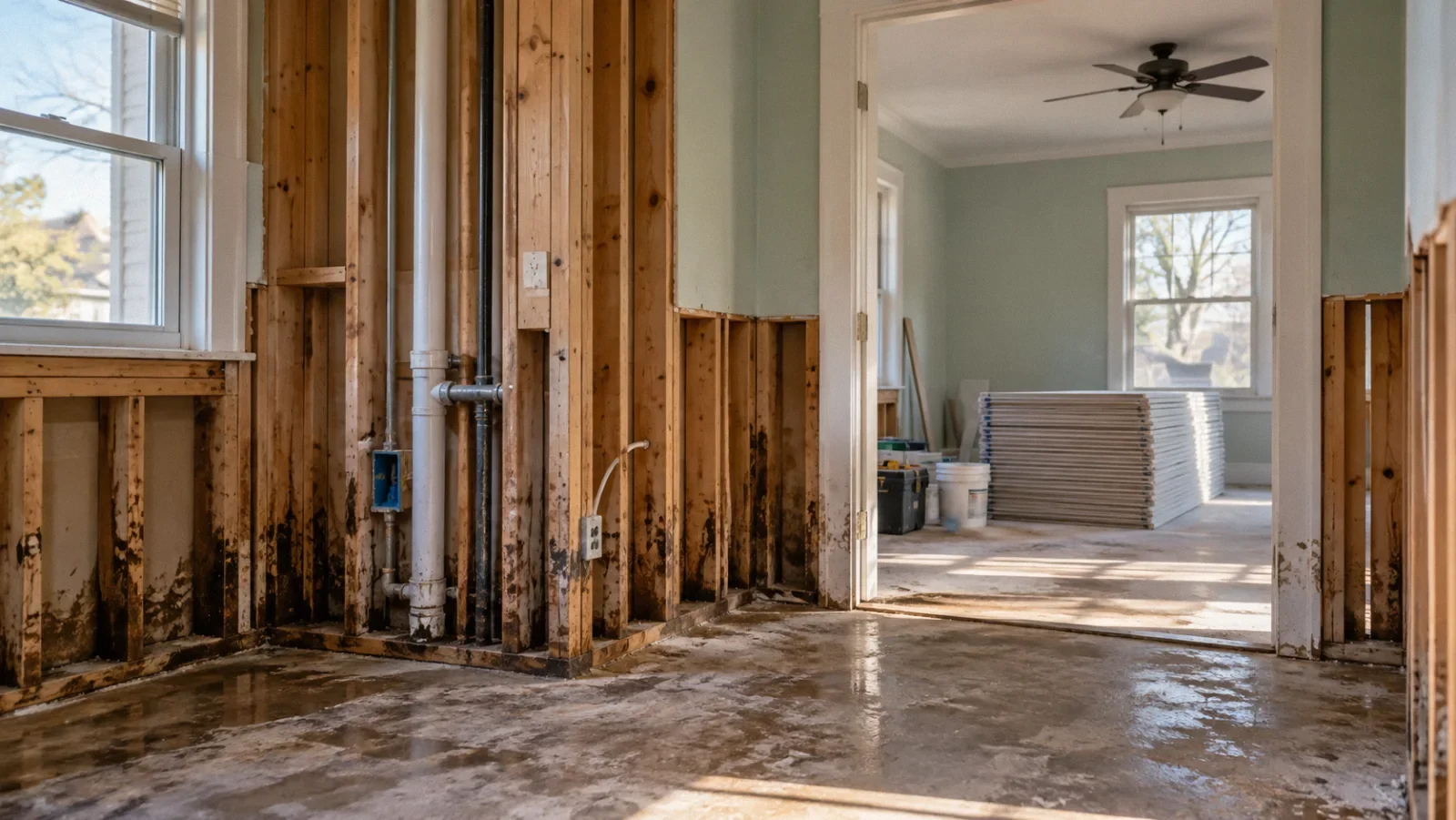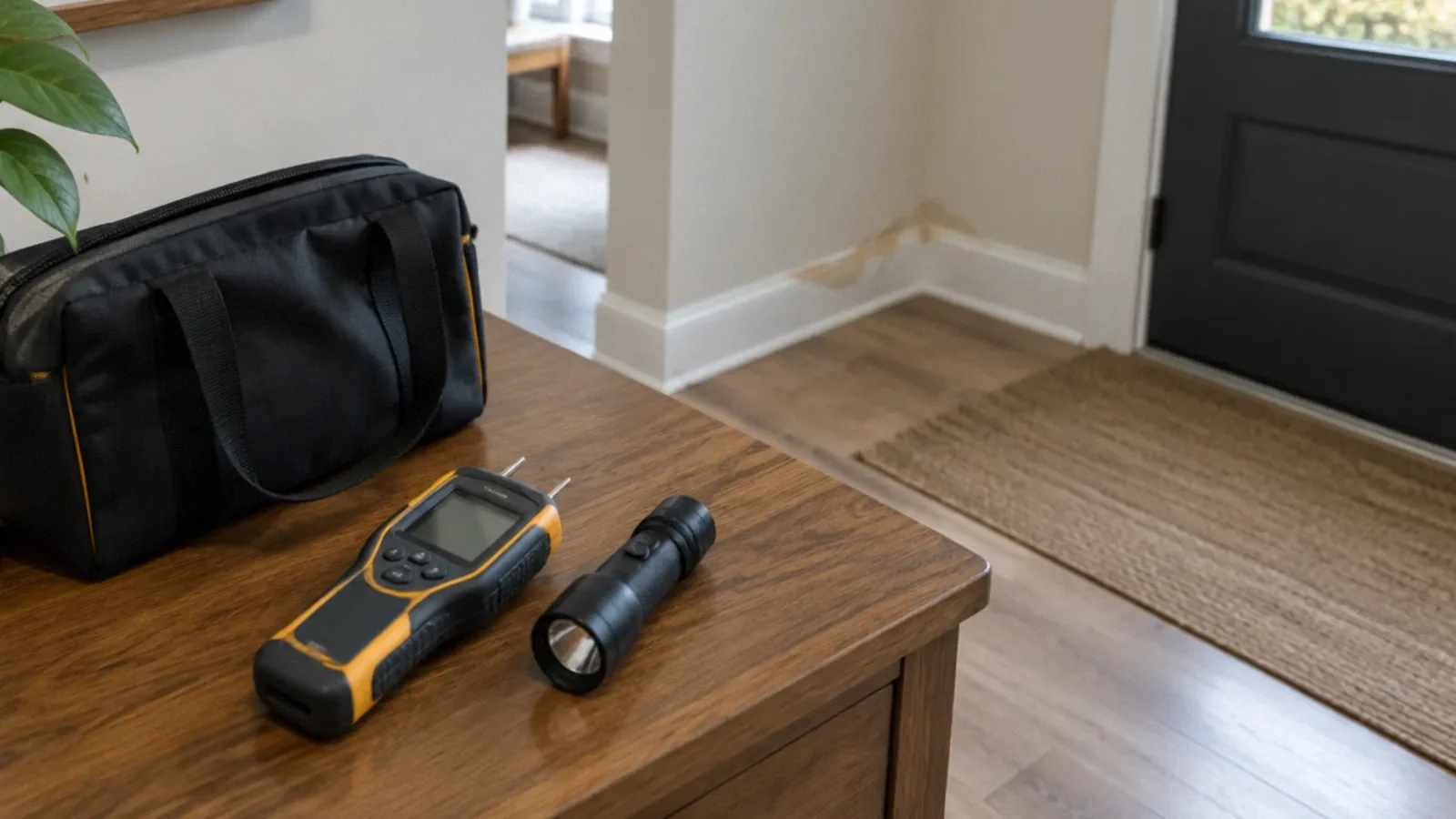
Check identity, relevant licensing, insurance and the proposed emergency scope before hiring. Speed matters, but a clear limited authorization can prevent a rushed decision from becoming an undefined contract.
Define the immediate service you need
A plumber stopping a leak, a mitigation crew drying affected materials and a builder restoring finishes perform different functions. Start by identifying the immediate problem and the service needed now. A company offering every phase may be convenient, but convenience does not replace a clear scope or prove competence in each trade.
Ask who will actually attend, what the first visit includes and whether assessment creates a payment obligation. If only emergency stabilization is authorized, say so in the written agreement. You can leave reconstruction decisions for a later defined proposal without treating the urgent call as permission for every possible repair.
Verify the person and business
Use the official licensing authority for your state or locality where a license is required. Match the legal name, license classification and status to the party signing the contract. An industry certificate, business registration and contractor license answer different questions. Ask for insurance evidence appropriate to the work and verify unclear details through reliable channels.
The FTC recommends confirming licensing and insurance and considering references and complaints. These checks are screening tools, not guarantees. An absence of public complaints does not prove excellent performance, and an isolated negative review does not establish misconduct. Look for patterns relevant to billing, documentation, unfinished work and how the business resolves problems.
Evaluate the proposed method and records
Ask how the contractor will identify affected materials, record moisture findings, determine equipment needs and decide when the next phase is appropriate. The explanation should connect the work to observed conditions. A confident promise of a fixed drying duration before inspection deserves questions, especially when concealed areas or contamination are involved.
Request a sample of the type of report you will receive, with another customer information removed. You are evaluating whether records are understandable and usable, not whether the company uses a particular software package. Clarify who supplies the source-repair report, daily monitoring records and final handoff, since different trades may own each item.
Compare complete offers where time permits
For nonurgent rebuilding, multiple written proposals can reveal scope gaps and pricing differences. In a true emergency, waiting for a full bidding process may be impractical; narrow the first authorization and obtain transparent rates. The FTC cautions against selecting solely on the lowest price and against paying the entire job upfront.
Compare equipment billing, monitoring, after-hours charges, contents handling, disposal and exclusions. Ask what happens if the insurer pays less than the invoice. A statement that the company works with insurance is not a promise that the owner owes nothing. Get any claimed payment limitation in the actual agreement rather than relying on a sales conversation.
Watch the decision pressure
A professional should be able to explain a document, give you a copy and distinguish an estimate from an authorization or assignment. Blank price terms, refusal to identify the contracting business or pressure to sign unrelated financing documents deserve a pause. An urgent property condition does not make unrelated contractual risks disappear.
The Reddit sample includes disputes involving both owner-selected and insurer-recommended providers. That means a referral is one input, not a substitute for checking the agreement. Before extending the relationship to reconstruction, review performance during mitigation: responsiveness, accurate records, scope control and whether questions received specific answers.
- Identity check: legal business name, responsible contact, relevant license and who will physically perform the work.
- Scope check: urgent tasks, exclusions, access limits and the point requiring another approval.
- Billing check: rates, equipment days, monitoring, deposits, payment due dates and insurer shortfall terms.
- Handoff check: written findings, source-repair status, completion criteria and the documents supplied to the owner.
A ten-minute screening conversation
During an urgent call, ask the representative to identify the business that will sign the agreement, the first service it proposes and the person responsible on site. Ask whether the initial visit is paid, which rate schedule applies and what work requires another approval. These questions can be answered before a complete reconstruction estimate exists. Write down the answers and request the corresponding documents.
When the crew arrives, compare the actual agreement with those answers. If the call described assessment only but the form authorizes unrestricted demolition, resolve the difference. If the company cannot yet estimate quantities, ask for a limited initial step with a defined review point. Uncertainty about concealed damage is reasonable; uncertainty about who is contracting or how every charge is calculated is a separate concern.
For later rebuilding, use the mitigation experience as evidence. Did the crew arrive as arranged, provide reports, explain changes and respond to questions? Were invoices consistent with the disclosed method? A familiar contractor can still deserve comparison with alternatives when the project changes from emergency response to a lengthy rebuild. Conversely, a minor communication issue that was corrected promptly should not be treated as proof of systemic misconduct. Evaluate the actual pattern, scope and documents rather than relying on either a sales promise or a single angry online review.
Who should you call first for water damage?
For immediate danger such as fire, sparks or a suspected gas leak, leave and call emergency services from a safe place. Keep away from standing water near electrical equipment. A plumber or water utility may be needed to stop a supply leak, a roofer for an exterior entry point and an electrician for affected electrical equipment.
A water mitigation specialist can assess affected materials and plan extraction, drying and cleanup after hazards and the source are controlled. One provider may coordinate several scopes, but confirm who is responsible for each task. Notify the insurer or property manager promptly when appropriate.
Who to call when water is inside a wall
Stop a known water source only if its shutoff is safely accessible and keep clear of wet outlets or a bulging, unstable wall. A plumber can investigate a suspected supply or drain leak; a roofer or building professional may be needed for water entering from outside. The visible stain does not establish the source.
A restoration professional can assess the wall assembly, hidden moisture and whether controlled access is needed. Ask for a written scope, measurement plan and explanation of materials that may need removal or drying. In California, verify the contractor’s license and classification when applicable.
A leak in the garage: choose the first call
If water appears during rain, a roofer or building-envelope professional can trace roof and flashing entry; a garage-door or drainage professional can assess water entering at the door and exterior runoff. A plumber is the first trade for a suspected supply or drain pipe leak. The visible puddle does not prove which path is responsible.
Keep clear of standing water near outlets, appliances or the electrical panel. Do not operate wet switches or equipment; call an electrician for affected electrical systems and emergency services for an immediate hazard. A mitigation specialist can assess damp walls and contents once access is safe and the source is controlled.
Your next-step checklist
- Match the contract name to official licensing records where applicable.
- Obtain a written emergency scope and copies of all signed forms.
- Ask for itemized rates and a method for approving changes.
- Verify insurance and relevant experience without relying on a badge alone.
- Reassess the provider before committing to a separate rebuilding project.
Related questions
Is an insurer preferred contractor automatically safer?
A program may offer useful coordination or other terms, but examine what those terms actually provide. You still need to understand the contractor agreement, scope, records and responsibility for disputed charges.
Should I reject a contractor who cannot give a final price immediately?
Not necessarily. Hidden conditions can prevent a firm final price. The important issue is whether the contractor explains known rates, assumptions, spending controls and the next approval point.
Who should I call if rainwater enters from outside?
Keep away from electrical hazards, then contact a roofer or building professional to trace the exterior entry point and a restoration professional to assess wet materials. Call emergency services for immediate danger.
Sources & context
Public guidance supports the principles in this article. The practical questions and examples are editorial interpretation, not a site assessment or a coverage decision. State-specific rules apply only where identified.
- FTC: How To Avoid a Home Improvement Scamofficial
- California CSLB: What Is a Contract?official
- California CSLB: Check a contractor licensestate contractor licensing guidance
Community questions behind this topic
These discussions helped identify reader concerns. They are anecdotal, not technical or legal authority.