Document the source, damage and notice history before arguing about fault. Water entering from a neighboring property does not by itself establish who is legally liable or which insurer must pay.
Separate origin from responsibility
A leak may originate in a neighboring unit, shared pipe, contractor installation or exterior drainage system. The location where water starts is an important fact, but it is not the whole liability analysis. Ownership, maintenance duties, negligence, governing documents and state law may affect responsibility. Avoid treating an initial verbal diagnosis as a final legal conclusion.
Washington insurance regulator guidance on condominium claims notes the relevance of governing documents when water moves between units. For detached homes or other arrangements, different rules and evidence may apply. The first practical objective is to establish what happened and prevent further damage while keeping the eventual allocation question open.
Collect a source report that explains its limits
Ask the investigating professional to identify the component, location and observed failure. Was the source directly seen, inferred from testing or still uncertain? Did the inspection cover only one unit or a shared assembly? A report should make these limits visible. A statement that the upstairs owner caused everything may exceed what the inspection actually established.
Preserve photographs of the source if lawfully available, repair invoices and the failed component when appropriate and safe. If a contractor installation may be involved, keep the installation date, invoice and any warranty or service correspondence. Do not remove evidence from another property or pressure a neighbor to surrender private records without an appropriate process.
Create a notice chronology
Record when the neighbor, association or manager learned of the problem and what response followed. Prior warnings can be relevant, but distinguish a documented message from a memory of an informal conversation. Save delivery confirmations and repair updates. If water recurs, record the new event rather than describing the whole period as one continuous condition without evidence.
A neutral notice might identify where water is appearing, ask for investigation and provide contact details for coordination. It does not need to demand an admission of negligence. Cooperative access and source correction often become harder when the first communication makes unsupported accusations. Preserve the facts for insurers or legal advisers who can assess their significance.
Notify the relevant insurers and association
Your own policy may provide a route for covered damage while another party responsibility is investigated. Ask your insurer how deductible recovery or subrogation may work if another party is legally responsible. Recovery is not guaranteed, and governing documents may affect it. Do not assume a neighbor insurer will pay solely because a leak is traced to that property.
If the neighbor supplies insurance information, pass it to the adjuster with the factual record. If the neighbor refuses, document the request and ask your insurer or adviser what alternatives exist. Avoid delaying reasonable protection of your property until the neighbor accepts responsibility, especially where the source remains active.
Evaluate a settlement offer carefully
A neighbor may offer cash or propose using a contractor. Before accepting, understand whether the payment is partial assistance or a full release, what damage has been assessed and whether hidden conditions remain. Do not sign away claims based on an incomplete cosmetic estimate without considering the consequences. A written agreement should accurately describe what it resolves.
The Reddit sample contains cases involving upstairs appliance leaks, alleged installer mistakes and HOA billbacks. They demonstrate how easily a physical-source question turns into several contractual and insurance questions. Use such accounts to identify documents to request, not to conclude that another homeowner outcome predicts yours.
- Physical evidence: source location, observed mechanism, affected route and limitations of the investigation.
- Timing evidence: discovery, notice, access, repair and any recurrence, with supporting records.
- Responsibility documents: lease, declaration, maintenance agreement or installation contract where applicable.
- Financial evidence: reasonable protective work, repair scope, contents loss and payments already received.
A neutral notice to the neighboring owner
A first notice can say that water has appeared in a specified location, that an inspection suggests a possible route from the adjoining property, and that coordinated access is requested to confirm and stop the source. Attach safe photographs and provide contact details for the investigating professional. Do not state that the neighbor has admitted liability when the neighbor merely agreed to investigate.
If the source is later confirmed, follow up with the report and request the relevant repair information. Separate the request for cooperation from any demand for payment. This preserves a useful record even if the neighbor disagrees about liability, and gives insurers a clearer account of what each party knew and did.
Consider a failed hose with no known prior warning compared with a repeatedly reported leak left unresolved. Both can damage the same lower ceiling, but the notice and maintenance history differ. An article cannot decide the legal result from that contrast alone. It can explain why the history should be preserved and why a source report should not overstate fault. If negotiations involve a release, ask a qualified local adviser to review its scope and any effect on your insurer recovery rights before accepting. A small early payment may have consequences beyond the immediate repair invoice.
Water damage from an upstairs neighbor
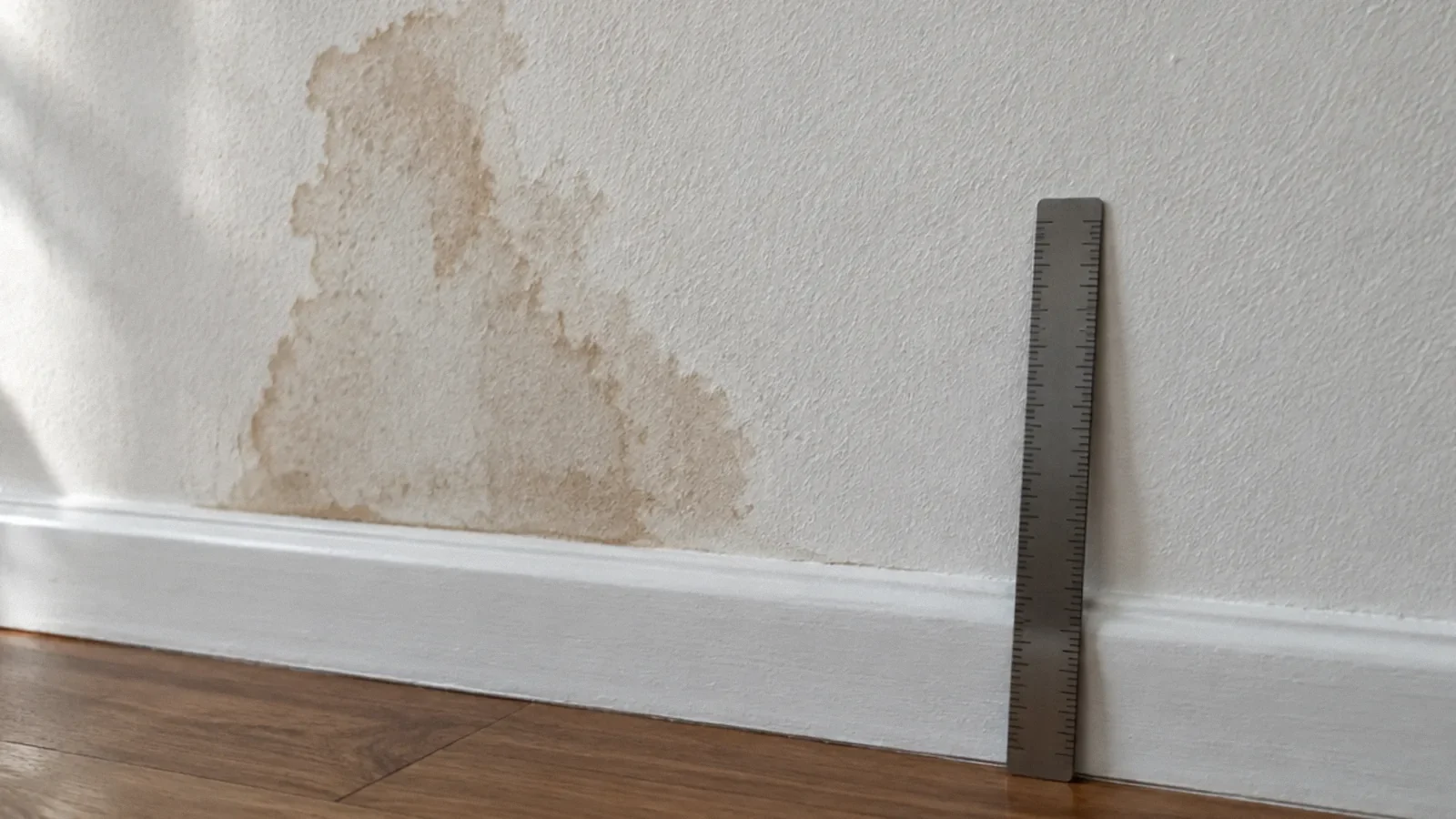
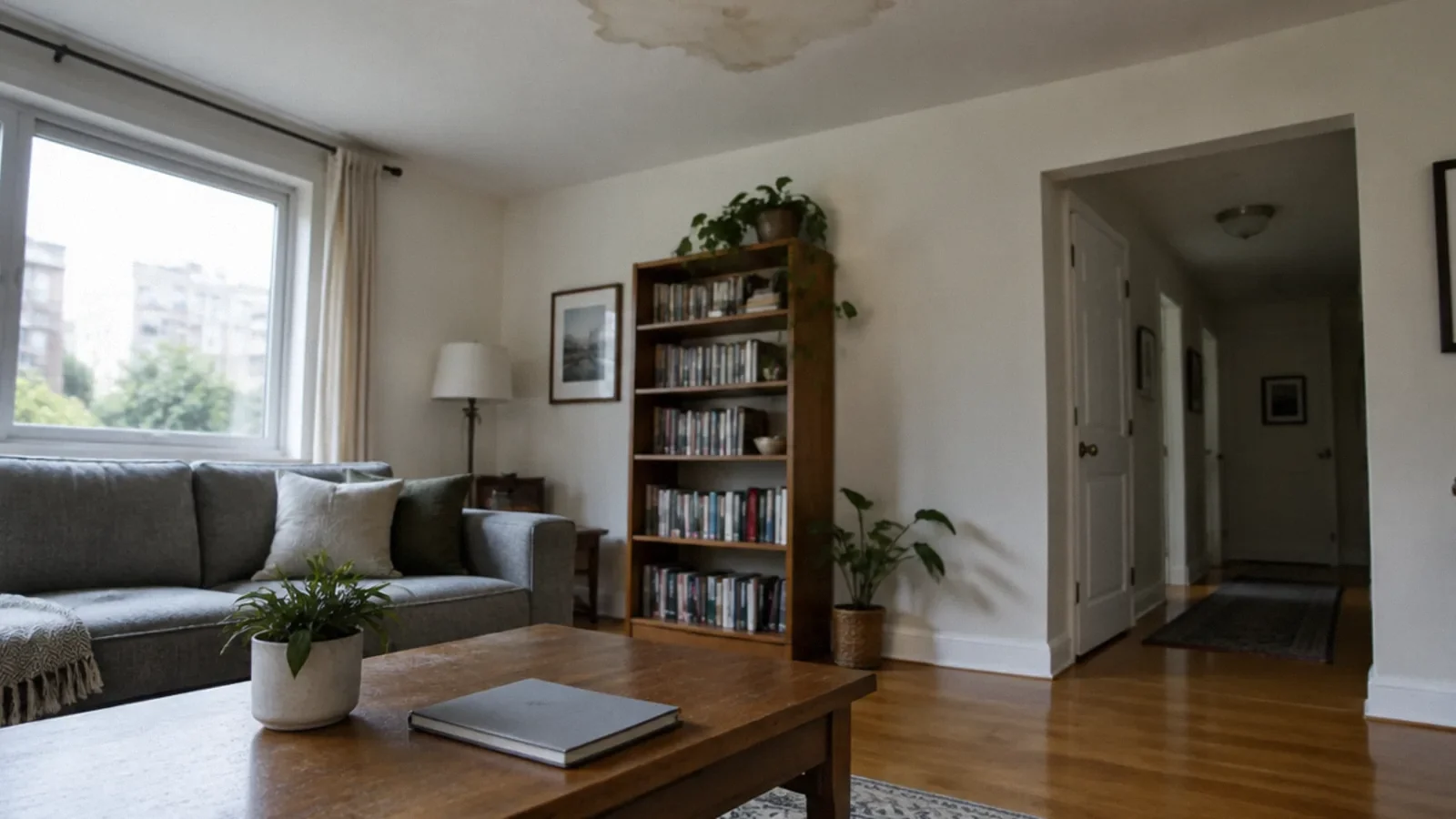
If water is entering from above, keep people away from a sagging ceiling and wet electrical equipment. Notify building management and the upstairs occupant promptly; only operate an identified shutoff if it is safely accessible. Document visible damage without entering an unsafe area.
The fact that water came from an upper unit does not by itself establish fault, ownership of the failed component or which policy pays. Ask a qualified professional to document the source and its limits, notify the relevant insurers and review building or association responsibilities. Save written notices, reports and receipts.
Your next-step checklist
- Send a factual notice and retain a copy.
- Obtain an appropriately detailed source investigation.
- Notify your insurer and association as required by the circumstances.
- Keep deductible recovery expectations separate from current repair funding.
- Seek local advice before accepting a release or allowing a significant claim deadline to pass.
Related questions
Is the upstairs neighbor automatically negligent?
No. A component failure and negligent conduct are different questions. The relevant duty, knowledge, conduct and governing documents must be assessed under applicable law.
Can my insurer recover my deductible?
It may pursue recovery in appropriate circumstances, but success and allocation depend on the facts, policy and law. Ask about the process and status rather than treating reimbursement as certain.
Sources & context
Public guidance supports the principles in this article. The practical questions and examples are editorial interpretation, not a site assessment or a coverage decision. State-specific rules apply only where identified.
- California Department of Insurance: Residential Insurance, Homeowners and Rentersofficial
- California Department of Insurance: Residential Property Claims Guideofficial
- Washington OIC: Filing a Condo Unit Insurance Claimofficial
Community questions behind this topic
These discussions helped identify reader concerns. They are anecdotal, not technical or legal authority.