Report the leak promptly in writing, preserve evidence and ask for a repair and access plan. Building repairs, personal belongings, temporary housing and legal remedies are separate questions.
Make the first notice usable
A landlord or manager needs to know the location, symptoms, time of discovery and whether water is still entering. Use the emergency contact when appropriate, then follow with a written account and photographs taken safely. State what you observed rather than diagnosing a concealed pipe or attributing fault without evidence. Keep proof that the notice was delivered.
If there is an immediate hazard, obtain the appropriate emergency assistance. Do not wait for a routine maintenance portal response when water is affecting electrical equipment, sewage is entering living space or a ceiling appears unstable. Tenants should also avoid opening building assemblies or commissioning major repairs without understanding their authority and local requirements.
When water appears to come from an upstairs unit
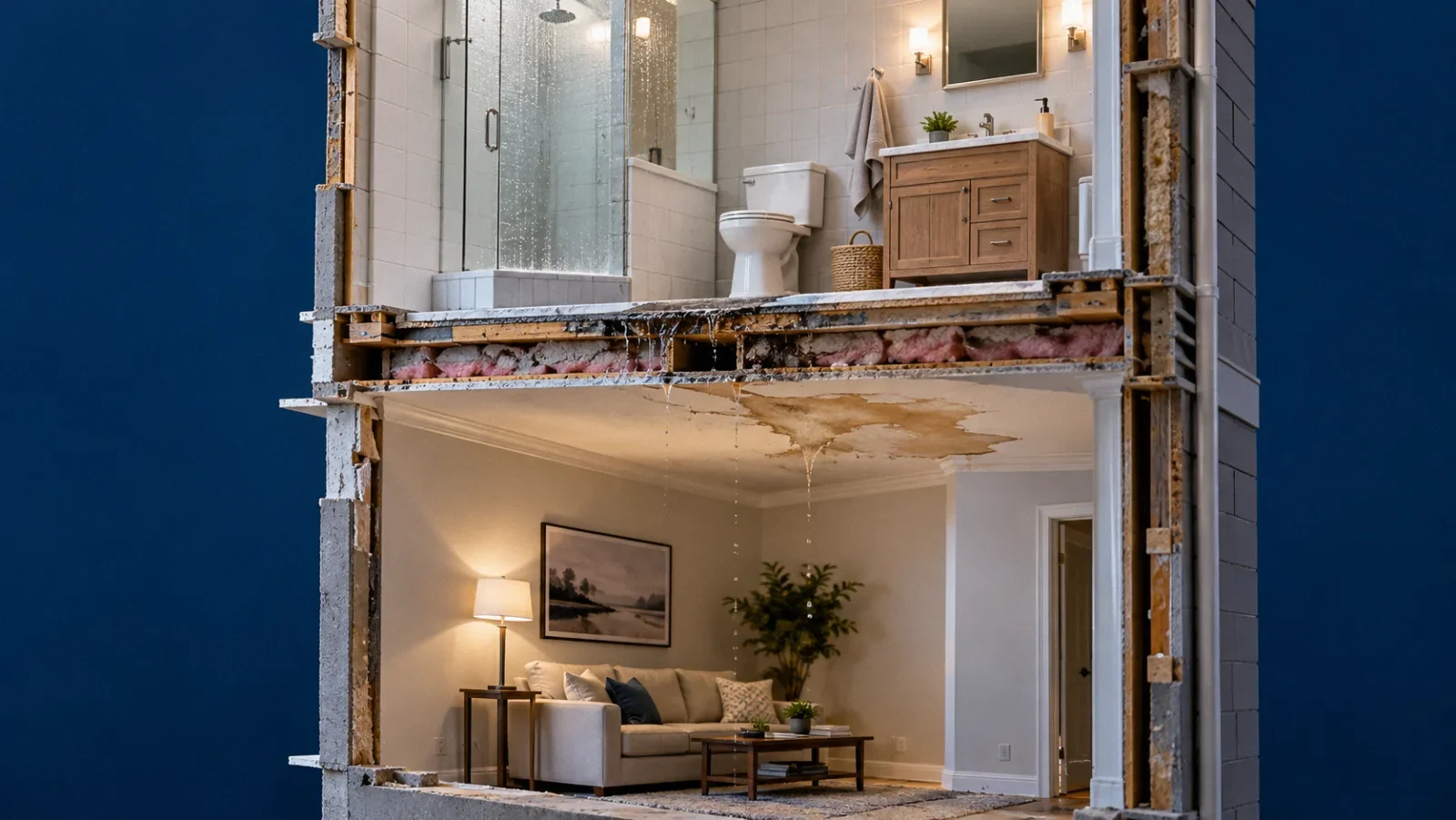
Report active leakage to the building’s emergency contact and keep clear of a wet light fixture or unstable ceiling. The visible drip may be below another apartment, but water can travel through a shared assembly. Management may need coordinated access to the unit above and affected common systems.
Document the location, timing and communications without assuming who caused the loss. Responsibility for the source, building repairs and personal belongings can depend on the lease, insurance, ownership and local law. Keep those questions separate while the immediate hazard and leak are addressed.
Separate the owner building from renter belongings
The landlord policy is not a substitute for renter contents coverage. Washington insurance regulator guidance explains that an owner policy does not insure the renter’s personal property or provide the renter’s liability protection. Check your own policy for the cause of loss, personal property provisions, deductible and any additional living expense coverage.
Make an inventory of affected belongings and ask the adjuster how to document cleaning, repair or replacement decisions. Do not assume that a landlord agreeing to repair the wall also agrees to reimburse every damaged item. Conversely, an insurance exclusion does not by itself decide whether the landlord has a separate legal obligation. Keep those routes distinct.
Request a plan with access and occupancy details
Ask the manager who will investigate the source, who will perform mitigation and when the next update will arrive. The plan should address access, dust or contamination controls, usable bathrooms and kitchens, and how residents will be informed of changes. Inform the manager of accessibility or scheduling needs that affect safe access.
Coordinate access without treating an open-ended key arrangement as the only option. Ask how keys are controlled, which personnel may enter and how entry will be logged. Local law and the lease govern notice and entry, including emergency exceptions. The New York Attorney General guide describes New York rules, but those notice rules should not be transferred to another state.
Document the condition over time
Keep a short dated record of active leaks, affected rooms, reported odors, repair visits and visible changes. Save work orders and notices. If a repair does not stop the problem, report the recurrence as a new observation and connect it to the previous request. A sequence of specific records is more useful than a long account written only after a dispute escalates.
Avoid treating a photograph or home mold test as a medical diagnosis. If someone develops health concerns, seek clinical advice and communicate relevant accommodation needs. Building investigation and medical evaluation have different purposes. Request an explanation of how the moisture source and damaged materials are being addressed rather than demanding an unsupported guarantee that the apartment is risk-free.
Check local remedies before changing rent or the lease
Habitability standards, repair deadlines, rent remedies and termination rights vary by jurisdiction. The New York tenant guide is an example of an official state resource explaining such rights; it is not nationwide permission to withhold rent or hire a contractor and deduct the cost. Contact the local housing authority, legal aid service or qualified adviser for the applicable process.
If relocation is necessary, clarify who is offering accommodation, what it includes and whether accepting it changes any other agreement. Keep ordinary rent, additional housing expenses and contents claims in separate records. Do not sign a release or revised lease under the assumption that it is only a receipt for a hotel arrangement.
- Notice packet: dated description, safe photographs, unit location and a reliable way to reach the tenant.
- Repair questions: source diagnosis, scope, access arrangements, expected milestones and next update date.
- Insurance questions: contents, loss of use, deductibles, exclusions and required evidence for the event.
- Local-rights questions: housing complaint route, emergency entry rules and lawful remedies if repairs stall.
A written repair request that supports follow-up
A useful tenant message can be brief: water was observed at the bedroom ceiling on the stated date, photographs are attached, the area remains affected, and the tenant requests investigation, a repair plan and instructions about use of the room. Include availability for access and an urgent contact. Avoid asserting a precise mold species, cause or legal remedy that has not been established.
If the response only proposes repainting, ask whether the source has been identified and how affected materials will be evaluated before finishing. This is a concrete building question that can be answered with records. If the manager says a contractor will attend, ask for the expected visit and how the tenant will be updated if it changes. Keep each response with the original notice rather than starting disconnected message threads.
If the problem persists, the same chronology can support a housing complaint or legal consultation. Describe actual missed visits, recurring water and unavailable facilities rather than relying on broad labels such as uninhabitable without explanation. A local authority or adviser can determine the legal significance. Continue documenting personal-property losses through the renter insurer process separately. This avoids a common failure in which the tenant waits for the landlord dispute to resolve and never supplies the insurer with the requested inventory or notice.
Signs of mold or dampness in an apartment
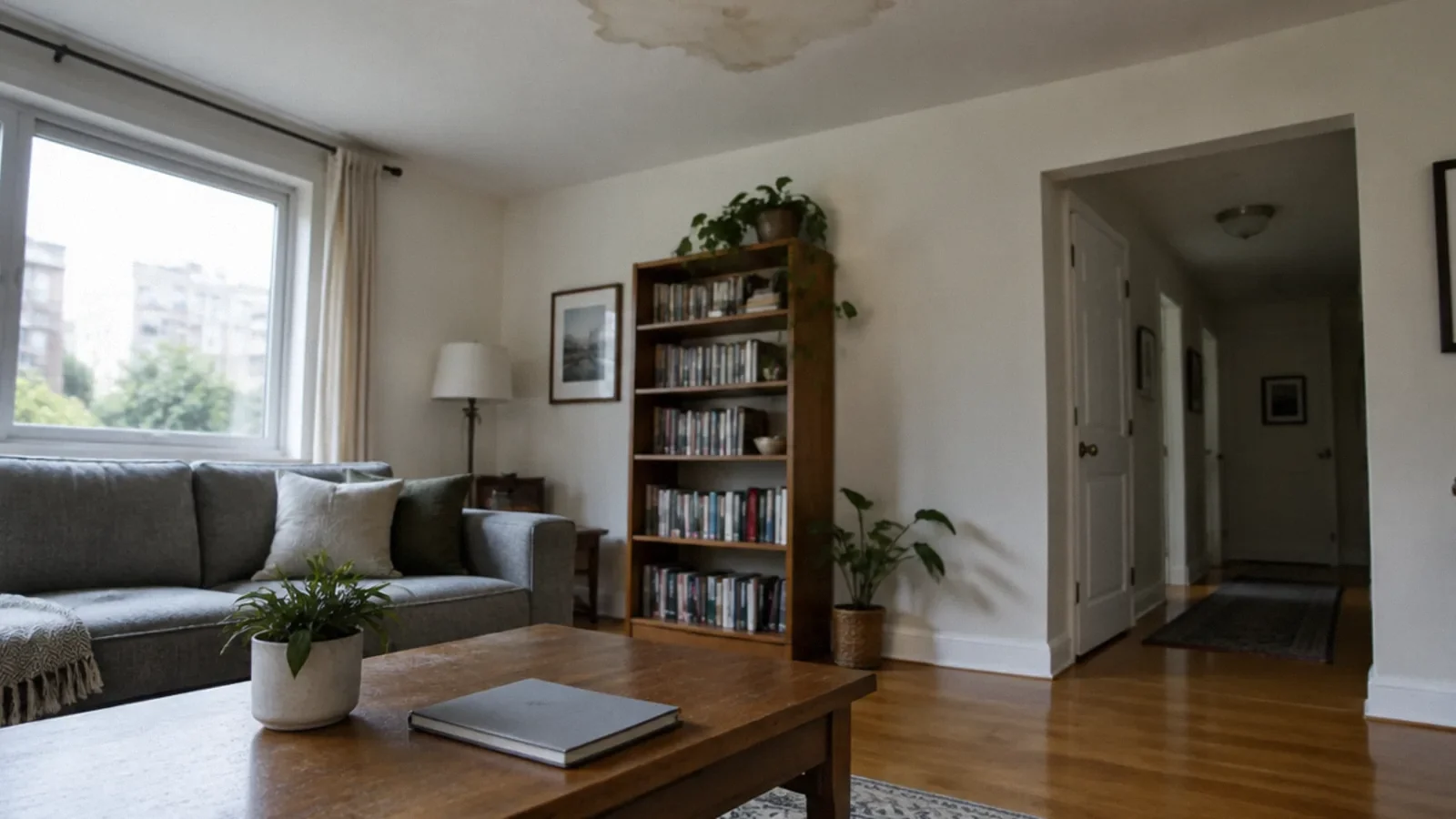
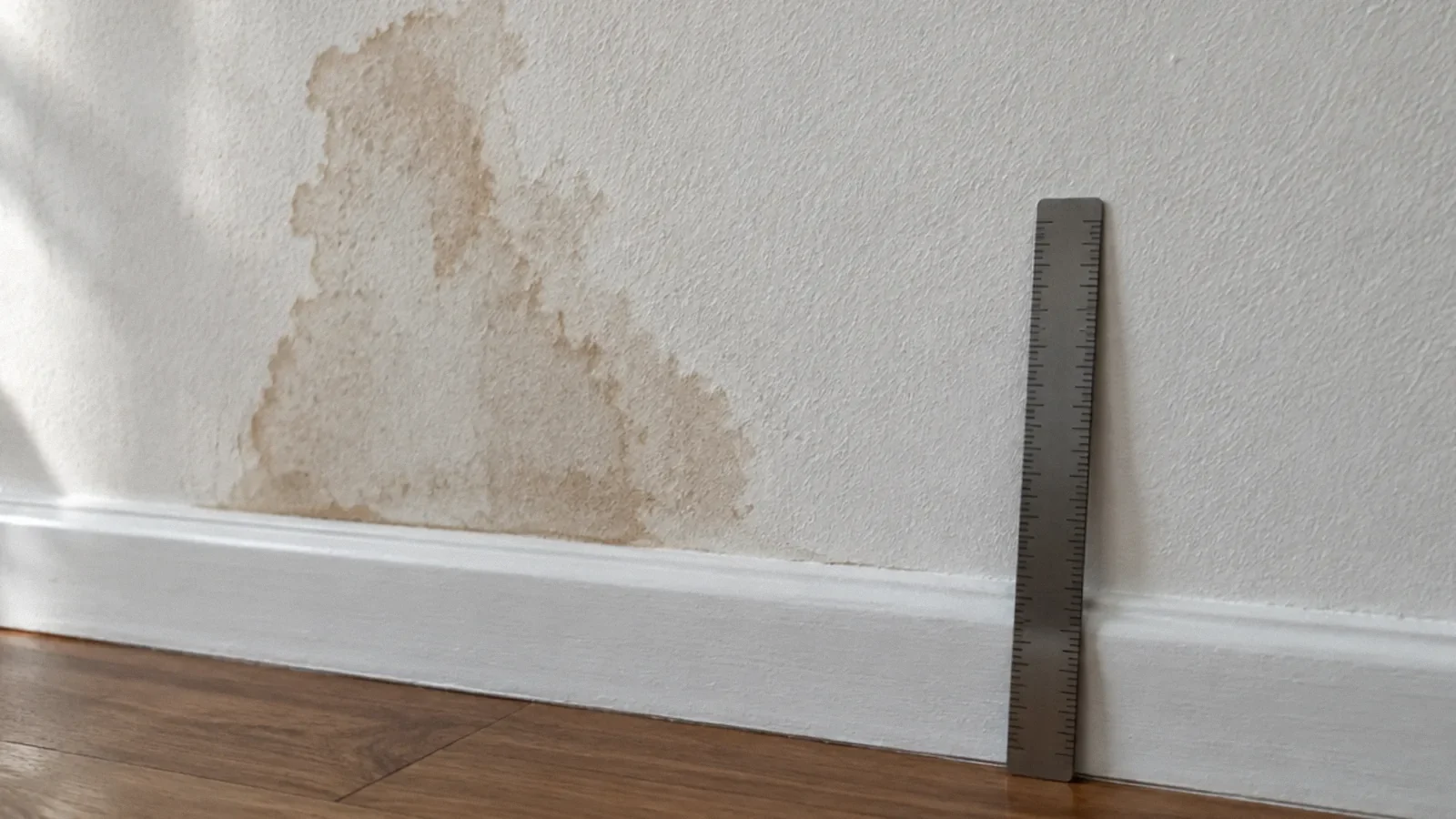
Recurring musty odor, condensation, staining and visible spots after a leak can point to a moisture problem, though appearance alone cannot identify mold. Document what is visible without opening walls or disturbing material, and notify the landlord or property manager in writing.
Request a plan for finding and correcting the water source, assessing affected materials and arranging access. Keep copies of notices and photos; urgent health, electrical or sewage hazards need prompt help. Local rights and responsibilities depend on the facts and jurisdiction.
Does visible mold make a California rental uninhabitable?
Color alone does not determine habitability. California public health guidance explains that dampness or visible mold posing a health danger can be a substandard housing condition, and local health or code enforcement officials evaluate the circumstances. Report a leak or suspected mold to the landlord promptly and document the notice.
If the issue is not addressed, contact the local health or code enforcement agency to ask about inspection and available remedies. The facts, notice, lease and applicable law matter; seek qualified legal advice before withholding rent or making other legal decisions.
Mold signs, inspections and local help
Look for recurring condensation on windows, spots around bathroom grout, staining at ceilings or baseboards, and musty odors in cabinets or closets. These are reasons to investigate moisture, not proof of a mold species or a medical diagnosis. Avoid disturbing suspect material. Notify the manager in writing and identify the exact locations and whether conditions recur after rain or use of plumbing.
If the response is inadequate, ask the local housing, health or code enforcement office how to submit a complaint, what evidence is needed and whether an inspector can visit. An inspection may observe moisture and conditions without taking laboratory samples. Ask whether sampling is offered, who chooses a laboratory and who pays; free testing is not guaranteed. EPA notes that visible mold usually does not require sampling to justify moisture correction and cleanup.
For a flooded basement, do not enter standing water near electrical equipment or suspected sewage. Notify the manager through its emergency channel, record damaged belongings only from a safe place, and request a housing-office assessment if access or repairs remain unresolved. Water can originate in another apartment or a shared system; do not assign fault from the location alone. Owners, tenants and insurers may have different responsibilities depending on notice, the lease, local law and the cause. California’s habitability example concerns rentals, not a universal rule for owner-occupied homes; color alone does not settle habitability.
Your next-step checklist
- Use the emergency reporting route when conditions require it.
- Follow verbal reports with written notice and retain delivery records.
- Notify your renter insurer about potentially covered belongings or displacement.
- Request a practical access and occupancy plan from management.
- Get local guidance before withholding rent, terminating a lease or authorizing major repairs.
Related questions
Must the landlord pay for all damaged belongings?
That cannot be assumed. Insurance coverage and legal responsibility require separate analysis of the cause, lease and applicable law. Preserve the inventory and notify your renter insurer while investigating other remedies.
Can I demand a particular remediation company?
Your rights and authority depend on local law and the lease. You can request qualifications, scope and an explanation of the plan, and raise documented concerns through the appropriate housing or legal process.
What if an upstairs apartment floods mine?
Notify building management promptly, avoid electrical and ceiling hazards, and document the damage. Responsibility and insurance depend on the cause, agreements and local law.
Is free mold testing available for California renters?
Availability depends on the local agency and circumstances; a free private laboratory test is not guaranteed. California public health guidance suggests contacting local health or code enforcement about suspected substandard conditions. Document the issue and ask the agency what inspection or assistance it offers.
Sources & context
Public guidance supports the principles in this article. The practical questions and examples are editorial interpretation, not a site assessment or a coverage decision. State-specific rules apply only where identified.
- New York Attorney General: Residential Tenants’ Rights Guideofficial
- California Department of Insurance: Residential Insurance, Homeowners and Rentersofficial
- Washington OIC: How Renter Insurance Worksofficial
- NAIC: Renters Insurance and Personal Belongingsofficial
- California Department of Public Health: Information on mold and moisture for renters (PDF)California health guidance
- EPA: Mold sampling limitsofficial
Community questions behind this topic
These discussions helped identify reader concerns. They are anecdotal, not technical or legal authority.