Notify the association and your insurer, document the water source, and obtain the governing documents and policies. The upstairs origin alone does not decide repair responsibility or legal liability.
There are several questions, not one bill
A condominium leak creates overlapping questions: who must stop the source, who maintains the damaged building component, which policy may cover it and whether someone is legally responsible. Those questions can have different answers. A unit owner can be responsible for maintaining an appliance without every resulting cost automatically becoming that owner personal liability.
Washington insurance regulator guidance tells condo owners to examine both the unit policy and master policy, along with the governing documents. That approach is useful nationally, but the applicable state law and actual documents determine the result. Avoid using a phrase such as walls-in as a complete description of responsibility; it may leave original finishes, improvements, deductibles and common elements unresolved.
Arrange access and source control first
Notify the association or manager using its emergency process and contact the appropriate repair professional. Identify all visibly affected units and common areas. Residents should not enter another unit or open building systems without lawful authorization. If water affects electrical equipment or creates another immediate hazard, use the appropriate emergency response instead of waiting for the responsibility debate.
Keep a log of notices and access attempts. Record when the source was investigated and what the professional observed. An upstairs owner saying the appliance has been fixed is useful information, but request the repair record where available. Drying the lower unit without confirming source control can leave the same assembly exposed to another event.
Collect documents that answer different questions
Request the declaration, relevant maintenance and insurance provisions, rules for reporting losses, master policy and deductible information. A certificate of insurance is not the full policy. Ask your insurer how your unit coverage interacts with the association coverage and whether it needs the governing documents before completing its decision.
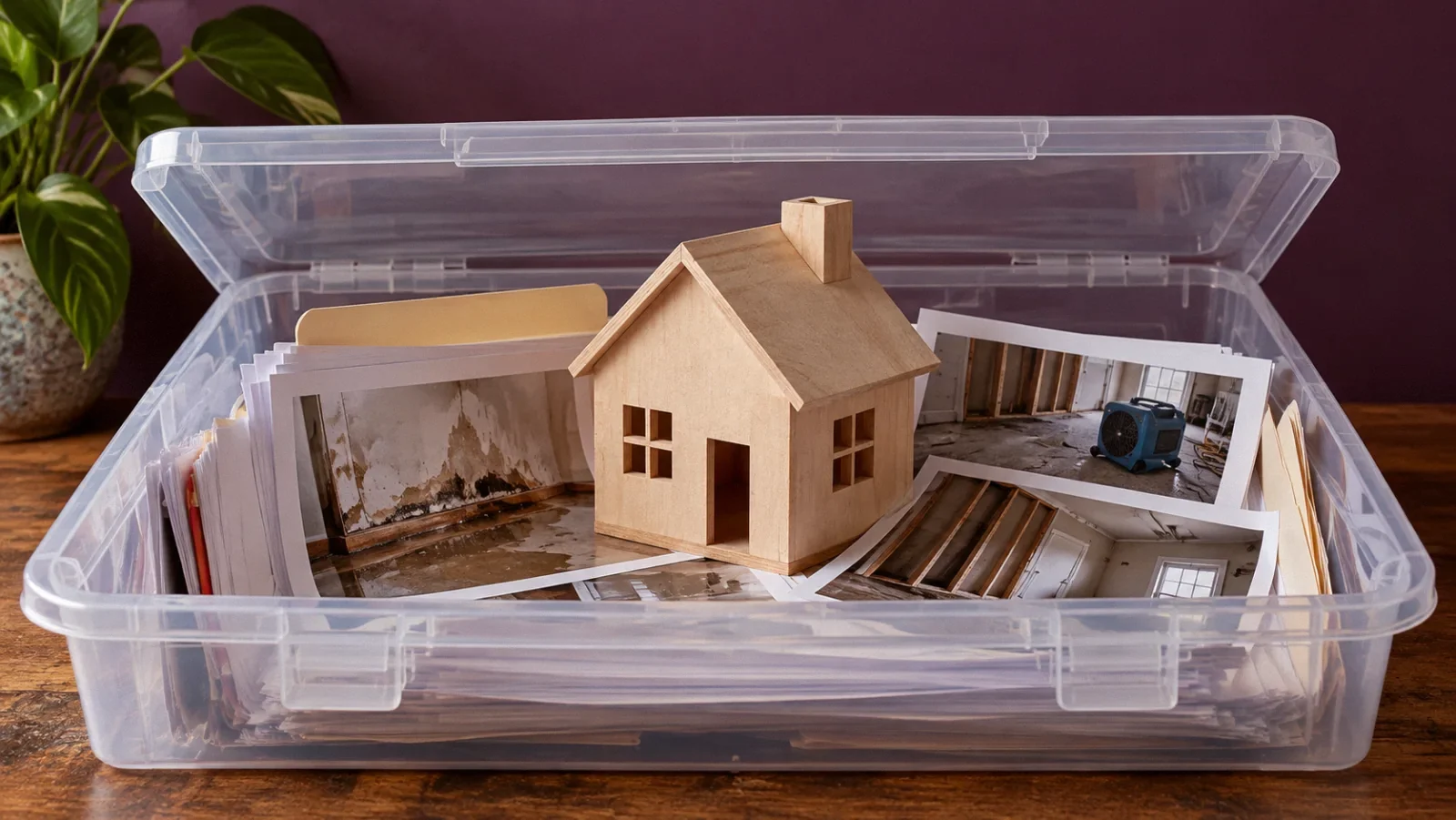
Create a component list: structural framing, wallboard, original flooring, owner improvements, fixtures and contents. For each, identify the apparent maintenance responsibility and which insurer is reviewing it. Mark unresolved items rather than forcing a premature assignment. This map can expose why two adjusters appear to be talking about different property even when they reference the same wet room.
Treat deductible allocation as its own issue
The association may have a substantial master-policy deductible, and a governing document or state rule may affect how it is allocated. Do not assume it must be divided equally, charged to the source unit or absorbed by the association. Ask for the written basis for any assessment or billback, including the calculation.
If a demand seems inconsistent with the documents, respond through the association process with the specific provision and facts you want reviewed. Preserve notice dates and obtain local advice when the amount or deadline warrants it. A dispute with the association should not cause you to miss separate policy duties or ignore damage prevention in your own unit.
Avoid automatic negligence conclusions
A failed component does not, without more, establish that its owner knew of the problem or acted unreasonably. Previous warnings, maintenance responsibilities, access refusals and repair records may matter, but liability analysis is state-specific. Provide evidence to the relevant insurers or qualified legal adviser instead of demanding that a neighbor admit fault as a condition of cooperation.
The Reddit sample includes both an owner billed by an HOA and a later report of a billback reversal after document review. Those anecdotes do not establish a rule for other associations. They show why a clear record and the actual governing language are more useful than the common assumption that water always creates liability in the unit where it started.
- Association questions: who authorizes common-element opening, source repairs and master-policy reporting?
- Unit insurer questions: which finishes, improvements, contents and loss assessments are being evaluated?
- Neighbor questions: what was observed, what professional attended and what source repair was performed?
- Billing questions: which document supports the allocation and what review procedure is available?
A component-by-component condo example
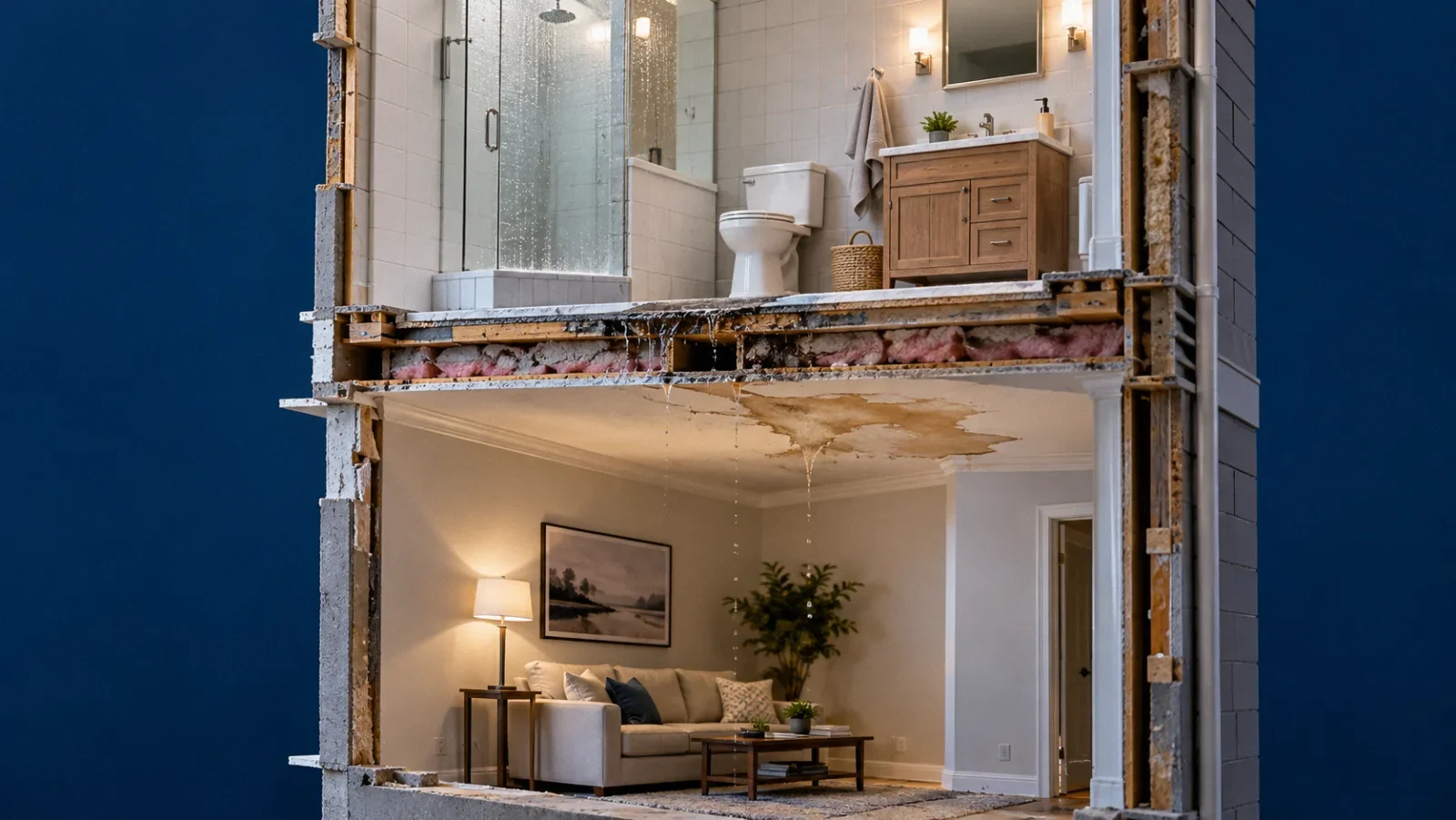
An upstairs refrigerator line leaks into a lower kitchen. The damaged items include shared framing, ceiling board, a light fixture, owner-installed cabinetry and personal belongings. Instead of asking one broad question about who pays for the leak, build five component rows. For each row, request the association maintenance provision, policy being reviewed, proposed repair and any deductible question. This does not prejudge the legal answer; it makes the missing information visible.
If the association sends a billback, request the provision authorizing it, the invoices included and the reason that particular unit is charged. If the upstairs owner insurer denies liability, ask your adjuster how that affects your own covered claim, if at all. A liability denial and a first-party coverage determination are different documents and should remain separate in the file.
Where several units need access, propose a coordinated inspection through the manager so the professionals can trace the route and avoid inconsistent room descriptions. Respect each resident’s access rights and document any limitation. If one area cannot be examined, the report should say so rather than claiming a complete source determination. This practical coordination can move repairs forward while policy allocation remains unresolved, provided the responsible parties clearly authorize the work and understand payment obligations.
Your next-step checklist
- Report promptly to the association and relevant insurer with factual observations.
- Obtain actual policies and governing documents rather than a certificate alone.
- Map responsibility by damaged component and keep uncertain items open.
- Ask for the basis of any deductible assessment or billback.
- Retain access, source-repair and notice records without making unsupported accusations.
Related questions
Should I file only against the upstairs neighbor?
Do not assume that is the only route. Notify your own insurer and association as required and ask how the policies interact. Recovery from another party may depend on documents, coverage and legal responsibility.
Does the master policy always cover drywall?
No universal boundary applies. Original construction, improvements and association definitions can matter. Ask for the applicable policy and governing provision rather than relying on the shorthand description walls-in.
Sources & context
Public guidance supports the principles in this article. The practical questions and examples are editorial interpretation, not a site assessment or a coverage decision. State-specific rules apply only where identified.
- California Department of Insurance: Residential Insurance, Homeowners and Rentersofficial
- California Department of Insurance: Residential Property Claims Guideofficial
- Washington OIC: Filing a Condo Unit Insurance Claimofficial
Community questions behind this topic
These discussions helped identify reader concerns. They are anecdotal, not technical or legal authority.