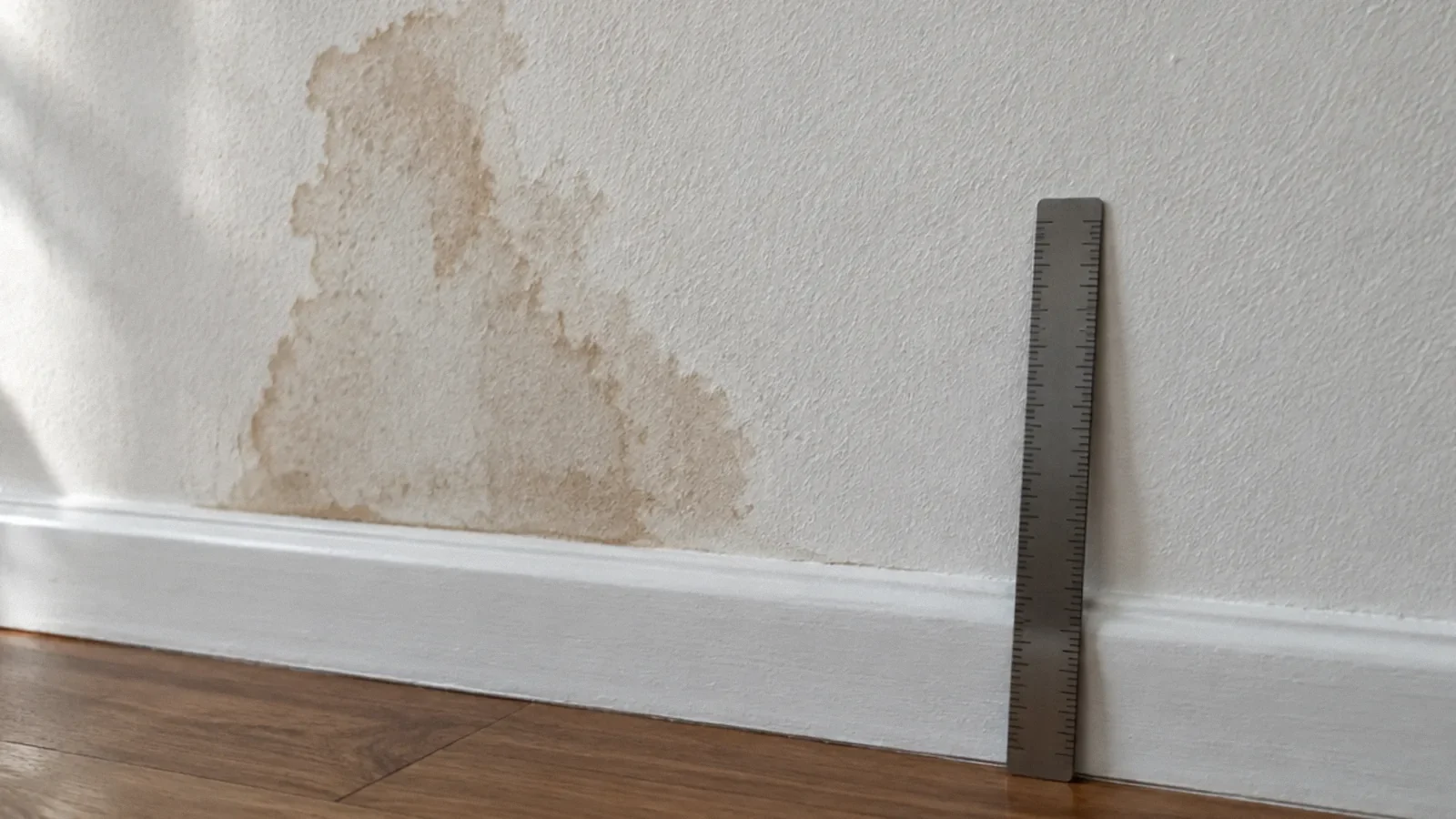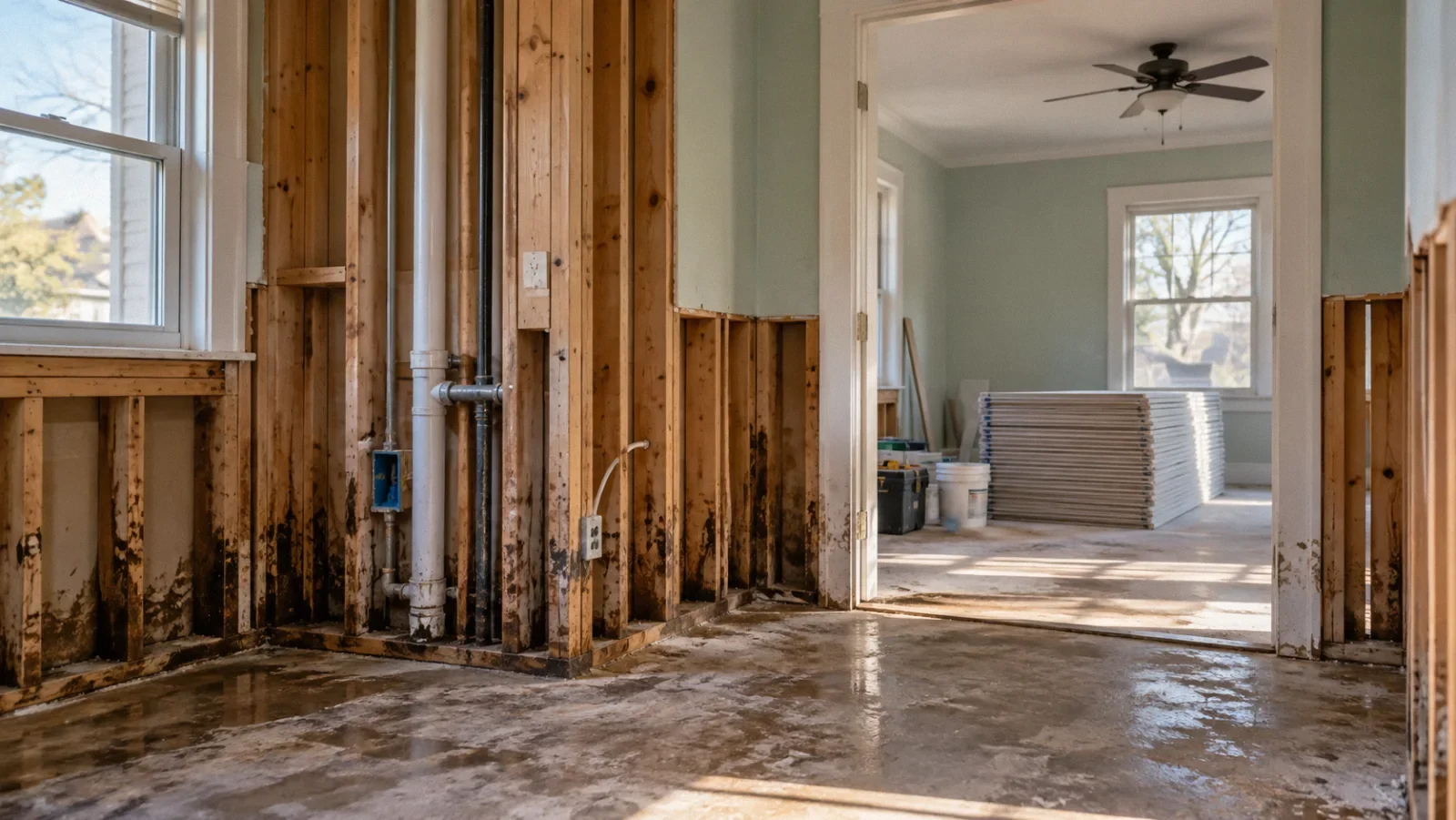
Emergency mitigation limits further damage; reconstruction restores the building afterward. Ask for distinct scopes, prices and completion criteria before treating either phase as approved.
Follow the work, not the company label
A single contractor may offer water extraction, selective demolition, drying and rebuilding. That does not make the phases one indivisible purchase. A wet kitchen can require immediate protection while cabinet design, finish selections and reconstruction pricing remain unresolved. The useful boundary is the purpose of each task: stopping deterioration now or returning the property to its agreed finished condition later.
Ask the contractor to mark the boundary on a room plan. Removing wet cabinet toe kicks to gain drying access is different from ordering replacement cabinets. Removing a damaged ceiling is different from hanging, finishing and painting its replacement. Identifying these transitions prevents a signed emergency form from becoming an assumed commitment to a much larger renovation.
What full buildback means
Buildback is the reconstruction phase that returns the affected building area to an agreed finished and usable condition after mitigation. Depending on the loss and agreement, it can include replacing insulation and drywall, finishing and painting, installing flooring and cabinets, reconnecting fixtures, and completing applicable inspections. “Full” is not a standardized promise that every preexisting defect, upgrade or contents item is included; the written scope defines the work.
A practical sequence is to confirm the water source is addressed and affected retained materials are ready to cover; agree on the reconstruction scope, price and required approvals; perform repairs in the appropriate trade and inspection sequence; and complete a documented walkthrough and handoff. The actual order depends on the building, applicable permits and the agreement. Note unresolved items, warranties and maintenance instructions rather than assuming that a drying report itself approves every reconstruction task.
Use an explicit handoff before closing walls
Reconstruction should not begin merely because the equipment has been collected. Request the final drying record, explanation of inaccessible areas, source-repair status and a list of materials removed or retained. Any unresolved moisture, contamination or structural concern should have an assigned decision maker. The rebuilding contractor needs this information to understand what is ready to cover and what still requires investigation.
A handoff can be short but should identify the inspected rooms and the date. It should distinguish observed conditions from assumptions about concealed assemblies. Do not convert a contractor statement that drying is complete into a guarantee of future leak prevention. The source repair may have been performed by another trade, and the mitigation contractor may not have inspected that work.
Keep the insurance estimate separate from the purchase agreement
The California Department of Insurance claims guide distinguishes temporary protection from permanent repairs and encourages retaining supporting records. Its claims discussion is useful background, but the policy and applicable state requirements control the particular loss. An insurer reviewing mitigation charges is not necessarily authorizing reconstruction or accepting every term in your contractor agreement.
Compare three documents: the emergency authorization, the reconstruction proposal and the insurer estimate. Mark overlaps such as debris removal, contents handling, protection or repeated mobilization. An apparent duplicate may have a legitimate explanation if performed twice for different phases; ask for that explanation. Conversely, a missing line should not silently become an owner obligation that neither party discussed.
Resolve scope gaps before selecting finishes
A reconstruction proposal should identify the finish standard, quantities, permits, access limitations and responsibility for code-related work. Separate restoration of damaged property from elective improvements. Replacing an affected wall surface may be part of the repair; changing the room layout introduces a different design and cost question. A combined price makes both insurance review and change control harder.
Consider a hypothetical bathroom loss: mitigation removes wet drywall and disconnects a vanity. The reconstruction bid includes new drywall and paint but does not include plumbing reconnection. That omission matters more than whether the total looks competitive. Ask each bidder to identify exclusions so the owner can account for the complete usable-room outcome.
- Ask who owns the transition from drying to reconstruction and who confirms the prerequisites are met.
- Request separate subtotal lines for mitigation, source repair, reconstruction and owner-selected improvements.
- Identify whether contents storage continues between phases and who authorizes those continuing charges.
- Require a written explanation of any work appearing in both estimates before assuming it is duplicated.
A two-phase approval example
Suppose a supply leak affects a laundry room and adjoining hall. The emergency proposal includes extraction, removal of identified wet baseboard and drying equipment. The owner signs that scope. Later, a representative asks the owner to select flooring and says the insurance money will handle everything. Before selecting materials, request a separate reconstruction scope identifying floor preparation, transitions, baseboard replacement, appliance movement and paint. These tasks may be necessary, but they were not necessarily purchased in the emergency agreement.
The useful written request is specific: please identify the completed emergency work, any continuing equipment or storage charges, and the proposed reconstruction tasks requiring my approval. Please also show any mitigation charge included again in the reconstruction estimate and explain why. This gives the contractor an opportunity to clarify legitimate repeated services while making accidental duplication visible.
If the contractor offers a single combined agreement, the same distinction can still appear as separate phases with defined authorizations and prices. The objective is not to multiply contracts unnecessarily. It is to prevent the urgency of extracting water from deciding finish selections, long-term payment terms or the scope of rebuilding before those issues have been considered. A clear combined contract can be easier to manage than two vague ones. Compare the actual documents and responsibility assignments rather than assuming that document count alone provides protection.
Your next-step checklist
- Obtain a copy of the signed emergency authorization before approving the next phase.
- Collect the drying report and source-repair invoice, including unresolved limitations.
- Match room names and measurements across mitigation and reconstruction estimates.
- Confirm who reinstalls fixtures, reconnects services and arranges required inspections.
- Record the reconstruction approval separately from the insurer coverage decision.
Related questions
Must I use the same contractor for both phases?
That depends on the agreement and any applicable policy program terms. Ask before signing, and obtain the consequences of switching in writing. A convenient handoff does not by itself establish an exclusive rebuilding obligation.
Can emergency work proceed before the rebuild price is known?
Often the phases can be scoped separately. The important questions are what emergency work is authorized, how charges accrue and what requires further approval. Do not postpone necessary protection simply to finalize finish selections.
Does full buildback include every upgrade?
Not automatically. Ask for a room-by-room scope, exclusions, finish specifications, inspection responsibilities and a price for any owner-selected improvement.
Sources & context
Public guidance supports the principles in this article. The practical questions and examples are editorial interpretation, not a site assessment or a coverage decision. State-specific rules apply only where identified.
- California Department of Insurance: Residential Property Claims Guideofficial
- FTC: How To Avoid a Home Improvement Scamofficial
Community questions behind this topic
These discussions helped identify reader concerns. They are anecdotal, not technical or legal authority.