Check the sofa manufacturer’s instructions and leather type before cleaning. Remove loose dust gently and use only a method approved for the finish. Blot spills promptly without soaking the material; delicate, heavily stained or water-damaged leather may need a specialist.
Identify the material first
Finished leather, unfinished or aniline leather, suede, nubuck and imitation leather do not respond identically. A product suitable for one sofa can stain or damage another. Check the care label, purchase documents or the manufacturer before selecting a cleaner.
If the finish is unknown, begin with gentle dry dust removal and ask a leather-care professional. Do not assume that a product labeled for leather is appropriate for every surface or that a sofa’s color reveals its finish.
Remove dust and ordinary debris
Use a soft clean cloth or an appropriate soft vacuum attachment as permitted by the maker. Avoid abrasive brushes and excessive rubbing, especially on delicate or worn surfaces. Remove cushions only as the manufacturer allows.
For a compatible finished leather, the maker may permit a lightly damp cloth for ordinary soil. Do not soak seams, cushions or padding. Dry the surface as instructed and avoid leaving water on the leather.
Blot a fresh spill
Act promptly by blotting with a clean absorbent cloth rather than rubbing the spill deeper. Work gently and follow the manufacturer’s stain guidance. Different spills, including grease, ink and dye, may require different treatment and can permanently affect the finish.
Test any approved product in a hidden area as directed. Do not mix cleaners or use bleach, abrasive pads, strong solvents or an unverified homemade mixture. If the stain spreads or color transfers to the cloth, stop and seek specialist help.
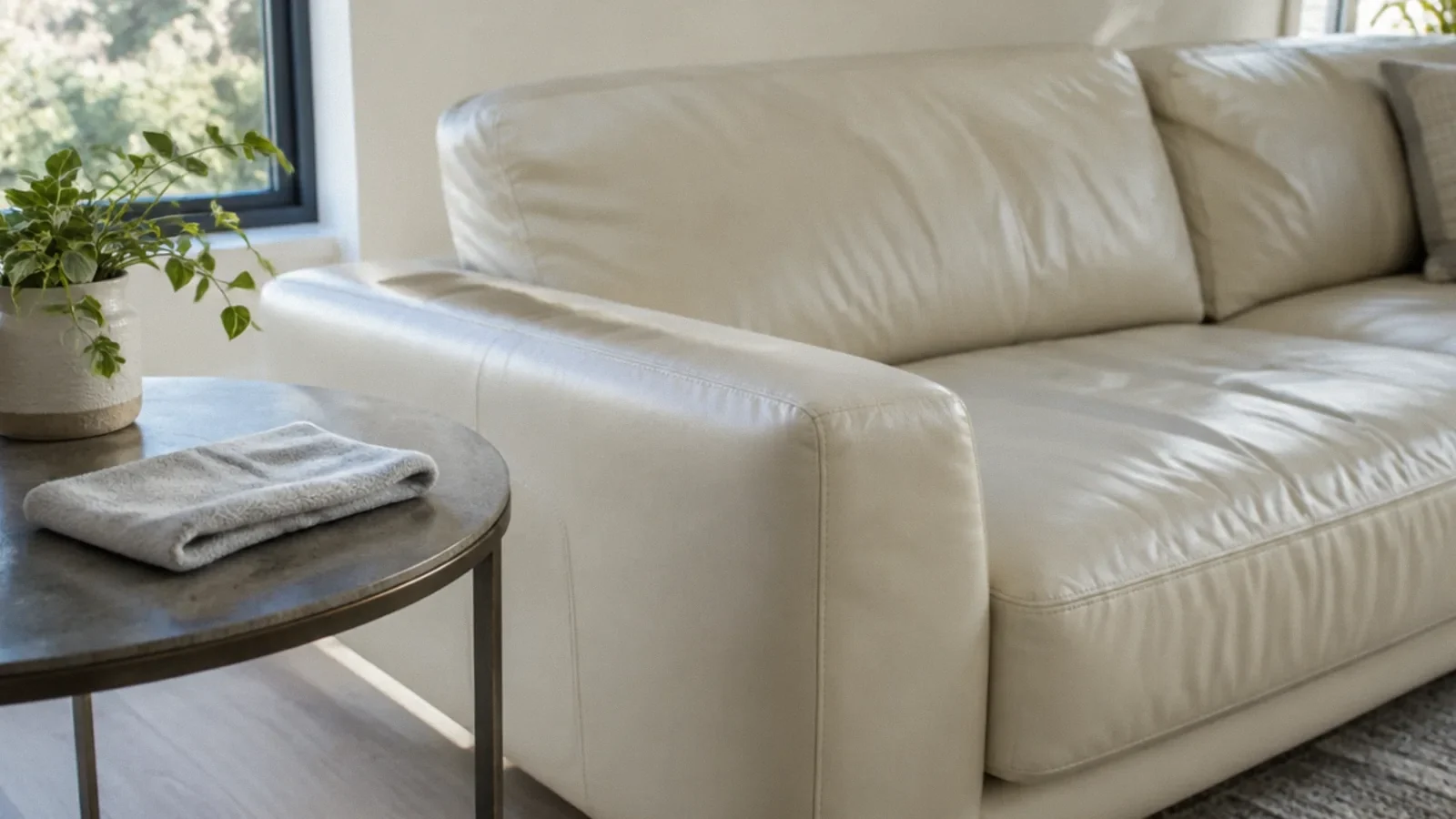
Cleaning a white or light leather sofa
Light upholstery can show ordinary soil, dye transfer and wear more visibly. The same material-specific rules apply: identify the finish, remove loose dust and use a compatible product sparingly. Stronger scrubbing is not a reliable way to restore the original color.
Clothing dyes, ink and body oils can require specialist treatment. Do not assume that a white leather sofa can safely be bleached. Ask the maker or a leather-care professional about the specific stain and finish.
Conditioning and protection
Some finished leather products may benefit from a compatible conditioner when the manufacturer recommends it; others should not be treated with generic products. A manufacturer’s instructions for a particular unfinished leather sofa can expressly prohibit leather-care products.
Check the label, test as directed and avoid applying product to seams, hardware or other materials unless permitted. Keep furniture away from excessive direct heat and sunlight where the maker recommends it. A conditioner cannot repair tears, deep dye loss or a wet cushion.
Water damage and suspected mildew
Blot accessible moisture gently, correct the source and let the item dry under conditions recommended by the manufacturer. Do not use a heater, hair dryer or direct sun to force drying. Wet padding or structural components can remain damp below the surface.
A pale film is not always mold, and color alone cannot identify an organism. Avoid disturbing extensive growth or contaminated material. A leather specialist or qualified restoration provider can assess whether cleaning, repair or replacement is appropriate.
When to hire a professional
Seek help for large or recurring stains, dye transfer, fragile leather, odor after water damage, suspected mold or valuable furniture. Tell the provider the material, known spill and any products already used. Ask what results are realistic and whether treatment may alter color or texture.
Request a written scope and estimate. A professional may be able to reduce a stain without fully removing it; no treatment can guarantee restoration of every finish. Keep photographs and relevant product information for comparison.
Prevent new damage
Dust gently on a routine schedule, protect the sofa from avoidable spills and address moisture promptly. Follow the manufacturer’s placement and maintenance guidance rather than applying products more often than recommended.
Keep cleaning products safely stored away from children and pets. If a sofa was exposed to sewage or floodwater, avoid contact and obtain qualified assessment; ordinary upholstery cleaning is not a substitute for a contamination-specific plan.
Fresh and dried water marks on leather
For a fresh water spill, gently blot with a soft dry cloth and follow the sofa maker’s drying directions. For a dried ring, identify the leather and finish first; do not rewet the entire cushion or scrub in pursuit of an even color. Use a lightly damp cloth only when the manufacturer permits it, and test an approved method on an inconspicuous area. Aniline, suede and unknown finishes can mark readily. If the ring remains, color transfers or padding was wet, stop and consult a leather specialist; removal is not guaranteed.
Your next-step checklist
- Identify the leather type and care instructions.
- Dust gently with an approved tool.
- Blot spills without soaking or scrubbing.
- Test only products approved for the finish.
- Seek specialist help for extensive water damage or delicate stains.
Related questions
How do I clean a white leather sofa?
Identify the finish and follow the maker’s instructions. Blot spills gently and avoid bleach or abrasive products.
Can all leather sofas use the same conditioner?
No. Some finishes require specific care and some manufacturers prohibit generic leather products.
Can water damage leather furniture?
Yes. Water can stain leather or reach padding and seams. Correct the moisture source and ask a specialist about significant damage.
Will professional cleaning remove every stain?
Not necessarily. Results depend on the stain, leather type, finish and time since exposure.
Can I clean a leather couch with vinegar?
Do not assume vinegar is safe for a leather finish. Follow the furniture maker’s instructions and use only a compatible product tested as directed; some leather types are easily stained or damaged by household cleaners.
Sources & context
Public guidance supports the principles in this article. The practical questions and examples are editorial interpretation, not a site assessment or a coverage decision. State-specific rules apply only where identified.
- IKEA: Sofa maintenance guidancemanufacturer guidance
- IKEA: Upholstery care by materialmanufacturer guidance
- IKEA: Example of unfinished leather care restrictionsmanufacturer instructions