Keep susceptible people away from suspected mold and address the moisture source. Leather finishes and objects vary, so follow the maker’s instructions and seek a specialist for valuable, delicate or heavily affected items. A white deposit is not automatically mold, and appearance alone cannot identify it.
Identify the object and moisture source
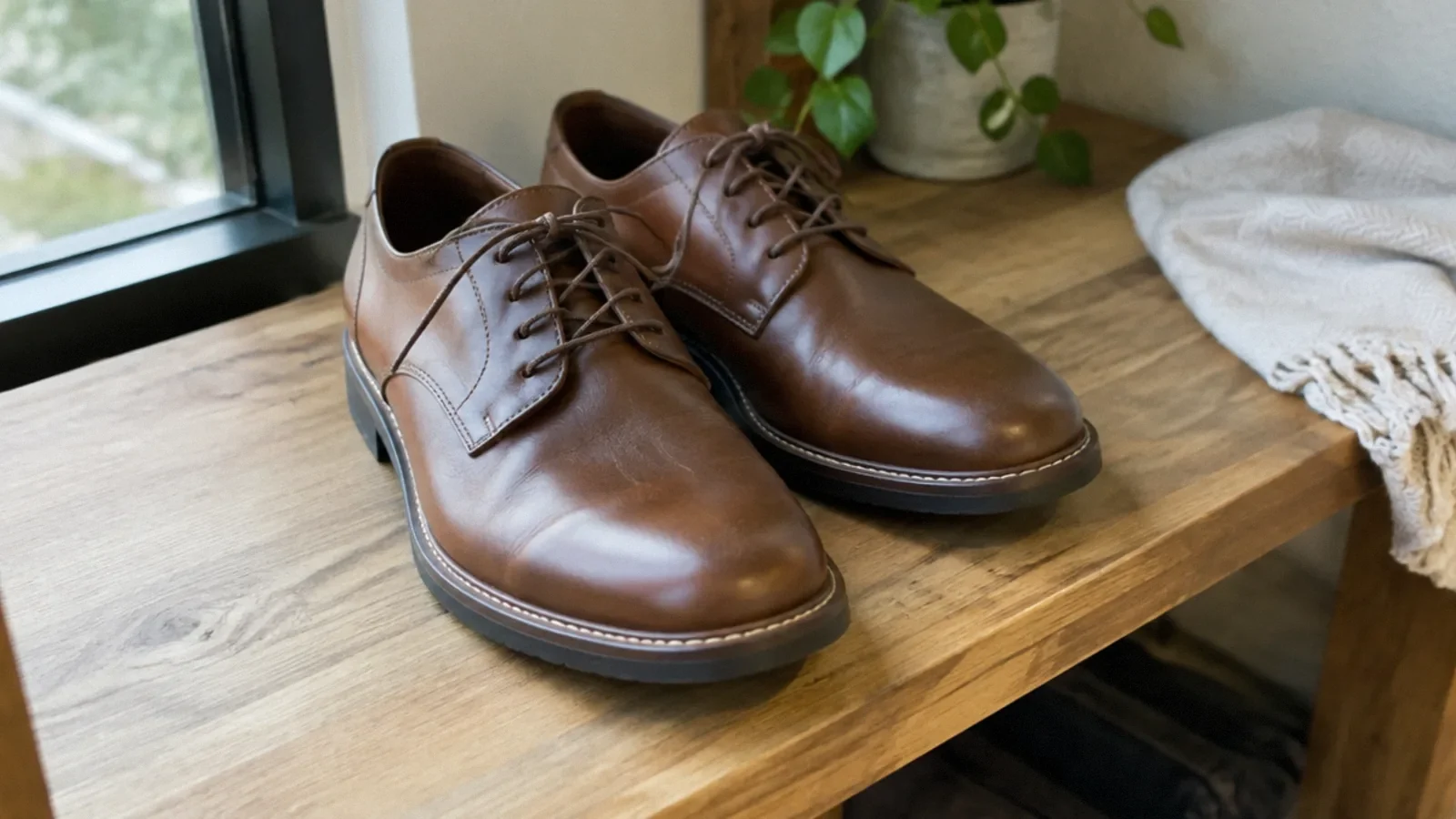
Shoes, a sofa, a handbag and a historic leather object can have different finishes, dyes, linings and construction. Check the manufacturer’s care instructions before applying moisture or a product. Find out whether the object became damp because of a leak, condensation or storage conditions.
A musty smell or visible deposit is a reason to investigate, but it does not establish the organism or the extent of contamination. Correct the water problem and inspect nearby materials. Do not return an affected object to a damp closet or cover it with fragrance.
Protect people from exposure
CDC advises that people with allergies, asthma, chronic lung disease or immune suppression should not perform mold cleanup. The Canadian Conservation Institute also advises people with respiratory conditions or suppressed immune systems to avoid contact with moldy leather objects. Seek appropriate help for vulnerable occupants.
Avoid shaking or brushing suspected growth into a room. Keep children and pets away, and use protection appropriate to the task. Extensive contamination, sewage or a valuable object warrants a qualified professional rather than a household experiment.
A white film may have another cause
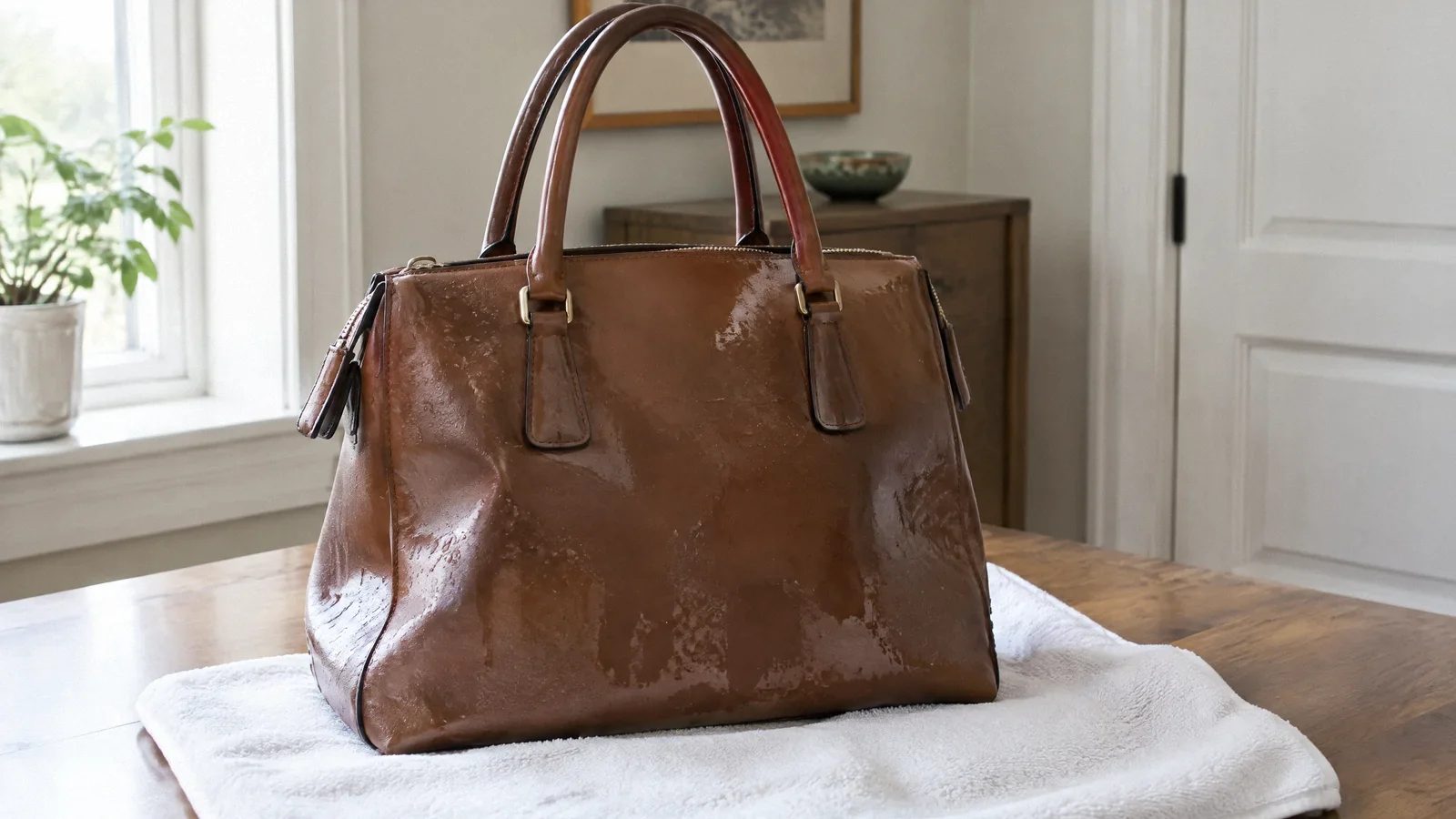
The Canadian Conservation Institute notes that oils, waxes and other products can form a pale deposit that resembles mold. A photograph or color alone cannot distinguish these causes reliably. If uncertain, avoid disturbing the surface and ask a leather specialist or conservator.
A deposit that disappears after wiping does not prove the underlying moisture issue has been corrected. Likewise, a remaining stain does not necessarily show active growth. Document the object and its storage conditions for the person assessing it.
Isolate an affected object appropriately
Keep an affected item apart from clean belongings to reduce accidental contact. The Canadian Conservation Institute discusses isolating dry mold-affected collection objects in a sealed container until treatment; damp objects need prompt drying or specialist direction. Do not seal a wet item indefinitely and expect the moisture problem to resolve.
If the item is valuable, fragile or heavily affected, contact a conservator before moving or treating it. Avoid carrying loose debris through the home. A professional can recommend containment and transport appropriate to the object and exposure.
Follow the maker’s care instructions
Leather can be damaged by excess water, heat, alcohol, bleach or an incompatible cleaner. Do not soak the item or apply a homemade mixture. If the maker permits a specific product, test it in an inconspicuous area and follow the label; stop if color or finish changes.
For a sofa, contamination may extend into fabric backing or cushions, which need a separate assessment. A visible surface treatment cannot establish that hidden layers are dry or clean. Ask a professional about the entire item rather than only the visible patch.
Small affected areas on leather
For a small, isolated area on a suitable object, first consult the care instructions and keep susceptible people away. The Canadian Conservation Institute recommends at least an N95 or N100 respirator, disposable gloves and non-vented goggles for a small amount of mold. Isolate a dry object from clean belongings; a damp item needs prompt drying or specialist advice rather than indefinite sealed storage.
For dry leather, the Institute describes close vacuuming with a HEPA-filtered vacuum to reduce the release of spores. Do not brush or shake debris into the room. Use a method or product only if appropriate for the leather and permitted by its maker; test an inconspicuous spot first. Stop if the finish changes or the material is fragile. Visible cleaning cannot guarantee removal from deep fibers or lining, so seek a specialist for persistent odor, recurring growth, a valuable item or extensive contamination.
Faux leather and its backing
Faux leather has a coated surface and may have fabric backing, seams and padding. Identify the product and follow its manufacturer’s permitted cleaning instructions; test an inconspicuous spot and use only a compatible product. Avoid soaking seams or forcing liquid into the backing. Dry the surface according to the care instructions and correct the room’s moisture source.
If water or suspected growth has reached the backing or cushions, if the coating is peeling, or if the odor returns, seek professional assessment. Cleaning the visible coating alone cannot establish that hidden layers are clean and dry.
When professional conservation is appropriate
A historic, expensive or sentimental object may have sensitive dyes, adhesives or decorative parts. The Canadian Conservation Institute’s guidance for collections uses controlled handling and specialized equipment; its procedures should not be assumed suitable as a casual household recipe.
Ask a leather conservator or qualified cleaner about the object’s material, possible contaminants, cleaning limits and expected appearance. Some staining or odor may remain, and some objects may not be safely salvageable. Obtain a written scope before treatment.
Drying and storage
Follow the maker’s or conservator’s instructions for drying. Avoid direct heat, harsh sun or a sealed wet storage container unless a specialist directs otherwise. Leather may stiffen, distort or discolor if dried improperly.
Address humidity and leaks in the room, not only the item. Store clean, fully dry leather in a suitable ventilated location according to its care instructions. Check periodically for recurring moisture, residue or odor.
After cleaning
Some mold fragments or staining may remain even after treatment; the Canadian Conservation Institute notes that susceptibility varies. Do not promise that a cleaning product sterilizes the object or makes it appropriate for every person.
If visible growth, dampness or odor returns, reassess the storage environment and the object. Keep the treatment record and contact the specialist before using a different product. Never mix bleach and ammonia or other cleaners.
What if leather has water damage?
For water stains, stiffness or other damage without suspected mold, see the separate guide to repairing water-damaged leather. The material, finish and wet padding affect the repair decision.
Your next-step checklist
- Keep susceptible people away from suspected growth.
- Find and correct the moisture source.
- Follow the item’s care instructions and avoid soaking leather.
- Consult a specialist for valuable or heavily affected objects.
Related questions
How do I remove mildew from leather?
First assess moisture and the leather type. Follow the maker’s instructions or consult a specialist; avoid spreading suspected growth and using harsh mixtures.
Is every white patch on leather mold?
No. Oils, waxes or other deposits can look similar. Appearance alone cannot establish the cause.
Can I soak leather in bleach?
Do not assume bleach is safe for leather. It can damage finishes and cleaning products should never be mixed.
Can a moldy leather item always be saved?
No. The material, extent, contamination and ability to clean and dry it determine the options.
What if faux leather has mold-like growth?
Faux leather and real leather can require different care. Correct the moisture source, avoid disturbing extensive growth and follow the furniture manufacturer’s instructions; wet backing or padding may need professional assessment.
Sources & context
Public guidance supports the principles in this article. The practical questions and examples are editorial interpretation, not a site assessment or a coverage decision. State-specific rules apply only where identified.
- Canadian Conservation Institute: Removing mould from leathergovernment conservation guidance
- CDC: Mold cleanup guidancefederal public health guidance
- EPA: Mold and moisturefederal guidance