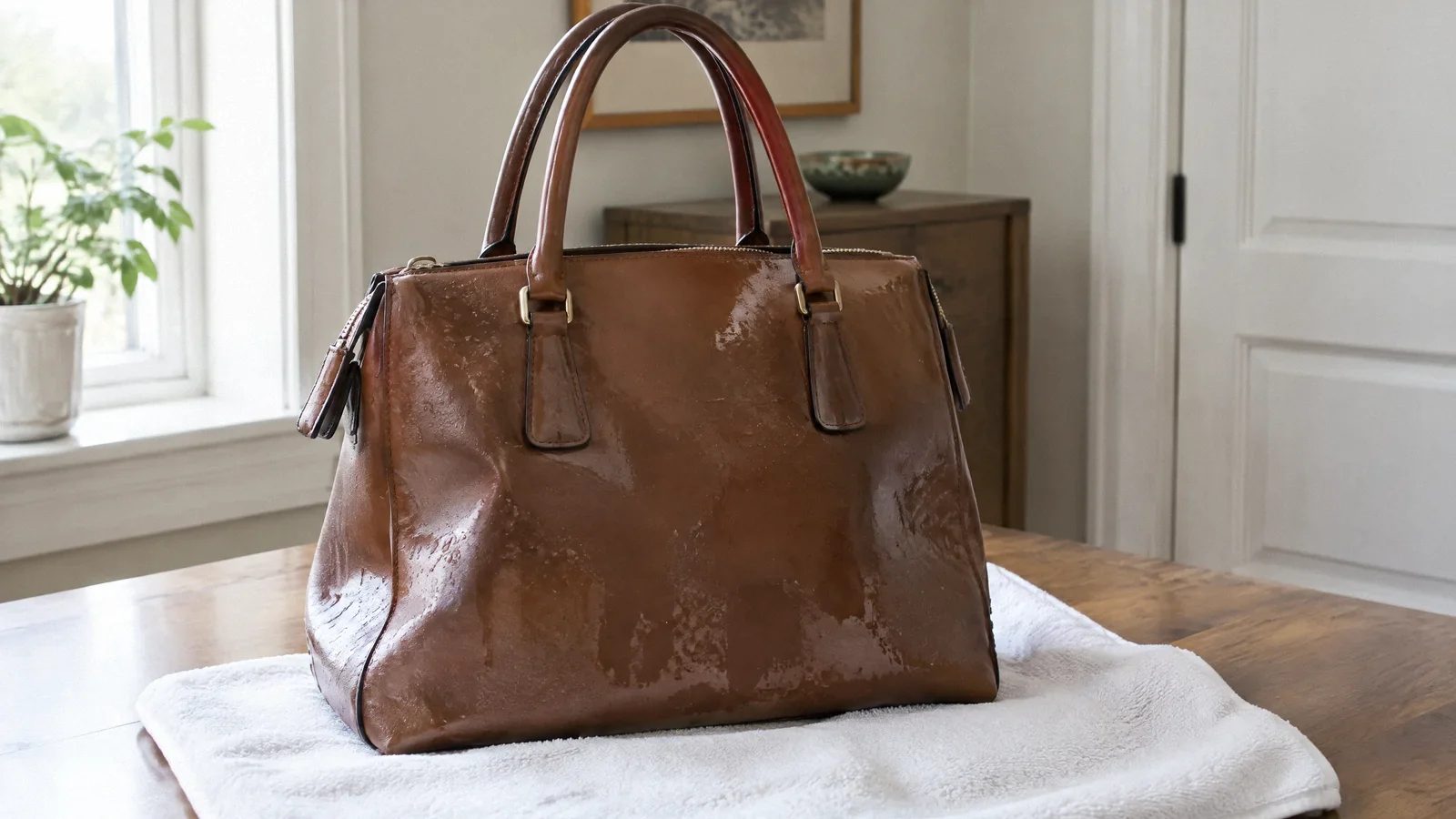
Water can leave leather stiff, stained, distorted or discolored. For a lightly wet ordinary item, remove excess water gently, support its shape and let it dry slowly at room temperature. Do not use heat, scrub the surface or apply an untested conditioner. If the item is valuable, historic, fragile, heavily soaked or contaminated by floodwater, consult a leather specialist or conservator before attempting treatment. Some changes cannot be reversed completely.
What water does to leather
Water can leave leather stiff, stained, distorted or discolored. For a lightly wet ordinary item, remove excess water gently, support its shape and let it dry slowly at room temperature. Do not use heat, scrub the surface or apply an untested conditioner. If the item is valuable, historic, fragile, heavily soaked or contaminated by floodwater, consult a leather specialist or conservator before attempting treatment. Some changes cannot be reversed completely.
Identify the item and water
Start by identifying the item and the water source. A few rain drops on a finished handbag are different from a soaked suede jacket, a leather-bound book or a bag exposed to sewage. Check the maker's care label and any instructions for the specific finish. If the leather is antique, decorated, painted, beaded or unusually brittle, handling itself can cause damage. The Canadian Conservation Institute notes that the effects of water depend on how the leather was processed and finished and on its condition.
Blot and support
Move a wet item away from the water source. With clean, absorbent, undyed cloth or paper, blot standing moisture gently; avoid rubbing, which can abrade a softened surface or move dye. Support a bag or shoe with unprinted absorbent paper if that can be done without forcing its shape. Replace the paper when damp. Do not pack the item tightly, stretch seams, hang a heavy wet jacket by a fragile loop, or try to reshape a stiff historical object. Lay delicate items on a clean supported surface.
Dry slowly
Let the item dry in a ventilated room out of direct sun and away from radiators, hair dryers and heaters. Do not put it in a clothes dryer. Rapid or uneven heating can worsen distortion and hardening. Drying time varies with thickness, lining, humidity and how wet the item became. A surface that feels dry can still have damp padding or seams. Allow time for the whole item to dry before storing it, and check the care instructions for any material-specific limitations.
Examine the dry surface
Once dry, examine the item in good light. A darker patch, a pale tide mark, a roughened nap or stiffness may reflect different damage. Do not identify the type of leather solely from its color or assume every mark can be washed away. Finished leather may tolerate a manufacturer-approved treatment that suede, nubuck or unfinished leather will not. If the finish transfers to a clean cloth or the surface flakes, stop and consult a specialist.
Choose products cautiously
For ordinary modern goods, use only a cleaner or conditioner that the manufacturer says is suitable for that leather and finish. Follow its instructions and first test an inconspicuous area; a test can reveal discoloration but cannot guarantee the entire item will react identically. Avoid household oils, bleach, vinegar and aggressive stain removers. They can darken or damage material, leave residues or interfere with later professional treatment. Museum conservation guidance generally minimizes dressings and cleaners because of their possible long-term effects; historic objects warrant particularly cautious handling.
Treat stiffness and distortion
Stiffness is not always fixed by adding oil. Water can alter fibers, dissolve or move finishing materials and leave permanent changes. Do not force a stiff, distorted item open or flex fragile seams. A conservator can evaluate whether humidification, controlled reshaping or other treatment is appropriate. For an everyday jacket, handbag or shoe, a reputable leather repair specialist can assess the finish and explain the likely appearance and limitations before treating the whole item. Request a small test, estimate and expected result before authorizing work.
Suede, nubuck and upholstery
Suede and nubuck have a raised surface that can change texture with water or rubbing. Do not use a smooth-leather cream on them unless the maker explicitly recommends it. Let the item dry fully and consult its care instructions; persistent rings, dye transfer or severe matting are reasons to seek a specialist. For leather furniture, treat the whole situation rather than a visible spot alone: water may have reached padding or the frame, and a professional upholstery cleaner can evaluate hidden moisture and the finish.
Floodwater and mold
Floodwater and sewage may carry contaminants into porous material and linings. Avoid treating a contaminated object as a routine water spot. Separate it from clean belongings without shaking it and seek guidance from a qualified restoration or conservation professional; some items may not be safely salvageable. If visible or suspected mold is present, avoid dry brushing it indoors and ask a specialist about safe handling. Do not infer a species or health risk from color.
Store and monitor
When the item is fully dry and appropriately treated, store it clean and supported in a dry, ventilated location. Avoid trapping residual moisture in a sealed bag. Keep photographs and receipts if an insurance claim may apply. If staining, odor, stiffness or shape changes persist, ask a professional what can realistically be improved. The goal is to prevent further deterioration and make an informed repair decision, not to promise that every mark or lost finish can be restored.
Your next-step checklist
- Blot gently and support the item.
- Air dry away from direct heat and sunlight.
- Check manufacturer instructions before applying products.
- Consult a specialist for fragile, contaminated or valuable items.
Related questions
Can water damage on leather always be repaired?
No. Stiffness, dye movement, distortion and finish loss can be permanent; a specialist can assess the item.
Should I use heat to dry leather?
Avoid direct heat and follow the maker’s care instructions. Let the item dry gradually in a ventilated room.
Sources & context
Public guidance supports the principles in this article. The practical questions and examples are editorial interpretation, not a site assessment or a coverage decision. State-specific rules apply only where identified.
- Caring for leather, skin and furprimary
- Care of tanned leatherprimary