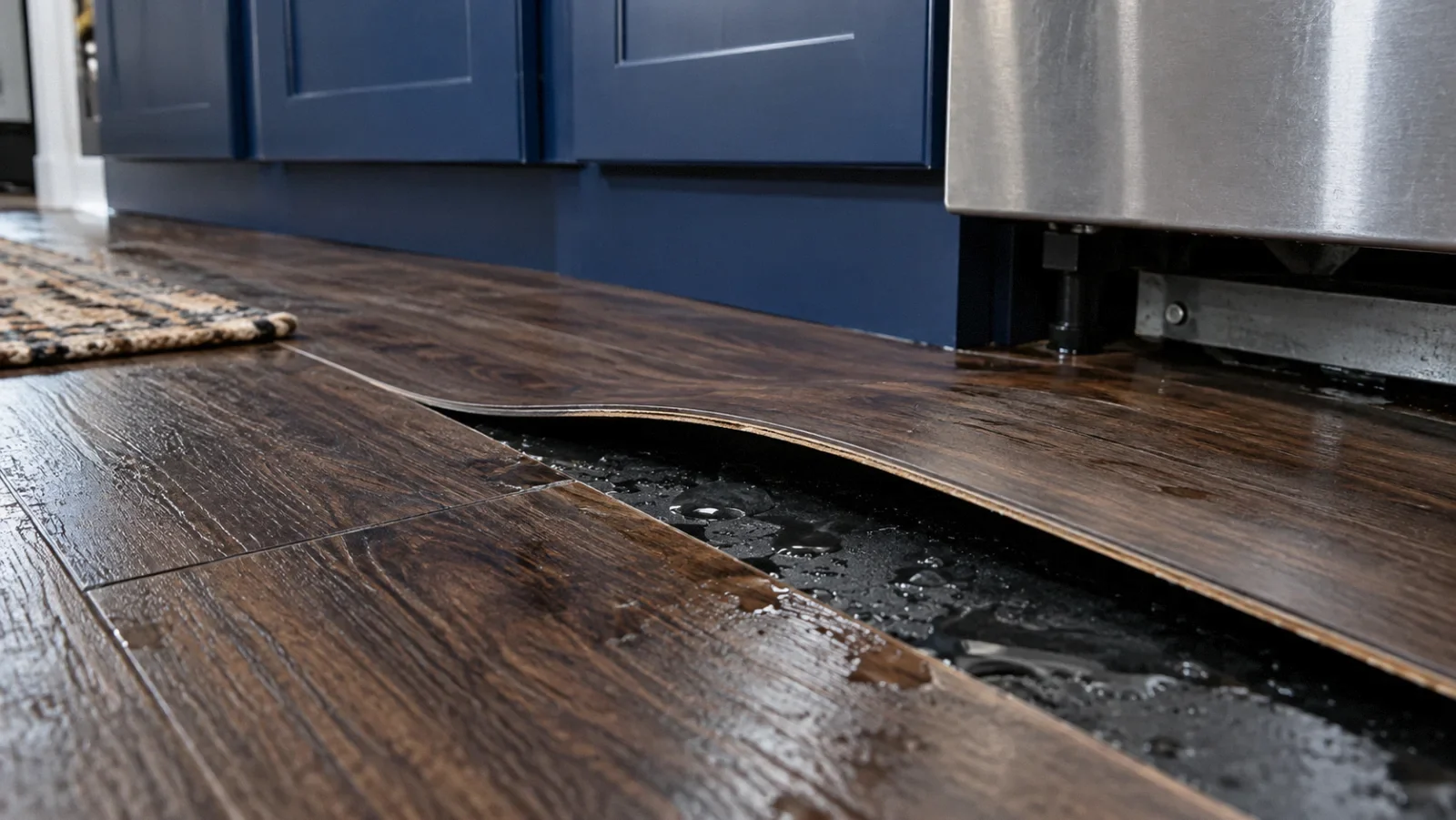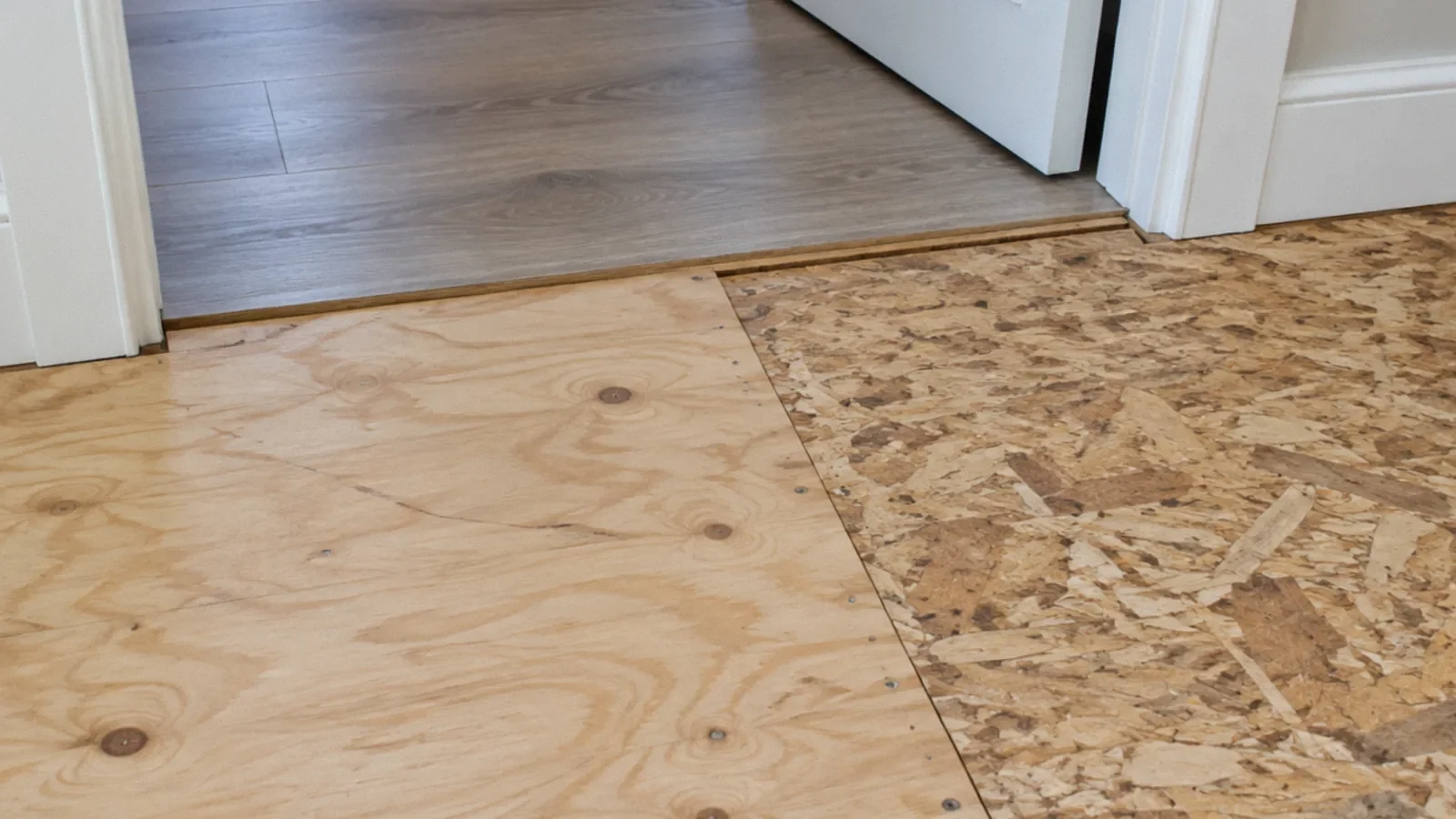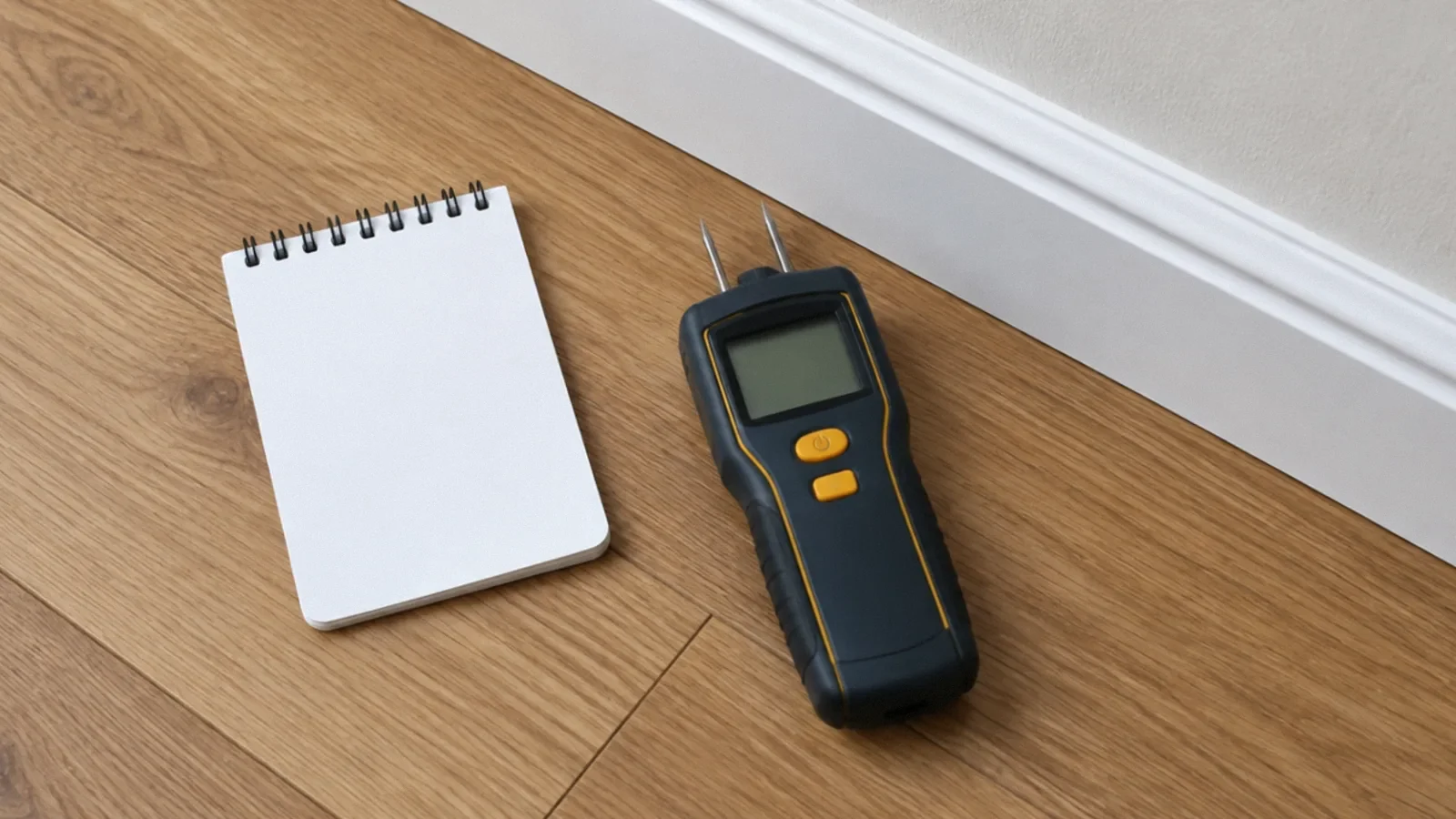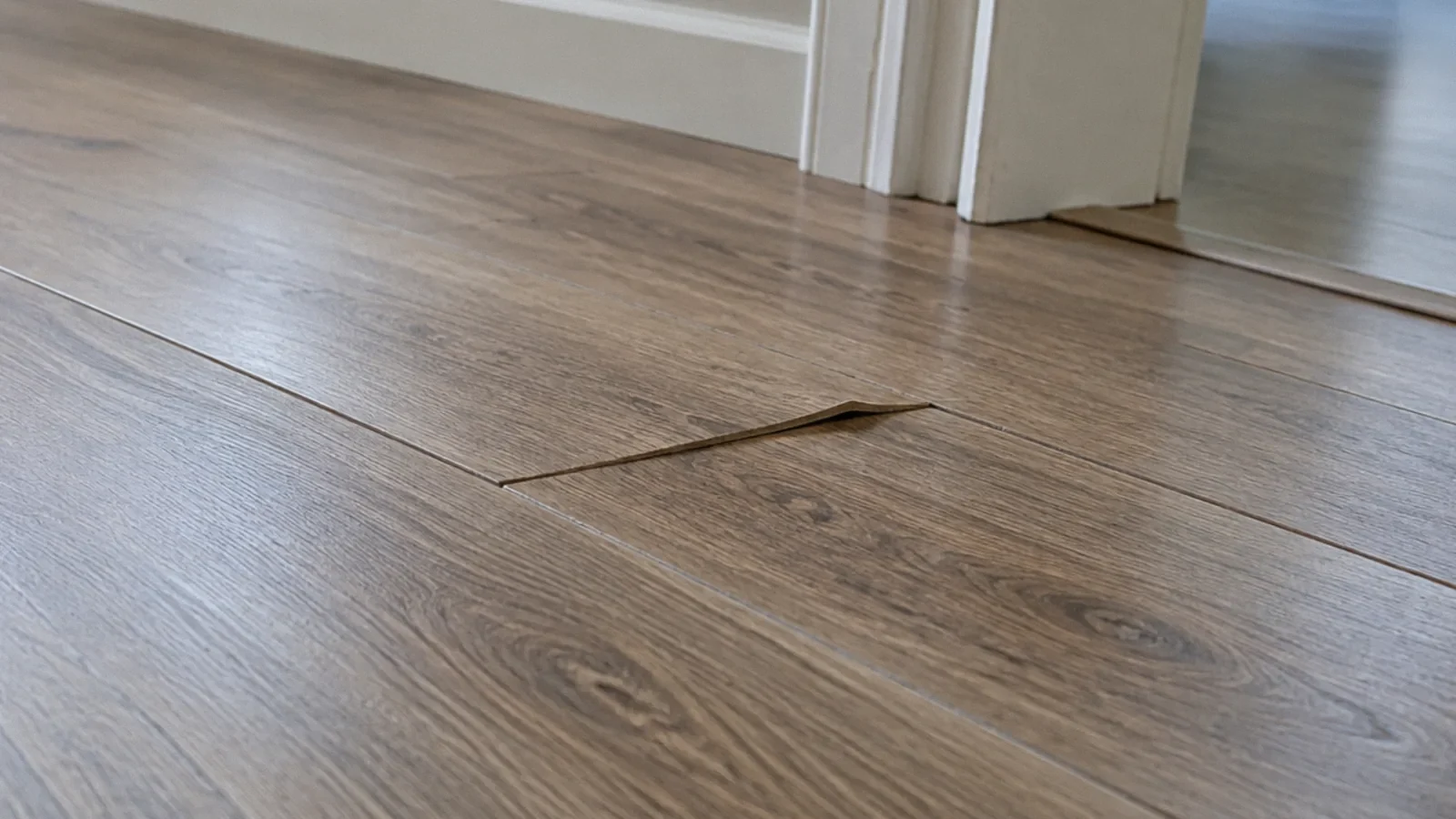
Swollen laminate edges often represent physical change that drying will not reverse. Inspect the underlayment and subfloor as well as the visible boards. Decide on reuse only after the source is repaired, the assembly is dry enough for the replacement system, and joints remain serviceable.
Start by identifying the flooring correctly
Laminate, engineered wood, and vinyl plank are often confused in casual descriptions. Their cores, surface layers, and locking joints respond differently to water. Find a leftover board, purchase record, or product identification if available. “Waterproof floor” is not a material specification.
Laminate commonly has a wood-based core. Water entering exposed edges or joints can produce swelling and raised seams. The decorative surface may remain intact while the core changes beneath it. A contractor should describe the actual construction before promising that the boards will return to their original shape.
Look below the layer that attracts attention
Surface mopping does not remove water beneath a floating floor. Underlayment can spread or retain moisture, and water may extend under appliances or cabinetry. EPA’s flooring guidance calls for checking underlying material even when the exposed hard surface can be cleaned.
Map the known path and ask where the edge of the affected area was verified. Removing only the visibly swollen board may miss water farther away. Conversely, a proposal to remove every room should explain continuous flooring, access, contamination, matching constraints, or measured extent rather than simply invoking the leak.
Dryness does not repair a damaged locking edge
Once a core or joint is distorted, a board may not reconnect securely even after its moisture decreases. Raised corners can affect movement and wear; a damaged locking profile can create a recurring gap. Assess condition with appropriate handling rather than forcing the joint flat under weight.
Spare boards can help with a local repair, but quantity, production differences, and the installation sequence matter. Some assemblies cannot be disassembled from the damaged spot without working back from an edge. Ask how removal will protect the boards intended for reuse and what happens if their joints break.
Set the replacement conditions before shopping
The substrate must meet the chosen flooring and underlayment system’s requirements. A room humidity reading alone does not establish a concrete slab’s or wood subfloor’s readiness. Ask which testing method applies, who performs it, and what record the installer will retain.
Do not trap a wet pad beneath new boards because its surface feels dry. Consider the original source as well: appliance leakage, a wet slab, and periodic exterior flooding require different prevention measures. FEMA’s flood-resistant-material guidance is useful when choosing materials for foreseeable flooding, but does not turn a finish into a waterproof assembly.
A practical boundary for a partial repair
Suppose the visibly swollen area covers only a few boards beside a dishwasher. A limited finish repair may still require inspecting water farther under the underlayment or toward the cabinets. The investigation boundary and the final replacement boundary need not be identical. One establishes what became wet; the other considers which boards are physically reusable and how the installation can be accessed.
Ask the installer to explain the sequence using the actual room layout. If the floating floor runs beneath fixed cabinetry, removing a local area may be more complicated than lifting loose planks in an open room. Do not let a generic promise of “click it back together” replace a construction-specific plan.
When a board is removed, preserve a representative damaged piece long enough to document the core and joint condition if practical. This can clarify whether the failure was surface finish, core swelling, or connection damage. Avoid a repair that simply fills a raised seam without addressing movement or the substrate below it.
A stop point for installation is unresolved substrate moisture, ongoing appliance leakage, or lack of a feasible joint connection. The existence of matching spare material is helpful, but it cannot solve those conditions. Agree on what happens if additional joint damage is discovered during disassembly, including how the revised scope will be documented.
A practical repair decision
A limited clean-water incident with accessible layers and undamaged joints may support selective replacement or reuse of unaffected boards. Widespread swollen cores, contaminated water, damaged locking edges, or inaccessible wet layers may push the decision toward broader removal. The reasoning should connect to observations.
Photograph seam height and damaged edges before disposal. Keep the source repair, moisture findings, and flooring repair scope together so the installer does not assume that another trade has already accepted the substrate.
Suspected mold beneath wet laminate
Water trapped under laminate can wet the underlayment and subfloor. If there is a musty odor or suspected growth, do not assume a surface wipe has addressed what is below. Limit disturbance and arrange assessment of the affected assembly, especially for a large or contaminated loss.
Determine whether the boards and underlayment can be removed without damage and whether replacement is necessary. Repair the source and confirm suitable dryness before installing a new finish. Color alone cannot identify a species or establish risk.
Assess wet underlayment and make a local repair decision
Stop the source first, then blot accessible surface water without driving it into joints. Photograph the affected boundary and avoid energised equipment. Swelling, cupping or raised seams can reflect moisture, but inadequate expansion gaps or an uneven subfloor can also cause buckling; an installer should assess the assembly and manufacturer requirements. Do not force boards flat. If safe access is possible, follow the flooring instructions for lifting removable planks from an edge without damaging locking joints. Label reusable pieces; a damaged lock may make a local replacement impossible. Inspect the underlayment and subfloor beyond the visible wet edge. Wet, contaminated or deteriorated underlayment may require replacement; measure and document drying before reinstallation. Visible or suspected hidden mold, sewage, electrical hazards, extensive swelling or inaccessible layers warrant professional help. Drying cannot guarantee that swollen boards recover their shape.
Your next-step checklist
- Confirm the product is laminate rather than vinyl or engineered hardwood.
- Inspect and document underlayment and subfloor conditions.
- Distinguish moisture readings from irreversible swelling and joint damage.
- Check whether spare boards and access allow a practical selective repair.
- Require substrate acceptance under the new flooring system before installation.
Related questions
Can I press swollen seams flat while they dry?
Pressure does not reliably reverse a swollen core or restore a damaged locking profile. It may conceal the condition temporarily. Have the material assessed before attempting cosmetic repair.
Are five spare boards enough?
Only if the affected area and disassembly path allow it and the surrounding joints survive. Board count alone does not determine the scope.
Can I replace laminate with vinyl to prevent this next time?
Vinyl may tolerate water differently, but water can still reach the underlying assembly. Source control, drainage, accessible inspection, and substrate design remain necessary.
How should a replacement quote describe the wet substrate?
It should state which underlying layers were inspected, whether they were retained or removed, and who will accept them before installation. It should also explain any unresolved moisture, flatness, or condition issue. A flooring-only material list does not establish that the supporting assembly is ready.
Will water under laminate dry on its own?
Not reliably. Underlayment and the subfloor can retain moisture beneath the visible surface. Identify the source and assess the hidden layers and locking joints.
Sources & context
Public guidance supports the principles in this article. The practical questions and examples are editorial interpretation, not a site assessment or a coverage decision. State-specific rules apply only where identified.
- EPA: Table 1, Water Damage Cleanup and Mold Prevention (clean-water material guidance)official
- FEMA: Flood Damage-Resistant Materialsofficial
- USDA Forest Service: Wood Handbookofficial
Community questions behind this topic
These discussions helped identify reader concerns. They are anecdotal, not technical or legal authority.