A wet OSB subfloor needs separate moisture and condition assessments. Drying may reduce moisture without reversing swollen edges, lost fastening, or damaged structure. Check the full affected assembly and have repair decisions tied to observed condition and the requirements of the replacement floor.
Moisture and serviceability are different questions
Oriented strand board is a structural wood panel used in many floor assemblies. Water exposure can cause dimensional change, especially at edges. A panel can become drier while an edge remains raised, and an elevated reading alone does not prove that its structural capacity is lost. Avoid both automatic demolition and automatic reassurance.
USDA’s Wood Handbook describes wood-water relations and dimensional change, but it does not determine the condition of a particular flooded panel. A qualified assessment needs the panel type, exposure, swelling, attachment, support, and any deterioration. Photograph changes before sanding or covering them.
Plywood and other subfloor panels
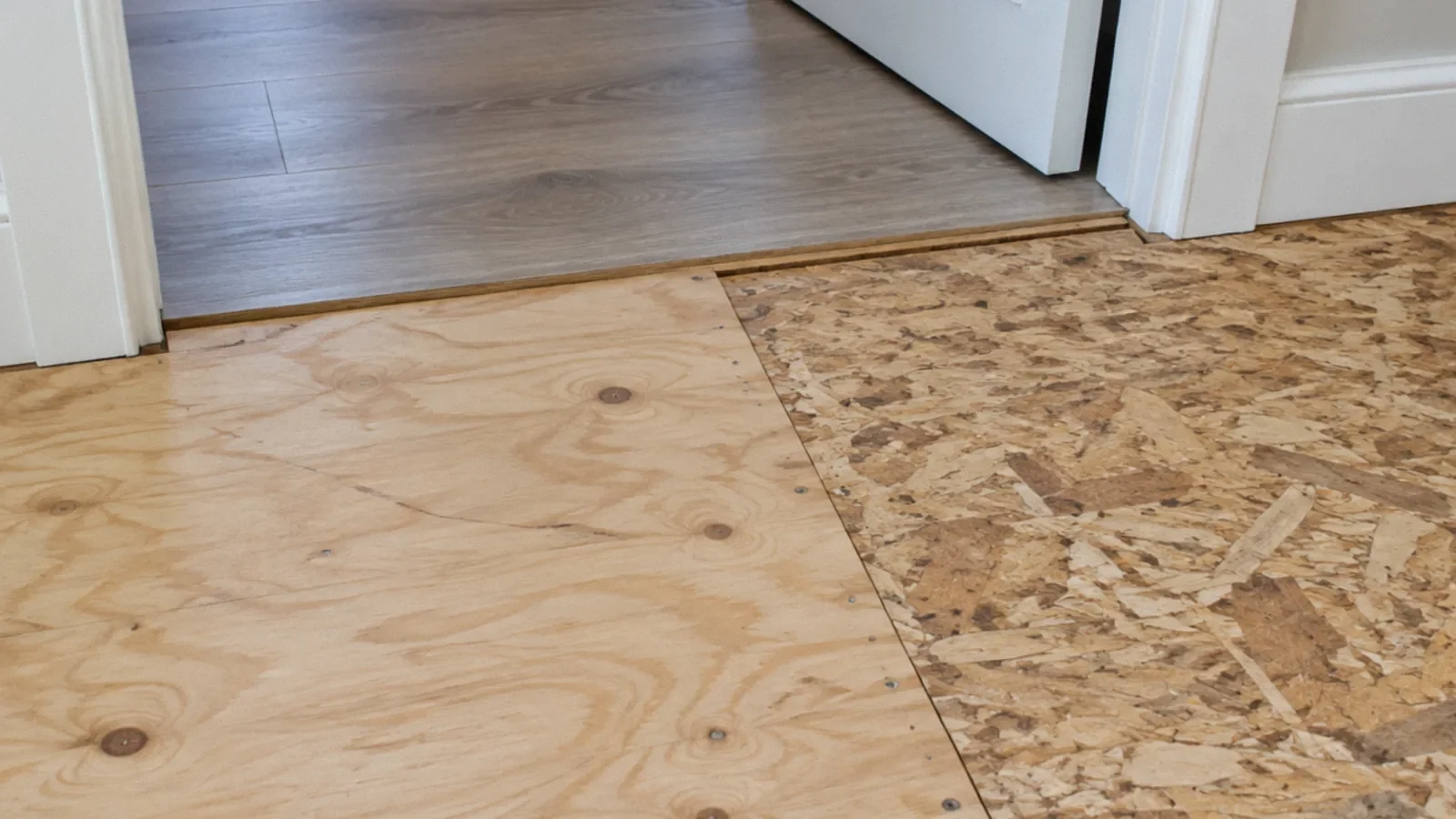
Plywood and oriented strand board are different engineered wood products, and their response to water depends on the product, exposure and construction. Plywood may show delamination or other damage; neither a name nor a single meter reading establishes whether a particular panel is serviceable.
For a bathroom or other wet area, evaluate the source, the upper and lower surfaces, panel support and any contamination. Replacing a structural panel requires a plan for joists, edge support and fastening by an appropriately qualified professional.
Inspect the wet pathway through the floor
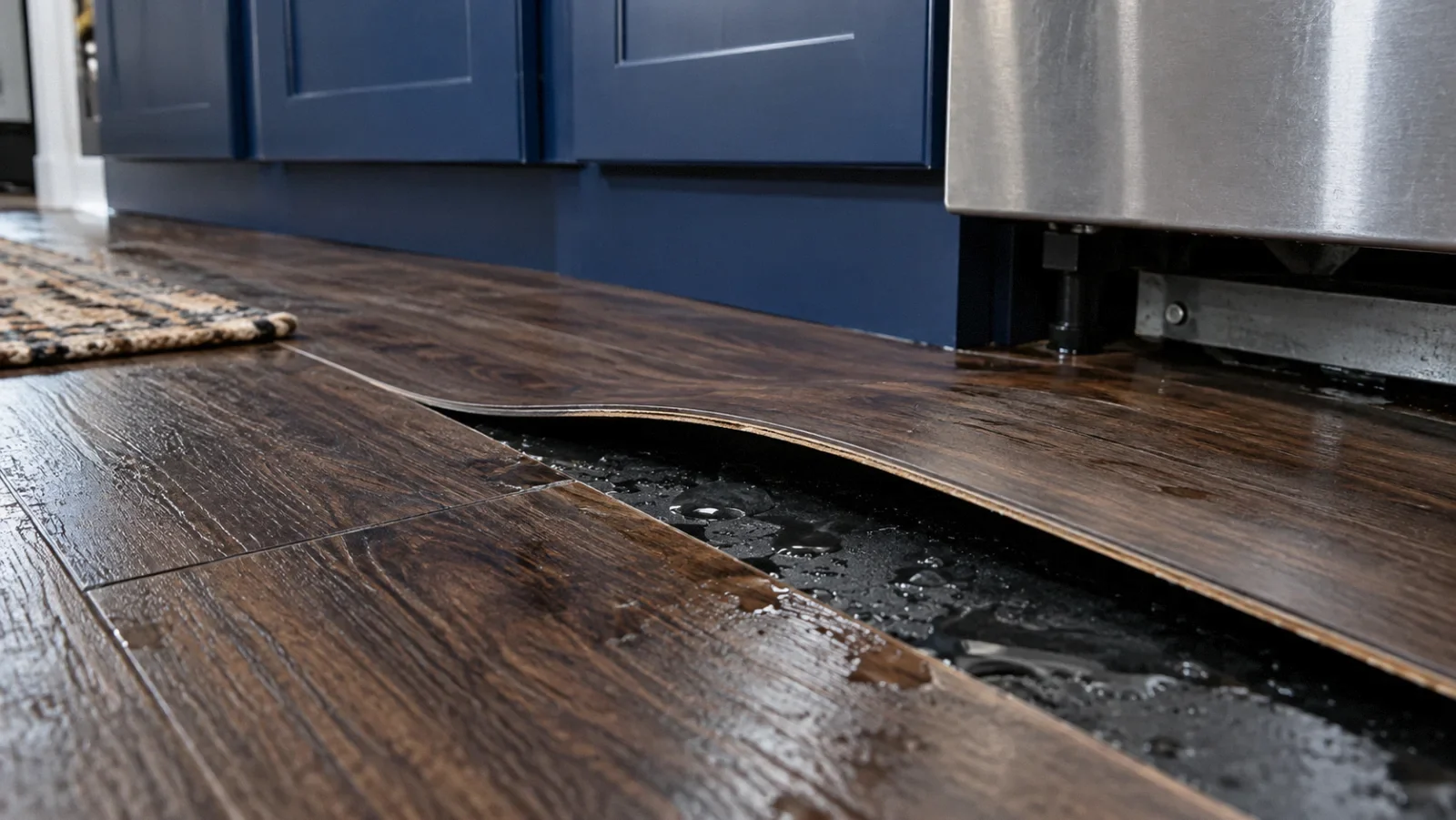
Water can enter beneath a finish, along a wall plate, or around a plumbing penetration and spread across panel joints. The underside visible from below may not reveal the moisture concentrated at the upper surface. Multiple layers can further complicate access.
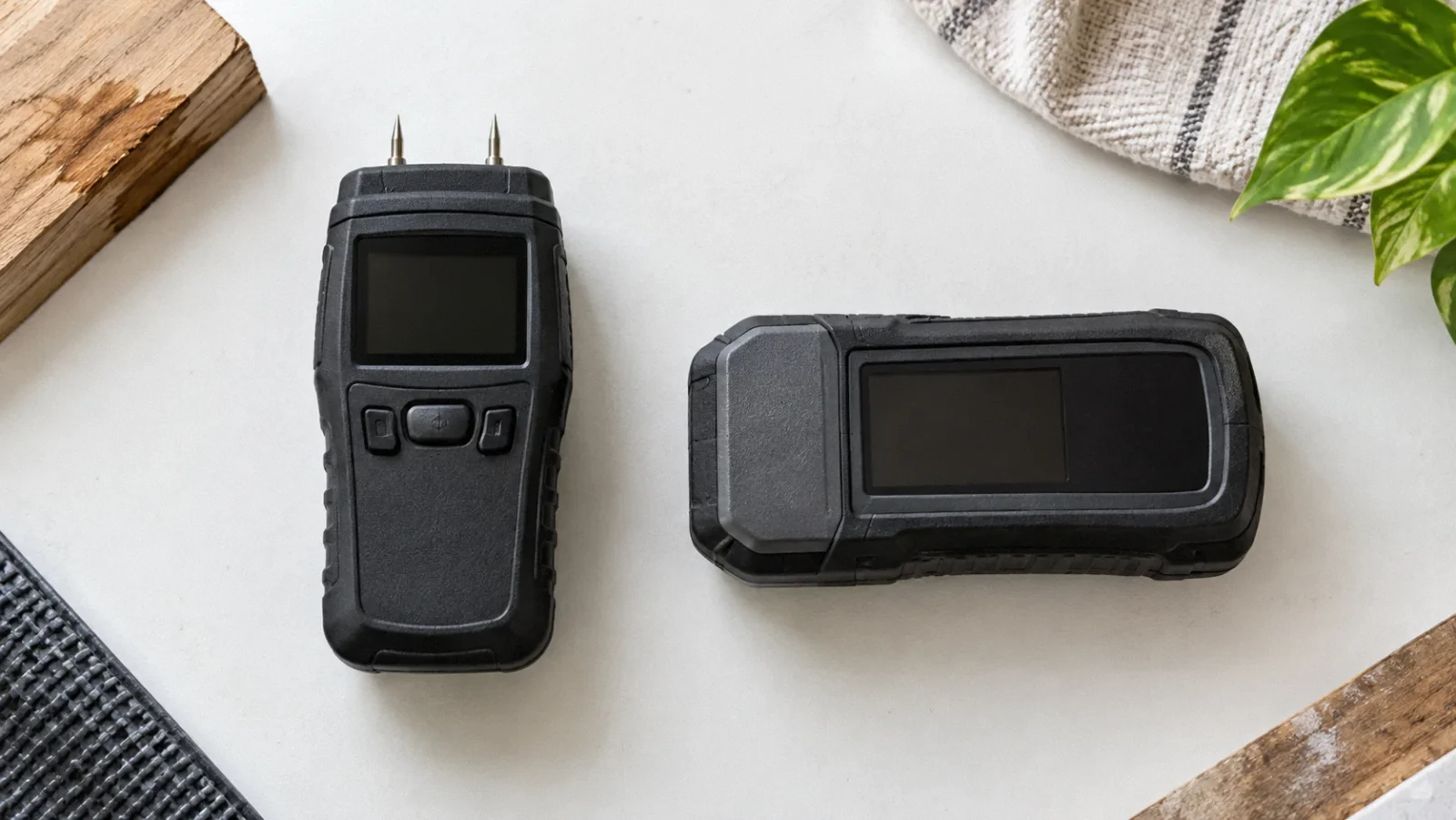
Identify the finish, underlayment, structural panel, and support below. Ask which layer the meter is actually measuring. A pinless instrument used through vinyl or other layers may produce a useful screening pattern without supplying a direct moisture content for the OSB itself.
Use repeated readings to guide the next action
Set repeatable measurement points near seams, penetrations, and the initially wettest areas. Record the meter setting, measurement depth where relevant, and a comparison area with similar material and exposure. Numbers from different scales or different materials should not be put on the same chart as though they were equivalent.
If readings stop improving, investigate an ongoing leak, trapped layer, poor drying access, or measurement interference. More time may be reasonable, but the reason should be explicit. A week of equipment use is not by itself proof that a panel either must be replaced or is ready for flooring.
Do not sand away the evidence too early
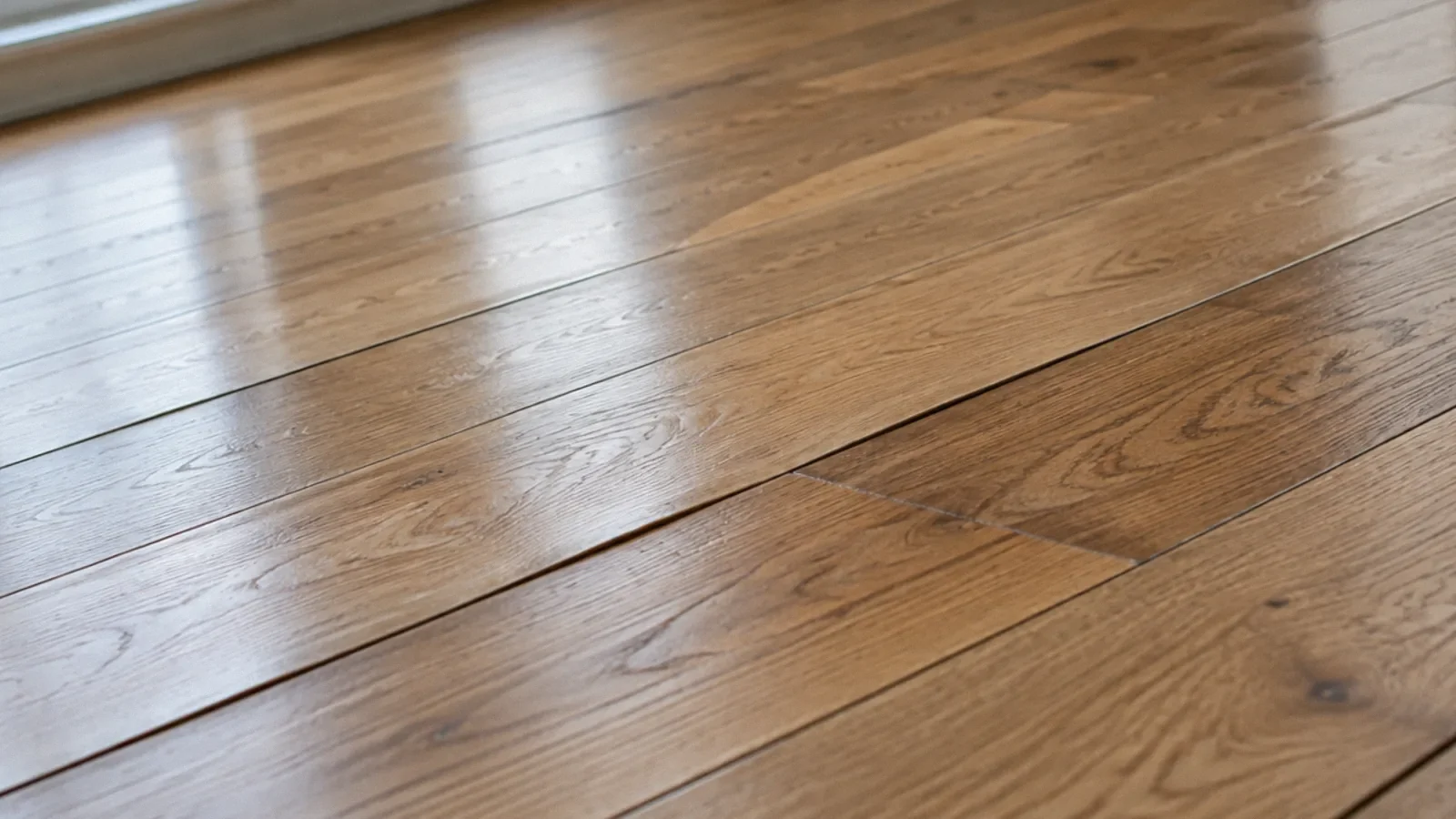
Grinding or sanding a raised joint can improve flatness, but it does not repair lost attachment, unsupported edges, decay, or delamination in other panel products. Removing material also changes the panel surface. Have the flooring and structural implications reviewed before treating every swollen seam as a cosmetic defect.
Where replacement is necessary, the repair must restore proper support and fastening. Cutting a convenient rectangle without considering joists and edge support can create a new floor problem. The person planning the repair should identify the structural role of the panel and relevant construction requirements.
Separate a flattening repair from a panel repair
Consider a subfloor whose readings improve but whose seams remain raised. The next question is whether the panel is sound and properly supported, followed by whether the surface can be prepared for the selected finish. A flooring installer may reject a raised seam even when the restorer has completed moisture removal. That is not necessarily disagreement; the trades are evaluating different requirements.
If the panel is loose, soft, or otherwise suspect, surface flattening should not precede condition assessment. If it is sound, the proposed preparation still needs to preserve the panel’s suitability and meet the floor system requirements. Ask the responsible professional to explain why the chosen repair addresses the observed defect.
An access hole or replacement edge also needs support. In a layered floor, a removed underlayment is not automatically the same as a removed structural subfloor. Identify which layer carries loads before deciding how to cut or replace it. This is particularly important near walls, concentrated loads, or plumbing openings.
After repair, photograph the supports and fastening before new finishes cover them. Record any areas retained with cosmetic swelling and the reason they remain serviceable. The file should show how the floor was made suitable for use, rather than merely that a high meter reading eventually became lower.
If the source was contaminated flooding, include cleanability in the decision as well. Structural soundness alone does not resolve whether an affected porous panel can be appropriately retained.
Accept the substrate for the next flooring system
The replacement finish may have requirements for moisture, flatness, soundness, and surface preparation. Those requirements can differ from the restorer’s drying goal. Coordinate the handoff so the flooring installer examines the substrate before underlayment conceals it.
If flooding could recur, review the whole floor design and source prevention. FEMA’s material guidance helps frame resilience discussions, but classifying a material does not make an existing installation appropriate for repeated wetting. Keep the source repair, panel evaluation, and flooring acceptance as distinct records.
What belongs to the floor assembly assessment
A soft or spongy floor needs evaluation of support, fastening and panel condition, not a moisture reading alone. Keep off an unstable area and arrange an inspection. Water traveling beneath floorboards also requires tracing the source and affected layers before selecting a drying method.
For the broader assessment of water beneath flooring, see the water-damaged floors guide. The question here is narrower: whether a particular subfloor panel is dry enough and serviceable for the next flooring system. Equipment choice by itself does not establish either conclusion.
Your next-step checklist
- Identify the actual structural panel and every finish or underlayment above it.
- Map moisture at seams and penetrations using a consistent measurement method.
- Record raised edges, looseness, softness, or other physical changes separately from moisture.
- Have support and fastening addressed if panels are repaired or replaced.
- Obtain flooring-system acceptance before new layers cover the substrate.
Related questions
Does a high meter reading mean the subfloor is ruined?
No. It indicates a condition needing interpretation with the meter, material, depth, and comparison basis. Structural or serviceability conclusions require additional observations.
Can a dry swollen edge be sanded flat?
Possibly as part of an appropriate repair, but first determine panel condition, support, thickness implications, and the flooring requirements. Sanding is not a universal structural repair.
What if the underside looks dry?
Moisture can remain near the upper surface or between layers. Have the assessment address the actual wet pathway rather than relying on one visible face.
Can the flooring installer accept the subfloor independently?
The installer should evaluate the requirements of the selected flooring, but structural concerns may need another qualified professional. Clarify that division before installation. A surface preparation decision and an assessment of load-bearing condition are not necessarily within the same person’s scope.
Does a wet plywood subfloor always need replacement?
No universal rule applies. Exposure, contamination, delamination, attachment, structural condition and the flooring system requirements all matter.
What is a floor drying system?
Some professionals use specialized equipment to move air or control drying conditions around floor assemblies. Suitability depends on the material, contamination, moisture readings and access; ask how the contractor will protect the floor and measure progress.
Sources & context
Public guidance supports the principles in this article. The practical questions and examples are editorial interpretation, not a site assessment or a coverage decision. State-specific rules apply only where identified.
- EPA: Moisture Control Guidance, Appendix C (material meters and flooring moisture tests)official
- FEMA: Flood Damage-Resistant Materialsofficial
- USDA Forest Service: Wood Handbookofficial
Community questions behind this topic
These discussions helped identify reader concerns. They are anecdotal, not technical or legal authority.