Keep away from standing water near electrical equipment and stop a known water source only if it is safe. Flooring, underlayment and subfloor can retain moisture at different rates. The response depends on the water source, material and extent; a dry-looking surface does not prove the floor assembly is dry.
Start with safety and the source
Do not enter standing water to reach a breaker, appliance or shutoff. If there is an electrical, structural or other immediate hazard, leave the area and request qualified assistance. Close a clearly identified water valve only when you can reach it safely without crossing a hazard.
Find out where the water originated and how it traveled. A supply leak, sewage backup and exterior flood require different precautions. Water that began at a clean source can contact contaminants along its path; do not decide on cleanup from the fixture name alone.
Look beyond the visible floor
A floor can include a finish, underlayment, adhesive or pad and a structural subfloor. Water may travel under a less-permeable finish or collect at baseboards, transitions and cabinets. Surface appearance and room humidity are not reliable measurements of every hidden layer.
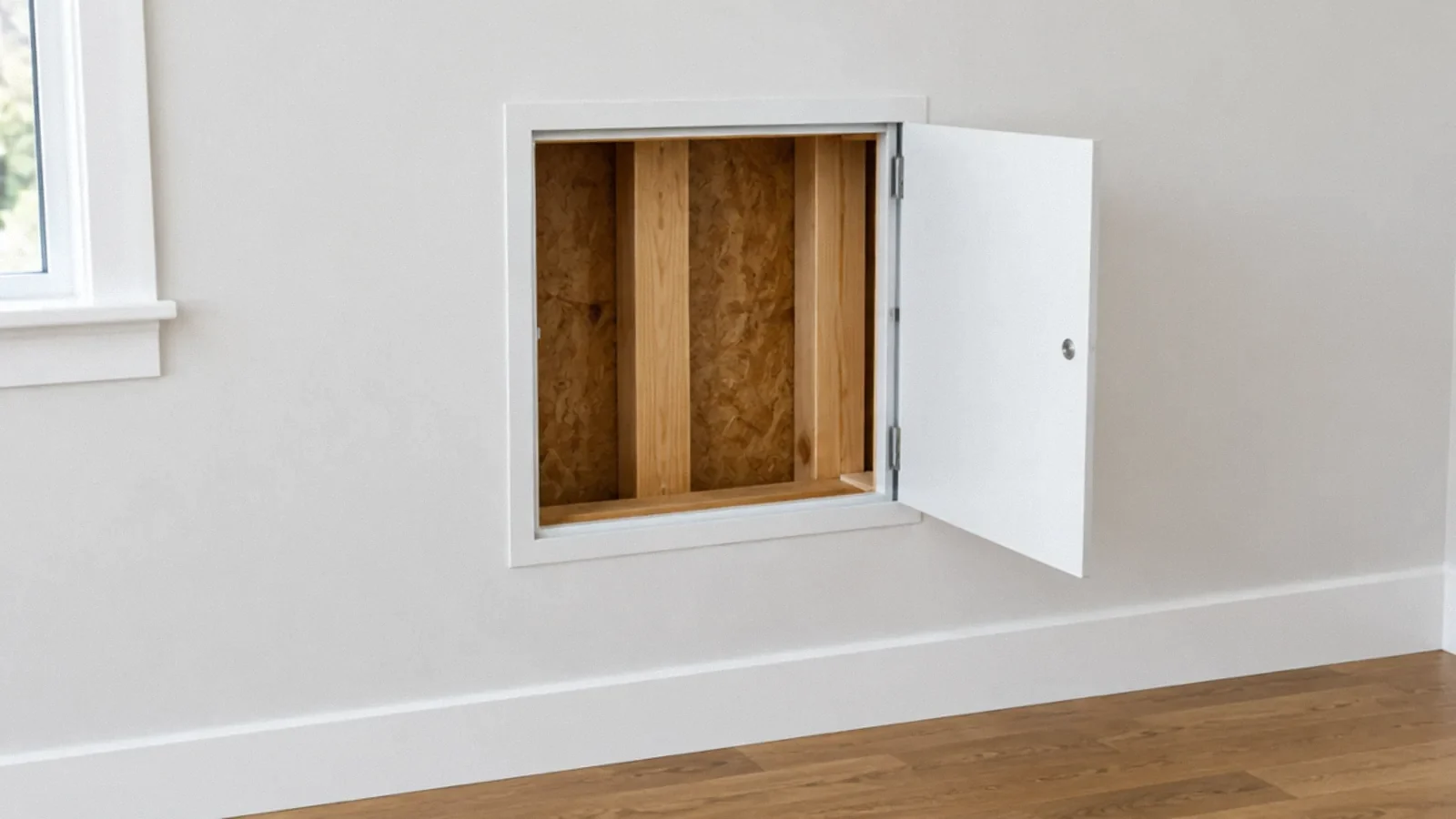
An experienced assessor can use appropriate instruments and, where justified, selective access to determine the extent. Ask what was inspected, which areas remain inaccessible and how retained materials will be checked before the floor is closed.
Wood and floorboards
Wood can swell, cup, buckle or change color after wetting, but visible shape alone does not prove whether it can be retained. Species, finish, installation, water source and the condition of the subfloor all matter. Drying too aggressively or covering wet wood can create additional problems.
A qualified flooring or restoration professional can assess the boards and underlying assembly, select an appropriate drying plan and compare the result with relevant material conditions. Do not sand or refinish until the source and moisture condition are addressed.
Laminate and luxury vinyl
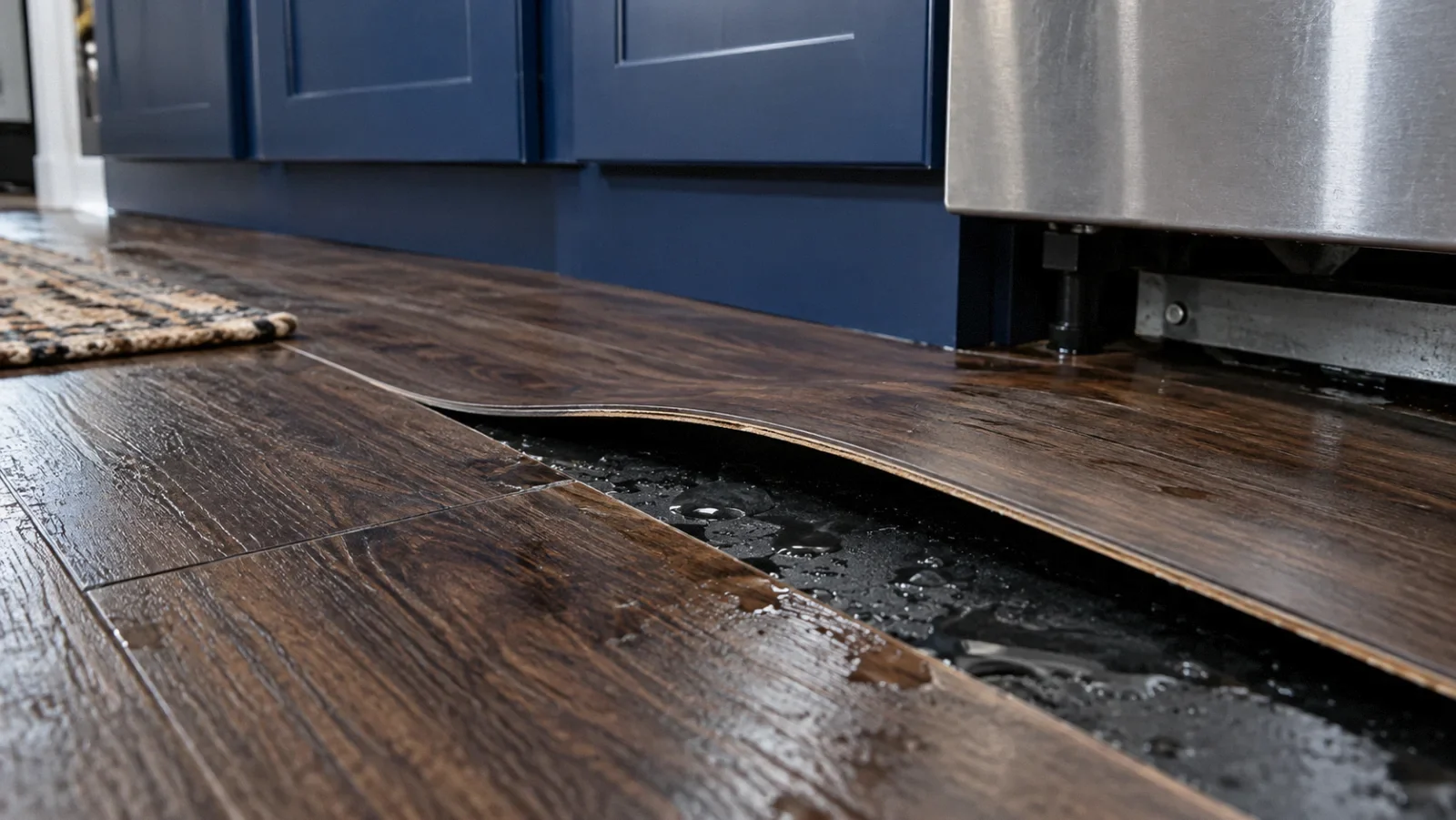
Laminate and vinyl products differ in their response to moisture. Laminate edges can swell or separate, while water may pass through joints or perimeter gaps in vinyl and reach underlayment. A waterproof marketing claim for the surface does not establish that the subfloor is dry.
Check the specific flooring manufacturer’s instructions and warranty. Some floating floors may need to be lifted for access, cleaning or replacement, depending on the assembly and water source. Do not reinstall planks over a damp or contaminated base.
Carpet, tile and other finishes
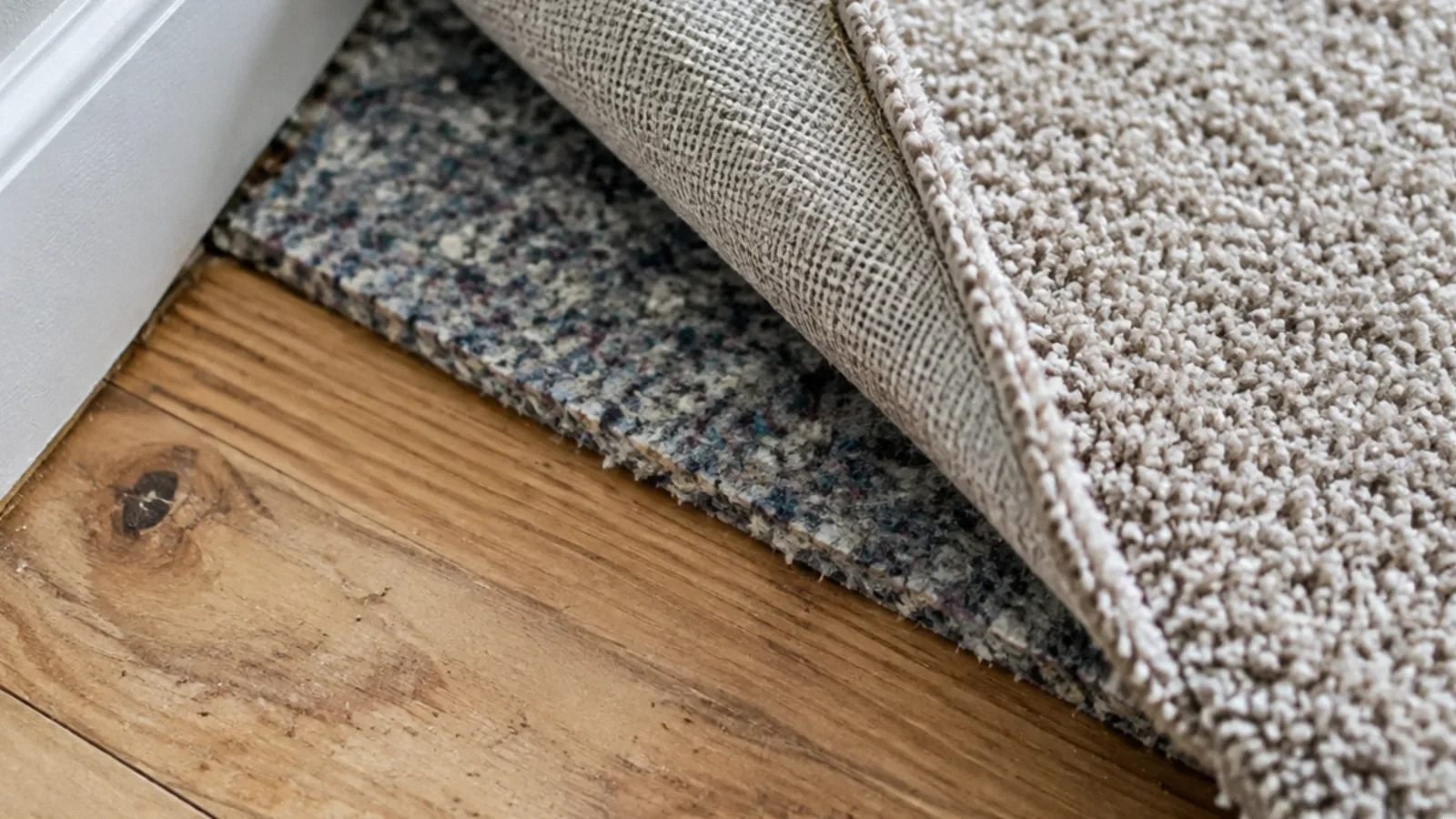
Carpet, backing, padding and the floor below may need separate decisions. Tile and grout can conceal moisture beneath a surface that appears intact. EPA guidance for clean-water damage emphasizes checking and drying the underflooring as well as the finish.
Do not use fans before the water is known to be clean, or blow air across visible mold. Sewage, floodwater and unknown contamination require experienced assessment and suitable protection. Material that cannot be cleaned and dried adequately may need removal.
Drying and measurement
Prompt response improves the opportunity to limit damage, but a fixed number of hours or a full dehumidifier tank does not prove that the assembly is dry. The plan depends on material, access, temperature, humidity and the water path. Ask how drying progress and the final condition will be documented.
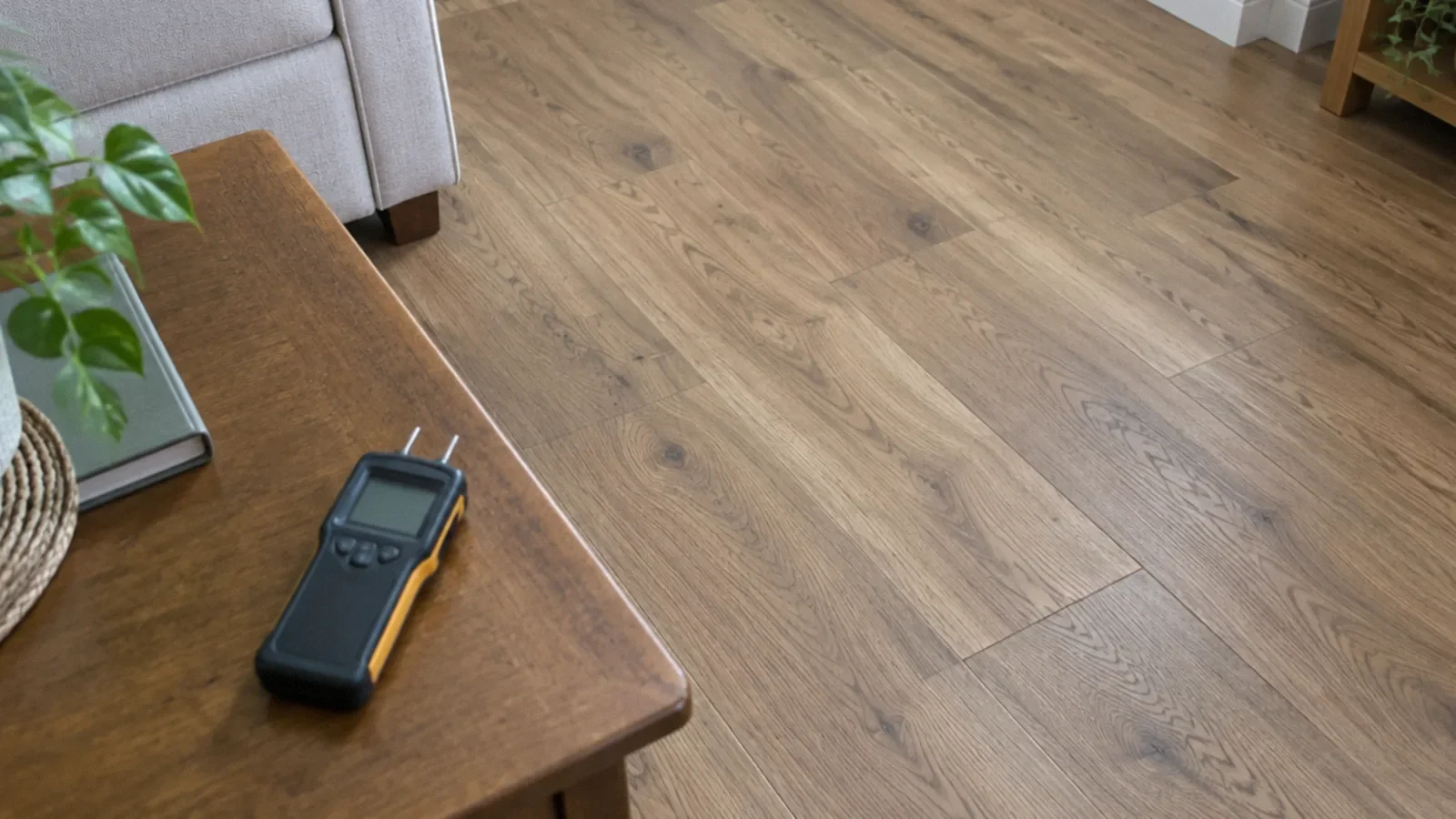
Measurement should address the materials that could remain wet, including the subfloor and perimeter where accessible. Compare readings with appropriate reference conditions and the flooring system’s installation requirements. A contractor should explain uncertainty and any inaccessible area.
Repair and insurance documentation
Photograph visible damage from a safe place and keep records of the source repair, material removal, drying and estimates. Notify the insurer or property manager as appropriate. Coverage depends on the policy, source and circumstances, and a restoration estimate is not a coverage decision.
A written scope should distinguish emergency water removal, drying, disposal, replacement flooring and finish work. Ask how hidden conditions will be documented and authorized. If the home is older, disturbing flooring or adhesive can require a separate hazardous-material assessment.
Before replacing the finish
Correct the source and confirm that retained materials are clean, structurally serviceable and appropriately dry before installing underlayment or flooring. Follow the new flooring manufacturer’s requirements and obtain necessary permits or qualified trade work where applicable.
Keep final moisture records and monitor for recurrence. If a leak returns, an odor persists or flooring lifts again, investigate the cause rather than covering the symptom. The correct repair depends on the full assembly, not just the top layer.
Suspected mold on a subfloor
A musty smell, staining or damaged flooring may indicate moisture below the finish, but the appearance does not identify a species or establish the full extent. Stop the water source when safe and avoid lifting flooring near wiring, unstable material or suspect hazardous products without appropriate expertise.
A professional can assess the exposed subfloor, adjacent layers and the type of water involved. EPA notes that the subfloor also needs cleaning and drying and that materials which cannot be adequately cleaned may require removal. Do not paint over suspected growth, apply a spray as the only treatment or replace the finish before the assembly is dry.
Bathroom floors, bubbles and concealed water
In a bathroom, note whether moisture appears around a toilet base, tub, shower enclosure or a supply connection; these locations suggest possibilities, not proof. Stop an accessible source if safe and call a plumber for continued water or suspected concealed piping. Do not open a floor near wiring, unstable material or an unknown older covering without a hazard assessment.
Softness, swelling, staining and musty odor can indicate trouble beneath a finish, but none identifies the cause alone. A local bubble in glued flooring may involve adhesion or moisture, while a raised floating plank may reflect movement, moisture or installation constraints. Check the manufacturer’s requirements and have the subfloor assessed before choosing repair.
Linoleum, adhesive and the subfloor can all be affected by water. A professional can determine how to access and measure underlying layers and whether the finish is reusable; older flooring and adhesives may contain hazardous materials and should be assessed before disturbance. Bathroom floor tile and wall tile have different assemblies and water paths; a sound-looking tile surface does not establish that backing or adjacent materials are dry.
After safe removal of clean standing water, document damage and assess the water source, finish, underlayment and structural subfloor. Contaminated flooding requires experienced cleanup. Retain materials only when they can be adequately cleaned, dried and remain structurally serviceable; replace deteriorated or uncleanable portions, then install a compatible finish after documented drying. A specialist should assess extensive hidden moisture, uncertain contamination or structural damage.
Your next-step checklist
- Keep clear of electrical and structural hazards.
- Stop a known water source only when safe.
- Identify water type and affected floor layers.
- Document drying and material decisions.
- Correct the source before reinstalling flooring.
Related questions
Can a water-damaged floor be dried?
Sometimes. The water source, flooring, subfloor, contamination and physical condition determine whether materials can be retained.
Does waterproof vinyl keep the subfloor dry?
Not necessarily. Water may reach seams, perimeter gaps or adjoining assemblies.
Should I replace flooring immediately after a spill?
First assess the source, extent and material condition. Some materials may be dried; others may need removal or replacement.
Can I use fans after sewage reaches a floor?
Do not use ordinary airflow equipment before the water is identified as clean. Sewage contamination requires experienced assessment.
What should I do with a flooded floor?
Avoid electrical hazards, stop the source if safely possible and assess the water type. The flooring, padding and subfloor may require different cleaning, drying or replacement decisions.
What if mold is suspected under tile flooring?
Moisture can reach backing or adjacent materials beneath a floor, but surface discoloration does not reveal the hidden extent. Avoid disturbing an extensive or uncertain area and ask a qualified professional to assess the water source and accessible layers.
Why is vinyl flooring bubbling up?
Moisture beneath the flooring is one possible cause, but adhesive or installation issues can also produce bubbles. Investigate the source and subfloor before repair; avoid sealing wet material under a new finish.
Can water damage linoleum?
Yes. Water can affect linoleum, seams, adhesive and the subfloor. Linoleum and vinyl are different materials, so follow the correct manufacturer’s instructions and assess moisture below the surface before repair.
Sources & context
Public guidance supports the principles in this article. The practical questions and examples are editorial interpretation, not a site assessment or a coverage decision. State-specific rules apply only where identified.
- U.S. EPA: Water damage cleanup and underflooringfederal guidance
- U.S. EPA: Flood cleanup safetyfederal guidance
- FEMA: Electrical safety after floodingfederal safety guidance
- EPA: Water damage and underlying flooringfederal guidance
- Primary guidance: www.epa.govprimary guidance
- Primary guidance: www.epa.govprimary guidance