Water appearing through a floor may originate from a supply or drain leak, an appliance, exterior water or condensation. Stop an active source only if safe, avoid electrical hazards and record when the water appears. A professional can trace the actual path before recommending a repair.
First steps and safety
Stop using affected plumbing if water is rising or a drain is backing up. If an accessible supply shutoff can be reached safely and a pressurized leak is suspected, close it and contact a plumber. Do not walk through water to reach a switch or appliance. Keep people and pets away from suspected sewage, and contact the utility or building manager when the source may be shared.
Observe when and where water appears
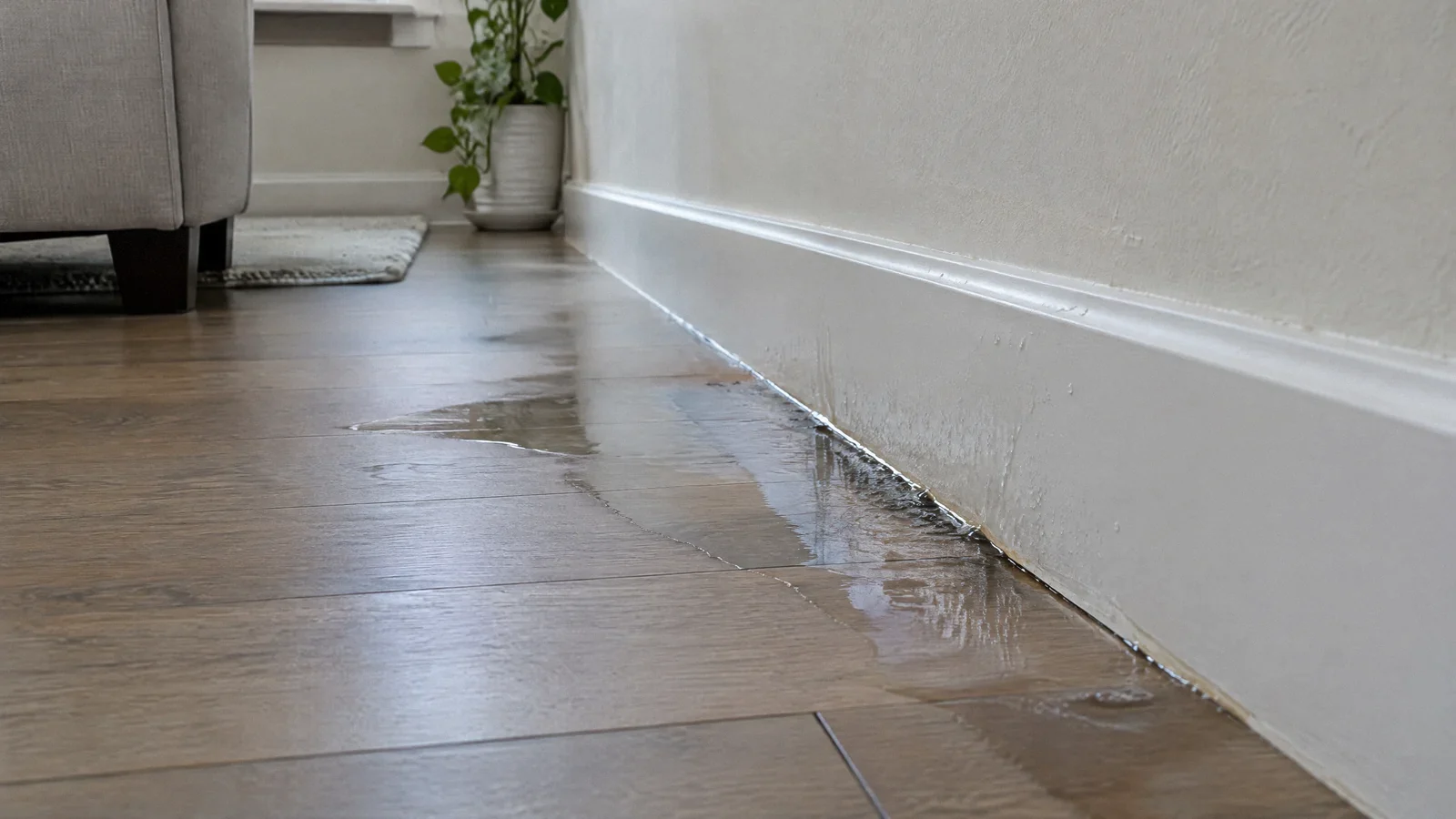
Note the first visible wet area, whether the water returns after rain or fixture use, and whether it is at a wall, floor seam, drain or appliance. A leak elsewhere can travel beneath flooring before emerging. A dry surface later does not prove the source is fixed. Photograph the area from a safe position and record weather and water use without repeatedly running fixtures during an active backup.
Possible plumbing sources
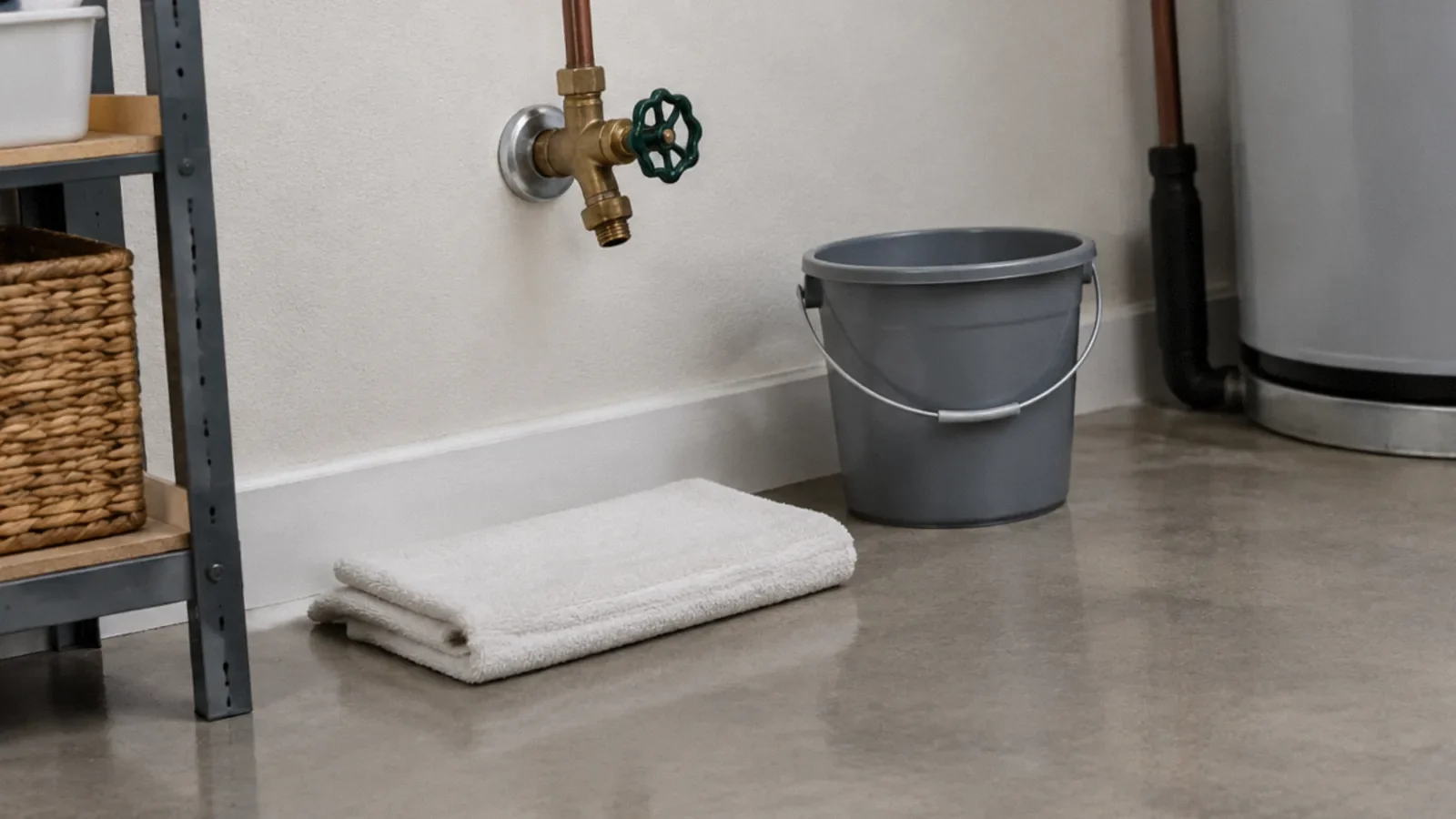
A supply line may leak continuously under pressure; a drain may leak during use. An appliance hose or connection can also release water. These patterns are clues, not proof. A plumber can assess accessible connections and use suitable leak-location methods. A leak beneath a slab requires professional diagnosis; do not break concrete or assume that shutting off one fixture isolates the entire affected pipe.
Rain, groundwater and condensation
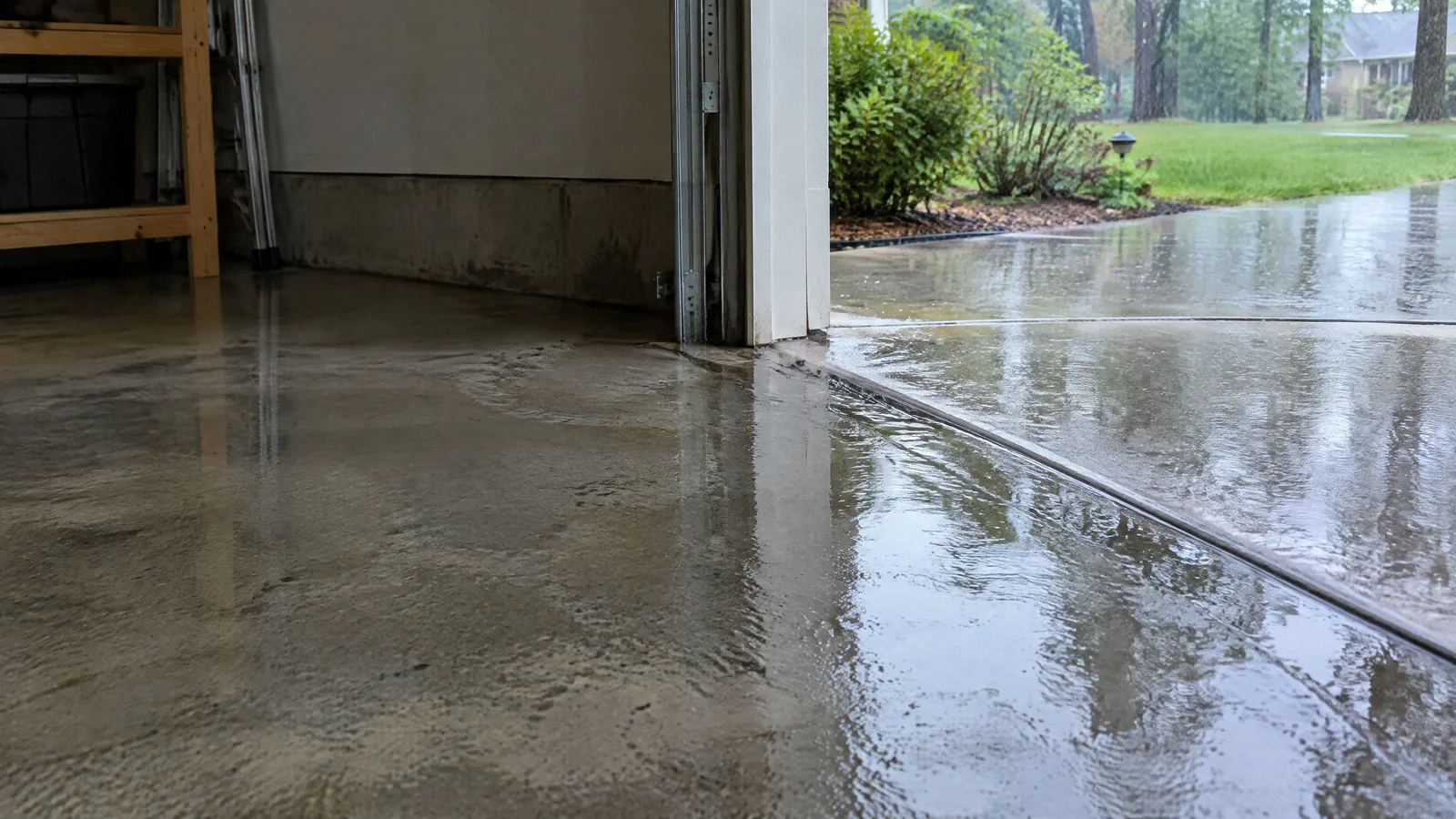
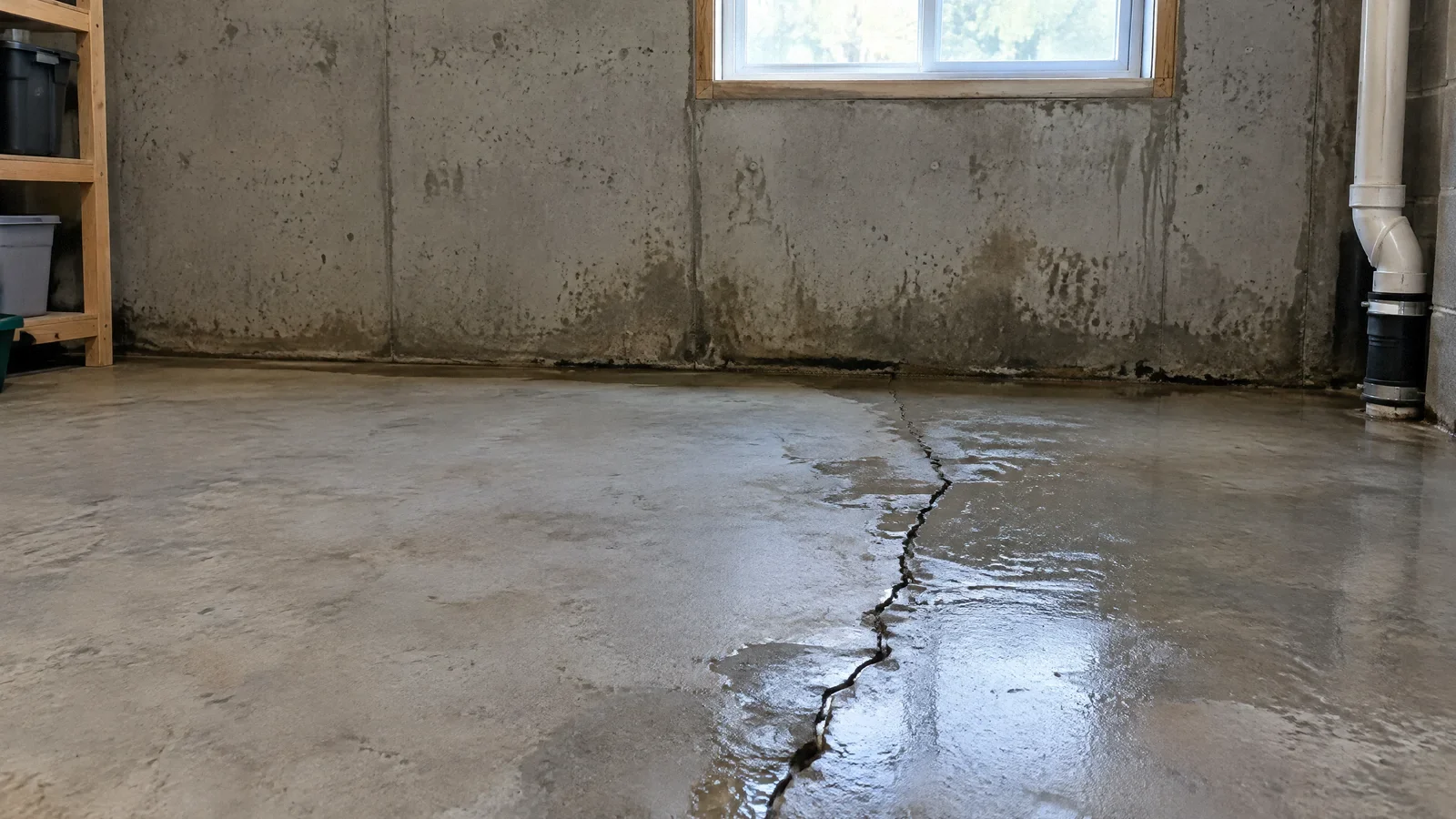
Water can enter at a foundation wall-floor joint, cracks or openings when drainage is inadequate. It can also travel beneath a floor from another part of the building. Condensation on a cool surface may resemble seepage, especially in humid conditions. Timing, location and moisture assessment help distinguish these possibilities, but a single stain or wet spot cannot identify the cause.
Inspection and repair
Ask the appropriate professional to identify the source and explain what remains concealed. A plumber handles suspected supply or drain leaks; a drainage or foundation specialist can assess rain-related entry. Sealing the visible spot without controlling water outside may conceal a continuing problem. Ask whether grading, gutters, drainage, plumbing repair or further investigation is appropriate before approving work.
Drying the floor assembly
Water may reach underlayment, subfloor or wall cavities even when the surface feels dry. Prompt drying matters, but the approach depends on material, contamination and electrical safety. Seek professional assessment for sewage, widespread moisture or concealed damage. Keep records and discuss coverage with the insurer; a diagnosis or payment decision depends on the policy and actual cause.
A practical observation log
Record the date, weather, room, first visible location and whether the wet area expands when the building is unused. Note any recent appliance installation or work on a nearby pipe. If the water follows rain, describe whether it begins during the storm or after a delay. If it follows use of a fixture, identify that fixture without repeating a test during active flooding. These details help a professional select a safe investigation and avoid unnecessary demolition.
What inspections can establish
A moisture meter can help map affected material, but readings need interpretation for the surface and instrument. Thermal images can show temperature differences rather than directly identifying the source of water. A plumber may use pressure or other tests, while a building professional assesses the envelope and drainage. Ask what the method can and cannot show, what access it requires and how the suspected source will be confirmed before finishes are removed.
Repair and verification
The contractor should explain the affected section, repair method and how the work will be checked. If a pipe is repaired, ask what testing and restoration are included. If the source is exterior drainage, ask where collected water will discharge and what maintenance is required. Before replacing flooring, confirm that affected layers have been assessed and dried to a suitable condition. Continue to record any recurrence; a dry day alone cannot prove that a rain-related problem is resolved.
Your next-step checklist
- Record the location, condition and relevant history.
- Identify the source or application before choosing a repair or product.
- Ask a qualified professional about local requirements and limitations.
- Keep the written scope, inspection findings and records.
Related questions
Does water through the floor always mean a slab leak?
No. Water may travel from an appliance, wall, drain or exterior entry, or condense on a cool surface. Timing and professional inspection help identify the source.
Should I replace flooring immediately?
First stop the source and assess the layers and contamination. A surface that looks dry can conceal moisture; the material and extent determine whether drying or replacement is appropriate.
Sources & context
Public guidance supports the principles in this article. The practical questions and examples are editorial interpretation, not a site assessment or a coverage decision. State-specific rules apply only where identified.
- DOE: Crawlspace moisture and capillary breaksofficial guidance
- CDC: Flooded home safetyofficial guidance