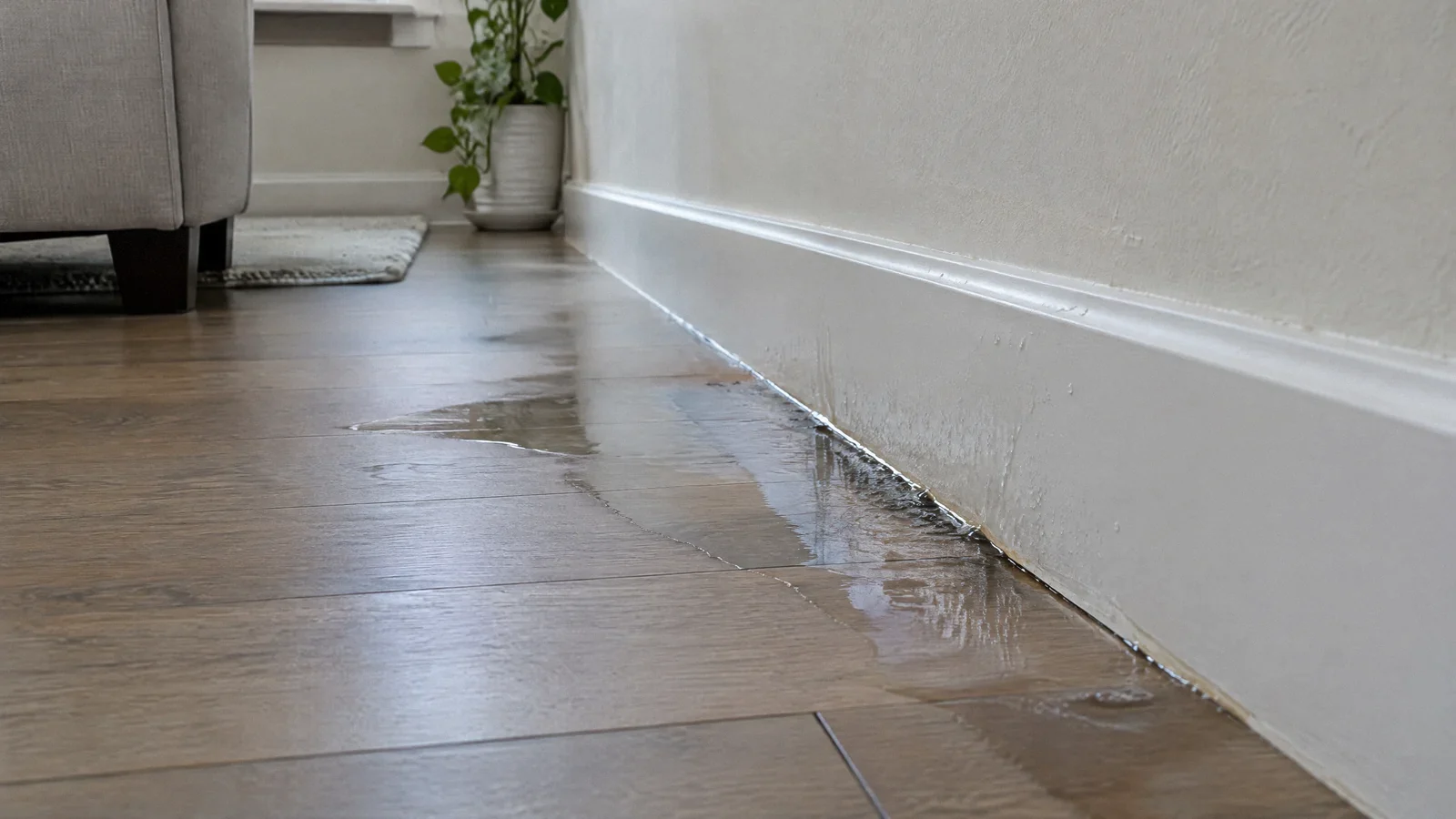
A wet garage floor may result from rain at the door, a plumbing leak, condensation or water entering at the slab or wall joint. Record the timing and location safely, then investigate the likely source before choosing drainage, plumbing repair or a coating.
Is it really coming through the slab?
Water at a garage floor may enter under the door, run from a wall, leak from a water heater or pipe, or rise at a slab joint or crack. Observe from a dry place after rain and during dry weather. A wet patch alone cannot establish whether the source is groundwater. Mark its location and record timing without entering standing water near outlets, appliances or stored chemicals.
Garage-door and exterior drainage
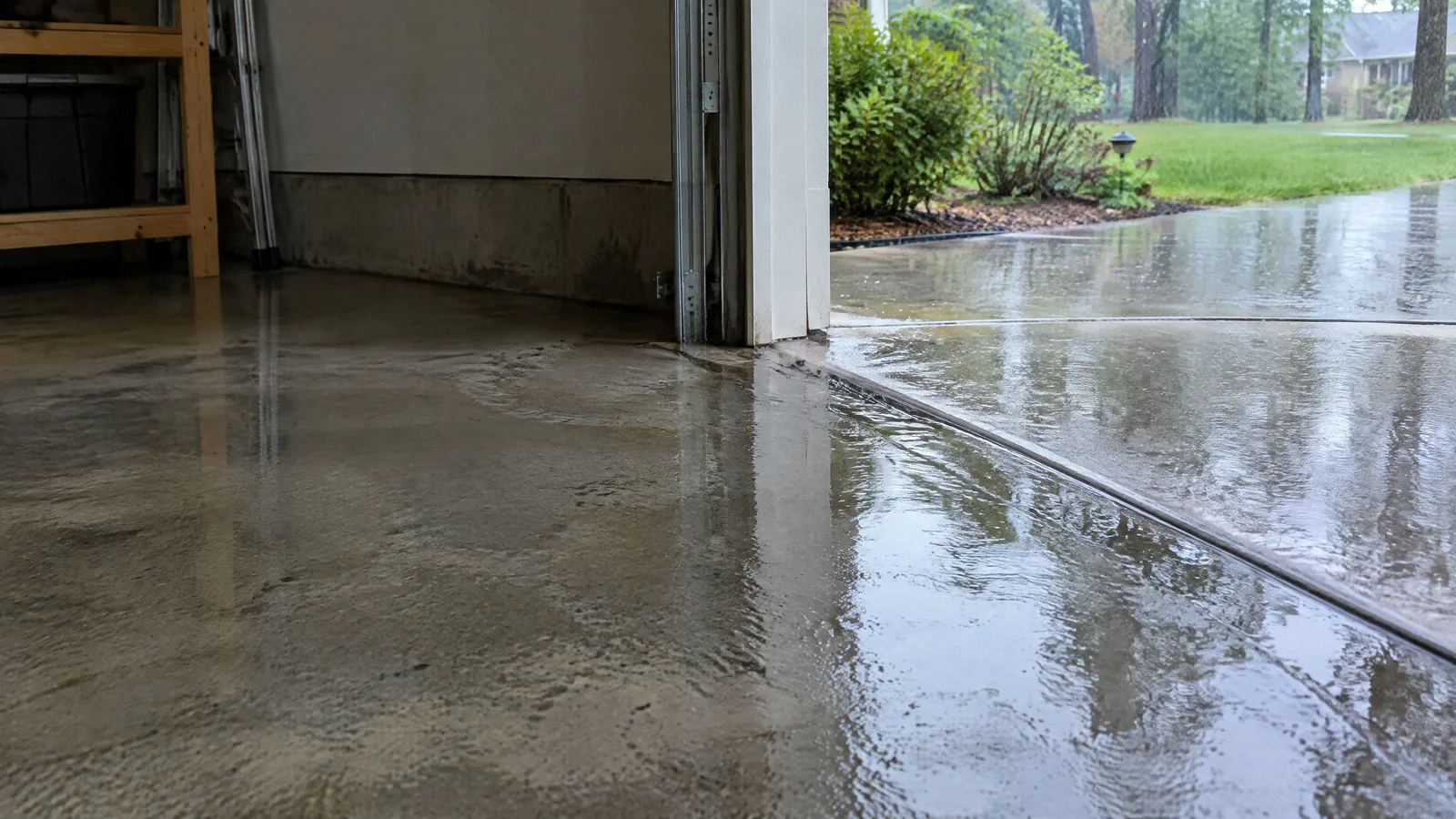
Rain can collect on a driveway or flow under a door when exterior grading or drainage directs water toward the opening. Check gutters, downspout discharge and visible debris from the ground. Water can follow the wall-floor joint and appear to emerge from the slab. A contractor can assess driveway slope, door threshold, surface drainage and where water can be directed safely without affecting neighboring property.
Plumbing and appliances
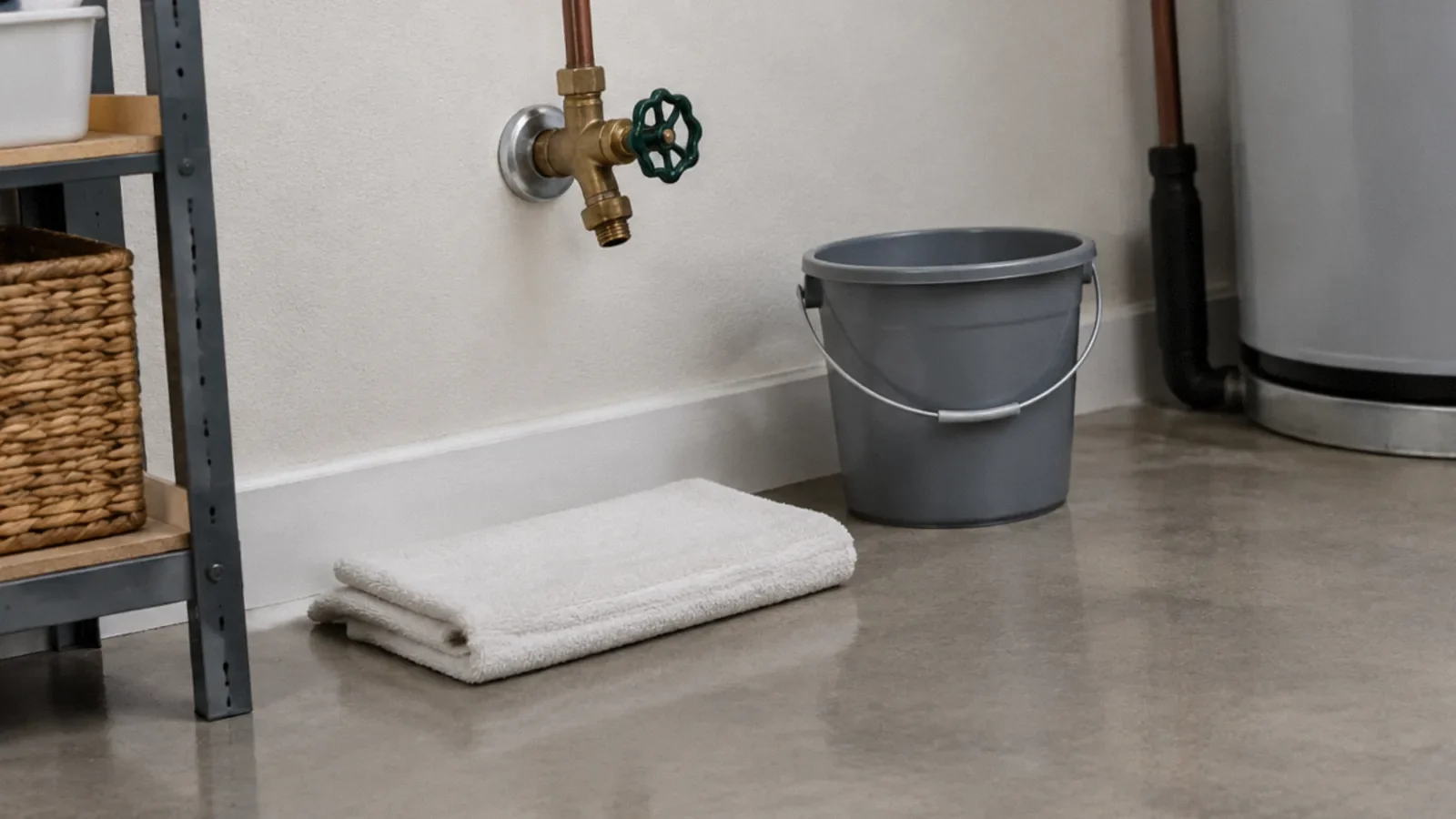
Garages often contain a water heater, laundry equipment or exposed supply lines. A pressurized leak can occur regardless of rain; a drain or appliance leak may occur during use. If safe, isolate a suspected supply and call a plumber. Avoid operating wet electrical equipment or moving an appliance through standing water. Ask the professional to test the suspected source rather than assuming every garage puddle is seepage.
Slab and soil moisture
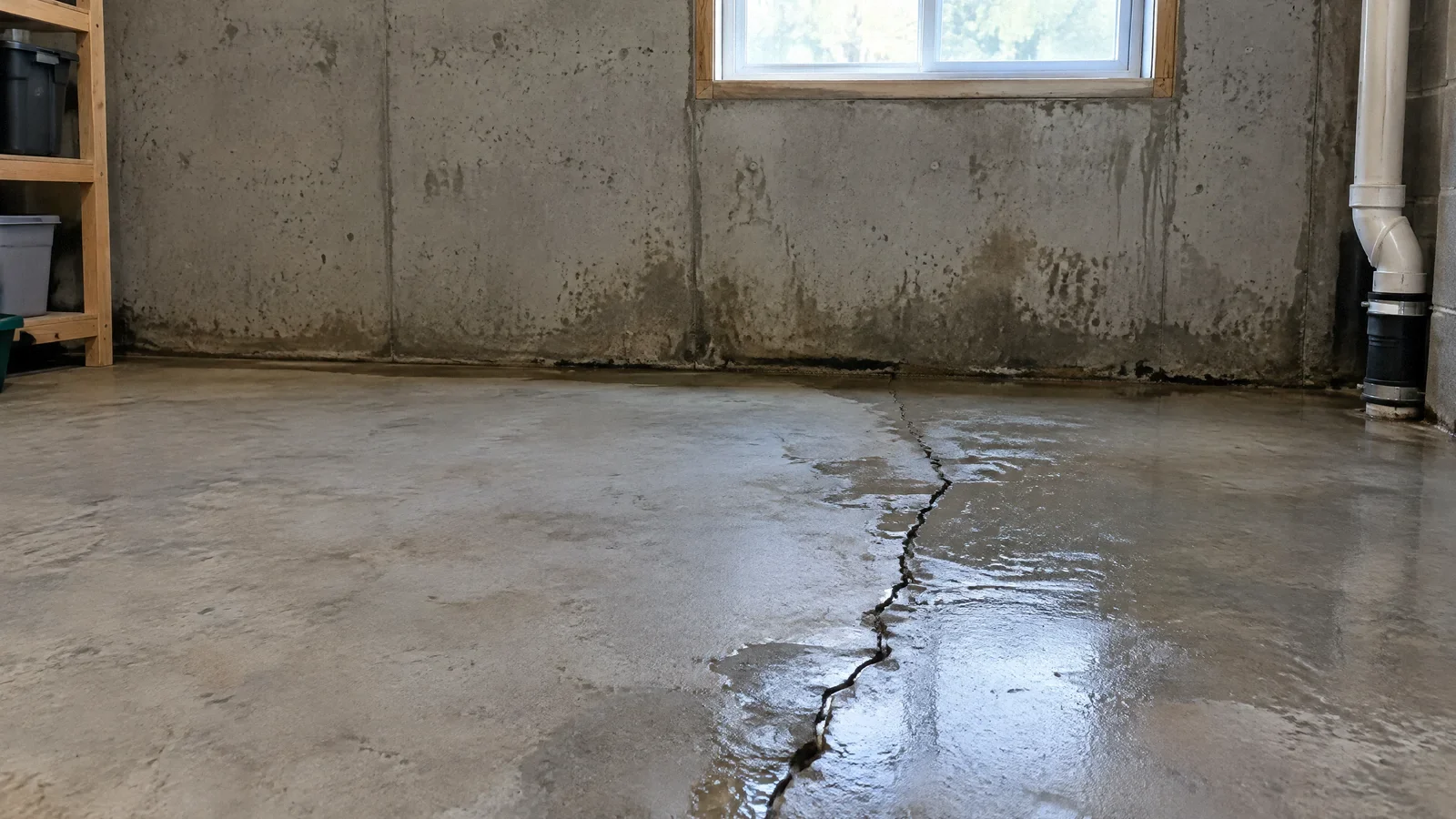
Moisture can move through porous concrete, joints and cracks, particularly when soil outside remains wet. A visible crack is a pathway, not proof of structural failure. Condensation on cool concrete is another possibility. A building professional can consider weather, humidity, slab condition and exterior drainage together. Moisture testing has limitations and should be interpreted with the site observations.
Repairs depend on the source
Clearing a blocked gutter or correcting a discharge point may help surface water, while a leaking supply requires plumbing repair. A crack repair, drain or waterproofing system may be proposed after the pathway is understood. An interior coating alone does not fix a leaking pipe or guarantee relief from exterior water pressure. Request a diagnosis, scope, maintenance requirements and limits of the proposed repair.
Protect stored items and document
Move belongings only when the area is safe and keep absorbent materials away from recurring wet areas. Fuel, paints and cleaners may contaminate garage water; avoid contact with unknown liquid. Seek appropriate cleanup assistance if contamination is possible. Keep photographs, dates and repair reports, and ask the insurer about the specific event and policy rather than assuming coverage.
Follow the water from the exterior
A driveway sloping toward a garage can deliver water to the door, but the threshold, pavement joints and drainage outlet all influence the actual path. Look for sediment marks or a trail at the entrance after a storm without standing in moving water. A surface channel, grading adjustment or door repair may be considered only after the pathway and legal discharge are understood. Do not direct runoff into a neighbor’s property or an unapproved drain.
Compare dry-weather and rain events
A puddle that returns in dry weather near a heater or pipe calls for a plumbing investigation. A patch appearing only after prolonged rainfall can suggest a drainage pathway, though a leak may occur at the same time. Condensation can vary with humidity and floor temperature. Keep a short log of dates and locations and show it to the contractor. Avoid repeated appliance operation when an active leak or electrical hazard is suspected.
Garage contents and finishes
Stored cardboard, timber, drywall and insulation can retain moisture, while sealed concrete may conceal water at its perimeter. Assess the lower wall and storage areas after the source is controlled. Do not use an ordinary vacuum or electrical fan in standing water. Unknown liquids may include fuel or chemicals and need appropriate handling. A professional can assess contamination and concealed moisture before damaged finishes are covered or replaced.
Your next-step checklist
- Record the location, condition and relevant history.
- Identify the source or application before choosing a repair or product.
- Ask a qualified professional about local requirements and limitations.
- Keep the written scope, inspection findings and records.
Related questions
Can rain enter under a garage door and look like slab seepage?
Yes. Runoff can cross the threshold or follow a wall-floor joint. Observe the pattern from a safe place and assess the exterior drainage and door.
Will sealing a crack stop every garage leak?
No. A crack may not be the source, and a coating does not correct a pipe leak or poor exterior drainage. Identify the route before choosing a repair.
Sources & context
Public guidance supports the principles in this article. The practical questions and examples are editorial interpretation, not a site assessment or a coverage decision. State-specific rules apply only where identified.
- DOE: Foundation drainage and downspoutsofficial guidance
- CDC: Flooded home safetyofficial guidance