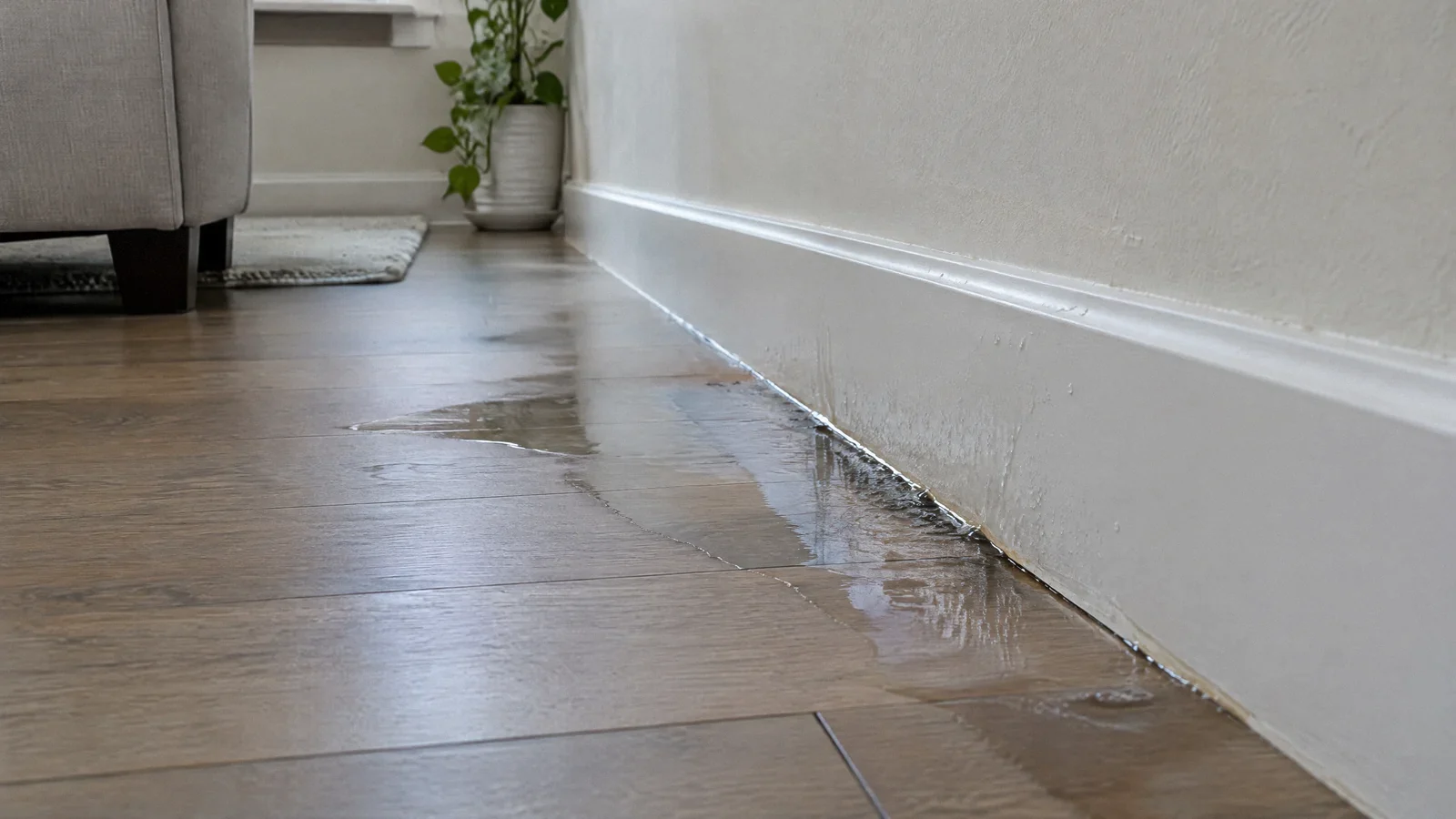
Water at a concrete floor may come from exterior water, a pipe leak, a drain backup or condensation. Record where and when it appears, keep clear of electrical hazards and arrange an assessment. A wet crack does not alone prove structural failure.
First establish the water pathway
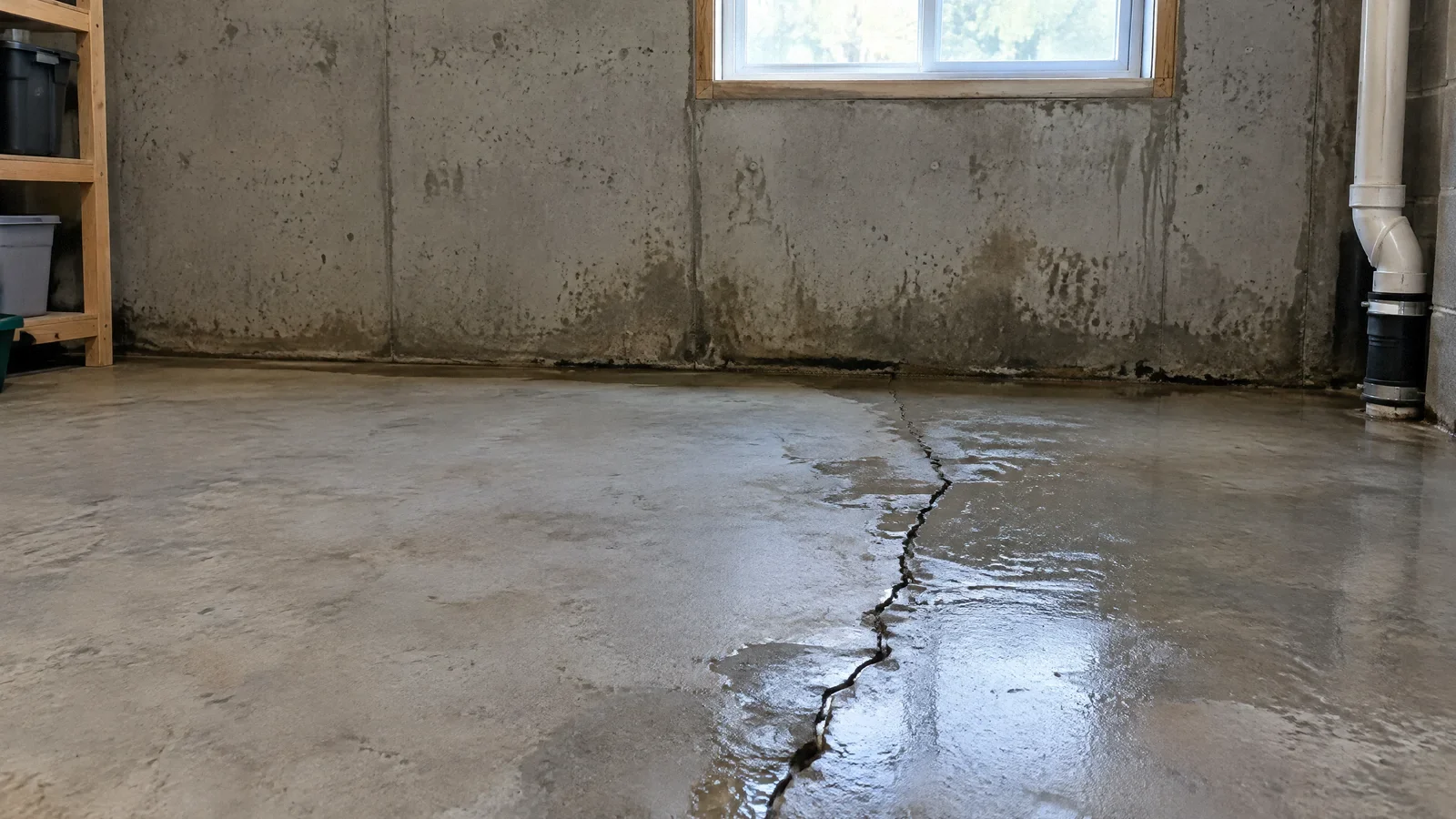
Water appearing on a concrete floor can come through a crack, the wall-floor joint, a plumbing penetration, a drain or beneath a wall. It may also travel across the surface from an appliance. Record when it appears, where it starts and whether it follows heavy rain or plumbing use. A wet crack alone cannot distinguish groundwater from a pipe leak or establish structural damage.
Rain and water below the slab
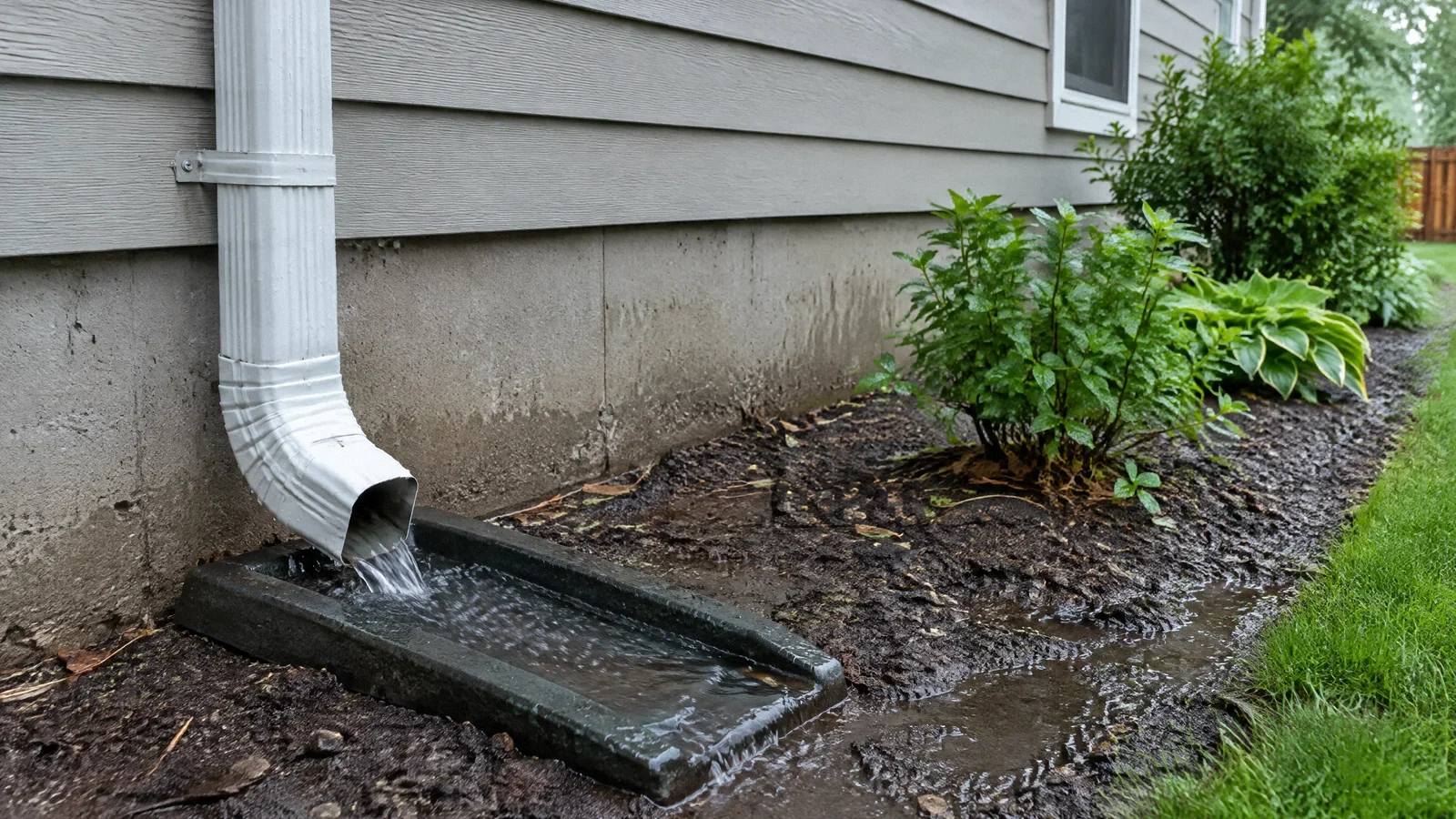
Water can accumulate in soil around a foundation when runoff is concentrated or drainage is inadequate. Moisture can move through porous concrete, and liquid can enter at openings or joints. DOE describes surface drainage, gutters, foundation drains and moisture barriers as parts of a water-management system. Their suitability depends on the building and site; a visible patch does not reveal whether a buried drain is functioning.
Supply, drains and condensation
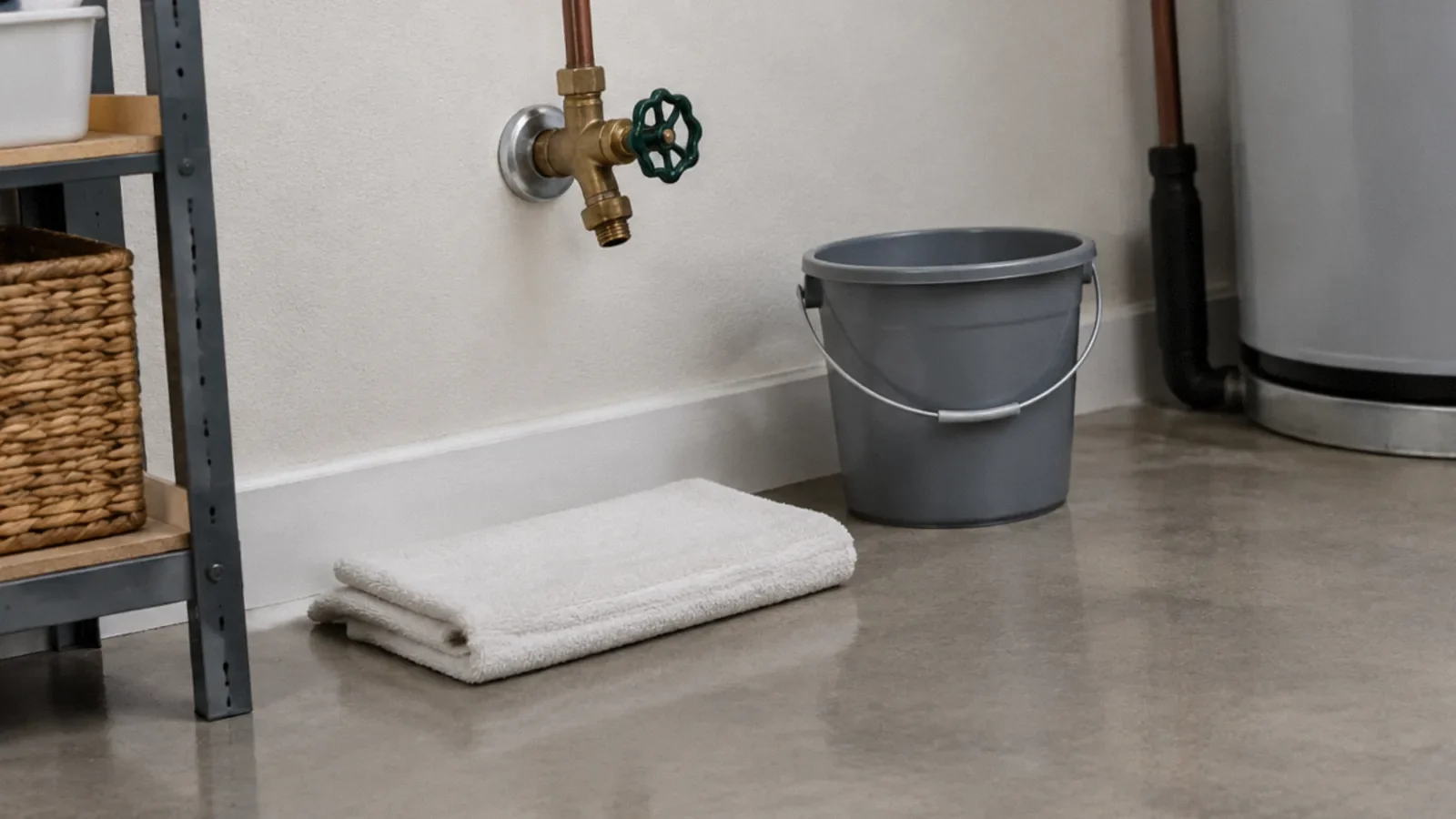
A leaking supply line may release water even during dry weather, while a drain leak may coincide with fixture use. A backed-up floor drain can bring contaminated water into the room. Condensation can form on a cool slab when humid air contacts it. These are competing explanations, not a checklist that proves a diagnosis. A plumber or building professional can choose appropriate tests without unnecessary demolition.
Safe immediate response
Keep away from standing water near electrical equipment. If sewage is possible, stop using affected plumbing and keep people and pets out of the area. Do not open a backed-up cleanout or pour chemicals into a drain. If a supply leak is suspected and a shutoff is safely accessible, isolate it and contact a plumber. Do not enter a flooded area to operate a switch.
Choosing a durable repair
Addressing the source may involve plumbing repair, managing roof runoff and surface grading, restoring drainage, or a professionally designed foundation repair. An interior seal over a wet crack may hide the symptom without controlling the source. Ask how water will be collected or redirected, where it will discharge, whether permits apply and how the result will be monitored. Existing systems differ and no single method suits every slab.
After the source is controlled
Promptly assess wet flooring, stored items and adjacent walls. Drying a surface does not establish that layers beneath it are dry. CDC recommends prompt drying after water damage; contaminated water and inaccessible materials may require a professional. Keep photographs and repair records and report recurring entry. If movement, a widening crack or significant displacement is observed, request a structural evaluation.
Why a crack is not a complete diagnosis
Concrete can crack for different reasons, and water may use an opening created by an unrelated process. A thin stable crack, a displaced edge and a wall that bows are different observations. Photograph safely with a date and report change to a qualified professional. Do not infer structural capacity from crack width alone or inject a product before understanding the source and the condition of the assembly.
Drainage and pump questions
Some buildings have perimeter drains leading to a gravity outlet or sump; others do not. A sump pump can move water reaching its basin but does not necessarily collect water from every location. Ask where drains discharge, whether the outlet is blocked or submerged, and what happens during power failure. A technician can evaluate the system safely. A pump or drain is not a substitute for finding a leaking supply line or a sewer backup.
Follow-up after repairs
Keep a record of the repaired location, materials and test results, including what was not accessible. Observe whether moisture returns during the type of conditions that preceded it, but do so only from a safe area. A repair to one crack does not certify the entire slab or drainage system. If water continues or new movement appears, share the record with the contractor and seek further assessment before covering the area.
Your next-step checklist
- Record the location, condition and relevant history.
- Identify the source or application before choosing a repair or product.
- Ask a qualified professional about local requirements and limitations.
- Keep the written scope, inspection findings and records.
Related questions
Does water at a slab crack mean the foundation is failing?
Not necessarily. Cracks can provide a pathway without establishing structural failure. New movement, displacement or a changing crack calls for professional evaluation.
Can a floor drain backup look like groundwater?
Yes. Wastewater may emerge at a floor drain. Stop using affected plumbing and arrange a plumber or utility assessment; avoid contact with the water.
Sources & context
Public guidance supports the principles in this article. The practical questions and examples are editorial interpretation, not a site assessment or a coverage decision. State-specific rules apply only where identified.
- DOE: Foundation drainage and downspoutsofficial guidance
- CDC: Flooded home safetyofficial guidance