A subfloor supports the finished flooring and can become wet after a leak, appliance overflow or flood. Dark, white or other discoloration on plywood or another substrate does not identify a mold species. Stains and construction marks can resemble growth. A musty odor, recurrent wetting or visible suspect material requires evaluation of both moisture and the condition of the layers above and below.
What a mark on a subfloor means
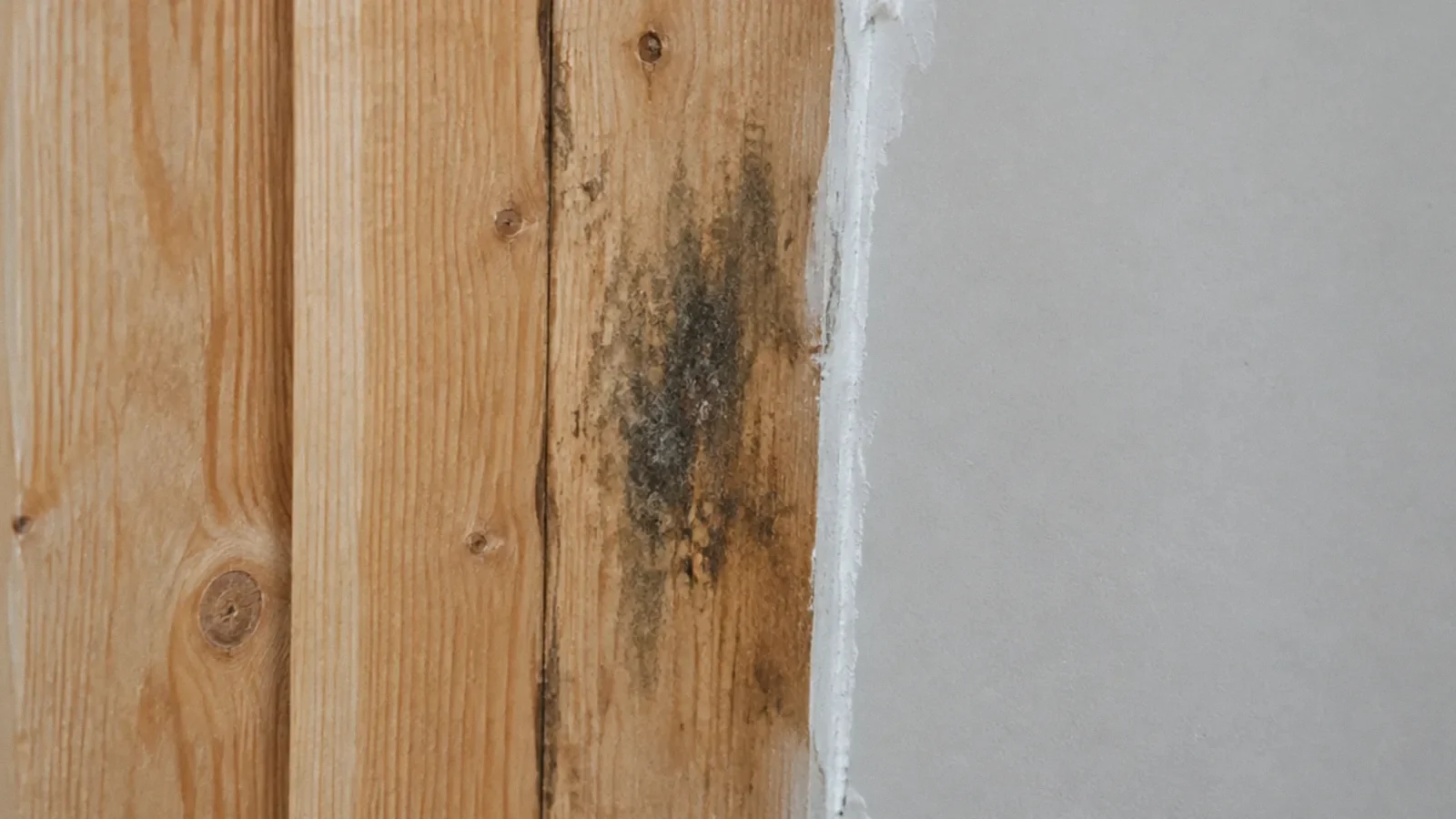
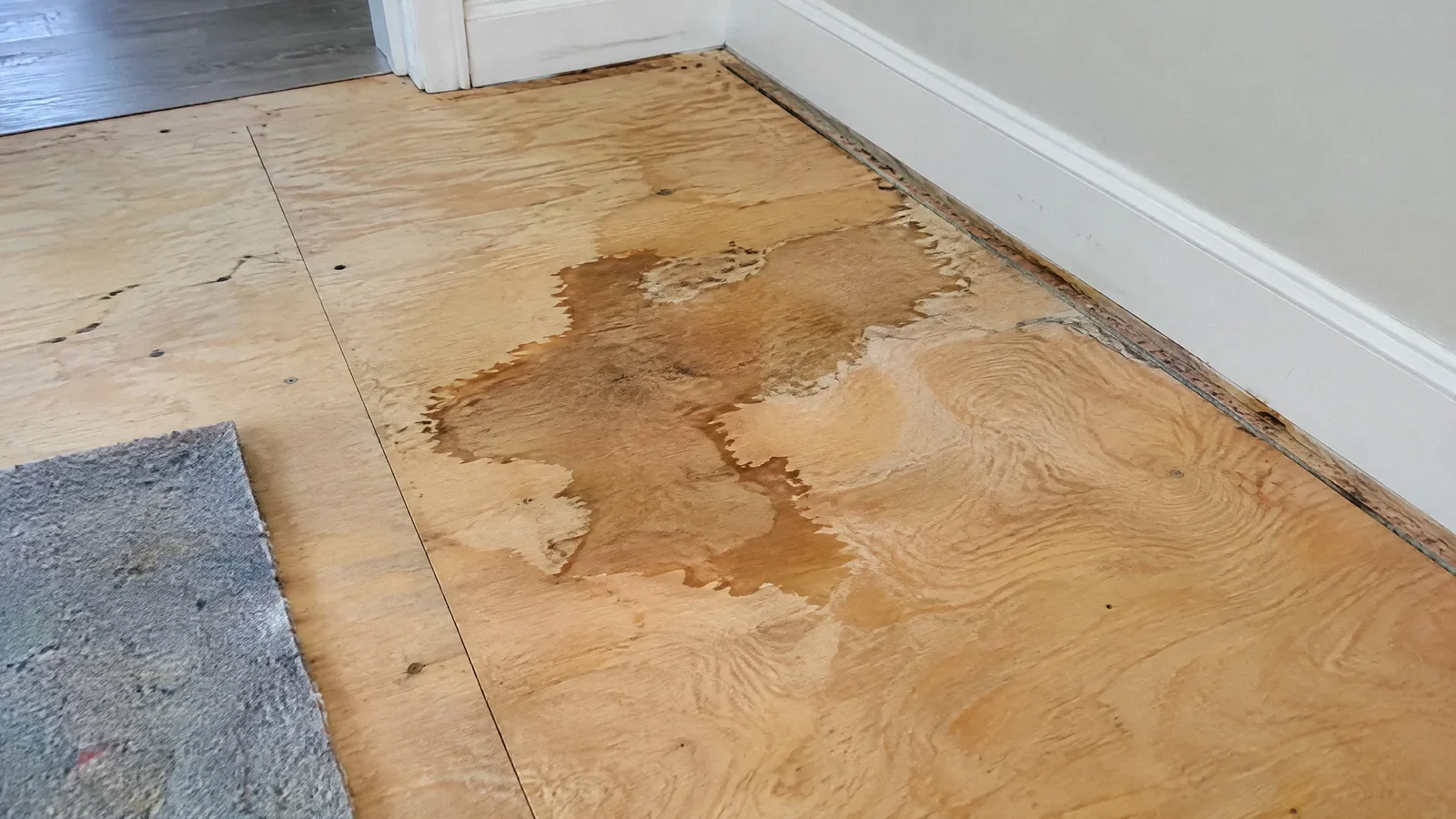
A subfloor supports the finished flooring and can become wet after a leak, appliance overflow or flood. Dark, white or other discoloration on plywood or another substrate does not identify a mold species. Stains and construction marks can resemble growth. A musty odor, recurrent wetting or visible suspect material requires evaluation of both moisture and the condition of the layers above and below.
Do not walk on a floor that feels unstable, swollen or structurally compromised. Keep people away from sewage or floodwater and do not enter a wet area where electrical equipment may be energized. A professional can determine when access is safe and whether a plumber, electrician or structural contractor is needed.
Trace the water and map the affected layers
Stop a leak only if the shutoff is safely accessible. Document the area and identify whether water entered from above, from plumbing, or from below. Flooring, underlayment, adhesive, subfloor and framing may dry at different rates. A dry-looking surface does not establish that a covered layer is dry.
A restoration professional can use moisture measurements and targeted inspection to define the wet area. Opening a floor may disturb old flooring or adhesive that contains asbestos; arrange appropriate assessment before cutting or removal when materials are suspect. Do not remove a load-bearing panel without an assessment and a safe repair plan.
Cleaning versus removal
The decision depends on material, depth of contamination, structural condition and access. Small, superficial growth on a sound accessible surface may be addressed as part of a controlled cleaning and drying plan, but porous wood and panel edges can retain moisture or contamination. EPA notes that moldy porous materials can be difficult to clean completely and may need removal.
Swollen or delaminated panels, soft spots, extensive growth, sewage contamination or damage that cannot be accessed and dried can favor replacement. A contractor should evaluate support, fastening and replacement specifications. A chemical spray or stain-blocking coating is not evidence that growth has been removed or that the panel is structurally sound.
Containment and worker protection
Avoid dry scraping, uncontrolled sanding or directing a fan at visible growth. These actions can spread particles. For suitable small cleanups, CDC recommends at least an N95 respirator, gloves and goggles without open vent holes. People with allergies, asthma, chronic lung disease or weakened immunity should not do mold cleanup.
Extensive damage, hidden cavities or contaminated water warrants qualified professional help. Ask how the work area will be isolated, how debris will be contained and disposed of, and how adjacent rooms and occupants will be protected. Never mix bleach with ammonia or other cleaners; chemical treatment does not substitute for physical removal and drying.
Verify the repair before new flooring
Correct the source and dry the subfloor and surrounding assembly before covering them. Ask the flooring installer which moisture measurements and conditions are required for the specific materials. A room humidity reading alone cannot establish moisture content inside a panel or joist. Keep the measurements and repair records with photographs.
The work is not complete merely because a new floor hides the stain. There should be no continuing leak, visible growth or moldy odor, and damaged structural material should be repaired by an appropriate contractor. Monitor the location after normal use or rainfall and have recurring moisture investigated promptly.
Questions to ask a flooring or restoration contractor
Ask which layers were inspected, where moisture measurements were taken and whether inaccessible areas remain. Measurements need interpretation in the context of the material and the equipment used. Ask whether a swollen or weakened panel can safely remain in place, who will determine the structural repair, and whether the proposed replacement is compatible with the finished floor.
Request a sequence that shows when the leak will be repaired, when affected material will be removed or cleaned, and when drying will be checked before the new floor is installed. If additional wet layers are discovered, the contractor should explain the change in scope and how the work area will remain contained.
Keep the inspection notes, measurements and photographs. If flooring begins to cup, feels soft, develops an odor or shows new staining after the repair, stop treating it as a cosmetic issue and request reassessment. A finished surface can conceal a recurring problem until damage becomes more extensive.
Distinguish appearance from performance
A stain may remain after drying even when the water source has been repaired, while a panel that looks acceptable can be damp underneath. Ask the contractor to explain moisture readings and structural observations together. New flooring should not be installed merely to conceal a mark; the assembly needs to satisfy the flooring manufacturer’s installation requirements.
Your next-step checklist
- Identify the moisture source and correct it.
- Assess the affected materials and occupants.
- Document repairs and check for recurrence.
Related questions
Can color identify the mold species?
No. Color alone cannot identify a species or establish individual health risk.
Does cleaning replace fixing the moisture source?
No. Correcting moisture is necessary to reduce recurrence.
Sources & context
Public guidance supports the principles in this article. The practical questions and examples are editorial interpretation, not a site assessment or a coverage decision. State-specific rules apply only where identified.
- Mold Cleanup in Your Homeprimary
- Mold Cleanup Guidelinesprimary
- Mold, Testing, and Remediationprimary
- Asbestos and Home Remodelingprimary