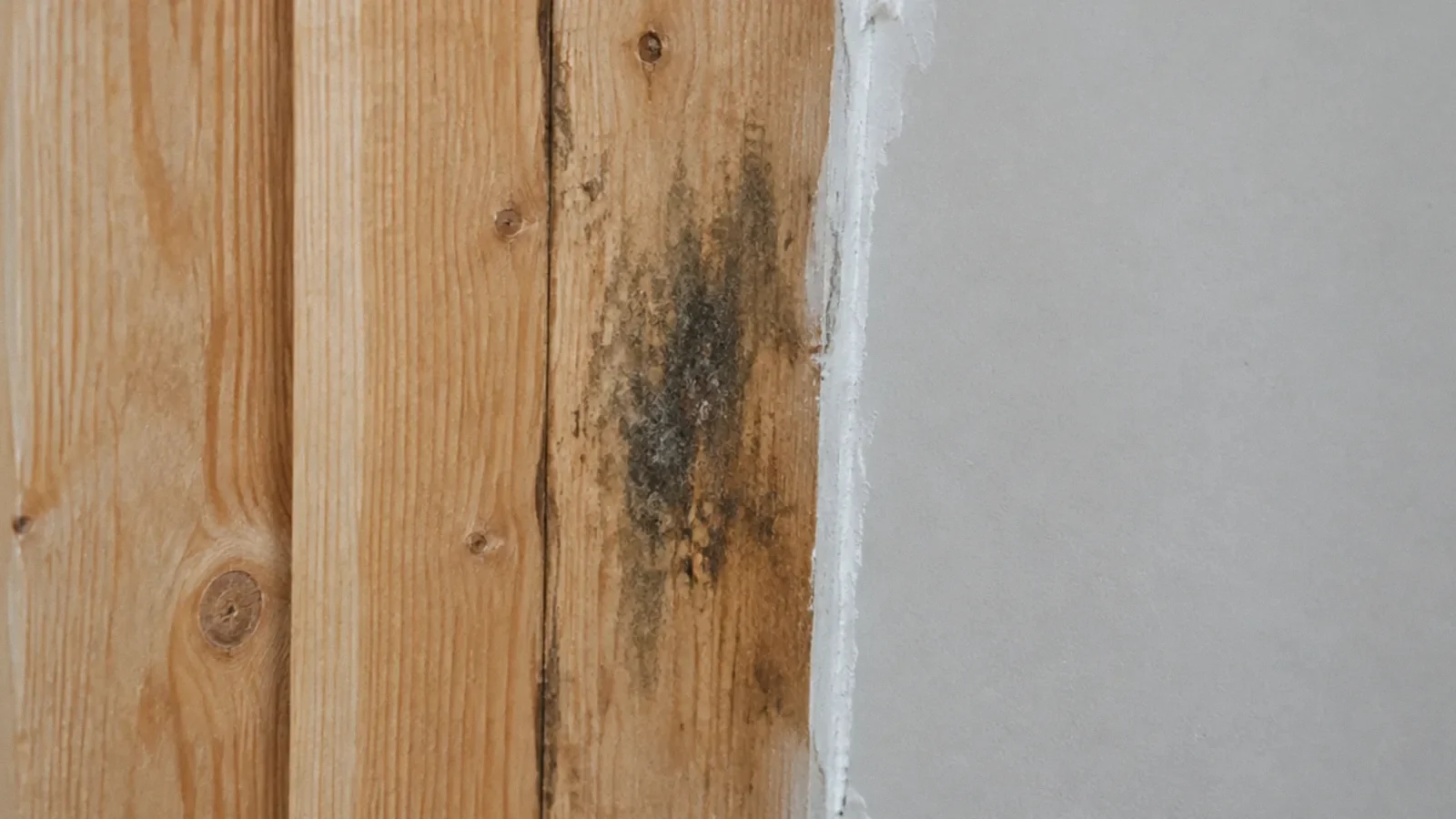
For mold cleanup, removing growth and correcting moisture matter more than changing its color. EPA does not recommend routine biocide use as the standard response, and moldy porous materials may need replacement.
Start with the material and contamination
A glazed tile surface, unfinished framing, paper-faced drywall, and carpet are different cleaning problems. A product that changes the appearance of one surface does not establish that growth has been removed from another. Identify the material, whether the water was contaminated, and whether hidden layers are involved before choosing a method. A sewage event is not equivalent to a small patch of bathroom surface growth.
EPA's home guide describes cleaning hard surfaces with detergent and water followed by complete drying. It explains that porous materials may be difficult or impossible to clean fully and that routine biocide use is not its standard recommendation. That is a reason to evaluate the assembly, not a claim that every chemical has no legitimate use under any circumstances.
Killing organisms is not the same as removing residue
A proposal may emphasize that a chemical kills mold or prevents growth. Ask what happens to the remaining material on the surface and to affected dust in the work area. Discoloration disappearing is a cosmetic observation, not a complete cleanup assessment. Equally, a remaining stain does not automatically prove that removal failed; the investigator must distinguish staining from remaining growth or debris.
CDC/NIOSH focuses on correcting dampness and appropriate remediation rather than using species counts as a substitute for repair. Translate that into a practical contract question: which surfaces will be physically cleaned, which components will be removed, and what evidence will show that inaccessible material was addressed? A spray-only line item leaves these decisions unanswered.
Why drywall and other porous products require caution
When growth involves the paper facing or hidden side of drywall, cleaning only the painted front cannot evaluate the full problem. Swelling, loss of strength, and contamination may independently justify replacement. Insulation, carpet backing, and composite cabinet cores can also have inaccessible internal surfaces. The removal boundary should follow the documented affected assembly and the method needed to clean adjacent retained materials.
Do not begin cutting suspect material solely to see whether a household cleaner worked. Disturbance can spread dust and may encounter electrical wiring, lead paint, or asbestos-containing components. For concealed or extensive growth, obtain an assessment and controlled work plan. The plan should protect occupied areas and explain how debris will leave the home.
Chemical safety is part of the decision
Never mix bleach with ammonia, acids, or other cleaning products. Follow the product label, including ventilation and protective equipment requirements. More concentrated is not automatically more effective or safer. A strong odor is not proof that a room has been disinfected, and a fragrance is not evidence that the moisture source has been corrected.
Workers may face obligations beyond the advice given to homeowners, including exposure assessment and respiratory protection requirements. A household product label does not replace an employer's hazard assessment. If the scope involves sewage, hazardous materials, extensive contamination, or vulnerable occupants, have the qualified project team choose controls appropriate to those conditions rather than improvising a stronger chemical mixture.
Compare two treatment proposals on the same basis
One proposal may list a chemical application while another includes removal of affected porous material and cleaning of retained surfaces. Those are not equivalent scopes merely because both use the word remediation. Ask each provider to identify what remains in the building afterward, how inaccessible surfaces are handled, and which moisture defect is corrected. Compare the same locations and completion criteria before comparing prices. This can reveal a genuine difference in access or material condition rather than encouraging a choice based on the strongest product claim.
Review a cleanup proposal by its result
A useful proposal identifies the source repair, the materials to retain or remove, cleaning methods, access requirements, and completion checks. It describes the condition required before new finishes cover the area. If a coating is proposed after cleaning, ask its purpose and whether the substrate must first meet particular moisture and cleanliness requirements. A coating should not conceal an unresolved condition.
At completion, inspect before reconstruction where practical. Compare the work with the agreed boundaries and review photographs of concealed locations. Ask about persistent odor, unexpected dampness, or material left outside the original scope. Schedule a follow-up under normal room conditions. Paying for a treatment is a record of an action; accepting the repair requires evidence that the underlying problem was addressed.
Does ammonia kill mold?
Ammonia is not necessary for routine mold cleanup and can irritate the eyes, skin and respiratory system. Whether a chemical can kill some organisms is a different question from whether contaminated material and the moisture source have been properly addressed. Dead mold can still trigger reactions.
EPA advises cleaning suitable hard surfaces with detergent and water and drying completely; porous materials may need different treatment or removal. Never combine ammonia with bleach, which can release toxic fumes. For a large area, hidden growth, sewage exposure or household vulnerability, seek qualified guidance rather than experimenting with chemicals.
Can bleach or ammonia clean dark mold?
Bleach can kill mold on a surface under appropriate conditions, but EPA does not recommend biocides as routine mold cleanup. A dark patch cannot be identified or rated by color, and a lighter appearance after bleach does not prove growth or residue was removed. Clean suitable hard surfaces and dry them; porous materials may require removal.
Ammonia may affect some organisms, but its effectiveness depends on conditions and it is not a substitute for removal and moisture repair. Never mix it with bleach: toxic fumes can result. Do not experiment with combinations or assume either chemical makes contaminated porous material safe.
Your next-step checklist
- Identify the affected material and water source before comparing cleaning products.
- Ask which growth and dust will be physically removed and how porous materials are evaluated.
- Reject chemical mixing and follow the label for any product actually selected.
- Review concealed surfaces and moisture evidence before coatings or new finishes.
- Keep the source repair and follow-up inspection in the completion record.
Related questions
Can I paint over mold after spraying it?
EPA advises cleaning growth and drying the surface before painting. A spray application alone does not establish that the material is ready for paint.
Does every mold stain mean removal failed?
No. Some staining may remain after cleaning, but the conclusion should be supported by inspection of the surface and the moisture history.
Is bleach always prohibited?
No. Guidance differs by contamination and task. The important distinction is that chemical treatment cannot substitute for appropriate removal, material assessment, and moisture correction.
Will ammonia kill mold and mildew?
A chemical’s ability to kill some organisms does not establish complete removal. Ammonia is not required for routine cleanup and must never be mixed with bleach.
Sources & context
Public guidance supports the principles in this article. The practical questions and examples are editorial interpretation, not a site assessment or a coverage decision. State-specific rules apply only where identified.
- EPA: Mold, moisture and your homeofficial
- CDC/NIOSH: Mold, testing and remediationofficial
- EPA: Bleach and mold cleanupfederal guidance
Community questions behind this topic
These discussions helped identify reader concerns. They are anecdotal, not technical or legal authority.