EPA recommends drying wet materials within 24–48 hours to reduce the chance of mold growth. That is a response target, not a promise that mold cannot grow earlier or proof that everything wet longer must be discarded.
Treat the clock as a reason to act
The useful question after a leak is what remains wet and how you will verify it. A wet ceiling discovered on Monday may have started leaking on Saturday. Conversely, a spill discovered immediately may have been removed before it entered a wall. The discovery time, leak duration, and material drying time are three different facts. Write each down separately and label estimates as estimates.
EPA's residential guidance uses 24–48 hours as a prompt-drying objective. It does not provide a method for dating growth by appearance. CDC/NIOSH emphasizes repairing moisture problems and assessing damaged materials. Neither supports deciding the entire repair scope from the time on a kitchen clock. Conditions within an insulated cavity can differ substantially from conditions measured in the room.
Find the wet assembly, not just the puddle
Sketch the source and the route water could have taken. Include the floor below, adjacent closets, cabinet bases, and transitions between flooring materials. Ask a restoration professional to explain which components are accessible and which are inferred to be wet. A reassuring surface measurement does not describe insulation behind it or the underside of flooring.
For each retained material, the drying plan should identify where readings are taken, the instrument and setting used, and the comparison or material-specific target. A single universal moisture percentage is inappropriate across wood, gypsum, masonry, and composite products. Measurements should be repeatable enough to distinguish progress from moving the instrument to a different location. Record drying conditions and any changes in equipment placement.
Escalation depends on more than elapsed time
Visible growth, persistent mustiness, extensive water migration, sewage involvement, or an occupant with heightened health vulnerability changes the response. Do not wait for a laboratory result before addressing a known water source. Do not use ordinary room fans to blow across suspect growth. Contaminated water and suspected HVAC contamination call for a professional assessment rather than treating the event as a small clean-water spill.
Porous materials may be difficult to clean once growth is established. The decision to remove them should account for contamination, accessibility, physical condition, and whether they can actually be cleaned and dried. The statement 'it has been two days' is incomplete evidence either for saving everything or for demolishing everything. Ask the person proposing removal to identify the material and the reason.
Two examples with different decisions
Imagine a supply hose leaking into an open, unfinished utility space for an hour. The source is stopped, water is removed, and all affected surfaces are accessible. That may support monitoring and controlled drying if the materials remain sound. The file still needs evidence that the underside of nearby stored items and the wall-floor junction did not remain damp.
Now imagine a slow dishwasher leak beneath several layers of flooring, discovered when the cabinet swells. The visible puddle may be small, but the history and enclosed construction create uncertainty. An assessment of concealed layers matters more than counting hours since discovery. A professional may need controlled access, with lead and asbestos hazards considered before disturbance. These are illustrative decision paths, not diagnoses of a particular property.
When the start time is unknown
A slow leak discovered behind furniture has no reliable starting clock. Instead of selecting an arbitrary date, record the earliest known symptom and the last documented normal condition. Ask the assessor how the uncertain duration changes inspection of porous materials and concealed layers. The response can still be prompt even when the history is incomplete. That distinction also matters in a dispute: a drying target cannot be used to infer that a particular person caused growth by delaying exactly one day, without evidence about the earlier wetting and actual material conditions.
Close the event with evidence
Before reconstruction, ask for the final moisture map, photographs of accessible concealed areas, the source repair record, and an explanation of any material that could not be evaluated. Note whether odors persist after equipment is removed. Revisit after normal use or relevant weather; drying equipment can temporarily mask the conditions that caused the problem.
If mold is found, treat remediation as an additional scope with defined boundaries and completion criteria. A successful drying record does not retroactively prove there was never growth. Equally, a mold concern does not prove an entire building is contaminated. Keep the conclusion as specific as the inspection supports, including locations, dates, methods, and limitations.
What to do after the leak stops
Safely stop the water source if possible, then remove accessible standing water only where electrical conditions are safe. Move wet belongings, dry accessible materials promptly with suitable ventilation and dehumidification, and check adjacent floors, cabinets and other connected areas. Ask a professional to assess concealed layers, extensive damage, sewage, suspected HVAC contamination or unsafe electrical conditions. Floodwater can be contaminated; follow official directions and return only after the property is cleared for entry.
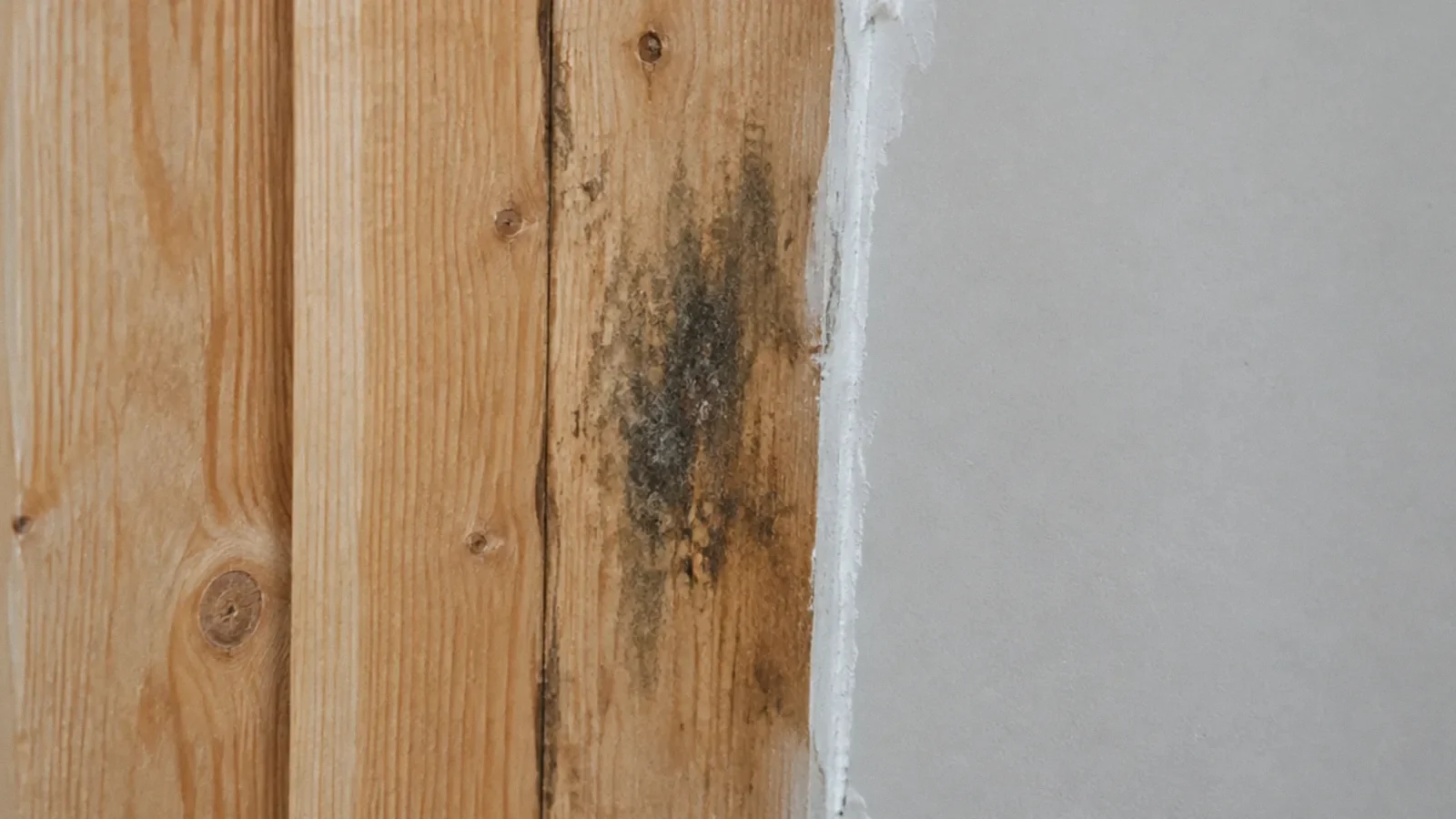
Mold spores are common indoors and outdoors. Growth needs moisture and a suitable surface; condensation and sustained indoor humidity can wet materials even without an obvious leak. A single leak can lead to growth, but it does not always do so. Staining, mustiness or visible suspicious growth warrants investigation; appearance alone cannot establish the species or date growth began. Drying water damage and remediating established mold are distinct tasks, and the time for either varies with the actual scope.
Your next-step checklist
- Record when the leak was discovered and the separate best estimate of when it began.
- Confirm the source repair and map connected cavities before deciding what is dry.
- Require repeatable readings and material-specific drying criteria for retained components.
- Escalate visible growth, sewage, HVAC involvement, and inaccessible wet assemblies.
- Review conditions again after normal use rather than relying on equipment runtime.
Related questions
Does mold always appear after 48 hours?
No. The interval is prevention guidance, not a universal growth deadline. Material, moisture, temperature, prior contamination, and access for drying affect the outcome.
Can an air test prove we dried in time?
No. Air sampling cannot reconstruct the moisture history or reliably rule out hidden growth. Evaluate the affected materials and drying records.
Should I wait to see whether mold appears?
No. Stop the source safely and arrange drying or removal promptly. Waiting for visible growth gives moisture more time to damage materials.
How fast can mold grow after water damage?
There is no universal clock. EPA recommends drying wet areas within 24 to 48 hours when possible as a prevention measure; actual growth depends on the material and conditions.
Sources & context
Public guidance supports the principles in this article. The practical questions and examples are editorial interpretation, not a site assessment or a coverage decision. State-specific rules apply only where identified.
Community questions behind this topic
These discussions helped identify reader concerns. They are anecdotal, not technical or legal authority.