Start with the blind manufacturer’s instructions and identify the material and operating mechanism. Gentle dusting works for many blinds. Some vinyl or metal products may permit a damp cloth or limited washing, but real wood, fabric, motors and certain headrails can be damaged by water.
Identify the material and mechanism
Vinyl, aluminum, faux wood, real wood and fabric window treatments have different care requirements. The headrail, cords, decorative tapes and motorized components can also limit how the product may be cleaned. Find the manufacturer’s model and instructions before removing or washing it.
A product’s material name alone does not prove that its entire assembly can be immersed. Hunter Douglas permits water immersion for some aluminum blinds but excludes particular collections and operating components. Other manufacturers may specify different rules.
Dust before applying a cleaner
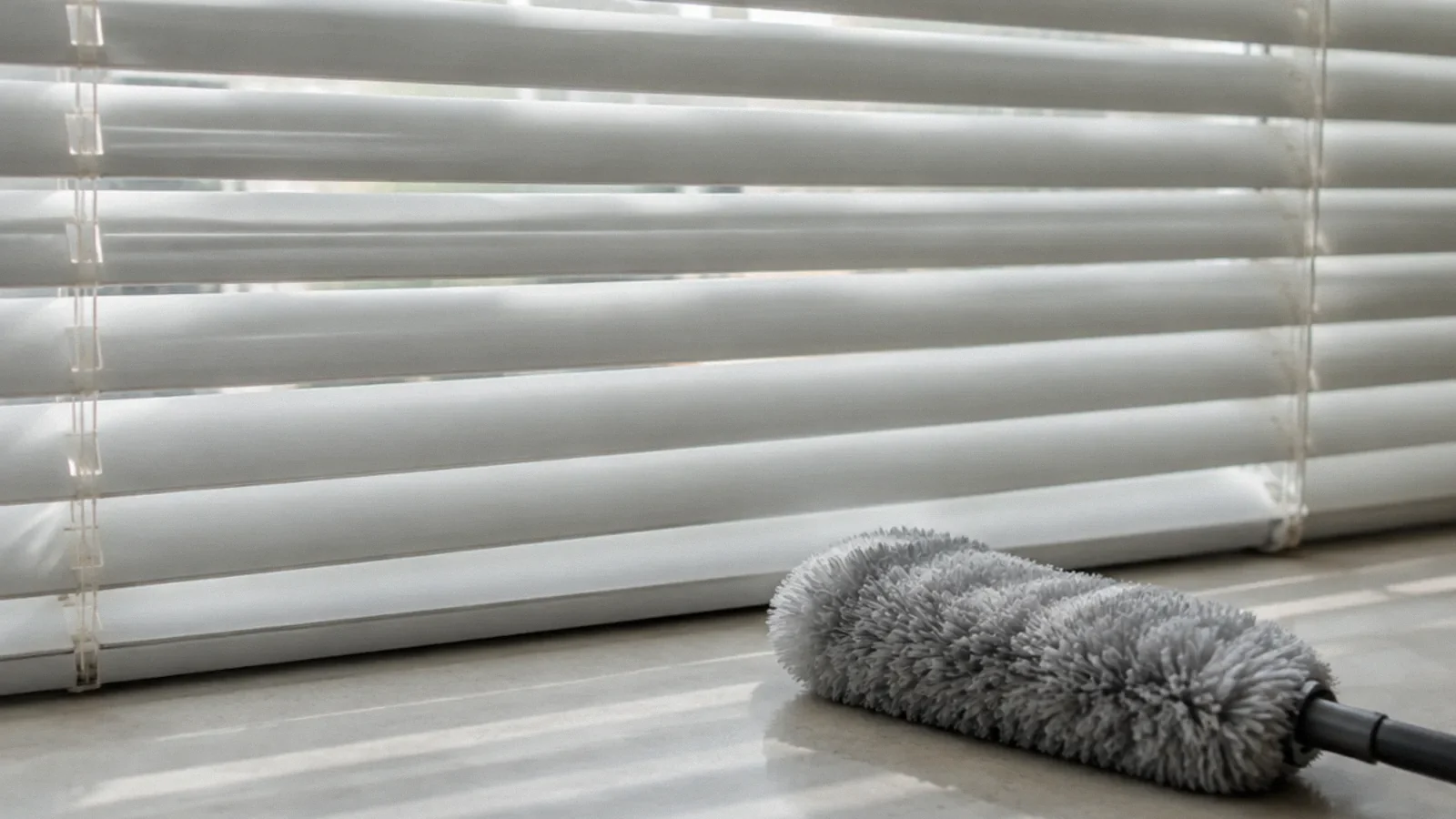
Lower and tilt the slats as the maker recommends, then use a soft clean duster or a vacuum with a suitable brush attachment and light pressure. Support fragile slats and work carefully so they do not bend. Avoid pulling on cords or touching a damaged mechanism.
Clean the surrounding sill with an appropriate method as well. Dusting first prevents loose soil from turning into a smear when a compatible damp cloth is used. Do not stand on unstable furniture or reach across an unsafe window opening.
Vinyl and faux-wood blinds
Some vinyl and faux-wood slats can be wiped with a lightly damp cloth and a mild cleaner if their maker allows it. Use little moisture, avoid saturating cords and wipe the slats dry according to the instructions. Keep liquid away from motors and electrical parts.
Test an approved cleaner in a hidden area and do not mix products. Avoid abrasive pads or strong solvents that can scratch, discolor or soften a finish. If the blinds are badly damaged or difficult to remove safely, consult the manufacturer or a professional.
Metal mini blinds
Many aluminum blinds can be dusted or vacuumed gently. Some specific models permit washing, but decorative tapes, headrails, lift systems or motorized parts may be excluded. Hunter Douglas lists immersion restrictions for several of its products; check your exact model.
If removal and washing are permitted, follow the maker’s directions for handling, cleaning and complete drying. Do not assume that a bathtub is suitable for every metal blind. Reinstall only after the allowed components are dry and the mechanism is safe to operate.
Real wood blinds
Wood slats and their finish can be damaged by excess water. Follow the manufacturer’s wood-care instructions and favor the recommended dry or minimally damp method. Do not soak wood blinds in a bathtub or leave water in seams and hardware.
If a finish is peeling, stained or affected by water, stop and request product-specific advice. A floor polish, household solvent or cleaning recipe intended for another type of wood may not be suitable for window treatments.
Should you use vinegar?
Vinegar is not automatically safe for every blind, finish or mechanism. Check the blind maker’s instructions first and use its approved cleaner. Hunter Douglas recommends material-specific cleaning methods and identifies restrictions for its products.
If the maker permits a particular cleaner, test it in an inconspicuous spot and follow its directions. Keep the headrail, cords, motors and electrical parts dry. Stop if the finish changes. Never mix vinegar with bleach or other cleaners.
What about stains or suspected mold?
Grease, persistent stains or water damage may require a different method from ordinary dust. Follow the product guidance and ask a specialist if the blind is delicate or valuable. Avoid soaking material whose backing, cords or coating cannot be dried safely.
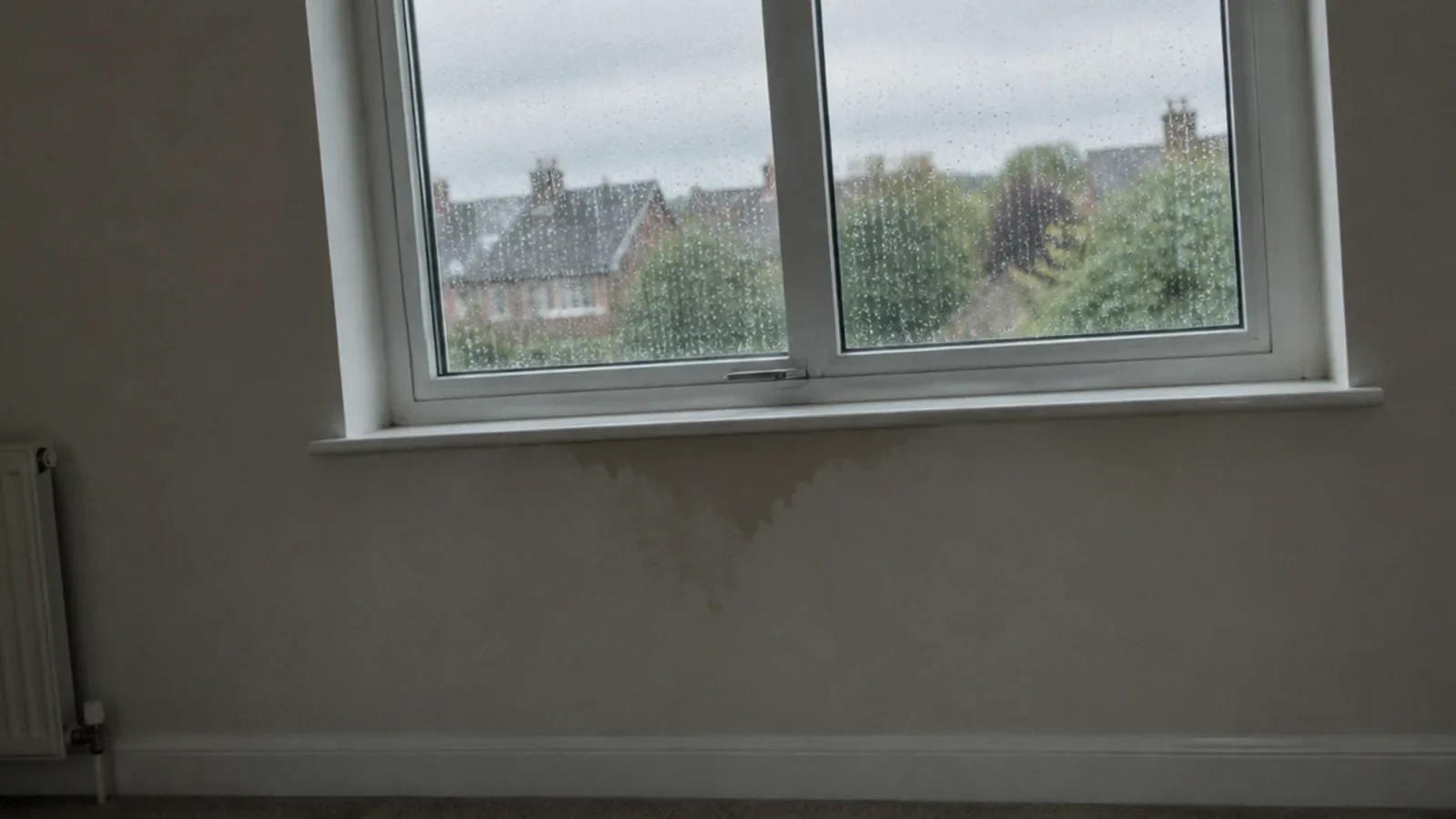
If mold-like growth is extensive or the surrounding wall is wet, do not disturb it unnecessarily. Correct the water source and seek qualified assessment of the wall and window assembly. A dark or pale mark alone cannot identify the substance.
Keep blinds easier to maintain
Dust on a routine schedule appropriate to the room and clean spills or splashes promptly using an approved method. When cleaning windows, a manufacturer may recommend applying glass cleaner to a cloth rather than spraying the blind.
Keep the care instructions and model information. For tall, heavy or motorized treatments, ask a qualified service provider about safe access and cleaning. A written scope should explain which components will be cleaned and how they will be dried.
Bath cleaning and vinegar: check the specific model
Some manufacturers permit immersion for particular blinds, while excluding others and their headrails or mechanisms. Only if your exact model’s instructions explicitly allow it, remove the blind as directed, protect all excluded parts, and wash the permitted slats in a bathtub using the specified cleaner and method. Rinse if directed and dry all permitted parts fully before reinstalling. This includes vinyl or horizontal blinds only when their maker allows that procedure; do not immerse wood, fabric, electrical controls or a headrail merely because the slats look washable. If the maker permits vinegar for that exact finish, use only its stated dilution and method, test a hidden area, wipe with the approved solution, rinse if instructed and dry fully. Without manufacturer directions, choose its approved cleaner instead; there is no universal vinegar concentration. Inspect old slats for brittleness first and test gently in an inconspicuous spot; stop if they crack or the finish transfers.
Your next-step checklist
- Identify the blind material and model.
- Dust gently before using liquid.
- Keep motors and restricted headrails dry.
- Avoid soaking real wood.
- Follow the maker’s instructions and never mix cleaners.
Related questions
Can I clean vinyl blinds in a bathtub?
Some products allow washing, but others have components that must stay dry. Follow the exact manufacturer’s instructions.
Can wood blinds be soaked?
Do not soak real-wood blinds unless the manufacturer specifically permits it; excess water can damage the wood and finish.
Is vinegar safe on all blinds?
No. Check the product instructions and test an approved method; never mix vinegar with bleach.
Can motorized blinds be washed?
Follow the maker’s model-specific instructions and keep electrical components dry.
Sources & context
Public guidance supports the principles in this article. The practical questions and examples are editorial interpretation, not a site assessment or a coverage decision. State-specific rules apply only where identified.
- Hunter Douglas: Cleaning metal blindsmanufacturer guidance
- Graber: Cleaning instructions by window treatmentmanufacturer guidance
- Hunter Douglas: Cleaning window treatments at homemanufacturer guidance
- Hunter Douglas: Cleaning metal blindsmanufacturer guidance
- Hunter Douglas: How to clean blindsmanufacturer guidance
- SelectBlinds: Vinyl louver maintenanceblind manufacturer instructions