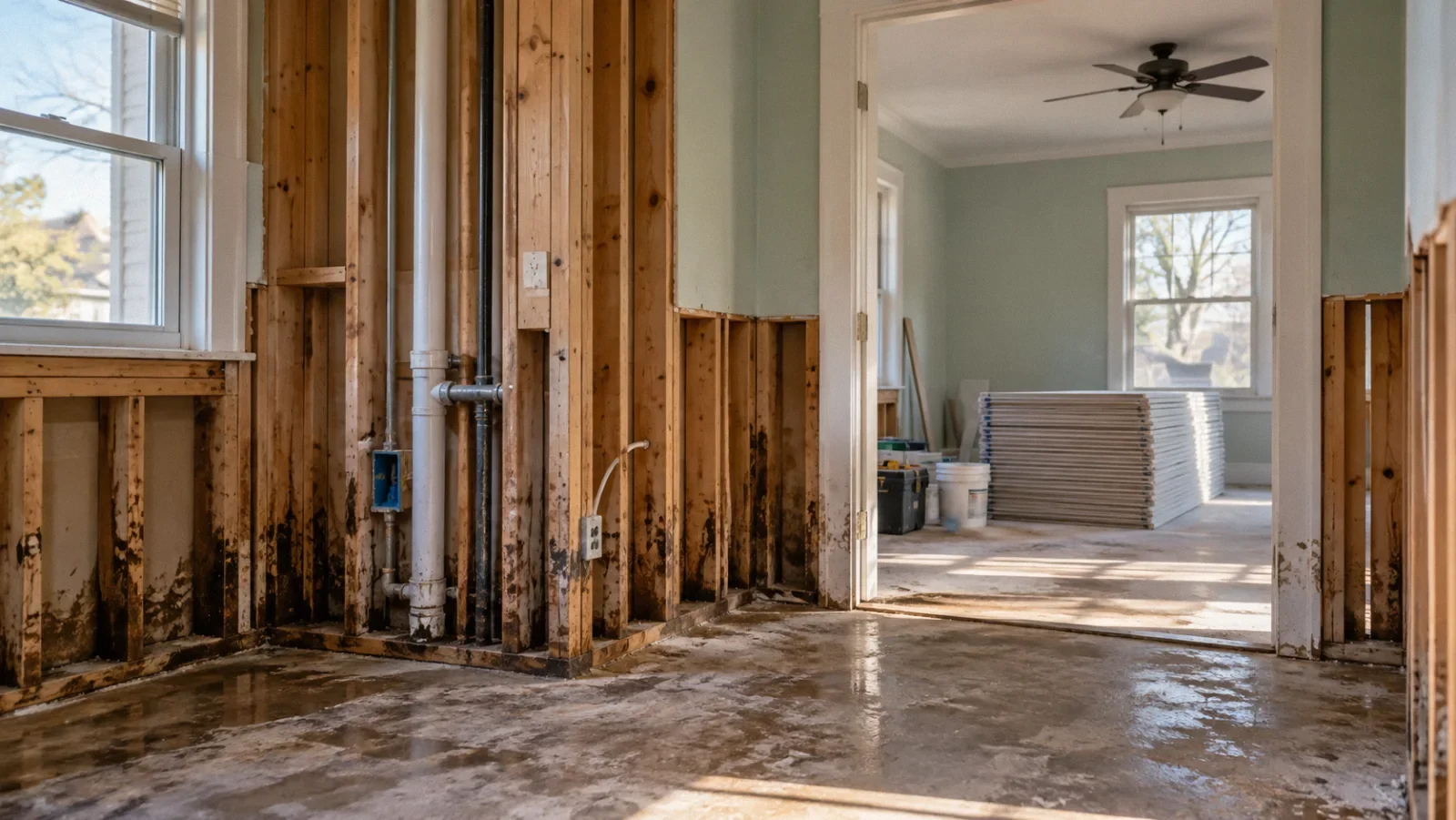
Tie payments to a clear scope and verifiable progress, and check the local deposit rules. An insurer check or urgent loss does not make a large upfront contractor demand automatically appropriate.
Ask what the deposit funds
A deposit request should have an understandable purpose within the project. Ask whether it covers mobilization, identified materials or another stated commitment. A round percentage demanded before the scope is defined leaves the owner unable to judge what is being purchased. Obtain the contract, schedule and relevant exclusions before transferring significant funds.
The FTC warns against paying the entire project upfront and notes that state law can limit down payments. California CSLB describes a general home-improvement down-payment limit of the lesser of $1,000 or 10% of the contract price, excluding finance charges. CSLB also describes an exception for contractors with a qualifying blanket performance and payment bond on file. Check the license record and whether the rule or exception applies to the actual contract; do not apply California requirements to every state or transaction.
Separate a deposit from a progress payment
A deposit is paid before the corresponding work has been completed. A progress payment should correspond to the agreed milestone or value under the contract and applicable law. Renaming an advance as a progress draw does not establish that the work exists. Ask what observable completion evidence supports each requested payment.
Useful milestones describe outcomes such as completion of a defined room scope or delivery and installation of specified materials. Vague milestones such as project underway make verification difficult. Where special-order materials are involved, ask for specifications, ownership, delivery arrangements and how changes or cancellation are handled. Local law may impose rules beyond the commercial agreement.
Do not let insurance proceeds set the contract price
A contractor may ask how much the insurer has paid. Sharing relevant estimates can help reconcile scope, but the check amount is not itself a measure of work performed or a reason to pay the full sum immediately. Keep the contractor agreement and insurer settlement calculation distinct.
An insurance payment may include contents, living expenses or amounts needed for later phases. A mortgage lender may also control structural proceeds. Before promising funds, identify which money is actually available and what it is intended to cover. Spending the entire initial payment on an undefined deposit can leave the household without resources for necessary work outside that contract.
Use traceable payment and receipt records
Match the payee to the contracting entity and use a method that produces a clear record. Obtain an invoice or receipt showing the project, payment purpose and remaining balance. Confirm changed banking instructions through a trusted contact rather than relying only on an unexpected email. Keep payment records with the contract and approved changes.
Ask how subcontractors and suppliers are paid and whether applicable lien releases will be provided. A payment to the prime contractor does not necessarily establish that everyone else has been paid. The required documents and protections vary by state; use the appropriate local forms and guidance rather than downloading an unrelated generic waiver.
When the demand exceeds your comfort or the legal limit
Ask for a revised payment schedule linked to documented progress and explain any lender draw constraints. A reputable negotiation should focus on actual procurement and cash-flow needs, not on pressure to hand over an insurance check before the agreement is clear. If the contractor refuses to explain the request, reconsider extending the engagement beyond essential authorized work.
If money has already been paid and performance stalls, preserve the contract, receipts, messages and current condition. Request a written status and accounting. Avoid another large payment merely because the first payment has already been made. The next decision should be based on verified work and a credible plan, with local advice if legal remedies or deadlines are involved.
- Before payment, identify the legal payee, exact amount, purpose and contractual basis.
- For materials, request the specification, order status, delivery plan and responsibility if the order changes.
- For progress, compare the requested amount with the defined completed milestone and unresolved defects.
- For remaining funds, account for uncompleted work, lender restrictions and other loss expenses.
Compare two proposed payment schedules
One proposal requests a large percentage immediately and another ties payments to defined completed phases. The second is easier to verify, but it still needs examination: are the phases meaningful, does the amount reflect actual progress, and are material commitments addressed lawfully? A schedule can appear staged while collecting most of the price before much work is done.
Ask the contractor to identify what the first payment purchases and what evidence supports each later request. If the answer is that insurance has already paid you, explain that the availability of proceeds does not describe completed work. Ask for a schedule linked to the scope and any lender draw process. Where local law imposes a deposit cap or other payment rule, that requirement must also be addressed.
Consider the consequence of nonperformance at each stage: how much money would remain, what work would still be needed and which materials would be available to complete it? This is a practical planning question, not a prediction that the contractor will abandon the project. It helps both parties discuss realistic cash flow. If the schedule changes, put the revision in writing and reconcile earlier payments so an old deposit is not accidentally counted again as a new progress obligation.
Your next-step checklist
- Check the relevant state consumer or contractor authority deposit guidance.
- Obtain a written scope and payment schedule before a substantial advance.
- Keep insurer proceeds distinct from contractor payment entitlement.
- Use traceable payments and retain itemized receipts.
- Verify progress and appropriate releases before later payments.
Related questions
Can a contractor require the whole insurance check upfront?
Do not assume that demand is lawful or reasonable. The contract, local rules and actual work matter. Ask for a defined payment schedule and check any deposit limits before handing over proceeds.
Does a material order justify any deposit amount?
No universal exception should be assumed. Ask for the order details and check local law. California CSLB guidance, for example, says its stated deposit limit has no special-order-material exception.
Sources & context
Public guidance supports the principles in this article. The practical questions and examples are editorial interpretation, not a site assessment or a coverage decision. State-specific rules apply only where identified.
- FTC: How To Avoid a Home Improvement Scamofficial
- California CSLB: What Is a Contract?official
- California CSLB: Contracts, payment schedules and blanket bond exceptionofficial
Community questions behind this topic
These discussions helped identify reader concerns. They are anecdotal, not technical or legal authority.