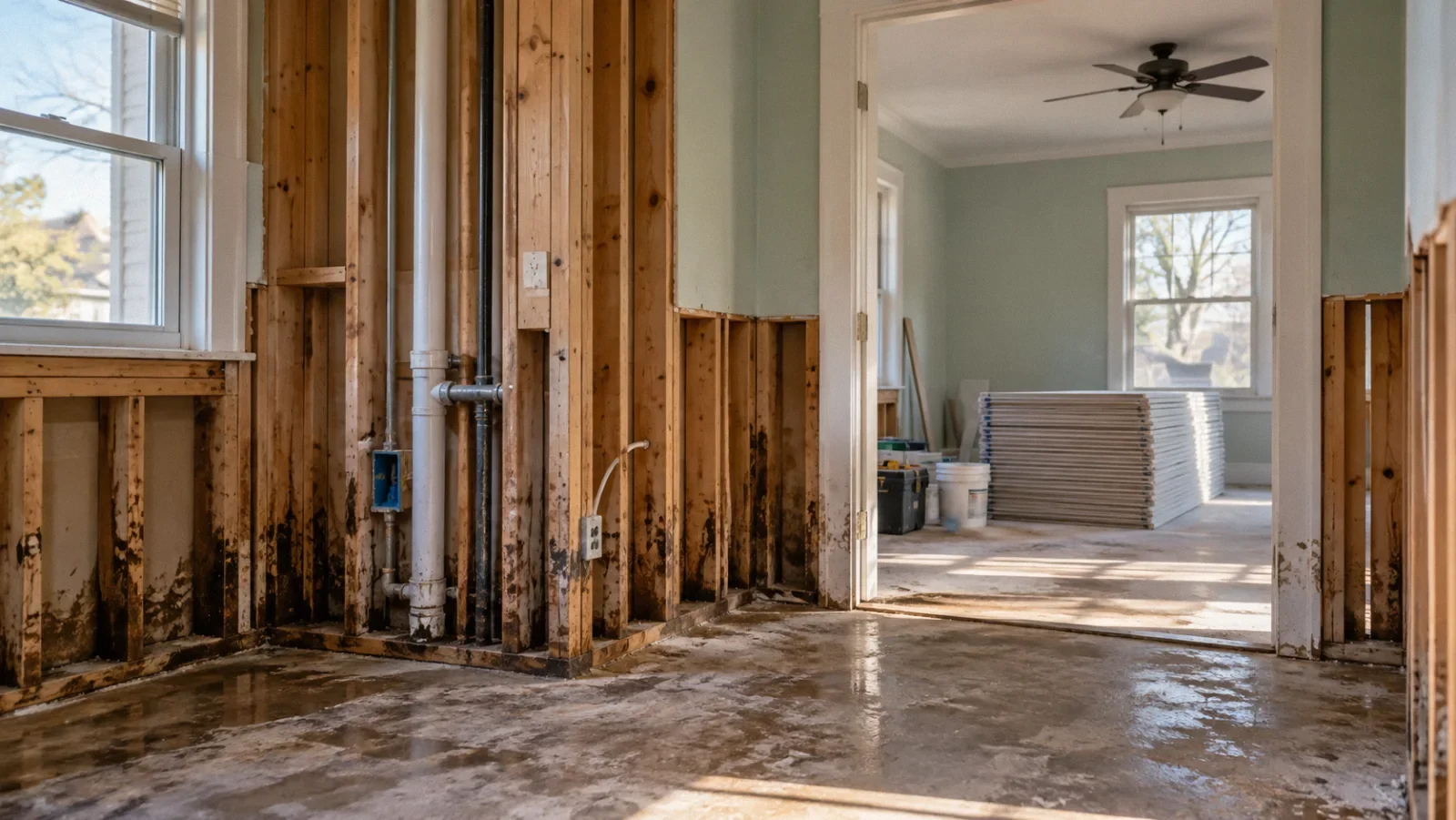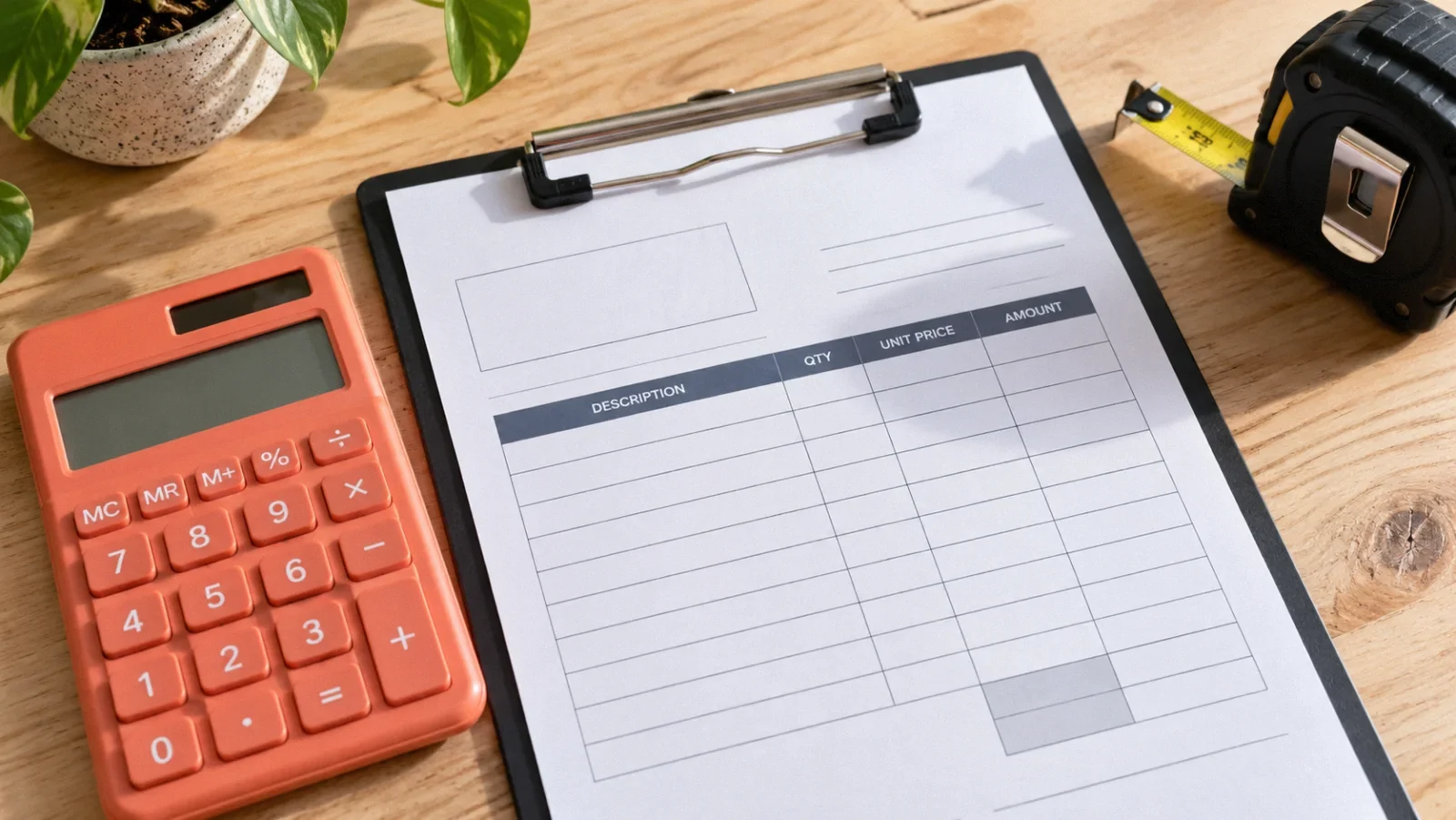
Review a mitigation bill against the signed scope, service records and actual quantities. Insurer approval and contractor billing are separate decisions, so ask for evidence of each disputed charge.
Begin with the agreement and invoice version
Collect the signed authorization, rate schedule, original estimate, approved changes and current invoice. Label their dates and versions. A revised bill can legitimately correct an error or add documented work, but the change should be explainable. Ask for a summary of additions and deletions rather than trying to reconstruct the difference from a new total.
The FTC recommends written agreements and keeping records when resolving contractor disputes. California insurance guidance also recommends maintaining claims communications and supporting documents. Use those practices to establish what was authorized and what was actually delivered. A bill is not proven correct merely because it is detailed, and it is not proven inflated merely because the total is higher than expected.
Check quantities before unit prices
Start with the observable elements: rooms, removed materials, equipment counts, service dates and labor entries. Make sure the units are understood. A charge for square feet differs from linear feet, and technician hours may differ from elapsed time on site when several people work together. Ask for clarification before labeling the arithmetic wrong.
Photographs, room measurements, installation logs and daily notes can help reconcile quantities. If an invoice lists work in a room you believe was untouched, identify that line and request its supporting record. Avoid broad accusations when a specific factual question can be answered. Keep your own observations dated and distinguish them from the professional records.
Ask what supports the duration and method
Equipment charges should connect to installation, monitoring and removal records. A longer drying period may have a technical explanation, such as inaccessible material or an interrupted process, but the explanation should be documented. Likewise, demolition, containment and specialized cleaning should correspond to the conditions addressed.
Do not use a universal online rule for the correct number of machines or days. Ask the contractor to explain the project-specific basis and what changed over time. If you lack the technical background to evaluate the response and the amount is material, consider an appropriately qualified independent review focused on the disputed issue.
Reconcile insurer allowances separately
Put the contractor charge, insurer allowance and stated reason for any difference in separate columns. The insurer may question necessity, rate, documentation or coverage. Each is a different problem. If an expense is outside policy coverage, that does not automatically decide whether the contractor was contractually authorized to perform it.
Reddit examples repeatedly show owners assuming insurer approval or direct communication resolved all payment obligations. Before relying on that assumption, read the agreement and ask both parties for their positions in writing. Request a clear statement of any undisputed amount and what remains under review. Avoid describing a partial payment as full settlement without understanding its legal effect.
Submit a manageable correction request
List disputed lines with a brief reason and the record needed to resolve each. Ask the contractor to correct arithmetic errors, explain unsupported quantities and provide missing reports. Give a practical response date as a request, while recognizing that contractual and statutory deadlines have their own rules. Keep the exchange professional and focused.
If the bill threatens collections or a lien, do not assume an ongoing insurer negotiation protects you. Obtain local advice promptly where needed. A licensing complaint or consumer complaint may be appropriate for conduct concerns, but it is not necessarily a substitute for responding to a legal notice. Preserve envelopes and delivery dates along with the invoice history.
- Authorization column: the contract item or approved change that supports the task.
- Quantity column: measured amount, unit, service dates and the corresponding record.
- Price column: agreed rate, calculation, taxes or fees and any identified discrepancy.
- Resolution column: information requested, response received, correction made and amount still disputed.
A line-item request that distinguishes error from disagreement
Suppose an invoice lists two technicians for four hours, but the owner remembers a four-hour visit and believes the eight labor hours are wrong. Ask how the invoice expresses labor. Two people working four hours each can produce eight technician hours without an arithmetic error. By contrast, a charge for a second visit that did not occur raises a different factual question. Understanding the unit prevents a legitimate item from distracting from actual discrepancies.
A useful request identifies the invoice line, your observation and the missing record: please provide the service date and crew record supporting this entry, and explain whether the quantity represents elapsed time or total technician time. Use the same approach for square feet, linear feet, equipment units and disposal loads.
When a correction is agreed, request a revised invoice with the change visible and confirm whether the insurer received it. Keep a reconciliation of payments already made. If the contractor says it did not receive an insurer payment, ask the insurer for payment status and appropriate tracing information rather than paying a duplicate amount immediately. A payment dispute can involve timing, an incorrect payee, posting errors or other facts; none should be assumed without checking the record.
Your next-step checklist
- Save every invoice version rather than overwriting earlier copies.
- Reconcile quantities and units before debating the total.
- Request equipment, labor and moisture records for relevant charges.
- Keep coverage exclusions separate from contractor authorization disputes.
- Respond promptly to formal payment or lien notices with appropriate local help.
Related questions
Does insurer approval prove the invoice is accurate?
No. It indicates an insurer decision within its process, not necessarily verification of every contractual or factual issue. You can still request an explanation of charges and compare them with the records.
Should I simply refuse the balance above insurance payment?
That can create consequences under the contract and local law. Identify why the balance exists, dispute specific unsupported items and seek advice where a significant debt or lien is threatened.
Sources & context
Public guidance supports the principles in this article. The practical questions and examples are editorial interpretation, not a site assessment or a coverage decision. State-specific rules apply only where identified.
- FTC: How To Avoid a Home Improvement Scamofficial
- California Department of Insurance: Residential Property Claims Guideofficial
Community questions behind this topic
These discussions helped identify reader concerns. They are anecdotal, not technical or legal authority.