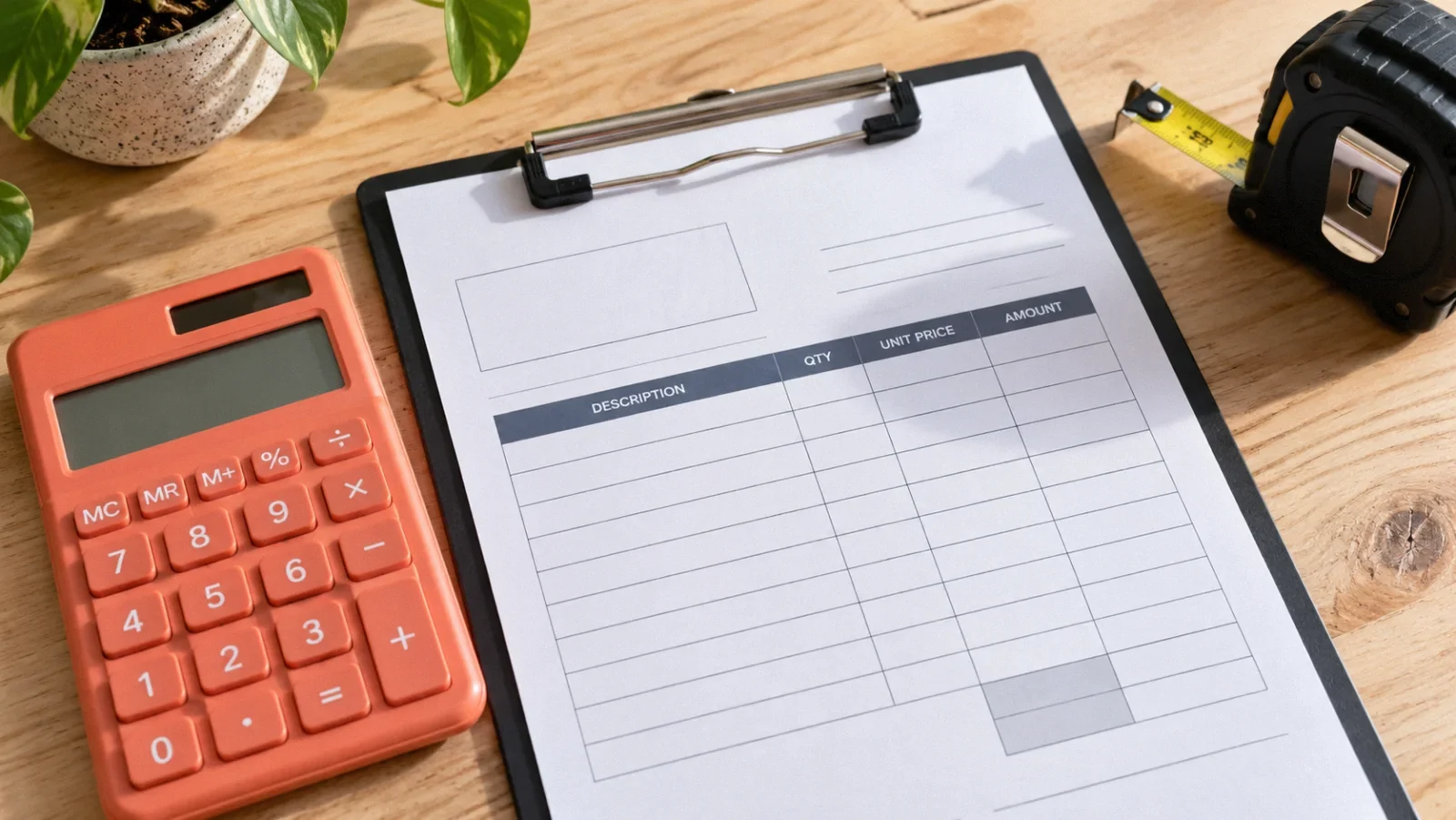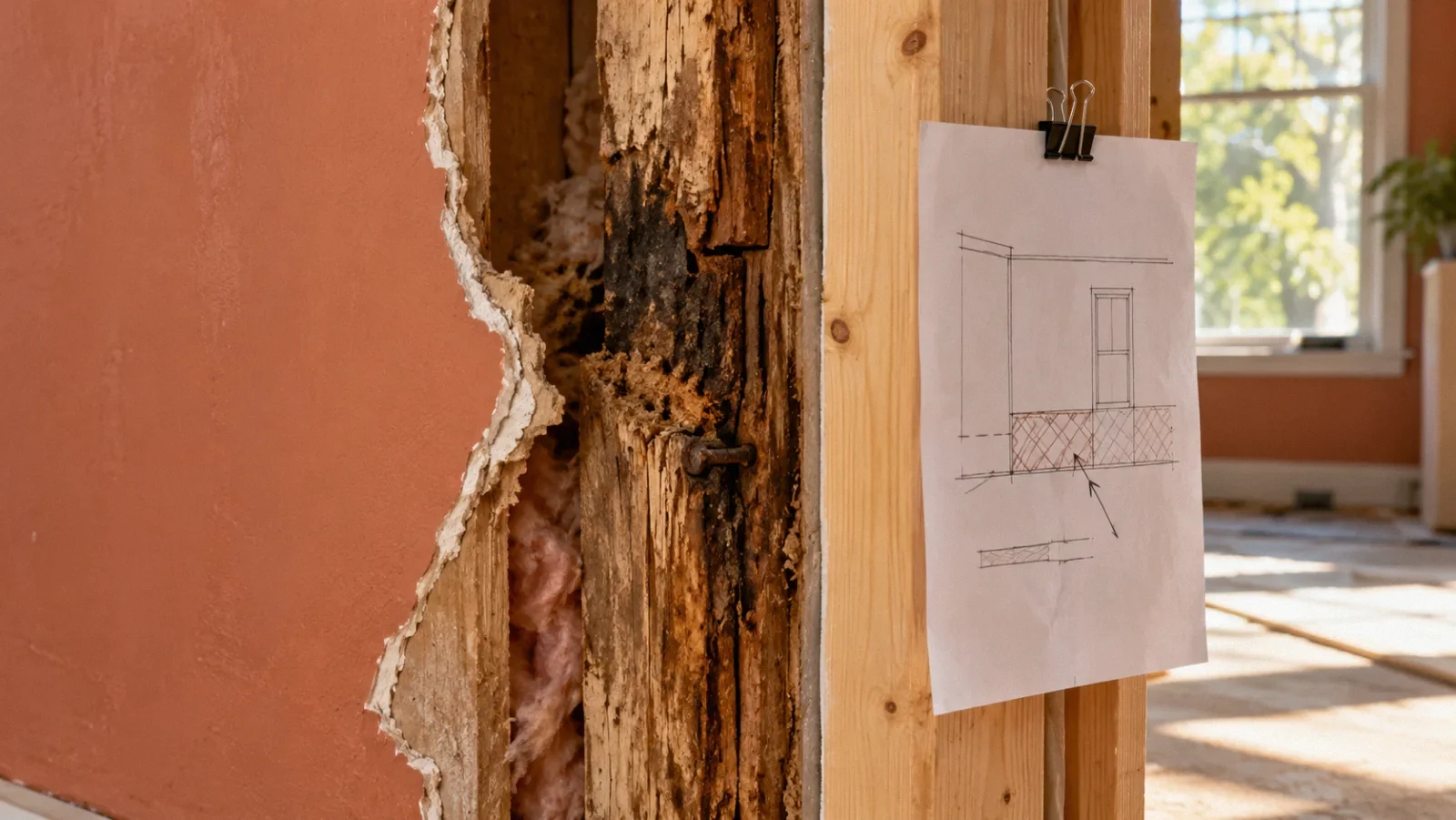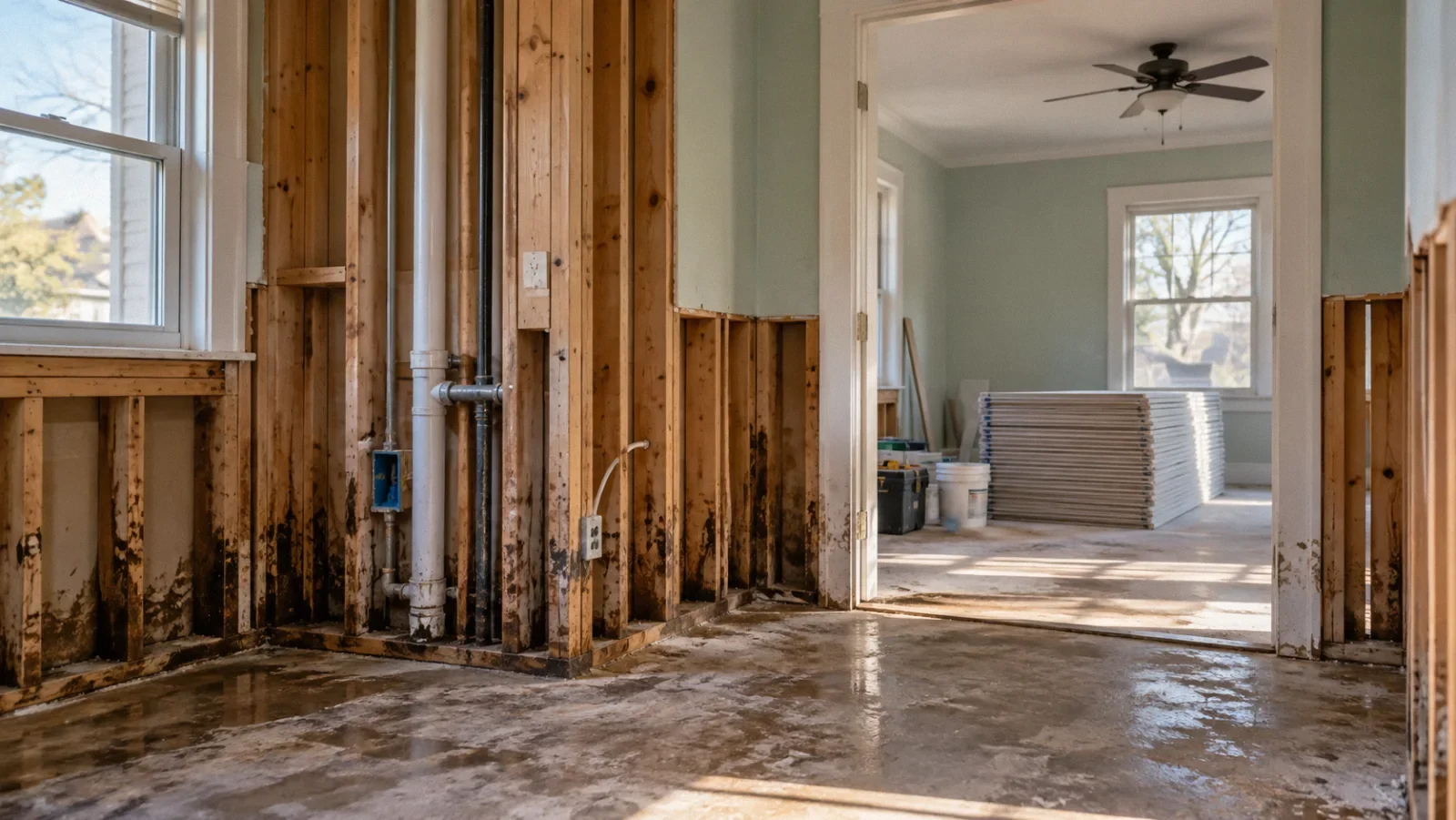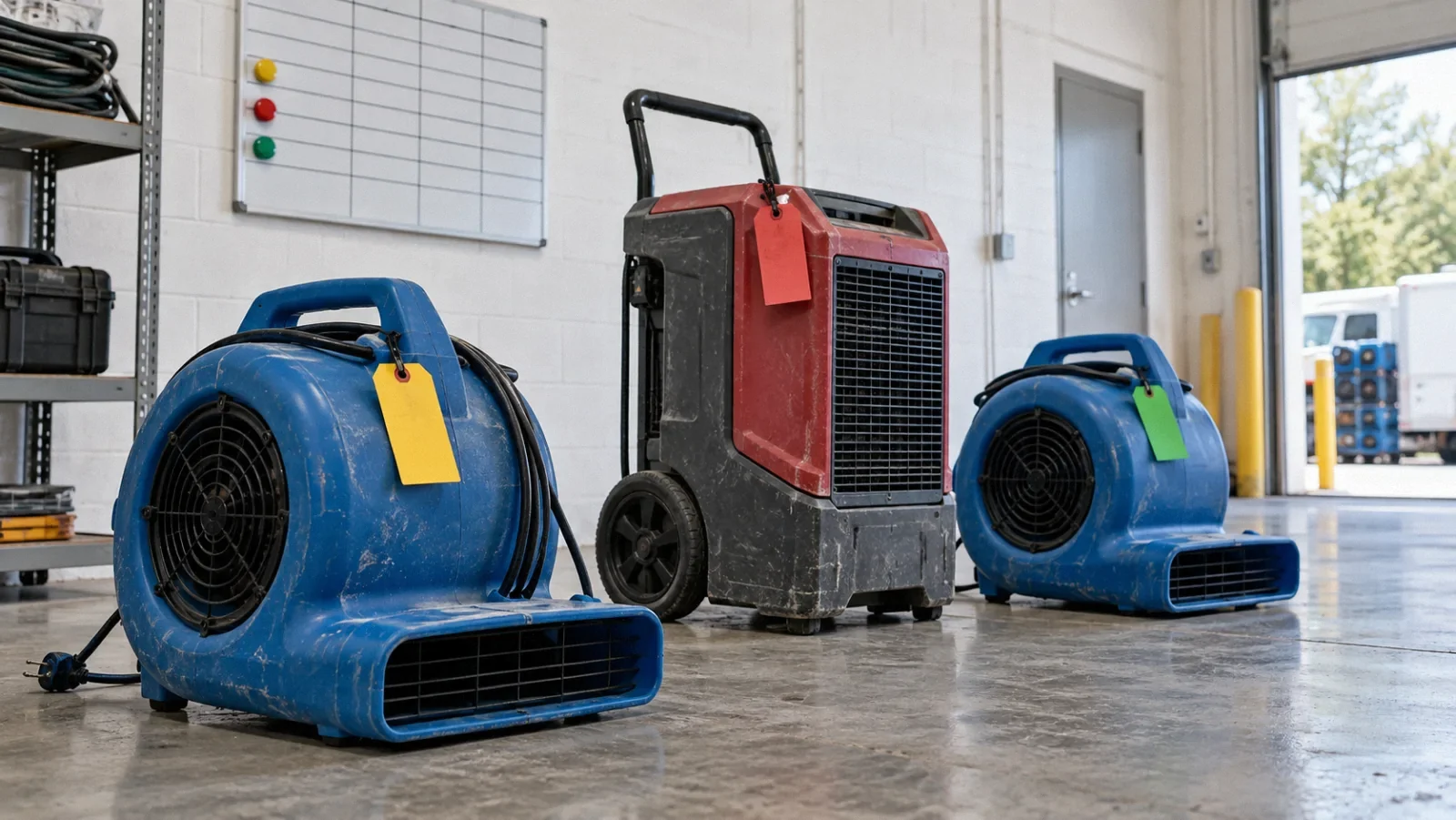
Match each drying machine to its location, installation date, monitoring record and removal date. A daily rate is only part of the bill; the reason for the quantity and duration matters too.
Create an equipment register
Ask the contractor to identify the types and number of machines placed in each area. Record equipment identifiers if available, but do not move or disconnect equipment to inspect a label. A room-level photograph and placement list can help reconcile the invoice later. Note changes when equipment is added, relocated or removed.
An air mover, dehumidifier and filtration device have different functions. Do not assume they are interchangeable or that every machine is justified by the same moisture reading. Ask what condition each type addresses and how the contractor will decide whether it remains necessary. The answer should relate to the building and work plan rather than only a standard daily package.
Understand the billing day
The contract should explain when rental billing starts and ends and how partial days, weekends or pickup delays are treated. Ask whether collection timing is under contractor control and how the owner requests removal once technical completion is established. If equipment remains on site after use ends, document the facts and ask how those days will be billed.
Do not assume a machine is chargeable only while its motor runs, or that merely sitting in the house makes every day reasonable. Those questions involve both contract terms and service justification. Clarify the rules before an avoidable delay creates a large disputed balance.
Connect monitoring to continued use
EPA guidance emphasizes identifying and correcting moisture problems and evaluating remediation completion. It does not prescribe a universal number of rented machines or a flat number of drying days for every home. The contractor should explain the project-specific measurements, affected materials and limitations that inform continued drying.
Request monitoring records that identify locations and trends. A single unexplained moisture number is difficult to assess. Ask what reference condition is being used, whether the same locations are being compared and what the next action is if progress stalls. The owner need not direct the technical process to expect a readable account of it.
Record interruptions and access problems
Power interruptions, equipment faults, closed access or a continuing leak can affect the process. Record when the issue was noticed, who was notified and when it was addressed. Do not alter settings or shut equipment down without discussing the consequence with the contractor, unless an immediate hazard requires emergency action.
Ask how interruptions affect billing and schedule. If the contractor could not monitor because access was unavailable, that is different from a missed visit despite agreed access. If a machine failed, request the service or replacement record. These distinctions make a dispute more concrete than a claim that all extra days must be unjustified.
Review the total with the insurer and contractor
Reddit billing disputes often focus on machines left for several days and charges that were not anticipated. The anecdotes do not establish a correct market rate or prove overbilling. They identify useful questions: how many machines, where, for what purpose, over which period and under what agreement?
Compare the equipment register with the invoice and insurer allowance. If the insurer allows fewer days, ask whether it disputes technical need, rate or missing documentation. Provide the relevant records rather than assuming the contractor and adjuster will resolve the issue without owner involvement. The signed agreement may still affect who owes a disputed balance.
- For each device, list type, identifier if available, room, installation and removal dates.
- For each monitoring visit, request measured locations, observations and the next technical decision.
- For each interruption, log cause, notification, corrective action and any proposed billing adjustment.
- For each disputed day, ask whether the disagreement concerns use, necessity, access, pickup or the agreed rate.
Separate a technical extension from a pickup delay
Imagine monitoring shows an affected assembly has reached the contractor completion criteria on Thursday, but equipment is collected Monday. Ask whether drying actually continued for a documented reason, whether the devices remained available under the agreed rental terms or whether pickup was simply delayed. Those facts can lead to different billing discussions. Do not assume the removal date alone proves every intervening day was technically necessary.
Now compare a case where an inaccessible material remains wet and the contractor documents a revised method over the weekend. The same calendar duration may have a different justification. Ask for the observations, next action and notification record. The owner should understand why charges continue without prescribing a technical drying method from a distance.
A written request can say: please reconcile the equipment dates with the monitoring report and explain the basis for the days after the stated completion observation. Please identify any access or pickup issue and the contract term applied. This keeps the discussion focused on evidence and billing rules. If there was a power outage or equipment fault, include its actual duration and response record. Do not assume interrupted operation automatically produces a credit, but ask how the contractor has accounted for service that could not perform as expected.
Your next-step checklist
- Obtain the equipment rate schedule and billing-day definition.
- Keep safe photographs and a location register of installed machines.
- Ask for understandable monitoring and final removal records.
- Report faults or access problems promptly and retain the messages.
- Resolve unexplained differences between equipment records and invoice quantities.
Related questions
Is three days always enough for drying?
No. Materials, water distribution, access, ambient conditions and the actual process vary. Ask for project-specific evidence supporting the duration rather than using a fixed calendar rule.
Can I unplug noisy equipment overnight to save money?
Discuss noise and occupancy needs with the contractor first. Interrupting the process may affect drying and the schedule without changing rental terms. Ask about appropriate alternatives or accommodation instead of assuming shutdown saves cost.
Sources & context
Public guidance supports the principles in this article. The practical questions and examples are editorial interpretation, not a site assessment or a coverage decision. State-specific rules apply only where identified.
- FTC: How To Avoid a Home Improvement Scamofficial
- EPA: Investigating, Evaluating and Remediating Moisture and Mold Problemsofficial
Community questions behind this topic
These discussions helped identify reader concerns. They are anecdotal, not technical or legal authority.